

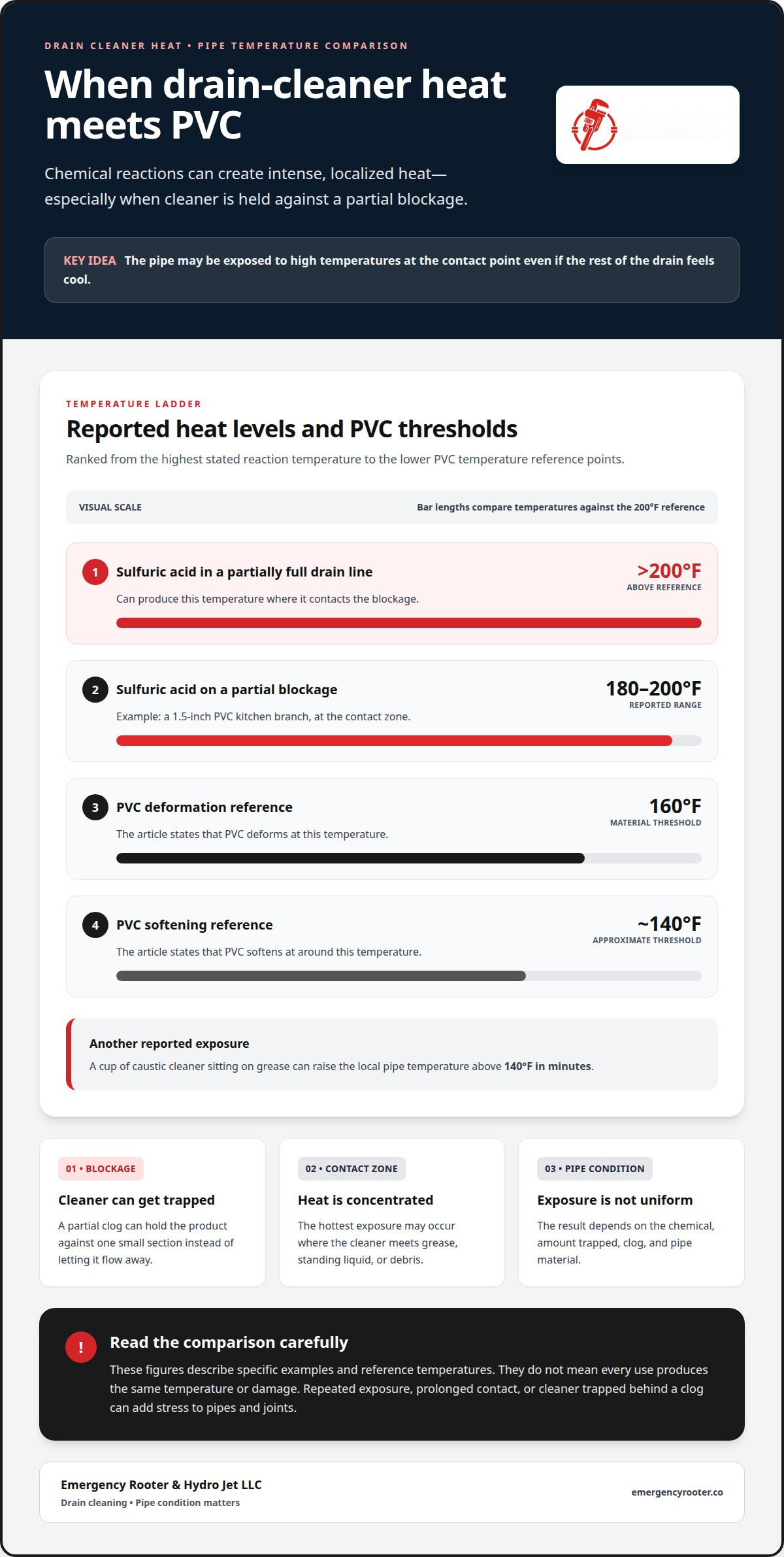
Yes, chemical drain cleaners can damage pipes. Their reactions generate heat, and a sulfuric-acid pour on a partial blockage in a 1.5-inch PVC kitchen branch can reach 180 to 200 degrees Fahrenheit at the contact zone. Strong chemicals can also weaken pipe walls and joints, especially when they’re trapped, used repeatedly, or poured into aging plumbing.
A chemical drain cleaner may seem like the fastest fix, but temporary improvement in flow doesn’t always remove the blockage or address its cause. Can chemical drain cleaners damage pipes? Yes, depending on the formula, exposure, and pipe condition. This article explains how heat and corrosive ingredients can affect plastic, PVC, metal pipes, and joints, and compares practical alternatives, from plungers and drain snakes to professional hydro-jet cleaning. You’ll learn when a mechanical approach may suit a minor clog and when recurring symptoms point to a deeper problem.
Key Takeaways
- Drain-cleaner reactions can produce heat that stresses pipes, especially when chemicals sit against a blockage.
- Repeated or trapped chemical exposure can weaken pipe walls and joints, increasing the risk of leaks.
- For some minor clogs, mechanical options such as a plunger or drain snake can clear the blockage without chemical cleaners.
- Hydro-jet cleaning uses pressurized water to remove buildup; the right approach depends on the blockage and pipe condition.
- Recurring clogs, multiple slow drains, or water backing up can signal a deeper drainage problem that needs professional attention.
Alternatives including mechanical cleaning and hydro-jetting
If chemical drain cleaner doesn’t clear the clog, stop adding it. Don’t mix it with another household cleaner. Residue may remain trapped above a blockage, creating a hazard during further work. Tell the plumber which product went into the drain, then choose a mechanical method suited to the clog and pipe condition.
For a minor sink blockage, a plunger can shift the material using pressure rather than a chemical reaction. A drain snake reaches farther into the pipe and can break up or pull out hair and other debris. Cleaning the sink’s trap may help when the obstruction sits there. These methods can often clear minor clogs without harming plumbing.
The trap is the curved section below a sink. If the blockage is there, clearing debris from that section can restore flow without treating the full drain line. A snake is more useful when the clog lies farther down. The right method depends on where the obstruction sits and what is causing it.
Rodding uses a rod to apply direct physical pressure to certain blockages. It can break apart material that a plunger cannot move. Tree roots are different: they may need to be cut away, followed by an investigation for cracks, open joints, or other pipe damage. Clearing the obstruction alone may not address where roots entered.
Hydro-jetting sends high-powered water through the line to clear buildup such as grease, sludge, silt, and scale. A hydro-jet can operate at 2,500 to 4,000 psi when cleaning larger drain lines. That pressure makes the method different from a hand snake. The condition of the pipe matters when selecting a method.
For recurring blockages, multiple slow drains, foul smells, gurgling, or water backing up, the problem may extend beyond one sink trap. A professional CCTV drain survey can show blockages, cracks, collapsed pipework, or tree-root entry inside the line. That inspection helps determine whether cleaning alone addresses the cause.
Hot water may help with some minor blockages, but avoid boiling water when the pipe material is uncertain. If you’ve already used a chemical cleaner, don’t follow it with another product or attempt work that could expose you to trapped residue. Keep the product information available and explain what was poured, so the next step accounts for any remaining chemical.
Heat generated by drain-cleaner reactions
Chemical drain cleaners can release heat as they react with a blockage. That heat concentrates where the product meets grease, standing liquid, or debris. The pipe may be exposed to intense local temperatures even when the rest of the drain feels cool. A partial clog can hold cleaner against one small section instead of letting it flow away.
In a 1.5-inch PVC kitchen branch, sulfuric acid on a partial blockage can reach 180 to 200 degrees Fahrenheit at the contact zone. PVC softens at around 140 degrees Fahrenheit and deforms at 160 degrees Fahrenheit. That comparison shows why a chemical reaction against trapped material can threaten plastic pipe. It does not mean every use produces the same temperature or damage.
A cup of caustic cleaner sitting on grease can raise the local pipe temperature above 140 degrees Fahrenheit in minutes. Sulfuric acid poured into a partially full drain line can produce temperatures above 200 degrees Fahrenheit where it contacts the blockage. The result depends on the chemical, the amount trapped, the clog, and the pipe material. A slow drain can therefore create a different exposure than a clear line.
Heat can stress more than the pipe wall. Plastic pipes and their joints may respond differently as temperatures rise, while older or weakened plumbing has less room for additional strain. If cleaner remains pooled near a connection, that joint may also be exposed. A brief change in flow does not show whether the blockage cleared or chemicals remain trapped.
How often can chemical drain cleaners be used safely? Follow the product label, and don’t treat chemical cleaner as routine maintenance. Repeated exposure increases the risk of pipe and joint damage, especially when cleaner repeatedly encounters the same blockage.
What should you do after accidentally mixing drain cleaner with another household chemical? Move away from the fumes and avoid breathing them. Mixing cleaners can create dangerous fumes that irritate the lungs. Don’t add another product or handle the mixture. Keep others away from the affected area.
If a cleaner fails to clear the drain, don’t pour in another dose or combine it with a different product. Tell the person handling the blockage which cleaner was used, since residue may remain in the pipe. Mechanical drain cleaning removes a clog without relying on another chemical reaction. For buildup along a drain line, hydro-jet cleaning uses high-pressure water, with the pipe’s condition guiding the appropriate method.
Leaks from weakened pipes and joints
Chemical cleaners can worsen existing cracks or loose joints, allowing water to escape where a pipe connects. Repeated use, prolonged contact, or cleaner trapped behind a clog can add stress to already weakened plumbing. A leak may stay hidden under a sink or behind a wall, so clearing the drain does not rule out pipe damage.
PVC glue joints can begin to seep six to twelve months after repeated chemical-cleaner exposure. In one described example, monthly use on a 1980s-era PVC kitchen sink was followed by joints starting to weep by month nine. The delay matters: a joint may appear dry immediately after treatment, then leak later as damage develops.
What signs indicate a drain cleaner has damaged a pipe? Look for fresh dampness beneath a sink, water marks near a pipe joint, or moisture returning after the cabinet has dried. A recurring clog alongside a leak or water backing up also deserves attention, because the problem may involve both a blockage and weakened plumbing.
A leak at the P-trap, the curved pipe beneath a sink, can point to a compromised connection or gasket. Chemical treatment may aggravate an existing weakness, but the leak’s location alone cannot establish its cause. Note whether moisture appears at a joint, along the pipe, or after the drain is used. Those details can help distinguish a connection leak from water escaping elsewhere.
Don’t pour another dose into a drain if you suspect damage. Stop using that fixture, avoid touching pooled cleaner, and tell the plumber which product was used and when. Chemical left in the line can expose anyone opening or clearing it. Repeated treatment can also disguise the real issue if a small passage opens while debris remains.
Recurring slow drains, foul smells, gurgling, and water backing up can point to a deeper drainage problem. A professional CCTV drain survey can identify blockages, cracks, collapsed pipework, and tree-root entry inside the line. That view helps locate damage rather than treating a leak as another ordinary clog.
Track the first sign and its location. For example, note whether moisture appears beneath the kitchen sink after use or whether several drains slow down together. A single damp joint and multiple slow drains suggest different problems. Clear observations, the cleaner’s product name, and the timing of treatment give a plumbing assessment more useful context.
Potential damage to plastic, PVC, and metal pipes
Pipe material affects how chemical drain cleaners can cause damage. PVC, ABS, cast iron, copper, and galvanized steel may respond differently to corrosive ingredients and repeated exposure.
Effects on Plastic and PVC Pipes
Plastic pipes can soften, crack, or craze when strong cleaner remains trapped or repeatedly contacts the same area. Sulfuric acid left on ABS for hours can cause the surface to craze. Repeated caustic exposure may leave a frosted, cloudy ring on PVC near a cleanout after two years.
These changes matter because surface damage can signal stress in the pipe wall, not simply a stubborn clog. A cleaner that only opens a small passage may leave debris behind, leading to more chemical contact during later treatments. The risk depends on the product strength, exposure time, blockage, and pipe condition.
Effects on Metal Pipes
Strong drain-cleaner chemicals can corrode metal pipes, especially when the line is old or already weakened. Repeated sulfuric-acid pours over six months can remove enough cast-iron wall thickness to leave its most-restricted section below a structural minimum. That kind of loss affects the pipe itself, not just the buildup inside it.
Copper and galvanized pipes can also be vulnerable. A copper pipe may develop a pinhole leak six to eighteen months after concentrated sulfuric acid pools on it. A galvanized branch near the end of its life may fail within weeks after a cleaner pour. These examples show why material, existing wear, and chemical exposure all matter.
Corrosive Cleaner Ingredients
Drain cleaners may contain hydrochloric acid, sulfuric acid, lye, caustic soda, or bleach. The label identifies the active ingredients, which helps explain why products can affect pipe materials differently. Industrial-strength drain cleaners using sulfuric acid may contain more than 90 percent concentration, a powerful formula that requires careful handling.
A 90-percent sulfuric-acid pour on a partial cast-iron clog can remove visible material from the pipe wall in a single dose. That example illustrates the potential severity of direct contact, not a result for every cleaner or pipe. Trapped product, repeated use, and existing pipe wear can increase the concern. Avoid using another dose when the first treatment has not cleared the blockage.
Which ingredients in chemical drain cleaners are most corrosive to plumbing?
Check the active ingredients before using a chemical drain cleaner. Formulas may contain hydrochloric acid, sulfuric acid, lye, caustic soda, or bleach. These chemicals don’t affect every pipe in the same way. Product strength, contact time, pipe material, and whether cleaner sits against a blockage all matter.
Sulfuric acid deserves particular caution around plumbing. Industrial-strength drain cleaners using it are described as having concentrations above 90 percent. A 90-percent sulfuric-acid pour on a partial cast-iron clog can remove visible material from the pipe wall in a single dose. That example shows how direct contact with a strong acid can harm a pipe, not that every product or use causes identical damage.
Hydrochloric acid is another acid that may appear in drain-cleaner formulas. Lye and caustic soda are alkaline ingredients, while bleach is another possible component. The ingredient name alone doesn’t show how much product will remain trapped, how long it will sit, or how a particular pipe will respond. A partially blocked drain can hold cleaner against one section rather than letting it pass through.
Use the label as your practical guide. Identify the active ingredient, follow the product’s stated directions, and don’t leave cleaner in the drain longer than directed. Wear protective gloves and eye protection, and keep the room well ventilated. Chemical cleaners can cause severe skin or eye burns, and fumes can irritate the lungs. Never combine products: mixing household cleaners can create dangerous fumes.
- Sulfuric acid: Strong formulas can threaten pipe walls, especially when trapped against a clog.
- Hydrochloric acid: This ingredient is an acid used in some drain cleaners.
- Lye or caustic soda: These alkaline ingredients can be present in drain-cleaning formulas.
- Bleach: Check the label, and never combine it with another cleaner.
Pipe material changes the concern. PVC can soften or crack under damaging exposure, while metal pipe can corrode, particularly if it’s old or weakened. A cleaner that briefly improves flow may only open a narrow channel, leaving residue and blockage behind. Another application can expose the same pipe section again.
If the first treatment fails, don’t add a stronger formula or switch ingredients. Stop and explain which product went into the drain before any clearing work begins. A mechanical method can address the clog without repeating chemical exposure. For a persistent blockage, arrange professional drain cleaning rather than pouring in another dose.
Emergency Rooter & Hydro Jet: Drain Cleaning
Emergency Rooter & Hydro Jet provides Drain Cleaning when chemical treatment leaves a clog in place or drains keep slowing down. Repeated blockages, several slow drains, gurgling, foul smells, or water backing up can point to a deeper drainage problem.
Mechanical cleaning can address a blockage without adding more chemicals. Hydro Jet Cleaning uses high-powered water to clear buildup from drain lines. Rooter Service can help with certain obstructions, while Emergency Plumbing addresses urgent plumbing problems. The method depends on the blockage and the condition of the pipe.
If cleaner remains in the drain, explain what product was used before clearing begins. That detail helps account for chemical residue. Contact Emergency Rooter & Hydro Jet to discuss a recurring clog, suspected pipe damage, or a drain that remains blocked.
Choose a Safer Next Step for Your Drain
Knowing that chemical drain cleaners can damage pipes helps you make a more informed choice before treating the same clog again. Use the drain’s symptoms to guide your next move. Note which fixtures are affected, whether water drains slowly or backs up, and whether the problem returns after use. Keep the cleaner’s container or product name available if you seek help. These details can help distinguish a local blockage from a problem affecting more of the drainage system.
Don’t let a temporary change in flow become a reason to keep pouring in chemicals. If you’re unsure what remains in the line, stop adding products and explain what has already gone down the drain. A clear account of the symptoms and treatment gives the next assessment a practical starting point.
For help with a stubborn or recurring drain problem, contact Emergency Rooter & Hydro Jet LLC. Take the next step with the details you’ve gathered, and get a clearer path toward resolving the blockage.
Frequently Asked Questions
Can Drain Cleaner Damage Your Pipes?
Yes, chemical drain cleaners can damage pipes, particularly if the formula is strong, stays in contact too long, or is used repeatedly. The risk also depends on pipe material and existing wear. A drain that clears briefly may still have buildup or damage farther down the line. If the clog returns, don’t treat the temporary improvement in flow as proof that the pipe is clear.
Can I use drain cleaner in a completely blocked sink?
No. Avoid pouring chemical drain cleaner into a completely blocked sink because it can stay pooled above the obstruction instead of moving through the pipe. That leaves concentrated cleaner in the basin or drain, where it can expose anyone who later tries to clear the clog. Don’t add a second product or try to force the blockage through. Explain what was poured before further work begins.
Is caustic soda safe for drains?
Caustic soda isn’t risk-free for plumbing. It can generate heat as it reacts with a blockage, and strong or trapped cleaner can stress some pipe materials. The product label is essential: follow its directions, protect your skin and eyes, and ventilate the room. Never combine caustic soda with another drain product or household cleaner, since mixing cleaners can create dangerous fumes.
What happens if drain cleaner is left too long?
Leaving drain cleaner in a pipe longer than its label directs can increase contact with the pipe and fittings. That prolonged exposure may damage plastic, corrode metal, or weaken joints, especially if the cleaner is trapped against a clog. Don’t assume extra time will clear a stubborn blockage. Follow the product directions, and avoid adding more cleaner if the first treatment hasn’t worked.
When should you avoid chemical drain cleaner?
Avoid chemical cleaner in a completely blocked drain, where product may pool, or in a septic tank or private drainage system. Skip another treatment if you’ve already used a cleaner and the clog remains; adding another formula can create dangerous fumes. It’s also a poor choice for recurring blockages or several slow drains, which may signal an underlying drainage problem rather than a simple, isolated clog.
Why should you be careful with chemical drain unblockers?
Chemical drain cleaners can injure people as well as plumbing. They can cause severe skin or eye burns, and fumes can irritate the lungs. Wear protective gloves and eye protection, keep the room ventilated, and follow the label. Never mix products. If a plumber needs to work on a drain after treatment, tell them what went in, because leftover chemical may remain in the line.
Can chemical drain cleaners damage PVC pipes?
Yes. Some chemical cleaners can soften, crack, or otherwise damage PVC, particularly when a strong formula is trapped behind a blockage, left too long, or used repeatedly. Heat from a reaction can also stress plastic pipe. Damage may not be obvious at the drain opening, so a clog that clears temporarily but soon returns deserves attention rather than another round of chemical treatment.
Can chemical drain cleaners damage metal pipes such as copper, galvanized steel, or cast iron?
Yes. Strong cleaners can corrode metal pipe, with greater concern for old or already weakened sections. Concentrated sulfuric acid pooling on copper can be followed by a pinhole leak; galvanized pipe near the end of its life may also fail after exposure. Repeated acid exposure can thin cast iron. If you suspect damage, stop adding chemicals and describe the product used.


