

The blockage is only part of the cost. The cost to fix a sewer backup in Los Angeles depends on the cause, whether the pipe is damaged, and how far sewage has spread inside the home. Clearing a clog is different from repairing or replacing a sewer line, and cleanup is a separate part of the work.
A backup may feel like one urgent problem, but its cause determines the work required. Tree roots, a broken pipe, and a severe blockage can each call for a different solution. This guide explains what shapes the overall cost, when a repair may be enough instead of replacement, and how a camera inspection can help locate the problem before digging begins.
Sewage cleanup is another consideration: damage inside the home may require restoration beyond plumbing work. The goal is to clarify what drives the cost and what the next step should address.
Key Takeaways
- Separate the cost of clearing a blockage from pipe repairs and indoor sewage cleanup to understand what the total may include.
- Learn which signs point to a localized repair and which may indicate that sewer line replacement needs consideration.
- See how a camera inspection can locate damage and help define the work before excavation begins.
- Recognize common Los Angeles backup causes, including root intrusion and aging or damaged pipes.
- Understand how professional drain and sewer maintenance can help reduce the risk of another backup.
When Should You Repair Instead of Replace Your Sewer Line?
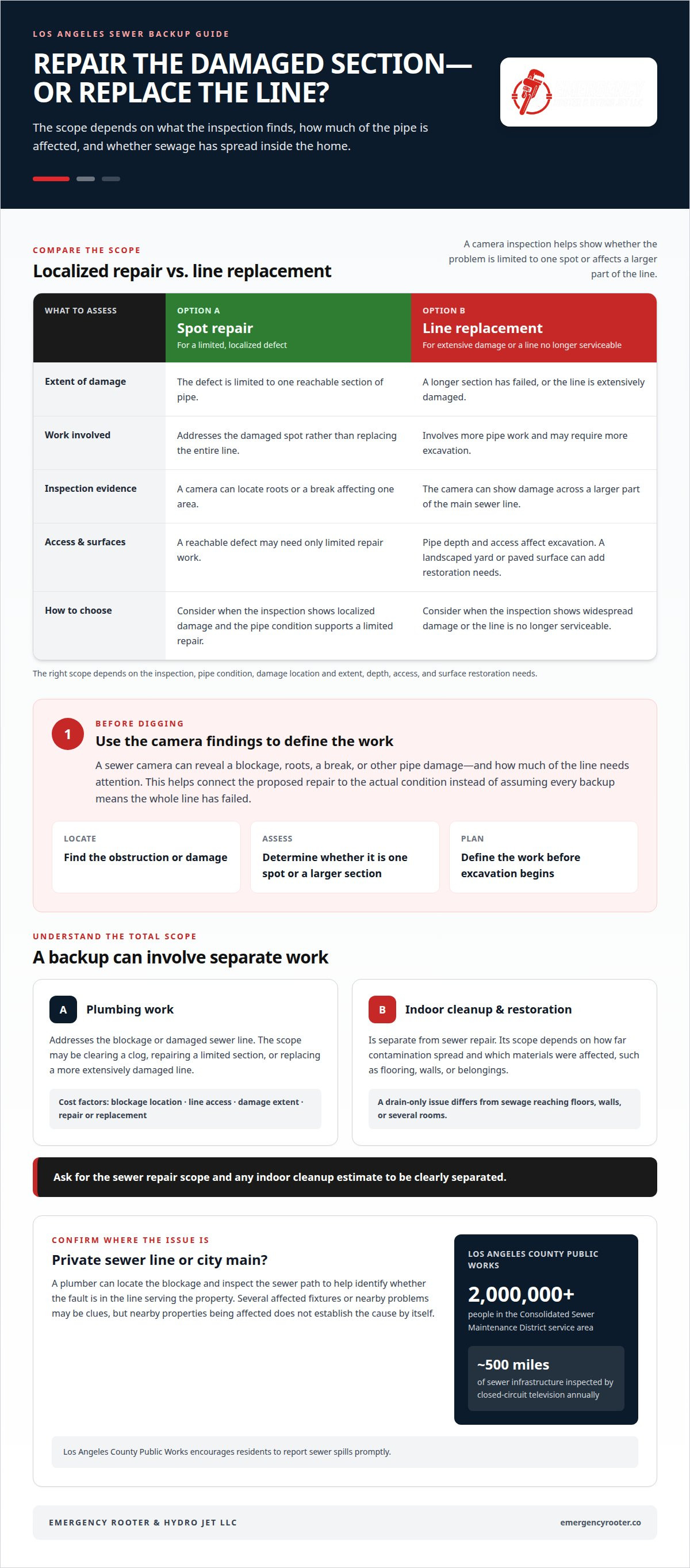
Repair suits localized damage; replacement may be needed when a longer section has failed. A sewer camera inspection, the pipe’s condition, and damage inside the home help define the scope.
Repair and Replacement Cost Factors
Repair and replacement costs depend on the damage’s location and extent, pipe depth, access, and surface restoration. A reachable defect may need only a limited repair, while widespread damage can require more excavation and pipe work.
A camera inspection can show whether roots or a break affect one spot or a larger part of the main sewer line. A spot repair addresses a limited section; replacement addresses a line that is extensively damaged or no longer serviceable. The work area matters, too: digging through a landscaped yard or paved surface creates additional restoration needs.
Plumbing work and cleanup are separate parts of a sewer backup. A plumber addresses the blockage or damaged sewer line; cleanup and restoration address sewage that entered the home. The cleanup scope depends on how far contamination spread and which materials were affected. A backup confined to a drain, for example, requires different restoration from sewage that reaches floors and walls.
Private Line and City Main Responsibility
A plumber distinguishes a private-line backup from a city sewer main problem by locating the blockage and inspecting the sewer path. This helps identify where the fault lies before repair work is planned.
A camera inspection can reveal whether the obstruction or break is in the line serving the property. The plumber can also note whether several fixtures are affected and whether the issue appears to extend beyond the private line. A city main problem may affect nearby properties, but that sign alone does not establish the cause. Los Angeles County Public Works encourages residents to report sewer spills promptly.
Los Angeles County Public Works says the Consolidated Sewer Maintenance District service area covers more than 2,000,000 people. Los Angeles County Public Works also performs closed-circuit television inspections of approximately 500 miles of sewer infrastructure annually.
Most standard homeowners insurance policies do not cover sewer backup damage unless additional coverage has been purchased. The policy’s sewer-backup terms determine applicable limits and exclusions, so coverage can vary between homes.
The City of Los Angeles offers two sewer lateral rebates to eligible property owners, subject to available annual funds. Applications go through MyLA311 and require an itemized contractor invoice, proof of payment, a recent DWP bill, the property’s APN, and other listed documents.
How Much Does it Cost to Fix a Sewer Backup?
The total depends on whether the plumber clears a blockage, repairs a damaged pipe, or identifies a larger sewer problem. Cleanup is separate if sewage enters the home. An assessment should distinguish plumbing work from restoration so the scope and cost factors are clear before work begins.
For plumbing work, pricing depends on the situation and is provided after a quote request. Key factors include the blockage location, access to the sewer line, extent of damage, and whether repair or replacement is needed. A tree root caught near an accessible connection calls for different work from a break beneath a paved area.
Sewage cleanup and restoration are separate from sewer repair. In Los Angeles, the amount of affected flooring, walls, and belongings shapes the restoration scope. A small affected area requires different work from sewage reaching several rooms.
After a backup, a professional should assess the plumbing, locate the blockage, and determine whether the line is damaged. If raw sewage has entered the home, stop using water and keep people and pets away from contaminated areas. The plumber can explain the plumbing work needed; cleanup requires a separate restoration assessment.
Clearing the immediate blockage does not always remove the cause. A camera inspection can reveal whether roots, buildup, or pipe damage remain. The findings help select a method that fits the pipe’s condition, rather than treating every backup as the same problem. Clearing a blockage, for example, differs from addressing a cracked sewer line.
Prevention starts with identifying recurring trouble spots. Slow drains, repeated backups, or several fixtures draining poorly can point to a developing main sewer line problem. A plumber can inspect the line, clear buildup, and recommend sewer repair if the inspection shows damage. Rooter Service can address a blockage, while Drain Cleaning targets buildup that restricts flow.
Professional maintenance can help identify changes before sewage backs up inside. A camera inspection lets the plumber see inside the line, while cleaning removes material that obstructs flow. The right method depends on the pipe’s condition and the cause. Hydro Jet Cleaning may suit some obstructions, but an inspection helps determine whether cleaning or repair is appropriate.
For a recurring blockage or an active backup, professional sewer backup response can help identify the plumbing problem and define the required work. Ask for a clear separation between sewer repair and any indoor cleanup estimate. That distinction makes it easier to understand what each part of the response addresses.
How Can a Camera Inspection Prevent Overpaying?
A sewer camera can show whether the line has a blockage, break, or damage requiring repair. It can also reveal how much of the line needs work before digging begins. This evidence helps tie the proposed repair to the actual condition instead of treating every backup as a full-line failure.
Warning signs include slow drains, standing water in showers, and gurgling toilets. When several fixtures show problems, a professional inspection can help locate a shared issue in the sewer line. If raw sewage has entered the home, keep people and pets away from affected areas because contaminated water can carry disease-causing organisms.
Camera inspection estimates vary by scope. These are general market estimates, not a quote for work at a specific property.
Inspection results help distinguish cleaning from repair. A blockage without pipe damage may need a different method from a visible break. Jetting can clear some obstructions, but it cannot repair a cracked or collapsed pipe. The camera view helps determine whether cleaning, a localized repair, or more extensive work matches the damage.
Documentation also matters after a sewer lateral repair. For the City of Los Angeles rebate application, applicants must provide a CCTV inspection video showing the property address at the start and the damage requiring repair. They must also submit a final CCTV inspection report describing the repaired damage. These records connect the original condition with the completed work.
The rebate process has specific permit and submission requirements. The final permit must have a City inspector’s signature dated no more than 60 days before the application is completed. Applicants submit through MyLA311, with an itemized contractor invoice, proof of full payment, a recent DWP bill, the property’s APN, and a signed release and waiver of liability.
Prevention starts with clear evidence, not guesswork. Los Angeles homeowners are advised to flush only toilet paper and human waste. Recurring slow drains or gurgling toilets warrant professional attention before another backup spreads into living areas. A camera inspection can help show whether the next step is cleaning, jetting, or sewer repair.
Common causes of sewer backups in Los Angeles
Tree roots, aging pipes, and blockages can all interrupt a home’s sewer flow. The cause matters: clearing an obstruction will not fix a cracked or collapsed line. A professional assessment should identify the source before repair work is chosen, especially when the same fixtures repeatedly back up.
Tree roots can enter a private sewer lateral through cracks or joints, then obstruct the pipe. In Los Angeles yards with mature trees, roots may spread toward underground moisture and find existing openings. As debris collects around growing roots, a partial restriction can become a blockage. A camera inspection can show whether roots are present and whether pipe damage also needs attention.
Older pipe materials can fail with age. Original clay or cast iron sewer laterals in pre-1980 Los Angeles homes may collapse, leading to severe backups. A collapsed section restricts flow differently from a small obstruction: clearing debris alone cannot restore the damaged pipe. The inspection should locate the affected section and establish whether the damage is limited or extensive.
Cracks and breaks can also allow soil or roots into a sewer line. Wet areas in a yard may signal a cracked or broken pipe, particularly when the damp patch follows the private lateral’s route. Standing water outside does not prove a sewer leak by itself, but it gives the professional a specific area to assess alongside the camera findings.
Some backups begin beyond a property’s private line. A city sewer main surcharge or mainline failure can send wastewater toward connected properties, while a private-line blockage may affect one home. The blockage location, inspection findings, and reports of nearby sewer spills help distinguish these possibilities. The cause determines which section of the system needs attention.
Household waste can increase the risk of blockages. Los Angeles homeowners are advised to flush only toilet paper and human waste. Wipes, including products labeled flushable, can contribute to sewer obstructions. A repeated backup after flushing wipes or other unsuitable material calls for a professional assessment, not an assumption that the pipe has collapsed.
Heavy rain can coincide with sewer surcharge or mainline problems, while roots and aging pipes remain property-level concerns. These causes can produce similar signs, such as slow drainage or wastewater returning through a fixture. The pattern matters: one affected drain suggests a different location from several fixtures backing up together. An inspection can help narrow down the cause before the repair plan is set.
For homeowners, the practical takeaway is to match the repair to the cause. Root intrusion may require clearing and attention to pipe damage; a collapsed lateral calls for repair planning rather than repeated clearing. A main sewer issue requires locating the fault beyond the property line. A clear assessment helps avoid unnecessary work and focus on the section actually affected.
How much does sewer pipe repair or replacement cost in Los Angeles
In Los Angeles, the cost depends on the pipe’s condition and the work needed to restore flow. A localized crack may call for a limited repair, while several damaged sections may make replacement more appropriate. The scope also depends on pipe depth, length, access, material, and the surface above it. A short repair beneath an accessible yard differs from work below a paved driveway.
Start with the inspection findings. A camera view can locate a break, root intrusion, or collapse and show how much of the line is affected. This evidence helps distinguish a spot repair from full replacement. If the pipe remains sound and the problem is limited to one area, a targeted repair may reduce the scope. Widespread damage means more of the sewer line needs attention.
Excavation and access can significantly shape the job. A buried line may require digging through soil, landscaping, concrete, or another hard surface. Each affected surface adds restoration work after the pipe is repaired. The depth and route also affect how the crew reaches the damaged section. At a Los Angeles property with a line beneath a driveway, surface restoration becomes part of the project scope.
The repair method matters, too. Traditional excavation exposes the damaged pipe, while trenchless methods can address some lines without opening a continuous trench. The right method depends on the pipe’s condition, route, and repair needs. The chosen approach should be explained in relation to the inspection findings. A cracked segment and a collapsed line present different repair conditions.
Indoor sewage cleanup is separate from sewer pipe work. If a backup affects flooring, walls, or belongings, restoration adds work beyond repairing the line. Ask for the plumbing and cleanup scopes to be shown separately. This makes it easier to see which work restores sewer flow and which addresses damage inside the home.
There is no single price for every Los Angeles sewer repair. Pricing depends on the situation and is provided after a quote request. Key factors include damage location, pipe length and depth, access, repair method, and restoration needs. An itemized scope should connect each proposed task to the inspection findings, so replacement is not treated as automatic when a localized repair is appropriate.
For a damaged or repeatedly blocked line, request a sewer line repair assessment from Emergency Rooter & Hydro Jet LLC. A clear assessment can identify whether the next step is a spot repair or broader replacement, and separate pipe work from any indoor restoration.
Emergency Rooter & Hydro Jet: Sewer Line Repair
Emergency Rooter & Hydro Jet LLC can help when a sewer backup points to a blockage or damaged line. Match the service to the problem: Rooter Service or Drain Cleaning for blockages, Hydro Jet Cleaning for suitable obstructions, and Sewer Line Repair for pipe damage. A recurring backup or several affected drains calls for professional attention, not repeated clearing without addressing the cause.
For a suspected pipe break, Sewer Line Repair addresses the damaged line rather than only restoring flow. For an obstruction, the appropriate cleaning method depends on what is blocking the drain and the pipe’s condition. Keeping these needs separate helps clarify the work required.
If you need help with the cost to fix sewer backup Los Angeles residents face, contact Emergency Rooter & Hydro Jet LLC.
Take the Next Step Toward a Clear Sewer Line
Understanding the cost to fix a sewer backup in Los Angeles starts with identifying what is happening inside the line. If a backup returns, several drains slow at once, or sewage appears indoors, arrange a professional assessment before the problem spreads. The right next step depends on whether the line needs clearing or repair.
Emergency Rooter & Hydro Jet LLC provides Rooter Service, Hydro Jet Cleaning, and Drain Cleaning for blockages and drain problems, along with Sewer Line Repair for damaged pipes. A professional can assess the issue and explain the work needed for your situation.
Take action while the cause can still be clearly assessed. Contact Emergency Rooter & Hydro Jet LLC to discuss the sewer problem and the next step. A clear plan can help you move forward with confidence.
Frequently Asked Questions
Can a Sewer Company Sell You Work You Don’t Need?
A proposed repair should address a visible problem, not rely on a recommendation alone. A sewer camera recording, written findings, and a clear description of the damaged area help explain why specific work is proposed. Evidence of a localized crack, for example, supports a different scope from damage across several sections. Before approving the work, ask how the recommendation relates to the inspection results.
Does a Smaller Dig Cost Less?
A smaller excavation means less ground to open and restore, which can reduce the work involved. But the size of the dig alone does not determine the total. Pipe depth, access, surface material, and the extent of damage also matter. A limited repair beneath soil differs from one beneath a paved driveway. If damage extends beyond the exposed area, a small opening may not address the whole problem.
How Can a Plumber Determine If Your Main Sewer Line Is Blocked?
A plumber looks for a pattern across fixtures, then checks the line to locate the obstruction. Toilets, tubs, and sinks draining poorly at the same time can point to a shared drain path rather than a single fixture. A camera inspection can reveal buildup, roots, or pipe damage inside the main sewer line. The findings help distinguish a main-line blockage from an isolated drain problem.
Is a Sewage Backup an Emergency?
Yes. Raw sewage inside a home needs prompt attention because contaminated water can carry disease-causing organisms. Stop using water in the home and keep children and pets away from affected rooms. Do not treat sewage as an ordinary drain spill. A professional can assess the plumbing issue, while contaminated materials may need separate cleanup and restoration. The longer affected areas remain untreated, the more surfaces may need attention.
What Is the Average Cost to Repair a Sewer Backup in Los Angeles?
The cost to fix a sewer backup in Los Angeles depends on whether the work involves clearing a blockage, repairing a pipe, or replacing a damaged section. Cleanup inside the home is a separate expense from plumbing work. Pricing depends on the situation and is provided after a quote request; key factors include damage extent, line access, pipe depth, and restoration needs.
What Factors Affect Sewer Backup Repair Costs, Such as Blockage Severity and Pipe Location?
Blockage severity affects how much work is needed to restore flow. Pipe location changes access: a line beneath landscaping is reached differently from one under concrete or a driveway. Length and depth also affect the repair scope. A short, accessible section with limited damage, for example, differs from a deep line that requires a longer repair and surface restoration.
How Much Does Sewer Line Cleaning or Hydro Jetting Cost in Los Angeles?
Hydro Jet Cleaning pricing depends on line length and access, so the required method and scope matter. It is suitable for some obstructions, but inspection helps determine whether cleaning fits the pipe’s condition. Emergency Rooter & Hydro Jet LLC offers a free phone estimate for hydro-jet work. A damaged pipe needs repair, not cleaning alone.
Are Permits Required for Sewer Line Repairs in Los Angeles, and What Do They Cost?
Permit requirements and charges depend on the repair location and scope, so no single fee applies to every sewer job. A limited repair and a larger excavation or replacement can involve different review requirements. Have the written project scope separate plumbing work, permit handling, inspection charges, and surface restoration. If applying for a City sewer lateral rebate, permit sign-off is part of the application requirements.


