
Heavy grease can return even after a drain is cleared. Commercial properties often schedule preventive hydro jetting in Santa Monica quarterly or semiannually; grease-heavy kitchens may need monthly service, while office buildings often need annual service. The right schedule depends on the pipe’s condition. High-pressure cleaning can clear buildup, but it cannot repair structural damage.
Recurring clogs, slow drains, or grease and sludge in a commercial line are signs to investigate further. This guide explains when commercial hydro jetting in Santa Monica is suitable, how pressurized water removes grease, roots, debris, and mineral buildup, and when another repair may be needed. You’ll also learn what affects the work and how Emergency Rooter & Hydro Jet LLC’s hydro jet cleaning and drain cleaning can help. We’ll cover signs of heavy buildup, pipe suitability, and the cleaning process.
Key Takeaways
- Use recurring slow drains and returning clogs as signs to investigate what is building up in the line.
- Consider pipe condition before high-pressure cleaning; jetting clears buildup but does not repair cracked or collapsed pipe.
- Grease, sludge, roots, debris, and mineral deposits can restrict flow, but each calls for attention to what is causing the blockage.
- Match preventive cleaning intervals to the property’s use and the kind of buildup affecting its drains.
- Learn what details shape the cleaning approach and when drain or sewer problems call for a different repair.
Heavy Grease or Buildup in a Santa Monica Drain Line?
Grease that returns after a drain is cleared can point to buildup along the pipe walls, not just a single blockage. In a commercial kitchen, fats and food residue can collect as wastewater cools, narrowing the passage and slowing flow. A camera inspection can show where buildup has formed and whether the pipe appears suitable for high-pressure cleaning. These findings help determine the service plan before work begins.
When requesting service, provide the property address, affected fixtures, business type, and symptoms. Mention whether several drains are slow, whether wastewater is backing up, and when the problem began. Recurring sink backups in a kitchen suggest a different pattern from a problem at one floor drain. These details help identify the line to inspect and the access point needed.
Appointment confirmation should establish the visit window, access arrangements, affected drain or sewer line, and the inspection planned. For a restaurant, access may involve a service area or floor drain near active kitchen operations. Clear arrangements reduce delays and help the technician focus on the reported blockage. Pricing depends on access, buildup, line condition, and whether camera inspection is needed; the price is provided after a quote request.
A camera inspection can distinguish grease buildup from a damaged pipe or another obstruction. The camera shows the inside of the line, helping locate buildup and guide the cleaning approach. If it reveals a crack, collapse, or other structural damage, hydro jetting can remove debris but cannot repair the pipe. Inspection findings help distinguish cleaning needs from repair needs.
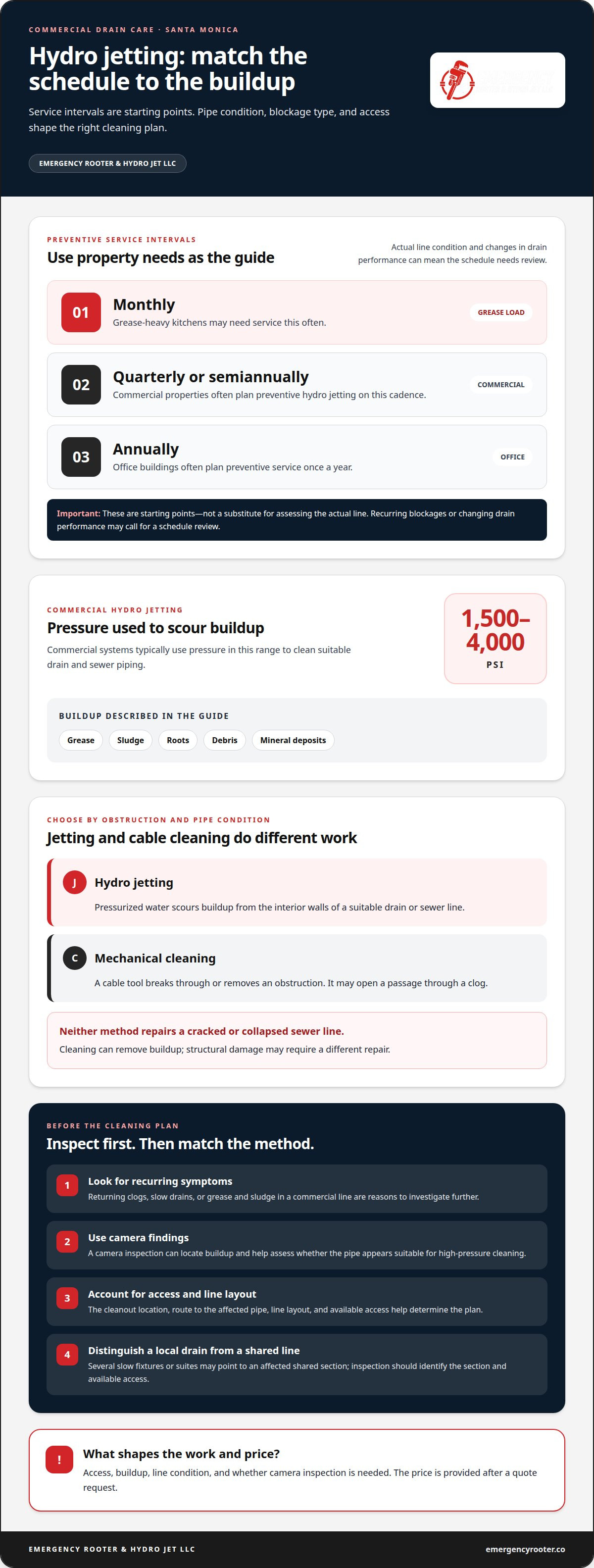
Preventive schedules depend on how a property uses its plumbing. Commercial properties often plan preventive hydro jetting quarterly or semiannually. Grease-heavy kitchens may need monthly service, while office buildings often need annual service. These intervals are starting points, not a substitute for assessing the actual line. Recurring blockages or changes in drain performance may mean the schedule needs review.
- Record which drains are affected and whether symptoms recur after clearing.
- Arrange access to the relevant line and confirm the camera inspection plan.
- Use inspection findings to distinguish removable buildup from pipe damage.
- Set preventive service around property use, especially kitchen grease loads.
For Santa Monica, minor plumbing repairs usually do not need permits, while major installations or repiping typically do. For commercial sewer or drain cleaning, the scope matters: cleaning differs from a project that includes major installation or repiping.
A sound way to choose a licensed and insured hydro jetting contractor is to require current license and insurance documentation, plus a clear explanation of camera findings, the planned cleaning, and any repair limits. Commercial plumbing services should identify whether the immediate task is to remove buildup or address damaged pipe. That distinction keeps a grease problem from being mistaken for a repair the cleaning process cannot perform.
Pipe condition and suitability for high-pressure cleaning
High-pressure water can clear buildup from suitable drain and sewer piping, but pipe condition comes first. The cleaning method, access point, and line layout all help determine the plan.
Hydro Jetting Versus Mechanical Cleaning
Hydro jetting sends pressure water through a drain or sewer line to scour buildup from the interior walls. Commercial systems typically use pressure ranging from 1,500 to 4,000 PSI. Mechanical drain cleaning uses a cable tool to break through or remove an obstruction. The choice depends on the blockage, how much residue coats the pipe, and the pipe’s condition. A cable may open a passage through a clog, while jetting targets material along the line walls. Neither method repairs a cracked or collapsed sewer line.
Floor and utility drains need the same condition-based assessment as kitchen drains. A floor drain near a wash area may collect grit and residue, while a utility drain may carry lint or sediment. Shared lines require coordination: a blockage affecting several suites or fixtures may be beyond one tenant’s connection. Inspection should identify the affected section and available access before cleaning begins. This helps distinguish a local drain problem from buildup in a shared sewer line.
Cleanout Access and Equipment Routing
A cleanout provides an entry point for drain cleaning equipment. Its location, opening, and route to the affected pipe help determine how equipment can reach the blockage. At a commercial property, the route may pass through a service area, stockroom, or exterior access point. The technician assesses these conditions before work, including whether the line layout lets the cleaning head reach the problem area.
Before service, identify the affected fixtures, note any shared-line concerns, and arrange access to the relevant cleanout. The technician assesses pipe condition and inspection findings before choosing a cleaning method. After cleaning, the technician can review the work area and check whether water flows through the affected drain. If camera inspection reveals structural damage, cleaning alone will not fix it; sewer line repair may be needed.
For a commercial drain that keeps slowing, commercial hydro jet cleaning can address buildup when the pipe is suitable. The key decision is not pressure alone. It’s matching the cleaning method to the obstruction, line condition, and access available.
Grease, debris, tree roots, and mineral deposits
A slow drain can have several causes, each leaving a different pattern inside the pipe. At a Santa Monica restaurant, grease may coat a kitchen line; at a nearby office, sediment or scale may narrow a utility drain. Hydro jetting uses high-pressure water to wash buildup from suitable drain and sewer pipe walls. Inspection findings help identify what is restricting flow and whether cleaning suits the pipe’s condition.
Grease often enters kitchen drains with wastewater, then sticks to pipe walls as it cools. More residue catches food scraps and sludge, gradually narrowing the passage. A jetting pass can dislodge this layer and carry loosened material through the line. The problem can return if grease continues entering the drain, so recurring kitchen blockages call for attention to both the line and the source of buildup.
Debris behaves differently. Food scraps, grit, and other loose material can collect at bends or in low-flow sections, while mineral deposits can form hard scale along the pipe interior. Jetting can flush loose debris and help scour deposits from pipe walls. Results depend on the material and pipe condition. A camera inspection can show whether the restriction is loose material, wall buildup, or related to damage.
Tree roots can enter drain or sewer lines through openings or damaged sections. Root growth can catch paper and other debris, creating a blockage that returns after clearing. Hydro jetting can break up and flush root material from the line, but it cannot close the opening that let roots in. Recurring intrusion is a reason to assess the pipe itself; a damaged section may need repair rather than repeated cleaning alone.
For grease, sludge, scale, or root fragments, cleaning should address the full affected section, not just make a narrow path through the clog. A technician identifies the line, reviews camera findings, and chooses a method suited to its condition. After jetting, a flow check helps show whether water can pass through the affected drain. If the same blockage returns, the underlying cause may remain.
Snaking can open a path through some obstructions, while water jetting targets buildup along pipe walls. The right choice depends on the blockage and the line, not simply the type of business. Across Los Angeles, commercial drains may carry kitchen grease, wash-area sediment, or root debris from a sewer connection. Matching the cleaning method to the material helps address the restriction without confusing cleaning with structural repair.
Recurring grease, sludge, and drain or sewer buildup
A drain that slows again after clearing needs more than another temporary opening. The pattern, affected fixtures, and line location help determine the next step.
Heavy Grease and Sludge Buildup
In a restaurant kitchen, grease can coat the inside of a drain and trap food particles. Over time, the layer narrows the passage and catches more sludge. A sink that drains slowly during busy periods may point to buildup along the kitchen line rather than one loose obstruction. Camera inspection can show where residue collects and how much of the pipe is affected.
Hydro Jetting Compared With Drain Snaking
Drain snaking uses a cable to break through or pull back an obstruction. It can restore flow through a localized blockage, but may leave grease coating the pipe walls. Hydro jetting directs high-pressure water through suitable piping to scour buildup and carry debris away. The choice depends on the material causing the restriction, the extent of buildup, and pipe condition. Neither method repairs damaged sewer lines.
Recurring Drain and Sewer Restrictions
A restriction that returns at the same fixture may be in its branch line. If several fixtures slow or back up together, the problem may be farther along a shared drain or sewer line. A technician can compare the affected fixtures, inspect the relevant line, and locate the recurring obstruction. Root intrusion, persistent grease, and structural pipe damage each call for a different response.
Signs of Clogged or Blocked Drains
Watch for a floor drain that holds water, a slow-draining sink, or wastewater backing up at another fixture. In a commercial kitchen, several affected sinks may point to a shared line restriction. Gurgling or repeated blockages also provide useful clues. Record which fixtures are affected and whether the symptoms occur together.
At a commercial property, connect the symptoms with the line layout. The technician can identify whether one drain, several connected fixtures, or the sewer line is affected. Camera inspection helps locate buildup and distinguish it from a damaged section. This matters because water jetting can clear deposits but cannot restore cracked or collapsed piping.
Residential drains can show similar warning signs, but commercial kitchens and shared buildings have more fixtures and possible line connections. During an urgent backup, note whether water is rising at one drain or several locations. That distinction helps direct inspection toward a local blockage or a wider restriction. Repeated clearing without locating the cause can leave the problem unresolved.
Commercial hydro jetting in Santa Monica
For a Santa Monica business, commercial hydro jetting uses controlled, high-pressure water to clear suitable drain and sewer lines. It can remove grease, sludge, roots, debris, and mineral buildup, but cannot repair damaged piping.
The process is straightforward: a technician identifies the affected line and access point, assesses pipe condition, and uses camera inspection when needed. Equipment then directs water through the line to loosen and flush buildup. After cleaning, the technician checks flow and reviews any remaining restriction or visible damage.
The key question is whether the pipe can handle high-pressure cleaning. A camera inspection can locate buildup and reveal signs of a crack, collapse, or other structural problem. If the pipe is damaged, jetting may clear material but will not restore the pipe. In that case, repair is the appropriate next step, rather than treating cleaning as a fix.
Commercial properties have different access and usage demands. A restaurant may have grease entering a kitchen drain, while an office may have a restriction affecting shared plumbing. The technician considers which fixtures are affected, whether multiple tenants share the line, and where the cleanout is located. These details guide equipment access and help focus the work on the relevant pipe section.
Hydro jetting is an option, not the automatic choice for every blockage. A mechanical cable can break through a localized obstruction; water jetting can scour material from pipe walls. The blockage, line condition, and inspection findings determine which method fits. A licensed and insured contractor should explain the findings and proposed work clearly before cleaning begins.
Santa Monica businesses should treat recurring restrictions as a reason to investigate beyond the latest clog. If a sink clears but slows again, or several connected fixtures back up, the blockage may be farther along the line. Camera findings can help distinguish persistent buildup from root intrusion or pipe damage. This matters because repeated cleaning will not close an opening that lets roots enter.
Before the visit, identify the affected fixtures, report when symptoms occur, and arrange access to the relevant cleanout. At a restaurant, note whether slow drainage appears during kitchen use; in a shared building, identify other affected areas. After the work, observe whether those same drains flow normally and report any returning symptoms. These details help connect the service to the actual line problem.
Clear findings make the method easier to judge. Request help with a commercial drain assessment when a Santa Monica blockage keeps returning or affects several fixtures.
Emergency Rooter & Hydro Jet
Emergency Rooter & Hydro Jet helps Santa Monica businesses address recurring drain restrictions, grease buildup, and urgent plumbing problems. The team provides drain cleaning, rooter service, hydro jet cleaning, and emergency plumbing based on the issue affecting the property. When several fixtures back up or a commercial kitchen drain keeps slowing, an assessment can help determine whether the line needs cleaning or another response.
Hydro jetting suits buildup in pipes that can handle high-pressure cleaning. It will not repair cracked or collapsed sewer lines, so pipe condition matters. If a blockage returns, share which drains are affected and how the symptoms change. This helps direct attention to the right line and next step.
Contact Emergency Rooter & Hydro Jet to discuss a commercial drain or sewer concern.
Make the Next Drain Decision Clear
Recurring trouble can disrupt kitchen routines, tenant access, and daily operations. Use the next service visit to move beyond a temporary opening: identify the affected line, clarify what inspection shows, and determine whether cleaning or repair addresses the actual problem. For commercial hydro jetting in Santa Monica, pipe condition should guide the decision, not pressure to repeat a method that has not resolved the restriction.
Emergency Rooter & Hydro Jet LLC offers Rooter Service, Hydro Jet Cleaning, and Drain Cleaning. The right next step depends on the obstruction and the condition of the drain or sewer line. Share which fixtures are affected and whether the problem has returned; those details help focus the conversation on your property’s needs.
Contact Emergency Rooter & Hydro Jet LLC to discuss a recurring commercial drain issue and a practical path forward. A clear assessment can help you make the next decision with greater confidence.
Frequently Asked Questions
Is hydro jetting safe for pipes?
Hydro jetting is safe for most residential and commercial pipes, but pipe condition must guide its use. A sound line can be cleaned with high-pressure water; cracked, collapsed, or structurally damaged piping needs a different response. For example, an older sewer line with recurring root intrusion should be assessed before cleaning. Hydro jetting removes buildup, but does not repair damaged pipe or close openings that let roots enter.
What commercial hydro jetting services are available in Santa Monica, CA?
Emergency Rooter & Hydro Jet LLC provides hydro jet cleaning, drain cleaning, rooter service, and emergency plumbing for commercial properties in Santa Monica. Its technicians are licensed and insured, and the company also serves Beverly Hills and Los Angeles. For a restaurant with a recurring kitchen drain blockage, an assessment helps identify the affected line and suitable work. Call now at (310) 889-7979 to discuss service.
How much does commercial hydro jetting cost in Santa Monica?
The price depends on the job and is provided after a quote request. Line length, access to the pipe, the type and extent of the obstruction, and the condition of the line affect the work involved. A commercial kitchen drain with difficult cleanout access may require a different plan from a straightforward line. Call now at (310) 889-7979 to request a free phone estimate for hydro jet service.
What factors affect commercial hydro jetting prices?
Line length and access are key factors in hydro jet cleaning pricing, along with the obstruction and pipe condition. A free phone estimate is available, and a technician may assess whether camera inspection is appropriate before selecting the cleaning method. For example, a blockage affecting a shared sewer line may require locating the affected section, while a reachable kitchen drain may have simpler access. Request a free phone estimate based on the line length and access.
What types of commercial drains and sewer lines can be hydro jetted?
Hydro jetting may be used on suitable commercial drain and sewer piping, including kitchen lines, floor drains, and shared sewer lines. The material carried through the drain and the pipe’s condition matter. A restaurant kitchen line with grease buildup presents a different cleaning need from an office floor drain carrying sediment. Inspection helps determine whether the line is suitable and where equipment can reach the restriction.
How does hydro jetting compare with mechanical drain cleaning for commercial properties?
Mechanical drain cleaning uses a rotating cable to cut through or loosen a blockage. Hydro jetting uses water to clean buildup from suitable pipe walls. A cable may suit a localized obstruction, while jetting addresses residue coating more of the line. For example, a restaurant drain with recurring grease may need a different approach from a floor drain blocked by one object. Pipe condition and the obstruction guide the choice.
What are the risks of hydro jetting old or damaged pipes?
High-pressure cleaning is not suitable for every old or damaged line. A cracked, collapsed, or weakened pipe may need repair rather than jetting, because cleaning cannot restore its structure. If camera inspection reveals damage or recurring root entry, the next step is to assess the line and its repair needs. Choosing a method without considering pipe condition risks clearing the blockage while leaving the underlying pipe problem unresolved.
How often should commercial properties schedule hydro jetting?
Preventive schedules depend on property use and buildup. Grease-heavy kitchens may need monthly service; commercial properties often schedule quarterly or semiannual cleaning, while office buildings often need annual service. These intervals are starting points, not a substitute for monitoring drain performance. A restaurant experiencing grease-related slowdowns before its planned visit may need its maintenance schedule reviewed against inspection findings and operating demands.


