

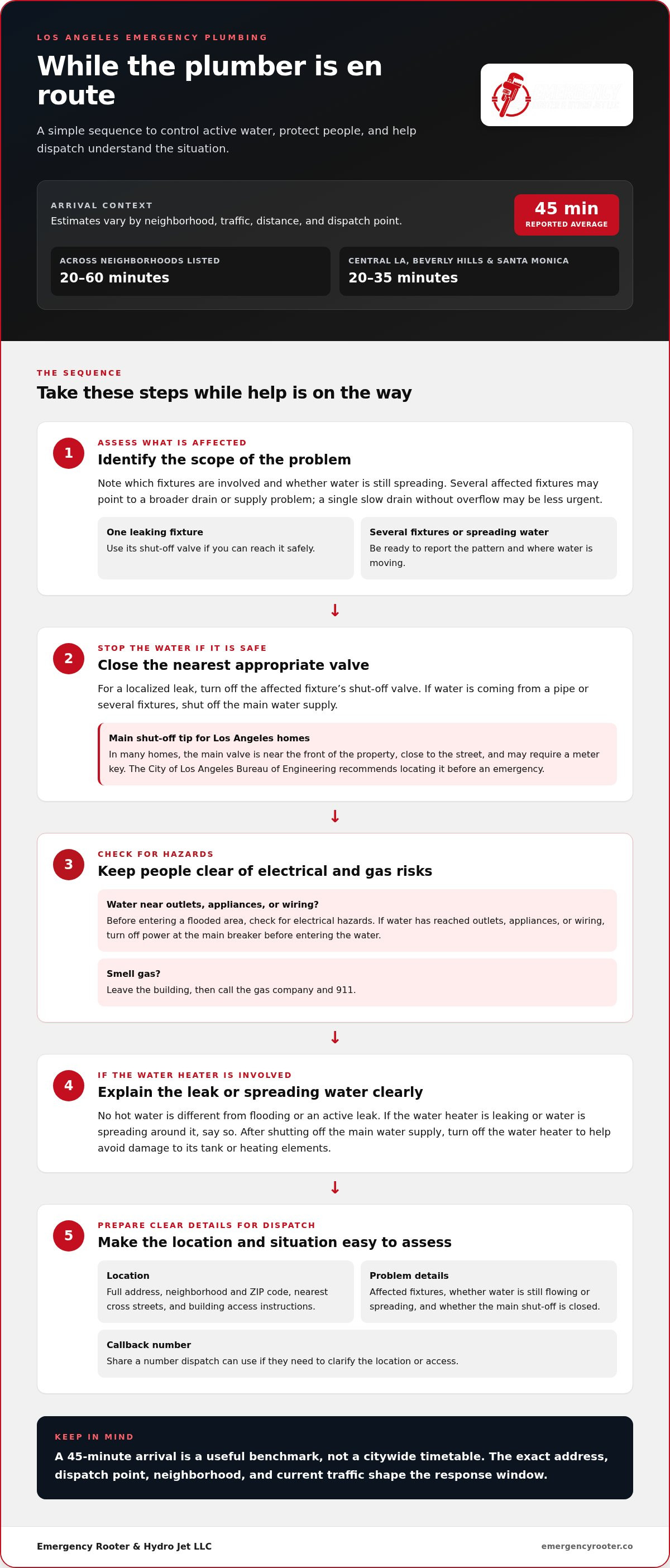
A 45-minute arrival is a useful benchmark, not a citywide timetable. Emergency plumber arrival estimates in Los Angeles range from 20 to 60 minutes across the neighborhoods listed, depending on location and dispatch point. A plumber with a 45-minute response time in Los Angeles may reach some areas sooner, while distance and traffic can add time elsewhere.
A leak spreading across the floor or a backed-up drain can’t wait for guesswork. You need to know what to do now, what affects the arrival window, and how emergency pricing is determined. The first steps you take can help limit damage while help is on the way.
This guide explains what affects a plumber’s response time in Los Angeles, how to shut off water and avoid hazards while you wait, which plumbing problems need urgent attention, and how to prepare for service. You’ll also learn when emergency plumbing, drain cleaning, rooter service, or sewer line repair may be the right next step.
Key Takeaways
- Arrival time depends on your neighborhood, traffic, and where the plumber is dispatched from, so use local coverage to judge the response window.
- Before help arrives, shut off the water if it’s safe and keep clear of electrical hazards.
- Burst pipes and sewer backups can need urgent attention; a contained, non-spreading issue may be suitable for scheduled repair.
- Emergency plumbing costs depend on the problem, the work required, and when service is needed. Learn what to look for in a written estimate.
- Understand when drain cleaning, rooter service, or hydro jet cleaning may address a blockage.
How Fast Can an Emergency Plumber Reach You in Los Angeles?
Emergency arrival estimates vary by neighborhood, traffic, distance, and dispatch location. Emergency Rooter & Hydro Jet LLC reports an average arrival time of 45 minutes, while neighborhood estimates show how travel conditions affect the window within our service areas.
Neighborhood Arrival Estimates
Emergency plumber arrival estimates from Emergency Rooter & Hydro Jet LLC are 20 to 35 minutes in central Los Angeles, Beverly Hills, and Santa Monica. Neighborhood proximity, local dispatch points, and current traffic conditions shape the route to your specific location within our primary service zones.
Plumbers Offering 45-Minute Response
Which Los Angeles plumbers offer a 45-minute response time? Emergency Rooter & Hydro Jet LLC reports an average arrival time of 45 minutes. A plumber with a 45-minute response time in Los Angeles may be a useful option when a leak or backup needs prompt attention in Beverly Hills, Los Angeles, and Santa Monica.
Which neighborhoods and ZIP codes are covered by 45-minute plumbing response services? Estimates that include 45 minutes cover our core service territory across Los Angeles, Beverly Hills, and Santa Monica. These neighborhood estimates don’t establish ZIP-code boundaries; the exact address and dispatch point shape the fastest route.
For a burst pipe, shut off the main water supply if it’s safe. The City of Los Angeles Bureau of Engineering recommends locating the main shut-off valve before an emergency. In many Los Angeles homes, it’s near the front of the property, close to the street, and may require a meter key. Stopping the water at the source can limit damage while you wait for Emergency Rooter & Hydro Jet LLC.
A slab leak may show up as unexplained damp flooring or a sudden drop in water pressure. A sewer backup affecting multiple drains needs urgent attention because wastewater can enter living areas. A single slow drain without overflow may be less urgent. When requesting help from Emergency Rooter & Hydro Jet LLC, describe the affected fixtures and whether water is still spreading.
No hot water is different from flooding or an active leak. If a water heater is leaking or water is spreading around it, explain that clearly. After shutting off the main water supply, turn off the water heater to help avoid damage to its tank or heating elements.
Before entering a flooded area, check whether water has reached outlets, appliances, or wiring. If it has, turn off power at the main breaker before entering the water. If you smell gas, leave the building, then call the gas company and 911. A burst pipe at 2 AM is still an emergency; clear details help Emergency Rooter & Hydro Jet LLC dispatch assess the call.
Why local service coverage matters for response time in Los Angeles
Los Angeles traffic can stretch a plumbing call across neighborhoods, even when the map distance looks short. A company based 45 minutes away is not an emergency plumber for a Los Angeles customer if its dispatch point adds that travel before the route begins. Local coverage matters because it affects where a technician starts, which roads they use, and whether they can reach the address during business hours or a later call window.
Los Angeles County includes communities spread across a large area. An address in ZIP code 90012 is in central Los Angeles, while Pasadena, Arcadia, and Santa Clarita are separate destinations. City names alone may not give dispatch enough detail. Share the full address, nearest cross streets, building access instructions, and a callback number. Those details help locate the property and avoid delays caused by unclear directions or gated entry.
Some problems need immediate attention in any neighborhood. A burst supply line can keep flooding a room. An overflowing toilet, a sewer backup affecting several fixtures, or active flooding can damage floors and belongings. Shut off the water if safe, then move people away from wet electrical equipment. Describe which fixtures are affected and whether water is still flowing. These details help dispatch understand the problem and the access needed.
- One leaking fixture: Close its shut-off valve if you can reach it safely.
- Several fixtures affected: Report the pattern, which can point to a broader drain or supply problem.
- Water spreading: State where it is moving and whether the main shut-off is closed.
Licensing, bonding, and insurance are separate from geographic coverage and arrival time. They don’t show where a technician is dispatched from or how quickly that person can reach a specific Los Angeles address. Consider those credentials separately from the practical response details: the exact service area, dispatch location, and route to your home. A claimed fast response is useful only if the address falls within the company’s working area.
Before arranging service, give the dispatcher your neighborhood and ZIP code, then explain whether the issue involves a leak, backups, or toilets. If flooding is active, say so clearly and mention whether you’ve shut off the water. For a local response to an urgent plumbing problem, review emergency plumbing service as a next step.
Steps to take before the plumber arrives
While waiting, focus on controlling active water, protecting people, and making the affected area easier to assess. In Los Angeles, knowing where the main water shut-off is can save critical minutes during a pressurized leak.
- Stop the water if it’s safe. Turn off the affected fixture’s shut-off valve for a localized leak. If water is coming from a pipe or several fixtures, shut off the main water supply. In most Los Angeles homes, the main valve is near the front of the property, close to the street. It may require a meter key. The City of Los Angeles Bureau of Engineering recommends locating this valve before an emergency.
- Stay out of electrically dangerous water. If flooding has reached outlets, appliances, or wiring, don’t enter the water. Turn off power at the main breaker before entering the flooded area. If you can’t reach the breaker without crossing water, keep clear and wait for emergency assistance. Move people and pets away from the affected room.
- Handle a gas smell first. Leave the building if you smell gas. Call the gas company and 911 before calling a plumber. Don’t operate switches or remain inside to investigate the source. Give responders the property address and explain where the odor is strongest.
- Protect the water heater. After shutting off the main water supply, turn off the water heater to help avoid overheating or damage to the tank or heating elements. For a gas water heater, set the thermostat to pilot. For an electric unit, switch off its dedicated breaker. Don’t touch wet electrical equipment.
- Limit damage and record what changed. Move dry belongings away from the leak, but don’t lift heavy items through standing water. Use towels or a container to catch a small, contained drip. Note which fixture leaked, when the water started, and whether shutting off the main stopped it. These details help explain the problem when the plumber arrives.
The first fifteen minutes can affect whether a plumbing emergency remains a straightforward repair or leads to extensive water damage. Focus on safe shut-off steps, not dismantling pipes or forcing a stuck valve. If the valve won’t turn, stop. Tell the plumber where it is and what happened when you tried.
Keep the route to the affected fixture clear while you wait. Secure pets, unlock the entry if safe, and have someone guide the plumber to the leak or backup. If the situation changes, such as water restarting or spreading into another room, update dispatch with that specific detail.
Written flat-rate estimates and after-hours pricing
An emergency call can involve more than the visible leak. A written estimate should identify the diagnosed problem, proposed repair, work included, and any separate dispatch or after-hours charge. For sewer backups, the scope may change once the blockage is located. A flat-rate estimate is useful only when it clearly describes the work covered, not just a single total.
The price depends on the case and is provided after a quote request; factors include the problem, access, repair method, parts, and timing. A leaking supply line with clear access differs from a hidden pipe leak. A sewer backup may require locating the blockage before the repair approach is clear. Those details shape the estimate.
Before approving work, read the estimate line by line. Look for:
- Diagnosis: What failed, and where was the problem found?
- Scope: Which repair steps and materials are included?
- Dispatch: Is an emergency call or visit charge listed separately?
- Timing: Does the estimate identify an after-hours or holiday charge?
- Changes: How will added work be described and priced before it proceeds?
After-hours pricing can differ from standard business-hour rates because dispatch and work happen outside the usual schedule. Nights, weekends, and holidays may affect the charge. The estimate should distinguish the emergency response from the repair itself. That makes it easier to see whether the total includes arrival, diagnosis, labor, equipment, and parts, or only some of those items.
A response-time estimate is not a repair quote. Knowing when help may arrive doesn’t establish the job’s scope or price. A visible leak may need a direct repair, while water behind a wall may require more investigation. Sewer line repair also depends on the location and condition of the affected section.
If the technician finds a different problem than expected, pause before authorizing extra work. Review the revised scope and total first. A clear written change helps prevent confusion about added labor, materials, or equipment. Keep a copy of the initial estimate and any update, especially for an emergency call involving active water damage.
Use the estimate to compare the proposed work with the symptom you reported. A toilet backup, a burst pipe, and a water heater leak require different steps. The written breakdown should connect the diagnosis to the repair, state any after-hours charge, and show the amount due for the described work. Read it before work begins, then keep it with the repair record.
Distinguishing urgent problems from repairs that can be scheduled
Judge urgency by active damage, safety risks, and whether essential plumbing still works. A burst pipe spraying water needs faster attention than a slow drip contained beneath a sink. The key distinction is whether the problem is spreading, creating a hazard, or affecting several fixtures.
Call for emergency plumbing when water is flowing uncontrollably, flooding is spreading, or sewage is backing up into the home. A sewer backup affecting multiple drains may point to a shared blockage, not one isolated fixture. A leak near outlets or wiring also creates a serious hazard. Keep clear of standing water near electricity, and report the danger when requesting help.
- Act immediately: A burst pipe, active flooding, or wastewater entering living areas.
- Arrange prompt assessment: A leak that continues after you close the fixture valve, or water appearing in a new area.
- Schedule a repair: A slow drain with no backup, or a drip that has stopped and remains contained.
- Separate the symptoms: No hot water alone differs from a leaking water heater or water spreading around the unit.
Weekend timing doesn’t change the damage pattern. A toilet overflowing on a weekend can still need immediate attention, while a toilet that flushes slowly without overflowing may be manageable until a scheduled repair. Don’t keep flushing to test it. Note whether other drains are affected, and stop using fixtures connected to the backup.
Notice what changes after you shut off the affected fixture or main water supply. If the leak stops and the area stays dry, the immediate risk may be lower. If water keeps appearing, spreads across the floor, or returns when another fixture runs, explain that pattern when requesting emergency plumbing. Those details help distinguish a contained fault from an active emergency.
A problem that needs professional diagnosis doesn’t always require emergency service. A single slow drain, a loose handle, or a faucet that drips only when used can often be scheduled if there’s no flooding or sanitation problem. A licensed plumber can assess the repair and explain the work needed. Don’t remove fittings or open a wall to investigate; that can worsen damage or hide the original symptom.
Describe the issue plainly: what is leaking, whether water is still moving, which fixtures are affected, and whether you shut anything off. For an active leak or sewer backup, request emergency plumbing help and give the dispatcher those details. For a contained drip or slow drain, explain that it’s stable and arrange a repair suited to the problem.
Emergency Rooter & Hydro Jet: Rooter Service
Emergency Rooter & Hydro Jet provides Rooter Service for stubborn drain and sewer blockages. For a slow or clogged drain, Drain Cleaning can address the problem; Hydro Jet Cleaning can clear buildup from pipe walls. Rooter Service requires an accessible cleanout. If wastewater backs up or you suspect a sewer line problem, prompt assessment can help identify the issue and the next repair step.
Describe what’s happening: which drains are affected, whether water is backing up, and whether the problem returns after clearing. That information helps match the call to the right plumbing service. Emergency Plumbing is available for active problems that can’t wait.
Contact Emergency Rooter & Hydro Jet to discuss the plumbing issue and next steps.
Take the Next Step Toward a Clear Repair Plan
Once you’ve controlled immediate risks, describe the problem clearly and choose a service that fits. A drain blockage, recurring backup, and sewer-line issue call for different work. Emergency Rooter & Hydro Jet LLC provides Rooter Service, Hydro Jet Cleaning, and Drain Cleaning for drain problems. Rooter Service requires an accessible cleanout. Sharing which fixtures are affected and what you’ve already tried helps start the conversation with useful details.
If you’re looking for a plumber with a 45-minute response time in Los Angeles, focus on the issue, your location, and what needs attention now. Clear information helps direct the call toward the right plumbing work without confusion.
Contact Emergency Rooter & Hydro Jet LLC to discuss your plumbing problem and the next step. You can move forward with a clear plan.
Frequently Asked Questions
Ready to Call a Plumber You Can Actually Trust?
Look for clear service information, straightforward pricing, and credentials you can identify. Emergency Rooter & Hydro Jet LLC states that its technicians are licensed and insured, and lists California license number 574013. Its service information covers plumbing work in Beverly Hills, Los Angeles, and Santa Monica. Before a visit, describe the problem and affected fixtures clearly so the call can focus on the repair you need.
Do Los Angeles plumbers guarantee arrival within 45 minutes or provide an estimate?
Arrival terms differ by provider. Emergency Rooter & Hydro Jet LLC describes its 45-minute response time as a guaranteed average, not a promise that every individual arrival takes exactly 45 minutes. An estimate is different: it describes expected work or cost, not travel time. Keep those details separate when planning. If your access is difficult, such as a locked gate or rear entrance, include instructions with your address.
What is the typical emergency plumber response time in Los Angeles?
There isn’t one arrival window for every Los Angeles address. Neighborhood, dispatch location, traffic, and the exact destination affect travel. If you’re searching for a plumber with a 45-minute response time in Los Angeles, treat that figure as a provider’s stated average, not a citywide standard. Give the dispatcher your neighborhood and cross streets so they can assess the route to your property.
How much do Los Angeles plumbers charge for emergency or 45-minute service?
Emergency plumbing pricing depends on the repair, access, severity, and equipment required, not the response-time estimate. Emergency Rooter & Hydro Jet LLC provides upfront pricing before work begins, with no hidden fees. A burst pipe repair and a sewer-line problem involve different work, so the proposed service and price can differ.
Are there after-hours, weekend, or holiday fees for emergency plumbers in Los Angeles?
After-hours charges can depend on the provider’s pricing terms and the work required. Emergency Rooter & Hydro Jet LLC states that it answers calls around the clock, including holidays, and provides upfront pricing before work begins. When arranging a visit, distinguish the dispatch charge from repair work and materials in the written estimate. That breakdown helps clarify what you’re approving, whether the call comes during business hours or a holiday.
Which plumbing emergencies qualify for rapid response in Los Angeles?
Active flooding, a burst pipe, sewage entering the home, or a leak creating an electrical hazard needs urgent attention. A slow drain without overflow is different from several fixtures backing up at once. Describe what’s happening now, whether water is still moving, and which fixtures are affected. For recurring drain or sewer backups, Rooter Service, Drain Cleaning, or Sewer Line Repair may fit the issue. Rooter Service requires an accessible cleanout.
How can I verify a Los Angeles plumber's license, insurance, and reviews?
Check the business’s stated credentials and compare the license name and number with the company handling your work. Emergency Rooter & Hydro Jet LLC identifies itself as licensed and insured and lists California license number 574013. Read reviews for specific details, such as the problem addressed, communication, and whether the described work matches your needs. Look for consistent descriptions rather than relying on a single broad claim.
What should I do while waiting for an emergency plumber in Los Angeles?
Keep people and pets away from the affected area, and leave a clear route to the damaged fixture. If safe, take photos of the leak or backup and note when it started. Don’t run nearby fixtures to test a suspected sewer blockage, since added water may worsen backups. Tell dispatch if conditions change, such as water spreading or another drain beginning to back up.


