

The stronger drain-clearing method isn’t always the right one. In the hydro jetting vs snaking decision, the blockage and the condition of your pipes matter more than pressure alone. If a clog keeps returning, temporary relief may not be enough. But high-pressure water isn’t suitable for every pipe, especially if it’s damaged or corroded.
It’s reasonable to want a fix that clears the drain without creating a bigger problem. Snaking can break through an isolated clog and restore flow. Hydro jetting uses pressurized water to wash buildup from pipe walls, which can help with stubborn grease, sludge, or recurring blockages. The right choice depends on what’s causing the clog and whether the pipe can handle the method.
This guide explains how each approach works, what it can clear, and when it may make sense for a home or business drain. You’ll also learn why an inspection matters before hydro jetting, particularly when pipe condition is uncertain. By the end, you’ll have a clearer next step for a stubborn or recurring drain problem in Beverly Hills, Los Angeles, Santa Monica, or nearby communities.
Key Takeaways
- In the hydro jetting vs snaking comparison, the right choice depends on the clog, how often it returns, and the pipe’s condition.
- Snaking may clear an isolated obstruction and restore flow, but residue can remain on the pipe walls.
- Repeated backups or several affected drains can point to a wider problem that needs professional assessment.
- Before choosing a clearing method, consider which fixture is affected and whether other drains are backing up too.
- Learn what to expect as a plumber assesses the line, selects a method, clears the blockage, and checks drainage.
Hydro Jetting vs. Snaking: What Each Drain-Clearing Method Does
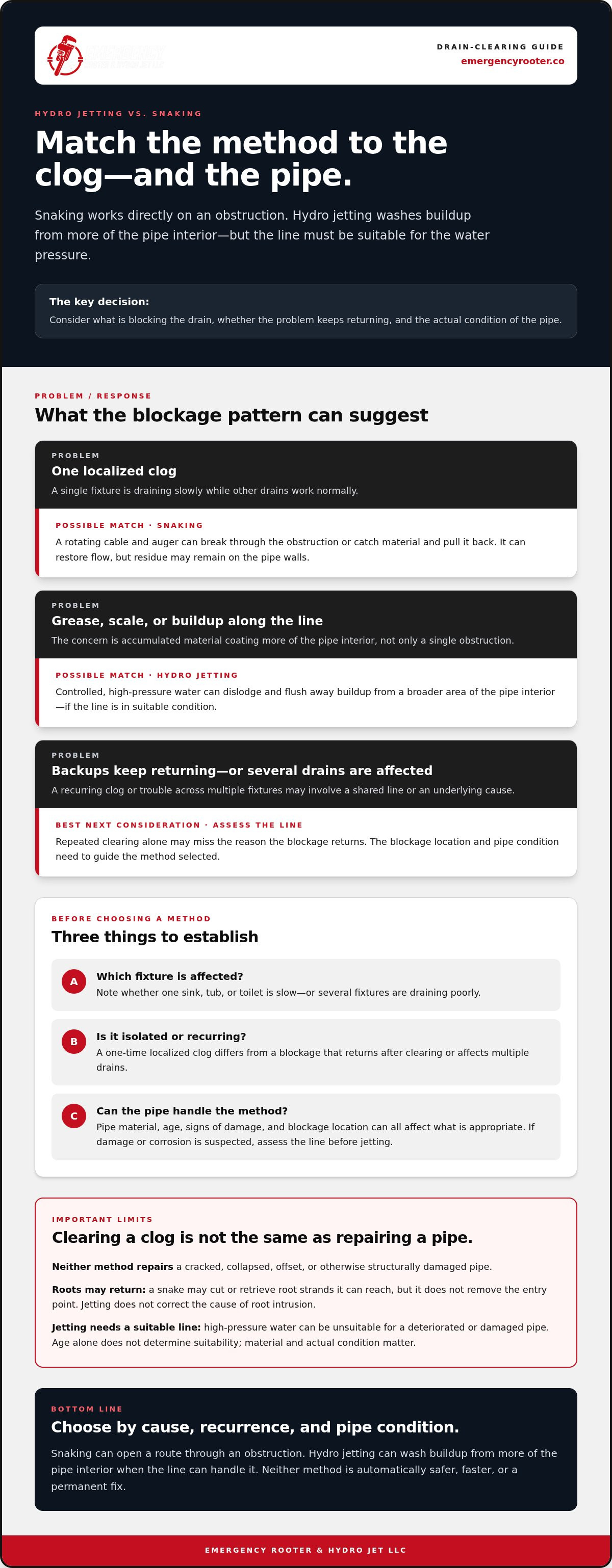
The best choice in hydro jetting vs snaking depends on the blockage and the pipe’s condition. Snaking uses a mechanical cable and auger to break through an obstruction or pull it out. Hydro jetting sends controlled, high-pressure water through a drain line to dislodge buildup and debris from the pipe walls.
Both methods can clear blockages, but they work differently. Snaking can open a path through a clog without removing all the residue around it. Hydro jetting cleans more of the pipe’s interior, but the line must be suitable for the force of the water. Neither method repairs a cracked, collapsed, offset, or otherwise structurally damaged pipe.
This video offers a visual comparison of the two drain-clearing approaches:
How drain snaking clears a clog
A plumber feeds a rotating cable into the drain toward the blockage. At the cable’s end, an auger works into the obstruction, breaking it apart or catching material so it can be pulled back. Snaking is often used for a localized clog, such as a single fixture draining slowly while other drains work normally.
Think of it as clearing a route through the blockage, not scrubbing the entire pipe. Water may flow again, but grease or other residue can remain on the walls and contribute to another clog. For a basic overview of drain cleaning methods, including mechanical tools and water jetting, see Wikipedia’s reference.
How hydro jetting clears a drain line
Hydro jetting directs pressurized water through the line to break up and flush away accumulated material. It may be used against grease, scale, and debris coating the pipe interior. Instead of simply punching a narrow passage through a blockage, the water stream works along the pipe walls to clear buildup from a broader area.
Pipe condition matters. A professional should assess the line before jetting, particularly if damage or corrosion is suspected. High-pressure water can’t restore a broken or collapsed section, and using it on a compromised pipe can create further problems. The method should match both the obstruction and the line’s condition.
Hydro Jetting vs. Snaking: Compare Results, Uses, and Pipe Considerations
The practical difference in hydro jetting vs snaking is how much of the line each method clears. A snake works directly on an obstruction. Hydro jetting uses water to wash buildup from more of the pipe interior, when the line is in suitable condition. Neither method is automatically safer, faster, or a permanent fix. The blockage, its location, and the state of the pipe all matter.
| Factor | Snaking | Hydro jetting |
|---|---|---|
| Mechanism | A rotating cable and auger break through or retrieve an obstruction. | Controlled, high-pressure water dislodges buildup and flushes debris through the line. |
| Typical use | Localized clogs and obstructions the cable can reach and work through. | Grease, scale, and accumulated residue along the pipe interior, if the line can handle jetting. |
| Cleaning scope | Can restore flow, but may leave residue on pipe walls. | Can clean more of the pipe interior rather than only opening a path through a clog. |
| Important limitation | May not remove surrounding buildup or resolve the reason a clog keeps returning. | Suitability depends on pipe condition; it cannot repair structural damage or stop a cause such as root regrowth. |
Pipe material, age, signs of damage, and blockage location can all affect which approach is appropriate. An overview of plumbing hydro jetting explains the water-based process and its applications, but the condition of the specific line still guides the decision.
Which method suits roots, grease, and recurring clogs?
A snake may cut through or retrieve root strands it can reach, but clearing them doesn’t remove the entry point or prevent roots from growing back. Jetting may flush grease and residue from a line, but it also won’t correct the cause of root intrusion. If a main-line backup keeps returning, repeated clearing alone may miss the underlying issue. The line needs proper diagnosis before choosing the next method.
Can hydro jetting damage older or fragile pipes?
It can be unsuitable for a deteriorated or damaged line. Age alone doesn’t determine whether a pipe can be jetted; its material and actual condition matter. If cracking, corrosion, or other damage is suspected, the line should be assessed before high-pressure cleaning is selected. Don’t treat jetting as a repair for a crack, offset, or collapsed section.
For recurring drainage problems in Greater Los Angeles, a professional assessment can help match the clearing method to the blockage and pipe. Emergency Rooter & Hydro Jet LLC provides hydro jet cleaning service when the line’s condition supports it.
How to Decide Between Snaking and Hydro Jetting for a Clogged Drain
Start with the pattern, not the machine. A one-time clog in a single fixture points to a different situation than repeated backups across the property. Use these steps to describe the problem and understand what a professional assessment needs to establish.
- Identify the affected fixture. Is one sink, tub, or toilet slow, or are several fixtures draining poorly? Note where the trouble starts.
- Check whether it’s isolated or recurring. A single localized clog may call for targeted mechanical clearing. A clog that returns after clearing, or affects several drains, needs a closer look at the shared line.
- Describe the backup pattern. Tell the plumber which fixtures are affected, when backups occur, and whether the issue has returned. Those details help narrow down where the obstruction may be.
- Assess the line before choosing a method. Depending on the symptoms, a plumber may clear the obstruction directly or use a sewer camera inspection to look for its location and visible pipe conditions.
- Match the method to the findings. Snaking may suit an accessible, localized obstruction. Hydro jetting may be considered for buildup along the line if its condition makes water jetting appropriate.
Method selection depends on the affected fixture, backup pattern, blockage location and type, and the pipe’s condition. No symptom alone proves what’s happening inside the line.
What symptoms suggest a main sewer line blockage?
Several slow fixtures, simultaneous backups, or recurring trouble in different parts of a home can point to a shared main-line issue. They’re clues, not a diagnosis. Symptoms can help locate the problem, but they can’t show whether the pipe is damaged or in suitable condition for a particular clearing method. For more on main-line clearing, see rooter service in Los Angeles.
When should a sewer camera inspection guide the choice?
A camera inspection can help locate an obstruction and show visible conditions inside the line. It may be useful when clogs keep returning or when damage is suspected, since the findings can inform whether snaking, hydro jetting, or another next step is appropriate. Not every clog needs camera inspection, and a camera view may not reveal every defect.
For example, a Los Angeles homeowner with one slow kitchen sink and otherwise normal drainage may have a localized clog. If several fixtures back up together or the problem keeps returning, the plumber may need to assess the shared line before selecting a clearing method. The location alone doesn’t determine the answer.
What to Expect During Professional Snaking or Hydro Jetting
A professional drain-clearing visit starts with the symptoms, not a preset tool. Describe which fixtures are affected, when the backup happens, and whether the problem has returned. The plumber assesses the line, selects a method based on the findings and pipe condition, clears the obstruction, then checks whether drainage has improved. In hydro jetting vs snaking, the right approach follows the condition of the drain.
What happens during a snaking service call?
The plumber accesses the drain and feeds a mechanical cable toward the blockage. The cable works through or retrieves the obstruction. After clearing, the plumber checks drainage to see whether flow has improved. If the clog returns, restored flow may not be the end of the issue. Further diagnosis may be needed to find remaining buildup or another cause.
What happens during a hydro jetting service call?
Before water-jet cleaning, the plumber assesses whether the line is suitable for high-pressure water. That assessment may include inspection when the symptoms or pipe condition call for it. If jetting is appropriate, water is directed through the line to dislodge buildup. Drainage is checked afterward. It’s a cleaning method, not a repair for a cracked, collapsed, or otherwise damaged sewer line.
The work generally follows this order:
- Describe: Explain the affected fixtures, backup pattern, and any repeat clogs.
- Assess: Locate the problem and consider the line’s condition.
- Select: Choose snaking or hydro jetting based on what the assessment shows.
- Clear and check: Remove the blockage, then check whether water drains more freely.
Keep the situation contained while help is on the way. Stop running water through affected fixtures, and keep people away from wastewater that has backed up. Don’t pour chemical drain cleaner into the line; it won’t repair pipe damage or explain why a blockage keeps returning. Share what you’ve already tried so the plumber can factor it into the assessment.
Professional drain clearing can remove an obstruction or buildup; it can’t repair a structurally damaged pipe. If a backup keeps returning, arrange an assessment for your Greater Los Angeles home or business. Request professional drain clearing.
Choose the Right Drain-Clearing Method in Greater Los Angeles
The right answer to hydro jetting vs snaking depends on the blockage, how often it returns, where it sits, and the condition of the pipe. A localized clog may be a candidate for snaking. Persistent buildup may call for an assessment to see whether hydro jetting is suitable. Neither method is a guaranteed fix for every drain problem, and clearing a blockage won’t repair a damaged line.
When is snaking a practical first approach?
If one fixture is clogged and the rest of the property drains normally, snaking may be a practical option after the line is assessed. The cable works on an obstruction it can reach, which can help restore flow. If the same drain clogs again, don’t assume another pass is all that’s needed. Recurrence can point to remaining buildup or another underlying issue that should be investigated.
When may hydro jetting be the better fit?
Hydro jetting may be considered when assessment points to persistent grease, scale, or other buildup along a drain line. It can clean more of the pipe interior, but only when the line’s condition makes high-pressure water appropriate. Suspected damage or deterioration calls for assessment before jetting. A recurring backup may also need diagnosis to identify its cause, rather than repeated clearing alone.
Emergency Rooter & Hydro Jet LLC provides drain-clearing service for residential and commercial customers across Greater Los Angeles, including Beverly Hills, Los Angeles, and Santa Monica. The company provides 24/7 emergency plumbing service and is licensed and insured. The drain and its condition guide the method selection.
Before service, note which fixtures are affected, whether more than one is backing up, and how often the problem returns. That history helps shape the assessment and method choice. If a backup involves several drains, or a clog keeps coming back, arrange professional drain clearing instead of relying on repeated temporary relief.
For a stubborn or recurring drain problem, request drain-clearing service in Greater Los Angeles. A professional assessment can help determine whether snaking or hydro jetting fits the blockage and pipe condition.
Get the Right Help for a Recurring Drain Clog
The choice in hydro jetting vs snaking comes down to the blockage, its location, how often it returns, and the pipe’s condition. Snaking may suit a localized obstruction. Hydro jetting may be considered for buildup along a line, but only when the pipe is suitable. Neither method repairs a broken or collapsed pipe, so recurring backups call for diagnosis, not guesswork.
Emergency Rooter & Hydro Jet LLC serves residential and commercial customers in Greater Los Angeles, including Beverly Hills, Los Angeles, and Santa Monica. The company is licensed and insured under California license #574013, has completed more than 10,000 jobs, and provides 24/7 emergency plumbing services. Its team can assess the drain and select an appropriate clearing method based on the problem found.
Don’t let another backup disrupt your home or business. Get 24/7 drain-clearing help in Greater Los Angeles. Take the next step toward a clear plan and restored drainage.
Frequently Asked Questions
Is hydro jetting better than snaking for a clogged drain?
Neither method is best for every clog. Snaking can break through or retrieve a localized obstruction, while hydro jetting uses pressurized water to clear buildup along more of the pipe interior when the line is suitable. In the hydro jetting vs snaking decision, consider the blockage type, location, recurrence, and pipe condition. A professional assessment helps match the method to the drain rather than choosing based on pressure alone.
Can hydro jetting damage old sewer pipes?
It can cause problems if used on a deteriorated or damaged line, so age alone isn’t enough to determine whether hydro jetting is suitable. Pipe material and actual condition matter. If corrosion, cracks, or other damage are suspected, the line should be assessed before high-pressure cleaning is considered. Hydro jetting clears buildup; it doesn’t repair a compromised pipe. A professional can use the findings to select a suitable next step.
Does snaking remove tree roots from a sewer line?
A snake may cut through or retrieve root strands that it can reach, which can help restore flow. But clearing roots doesn’t remove the point where they entered the line or prevent regrowth. If roots are suspected, recurring backups deserve further diagnosis. The next step depends on what’s causing the blockage and the condition of the sewer line, not simply whether a snake can pass through the obstruction.
How does hydro jetting clear grease and buildup?
Hydro jetting sends controlled, high-pressure water through a drain line to loosen and flush grease, scale, and accumulated debris. The water works along the pipe interior, so it can clean more of the line than a method that only opens a path through a clog. Its suitability depends on the pipe’s condition. It won’t fix structural damage or correct the reason material keeps collecting in the line.
When should a recurring drain clog be inspected with a sewer camera?
A sewer camera inspection may help when a clog repeatedly returns, when several fixtures are affected, or when pipe damage is suspected. The camera can help locate an obstruction and show visible conditions inside the line, giving a plumber more information before selecting a clearing method. Not every clog requires camera inspection, and a camera view may not reveal every defect. The decision depends on symptoms and assessment findings.
Can hydro jetting fix a broken or collapsed sewer line?
No. Hydro jetting is a drain-cleaning method, not a structural repair. It may clear buildup from a line that’s suitable for cleaning, but it can’t restore a cracked, broken, offset, or collapsed section. If damage is suspected, the line needs assessment to determine the appropriate repair. Continuing to clear a damaged pipe without addressing the underlying problem may leave the cause of recurring backups unresolved.
What should I do if several drains back up at once?
Stop using water in the affected fixtures to limit additional backup, and keep people away from wastewater. Several drains backing up together can point to a shared line issue, though symptoms alone don’t confirm the cause or pipe condition. Arrange a professional assessment instead of treating each drain as a separate clog. Emergency Rooter & Hydro Jet LLC serves homes and businesses in Beverly Hills, Los Angeles, and Santa Monica.


