
One slow sink is frustrating. But if the toilet gurgles, the shower fills when you flush, and another drain starts backing up, the problem may involve more than one fixture. Main sewer line clog symptoms often appear across the home because wastewater has trouble flowing out through a shared pipe. The backup may show up first at a low fixture, such as a ground-floor shower or floor drain.
If several drains are affected or sewage is backing up, stop using water throughout the home and avoid chemical drain cleaners. Using more water can add to the backup, and a chemical cleaner won’t tell you what is causing it. This guide explains how to read the warning signs, what to do to limit further backup, and when to arrange an assessment. The findings help determine whether rooter service or drain cleaning may clear an obstruction, or whether damaged piping calls for sewer line repair.
Key Takeaways
- Main sewer line clog symptoms often affect several fixtures. A problem limited to one sink or shower may point to a local drain issue.
- Note where wastewater backs up and whether toilet bubbling or slow drains happen at the same time. Together, these clues can point to a shared-line problem.
- Keep track of which fixtures are affected, where water appears, and whether the problem returns. This gives the plumber a clearer picture.
- Rooter service or hydro jet cleaning may clear a suitable obstruction. Sewer line repair is considered when an assessment finds pipe damage.
Main Sewer Line Clog Symptoms: What the Warning Signs Mean
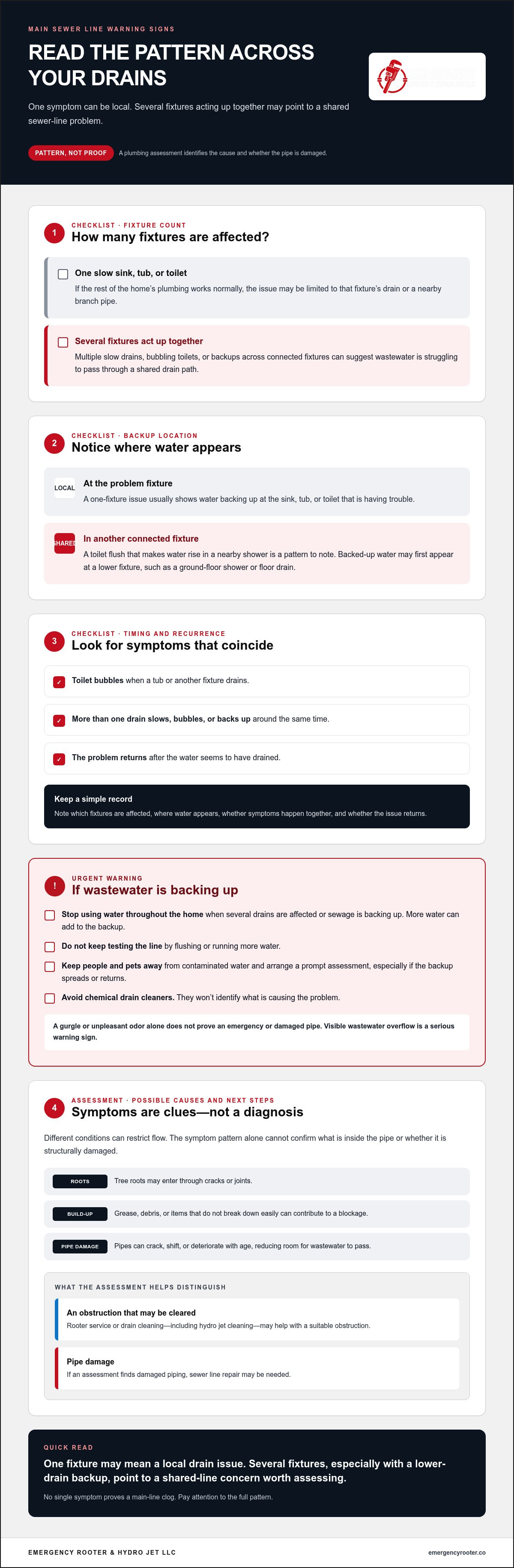
A pattern across fixtures can help distinguish a shared sewer-line problem from a clog in one sink or shower. One slow drain may be a local issue. Several slow drains, bubbling toilets, or wastewater backing up in a lower-level tub or floor drain deserve closer attention. No single symptom proves that the main line is clogged, but several signs occurring together can point to a blockage in the pipe carrying wastewater out of your home.
A main sewer line clog is an obstruction in the pipe that carries wastewater away from multiple fixtures in a home. When flow is restricted, water may drain slowly, gurgle, or back up at another fixture. For example, if flushing a toilet makes water rise in a nearby shower, note the connection and avoid flushing again to test it.
Here’s a visual overview of common warning signs:
Which symptoms across fixtures suggest a main-line blockage?
Look for more than one fixture acting up around the same time. A toilet that bubbles when a tub drains, multiple slow drains, or a shower that backs up while another fixture is in use can suggest wastewater is struggling to pass through a shared drain path. A floor drain or another low fixture may be where backed-up water first appears.
By contrast, one slow sink while toilets, tubs, and other drains work normally may indicate a localized issue. Note which fixtures are affected, whether symptoms happen together, and whether they return after the water has drained. That pattern is more informative than a single gurgle or slow drain.
When does a sewer backup need urgent attention?
If wastewater is backing up into the home, stop using the affected plumbing. Running more water can add to the backup. Keep people and pets away from contaminated water, and arrange a prompt assessment, especially if the backup is spreading or returns after seeming to clear.
A gurgle or unpleasant odor by itself doesn’t prove an emergency or a damaged pipe. Visible wastewater overflow is a serious warning sign. The Sanitary Sewer Overflow (SSO) reference explains how blockages can contribute to sewer overflows and why they should be taken seriously. Pay attention to the full symptom pattern, and don’t keep testing a line that is already backing up.
Why Main Sewer Line Clog Symptoms Can Affect More Than One Drain
Your home’s drains connect to a shared route. Wastewater from sinks, toilets, tubs, and showers flows through smaller drainpipes into the main sewer line, which carries it away from the house. If that main route is obstructed, water from several fixtures can drain slowly or back up. That shared connection explains why main sewer line clog symptoms may appear in more than one room, even when the obstruction is in one pipe.
When several fixtures act up, pay attention to the shared drain path.
How a blockage in a shared sewer line creates household symptoms
Imagine wastewater from an upstairs toilet and a downstairs shower flowing toward the same main line. If an obstruction limits that flow, water may collect in connected pipes instead of draining away. A lower fixture, such as a ground-floor shower or floor drain, may show backup first because it is close to floor level and can become an exit point for rising wastewater.
Gurgling can happen as water and air move through restricted or disrupted plumbing. It is a clue to note, not a diagnosis on its own. If sewage reaches living areas, avoid contact and keep people and pets away. The EPA outlines the health risks of sewer backups, including risks associated with exposure to untreated wastewater.
What can cause a main sewer line to clog?
Several conditions can restrict flow. Tree roots may enter through cracks or joints. Grease can collect inside a pipe, while debris and items that don’t break down easily can contribute to a blockage. Pipes can also crack, shift, or deteriorate with age, reducing the space available for wastewater to pass through.
Recurring trouble doesn’t point to one cause automatically. A partial blockage may let water through for a while, then clog again as debris catches on roots or a rough, damaged area. Symptoms alone can’t identify what is inside the pipe or confirm structural damage. An assessment helps distinguish a blockage that may respond to rooter service or drain cleaning from pipe damage that may call for sewer line repair.
If symptoms keep returning or more than one fixture is affected, get help assessing a suspected sewer-line blockage.
Main Sewer Line Clog or One Fixture? How to Read the Difference
Start by counting affected fixtures. One slow drain alone doesn’t establish a main-line clog. A problem isolated to one sink, tub, or toilet is more consistent with a local obstruction. If several connected fixtures slow down, gurgle, or back up around the same time, the shared sewer line may be involved. Use the pattern as a clue, not a final diagnosis.
| What to compare | One fixture affected | Several fixtures affected |
|---|---|---|
| Where water backs up | Usually at the problem sink, tub, or toilet | May appear in another connected fixture, often a lower drain |
| Other drains | Typically work normally | More than one drain may be slow, bubbling, or backing up |
| Whether it recurs | May remain limited to the same fixture | Symptoms may return across fixtures or occur together |
This table offers clues only. A plumbing assessment is needed to identify the blockage and determine whether the pipe is damaged.
What points toward a single sink, tub, or toilet clog?
If one fixture drains poorly while the rest of the home’s plumbing works normally, the obstruction may be in that fixture’s drain or a nearby branch pipe. A slow bathroom sink, for example, doesn’t by itself mean the main sewer line is blocked. If the problem persists, worsens, or starts affecting other fixtures, arrange an assessment. Avoid chemical mixtures or forceful methods that could create a hazard or damage plumbing.
What points toward a shared sewer line problem?
Simultaneous or recurring trouble in toilets, tubs, and showers raises more concern about a shared line. Wastewater appearing at a lower drain is an important warning because it may be backing up through the plumbing instead of flowing out. These main sewer line clog symptoms can indicate an obstruction, but they don’t prove the pipe is broken.
Roots, buildup, or debris can restrict flow, and damaged piping can also contribute to recurring problems. For example, tree roots in the sewer line may interfere with drainage, but symptoms alone can’t confirm root intrusion or structural damage. An assessment helps determine whether clearing is appropriate or sewer line repair should be considered. Don’t assume every multi-fixture backup requires pipe repair, or that a recurring single-fixture clog is harmless.
What to Do When Main Sewer Line Clog Symptoms Appear
If several drains are backing up or wastewater is entering the home, first limit additional flow into the affected line. Don’t keep testing fixtures. Follow these steps:
- Pause water use. Stop using fixtures connected to the affected line. If symptoms involve several areas, avoid running water elsewhere in the home until the situation is assessed.
- Keep clear of wastewater. Keep children and pets away. Avoid touching sewage or contaminated water, and don’t try to wash it down another drain.
- Stop DIY attempts. Don’t repeatedly plunge a suspected main-line backup or pour chemical drain products into the plumbing. These steps don’t identify the cause and may complicate the response.
- Note what’s happening. Record which fixtures are affected, where water appears, and whether the backup is recurring. Keep the area accessible for assessment.
- Arrange help promptly. Wastewater backup, multiple affected fixtures, or recurring symptoms call for a plumbing assessment.
What should you stop doing during a sewer backup?
Avoid flushing toilets, running dishwashers or washing machines, and using sinks, tubs, or showers connected to the affected line. More wastewater can add to the backup. Keep people out of the affected area, and don’t mix drain chemicals or try forceful clearing methods. Your notes about the symptoms can help the plumber understand what is happening without further testing the line.
When should a Los Angeles-area homeowner call for help?
Call promptly if wastewater is backing up, several fixtures are affected, or the problem keeps returning. Emergency Rooter & Hydro Jet LLC provides emergency plumbing service in Beverly Hills, Los Angeles, Santa Monica, and surrounding Greater Los Angeles communities. For more on clearing and root removal, read the Los Angeles rooter service guide.
Responsibility for the private sewer lateral and its connection to the public sewer can vary by location. Don’t assume where one ends and the other begins; verify local requirements with the relevant city or sewer authority. If you’re seeing main sewer line clog symptoms, contact us for plumbing help and share which fixtures are affected.
How Professionals Address Main Sewer Line Clog Symptoms in Greater Los Angeles
Professional service starts with the pattern you’ve noticed, not an assumption that every backup needs the same fix. Share which fixtures are affected, whether wastewater has surfaced, and whether the problem keeps returning. These details help guide an assessment of the line and the next step. The goal is to determine whether the issue is a blockage that can be cleared or damage that calls for repair.
The findings matter. A clog doesn’t automatically mean the sewer line needs replacement. If the pipe is damaged, sewer line repair may be appropriate. If an obstruction is restricting flow, a clearing method may be enough. The plumber should explain the assessment and recommended work before proceeding.
How rooter service or hydro jet cleaning may help
Rooter service uses mechanical equipment to break through or remove suitable blockages. Hydro jet cleaning uses high-pressure water to clear suitable obstructions and clean buildup from pipe walls. Neither method is right for every condition. The type of obstruction and the pipe’s condition help determine the appropriate approach. If damage is suspected, clearing alone may not address the underlying problem.
That distinction helps avoid treating symptoms without understanding their cause. Emergency Rooter & Hydro Jet LLC provides rooter service, hydro jet cleaning, drain cleaning, and sewer line repair. An assessment helps determine which service fits the condition of the line.
What to expect from a local emergency response
Emergency Rooter & Hydro Jet LLC provides emergency plumbing service in Beverly Hills, Los Angeles, Santa Monica, and surrounding communities. When arranging service, share the affected fixtures, when the symptoms started, and whether wastewater has backed up. These details help the plumber assess the situation and explain the next steps.
For a suspected main sewer line clog, the recommended work should match the assessment findings. Rooter service or hydro jet cleaning may address a suitable obstruction. Sewer line repair is considered when the pipe is damaged, not simply because a clog occurred.
If you’re seeing main sewer line clog symptoms, get help assessing the line and choosing the right response. Get help with a sewer line clog.
Act Early to Limit a Sewer Backup
The clearest warning is a pattern: several fixtures draining slowly, gurgling, or backing up can point to a shared sewer-line issue, while one slow drain alone doesn’t confirm a main-line clog. If wastewater is backing up, stop using affected plumbing and keep people and pets away from the contaminated area.
Don’t guess at the cause. An assessment can determine whether rooter service or hydro jet cleaning is appropriate for a blockage, or whether damaged piping calls for sewer line repair. Not every clog means the line needs repair.
Emergency Rooter & Hydro Jet LLC provides 24/7 emergency plumbing service across Greater Los Angeles, including Beverly Hills, Los Angeles, Santa Monica, and surrounding communities. If you’re seeing main sewer line clog symptoms, get help with a sewer line clog.
With a clear symptom pattern and the right assessment, you can move from uncertainty to a practical plan for your home.
Frequently Asked Questions
What are the most common main sewer line clog symptoms?
The most common main sewer line clog symptoms affect more than one fixture. You may notice several slow drains, toilets that bubble or gurgle, or wastewater backing up in a tub, shower, or floor drain. One symptom doesn’t confirm a main-line blockage. Pay attention to whether signs happen together, return after draining, or appear in different areas of the home. That pattern helps guide an assessment.
Can one clogged toilet mean the main sewer line is blocked?
One clogged toilet alone doesn’t prove the main sewer line is blocked. The cause may be limited to that toilet or its nearby drain, especially if sinks, tubs, showers, and other toilets drain normally. Concern rises if flushing causes water to back up elsewhere, other fixtures slow down, or the toilet keeps clogging. Don’t keep flushing to test it if water is rising or overflowing.
Why are multiple drains in my house backing up at once?
Multiple drains may back up at once because their pipes connect to a shared route that carries wastewater out of the home. A restriction in that route can affect several fixtures instead of just one. Note which drains are involved and whether they act up at the same time. If wastewater is surfacing, pause water use in affected areas and arrange an assessment rather than testing more fixtures.
Is a gurgling toilet a sign of a main sewer line clog?
A gurgling toilet can be a clue, but it doesn’t confirm a main sewer line clog by itself. The sound may occur when water or air movement in the plumbing is disrupted. Check whether other fixtures are slow, bubbling, or backing up too. If the toilet gurgles repeatedly or wastewater appears in a tub or shower, stop using affected plumbing and have the pattern assessed.
What should I do if sewage backs up into my home?
Stop using plumbing connected to the affected line and keep people and pets away from the wastewater. Don’t touch it or try to wash sewage down another drain. Contact a plumbing professional promptly, especially if the backup is spreading or recurring. Homeowners in Beverly Hills, Los Angeles, and Santa Monica can contact Emergency Rooter & Hydro Jet LLC for emergency plumbing help in the Greater Los Angeles area.
Can I clear a main sewer line clog myself?
Don’t treat a suspected main-line blockage like an ordinary sink clog. Avoid chemical drain products and repeated plunging as substitutes for diagnosis, particularly if several fixtures are affected or wastewater is backing up. These methods may not reach or resolve the obstruction, and chemicals can create additional hazards. Stop adding water to the affected line and arrange an assessment to determine whether rooter service or another clearing method is appropriate.
Does a main sewer line clog always mean the pipe needs repair?
No. A blockage doesn’t automatically mean the pipe is damaged or needs repair. Depending on the cause and the pipe’s condition, rooter service or hydro jet cleaning may be suitable for clearing an obstruction. If an assessment finds damaged piping, sewer line repair may be needed. The right next step depends on the findings, so don’t assume every clog requires replacement or that clearing alone will fix recurring trouble.


