

Sewage rising through a shower, toilet, or floor drain is more than a plumbing nuisance. It’s a contamination risk, and using another fixture can make the backup worse. Keep people and pets away, stop using connected plumbing, and call a sewer backup emergency plumber.
You may not know whether one drain is blocked or the main sewer line is backing up. Start with safety, then note which fixtures are affected, when the backup began, and whether water rises when other fixtures are used. This information helps the plumber assess the problem without you testing additional drains.
This checklist explains how to contain the immediate risk, describe the symptoms, and understand what happens after diagnosis. Emergency Rooter & Hydro Jet LLC provides emergency plumbing, rooter service, drain cleaning, hydro jet cleaning, and sewer-line repair across Greater Los Angeles, including Los Angeles, Beverly Hills, and Santa Monica. The response follows a practical sequence: contain, describe, diagnose, then clear or repair.
Key Takeaways
- Stop using toilets, sinks, showers, dishwashers, and laundry drains connected to affected plumbing to avoid adding water to the backup.
- Note which fixtures are slow or backing up, when symptoms started, and whether one fixture’s use has triggered trouble elsewhere.
- Tell a sewer backup emergency plumber if sewage is actively spreading, which areas are affected, and any access or safety concerns.
- Several affected fixtures can point to a shared line restriction, but an on-site diagnosis is needed to identify the problem.
- Rooter service, drain cleaning, hydro jet cleaning, or sewer-line repair may be appropriate depending on the diagnosis.
Sewer Backup Checklist: Before the Plumber Arrives
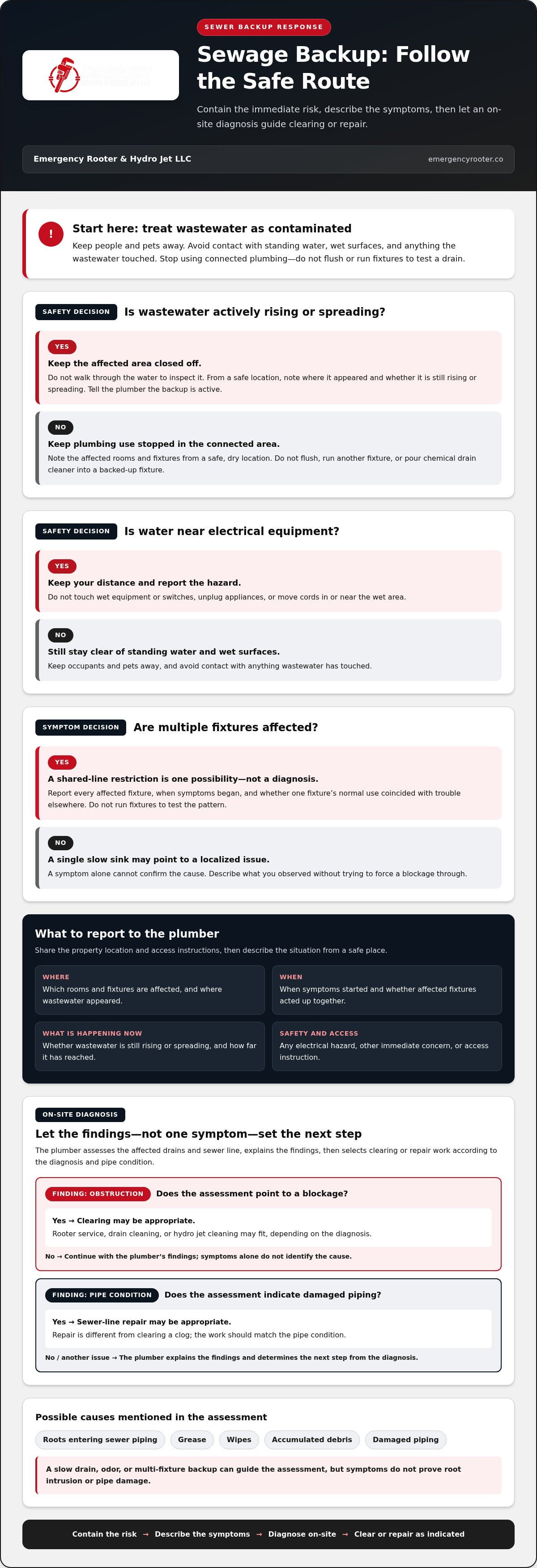
Treat sewage or wastewater coming through a drain as contaminated. Keep people and pets out of the affected area, and don’t walk through the water to inspect it. Avoid contact with wet surfaces and anything the wastewater has touched.
Stop using toilets, sinks, showers, dishwashers, and laundry drains connected to the affected plumbing. Don’t flush to test whether a drain has cleared, and don’t pour chemical drain cleaner into a backed-up fixture. More water can add to the overflow, while chemicals can create another hazard.
This video reviews immediate steps to take during a sewer backup:
Quick checklist:
- Stop water use throughout the connected area.
- Keep children, pets, and other occupants away from the backup.
- Stay clear of standing water near outlets, appliances, cords, or other electrical equipment. Don’t touch wet equipment or switches.
- From a safe, dry location, note the affected rooms and fixtures.
- Call a sewer backup emergency plumber and describe what’s happening.
First actions when sewage is actively backing up
Look from a safe location. Is water coming from a toilet, shower, floor drain, or more than one fixture? Note whether it’s spreading or still rising, but don’t step into it to check. Keep the affected area closed off until it can be assessed and cleaned appropriately. For context on sewer overflows and their effects, see Sanitary sewer overflow.
If water is near electrical equipment, keep your distance. Don’t try to unplug appliances, move cords, or operate switches in or near the wet area. Report the hazard when you call so the plumber knows what conditions are present.
What to tell the sewer backup emergency plumber
Share the property location and access instructions, then describe where the wastewater appeared, how far it has spread, and whether it’s still rising. List every affected fixture and mention if several drains backed up at once. Report electrical hazards or other immediate safety concerns. Don’t test additional drains to gather more information.
Recognize Main Sewer Backup Symptoms and Possible Causes
One slow sink may point to a clog near that fixture. Trouble in several places at once is different. If a toilet bubbles while a shower backs up, or multiple drains slow down together, wastewater may be meeting a restriction in a shared section of the drainage system. That pattern is a clue, not a diagnosis.
Pay attention to what happens during normal use, but don’t run fixtures just to test them. Note which drains are affected and whether symptoms began together. A clear description helps a sewer backup emergency plumber decide where to begin the assessment.
When several drains back up at the same time
A single slow sink can indicate a localized problem. A toilet that bubbles as a shower drain backs up may point to an issue farther along a shared drainage route, where wastewater from one fixture affects another. Stop using the affected plumbing and report which fixtures acted up and when. Don’t assume the cause or try to force a blockage through.
Common causes of a sewer backup
Roots can enter sewer piping, while grease, wipes, and accumulated debris can restrict wastewater flow. Recurring backups may also involve damaged piping, rather than a clog that can simply be cleared. The EPA on Sanitary Sewer Overflows explains how sewer overflows can occur when wastewater systems become obstructed or overwhelmed.
Symptoms alone can’t confirm what’s happening underground. A slow drain or unpleasant odor doesn’t prove root intrusion or pipe damage. A professional diagnosis helps determine whether rooter service or drain cleaning is appropriate, or whether the line needs repair. The right next step depends on the findings, not on one symptom in isolation.
If multiple fixtures are backing up or the problem keeps returning, use emergency sewer service to arrange an assessment. Share the symptoms you’ve observed so the plumber can focus the diagnosis.
What Happens During Emergency Sewer Backup Diagnosis and Clearing?
A sewer backup call should move through clear steps: describe the symptoms, assess the plumbing on-site, explain the findings, then choose suitable clearing or repair work. A sewer backup emergency plumber needs to know which fixtures are affected and whether wastewater is still coming up. Those details help focus the assessment, but they don’t identify the exact cause by themselves.
Expect the process to follow this sequence:
- Call: Share the property location, affected fixtures, and any active backup or safety concern.
- Symptom review: Explain what happened, when it started, and whether more than one drain is involved.
- On-site diagnosis: The plumber assesses the affected drains and sewer line based on the symptoms and conditions at the property.
- Explanation: Get a clear account of whether the findings point to an obstruction, possible pipe damage, or another issue.
- Next step: Clearing or sewer-line repair is selected according to the diagnosis and pipe condition.
How the plumber narrows down the problem
Several fixtures backing up together can direct attention beyond one sink or toilet, while symptoms limited to one drain may point to a more localized issue. The plumber considers that pattern alongside the on-site findings. Clearing an obstruction and repairing a damaged sewer line are different jobs, so the method should fit the problem found, not just the most noticeable symptom.
Before work proceeds, the plumber should explain the recommended approach in plain language. If the assessment suggests damaged piping, repeated attempts to clear the line may not address the underlying problem. Sewer-line repair may need to be considered instead.
Rooter service, hydro jet cleaning, or sewer-line repair
Rooter service uses a mechanical approach to clear certain suitable obstructions. Hydro jet cleaning uses high-pressure water and may be appropriate for diagnosed blockages or line-cleaning needs. Neither method is right for every pipe or backup. The line’s condition matters, so the plumber assesses whether a clearing method is suitable before using it.
If the diagnosis indicates damaged piping rather than a removable obstruction, sewer-line repair may be appropriate. Emergency Rooter & Hydro Jet LLC provides rooter service, hydro jet cleaning, drain cleaning, and sewer-line repair in Greater Los Angeles. The recommended service depends on the assessment. No particular method or outcome should be assumed beforehand.
Safe Response: Questions and Local Sewer Details
A clear report helps the plumber understand the urgency and prepare for the call. Keep details brief and specific. You don’t need to identify the cause. Describe what you can observe from a safe location.
What information helps dispatch respond
Have these details ready when calling a sewer backup emergency plumber:
- Location: Give the property address and city or neighborhood.
- Affected areas: Name the rooms and fixtures involved, such as a bathroom toilet, shower, or floor drain.
- Backup status: Say whether wastewater is still entering or spreading.
- Symptom pattern: Explain whether one fixture is affected or several drains showed trouble together.
- Access and safety: Share entry instructions and immediate hazards, such as water near electrical equipment. Don’t approach a hazard to get a closer look.
If symptoms change while you’re waiting, report the update. Avoid running fixtures to gather more information. A concise, accurate description is more useful than a guess about the cause.
Los Angeles-area service and sewer responsibility
Emergency Rooter & Hydro Jet LLC provides 24/7 emergency service across Greater Los Angeles, including Los Angeles, Beverly Hills, and Santa Monica. The company reports an average arrival time of 45 minutes. That is an average, not a promise of a specific arrival time for an individual call.
A backup affecting more than one property or appearing near public sewer infrastructure may raise questions about whether the issue involves private plumbing or a public sewer. Don’t assume responsibility based on symptoms alone. If you suspect a public sewer issue, contact the appropriate local agency to confirm its reporting process and next steps. Local procedures can differ, so follow the guidance for the area where the property is located.
For location-specific service expectations, read the emergency plumber in Beverly Hills guide or the emergency plumber Santa Monica guide.
To report an active backup, contact our emergency plumbing team with the location, affected fixtures, and current conditions.
Call a Sewer Backup Emergency Plumber and Prevent Another Backup
Don’t wait for an active sewage backup to settle on its own. Wastewater entering living areas, spreading across floors, or coming up through several fixtures calls for prompt professional attention. If the line was cleared before and the symptoms have returned, report that history. A recurring backup may need more than another clearing attempt.
When to request emergency plumbing service
Call when sewage is actively entering the property, multiple fixtures are backing up, or wastewater returns after a previous service. Keep people and pets away from the affected area while help is arranged. Emergency Rooter & Hydro Jet LLC provides 24/7 emergency plumbing in Greater Los Angeles, including Los Angeles, Beverly Hills, and Santa Monica.
The company is licensed and insured under California license #574013 and reports more than 10,000 completed jobs. This context does not replace an on-site assessment. The next step depends on the plumber’s findings at your property.
After the immediate blockage is addressed
Ask what the diagnosis showed, what work was performed, and whether follow-up is recommended. Rooter service, drain cleaning, hydro jet cleaning, or sewer-line repair may be considered according to the problem and pipe condition. No single method fits every backup. For more context on main-line clearing, see the Los Angeles rooter service guide.
If the assessment also identifies a burst pipe, the burst pipe repair in Los Angeles guide covers that separate repair concern. Plumbing service addresses the drain or sewer problem. It isn’t the same as cleaning and restoring areas affected by contaminated water, so clarify what work is included and arrange appropriate cleanup separately.
For an active backup or a problem that has returned, contact Emergency Rooter & Hydro Jet LLC for emergency plumbing service. Keep everyone away from contaminated water until the area can be assessed and cleaned appropriately.
Take the Next Step Toward Safe, Clear Drains
When wastewater enters the property, stop using connected fixtures, keep people and pets away, and avoid contact with contaminated water. Note which drains are affected and whether the backup is active or has returned. Those details help a sewer backup emergency plumber assess the situation and explain the appropriate next step.
Emergency Rooter & Hydro Jet LLC provides 24/7 emergency plumbing across Greater Los Angeles, including Los Angeles, Beverly Hills, and Santa Monica. The company is licensed and insured under California license #574013. Its reported average arrival time is 45 minutes, an average rather than a guaranteed response time. Clearing or repair options depend on the diagnosis, and plumbing service addresses the drain or sewer problem, not water-damage restoration.
Don’t wait for an active backup to resolve on its own. Call Emergency Rooter & Hydro Jet LLC for 24/7 sewer backup service and describe what’s happening. Keep everyone clear of the affected area while help is arranged. A clear report and professional assessment help move the problem toward an appropriate resolution.
Frequently Asked Questions
What should I do first when sewage backs up into my house?
Keep people and pets away from the affected area, and stop using toilets, sinks, showers, dishwashers, and laundry drains connected to the plumbing. Don’t step into wastewater to inspect it or touch wet electrical equipment. From a safe, dry spot, note which fixtures and rooms are affected and whether the water is still rising. Share those details when you call a sewer backup emergency plumber.
Can I keep flushing the toilet during a sewer backup?
No. Don’t flush to test the drain or try to push the blockage through. Additional water entering connected plumbing may worsen an active backup, particularly if other fixtures are affected. Stop using the toilet and other connected fixtures until the line has been assessed. Tell the plumber whether the toilet is the only fixture showing trouble or whether sinks, showers, or floor drains are also backing up.
How do I know if a sewer backup is an emergency?
Treat sewage entering living areas, wastewater that is actively spreading, or several backed-up fixtures as urgent. A backup that returns after a previous clearing also needs prompt attention, since the underlying issue may remain. Keep everyone away from contaminated water and avoid using connected plumbing. If water is near electrical outlets or equipment, stay clear and report the hazard when requesting emergency plumbing service.
What causes a sewer line to back up into a house?
A sewer backup can result from roots, grease, wipes, or accumulated debris restricting wastewater flow. Damaged piping can also contribute, especially when symptoms recur after a line has been cleared. Bubbling toilets, several slow drains, or wastewater appearing in a shower can suggest a shared restriction, but these signs don’t prove the cause. A plumber’s diagnosis helps determine whether clearing or sewer-line repair is appropriate.
How quickly can an emergency plumber arrive in Los Angeles?
Emergency Rooter & Hydro Jet LLC provides 24/7 emergency plumbing across Greater Los Angeles, including Los Angeles, Beverly Hills, and Santa Monica. The company reports an average arrival time of 45 minutes. That is a reported average, not a guaranteed arrival time for an individual call. Share your exact location, access details, affected fixtures, and whether wastewater is still entering so the plumber has a clear picture of the emergency.
Who is responsible for a sewer backup in Los Angeles?
Responsibility can depend on where the problem is located and whether it involves private plumbing or public sewer infrastructure. Don’t assume the responsible party from symptoms alone. Have a plumber assess the affected property line. If you suspect a public sewer issue, contact the appropriate local agency to confirm its process. Procedures may differ across Los Angeles-area communities, including Beverly Hills and Santa Monica.
Can a plumber clear a sewer backup without replacing the sewer line?
Yes, some backups are caused by obstructions that may be cleared without replacing the line. Depending on the diagnosis and pipe condition, a plumber may recommend rooter service or hydro jet cleaning. If the assessment finds damaged piping, clearing alone may not address the problem, and sewer-line repair may be needed. The suitable method depends on the findings, so don’t assume every backup requires replacement or can be fixed by clearing.
Should I clean up sewage before the plumber arrives?
Don’t enter the contaminated area or handle sewage while waiting for the plumber. Keep children and pets away, avoid tracking wastewater through the property, and stay clear of standing water near electrical equipment. Tell the plumber how far the water has spread and whether it is still rising. Plumbing service addresses the drain or sewer problem. Cleanup and sanitizing contaminated areas are separate needs that require appropriate handling.


