

A slow drain can be an early warning of buildup inside the pipe. Professional slow drain repair in Los Angeles starts by determining whether the blockage affects one fixture, a shared branch, or the main line. The right solution depends on what is causing the slowdown and whether the pipe is damaged.
It’s easy to assume a sluggish sink or shower has a minor clog. But recurring backups or several affected fixtures can point to a deeper problem. Older Los Angeles properties may also have drain-line sags that trap debris or aging pipes with cracks that allow tree roots to enter.
This guide explains the signs of a developing blockage, how fixture clogs differ from main-line problems, and when clearing the drain may not be enough. You’ll also learn what inspection and repair decisions can reveal about whether a line needs cleaning, repair, or replacement, so you can understand the problem and the next step.
Key Takeaways
- Notice whether one fixture is slow or several drains are backing up together; that pattern helps point to where the blockage may be.
- Learn what professional drain cleaning can clear, and when signs in the pipe call for repair rather than another clearing attempt.
- Understand how homes and businesses can approach drain problems while limiting disruption to everyday water use.
- See how recurring clogs, pipe damage, and the location of the problem shape repair or replacement decisions.
- Recognize why older properties may need a closer look at drain-line condition before a recurring blockage is cleared again.
Do You Need a Clogged Drain Repair in Los Angeles, CA?
A slow drain can signal a clog, shared line, or damaged pipe. For homes and businesses in Los Angeles, the first step is locating the problem.
Residential and Commercial Drain Services
Residential drain cleaning often targets one bathroom sink, shower, or kitchen line. Commercial plumbing may involve several fixtures, shared branches, and access limited by operating hours. A technician identifies the affected drains, checks whether backups happen together, then chooses clearing or repair based on the obstruction. One slow break-room sink is different from several restroom fixtures draining poorly.
Chemical drain cleaners may clear some buildup, but they can damage older metal pipes and sensitive plastic pipes. Professional cleaning matches the method to the obstruction and pipe condition. This matters when a bathroom drain slows again after repeated chemical treatments.
The price depends on the case and is given after a quote request; key factors include the blockage’s location and severity, access to the line, and whether work involves clearing or sewer line repair. An estimate should identify the work covered, so you can distinguish basic clog removal from a damaged-pipe repair. Offer eligibility depends on the offer’s stated terms and the job required. A drain-clearing offer may not cover pipe repairs, deep blockages, or multiple affected lines.
When choosing slow drain repair in Los Angeles, look for a licensed & insured plumber who explains the diagnosis and proposed work clearly. Ask how the plumber distinguishes a fixture clog from a sewer line issue and what findings could change the repair plan. Emergency Rooter & Hydro Jet provides upfront pricing before work begins, with no hidden fees.
In the City of Los Angeles, many plumbing and drain repair projects require permits, and the Los Angeles Department of Building and Safety issues plumbing and drain repair permits. Whether a permit applies depends on the project’s scope. Before work begins, clarify how permit requirements affect the proposed drain or sewer line work.
Finding Los Angeles Sewer Drain Cleaners
Start with the symptoms: one slow fixture points to a different scope than several fixtures backing up together. Look for a sewer drain cleaner who can explain the likely blockage, the method proposed, and whether inspection is needed before repair. Thumbtack lists 188 five-star sewer drain cleaners in Los Angeles, California, but a directory count doesn’t show which service fits your specific drain problem.
Customer reviews can help you assess communication and follow-through. The reported average homeowner rating for drain cleaning in Los Angeles, California, is 4.6. Read reviews for details that match your situation, such as recurring bathroom clogs, commercial restroom lines, or a sewer line backup. Pair those comments with a clear diagnosis and estimate; a high rating alone doesn’t identify the cause or scope.
Symptoms of fixture-level versus main-line blockages
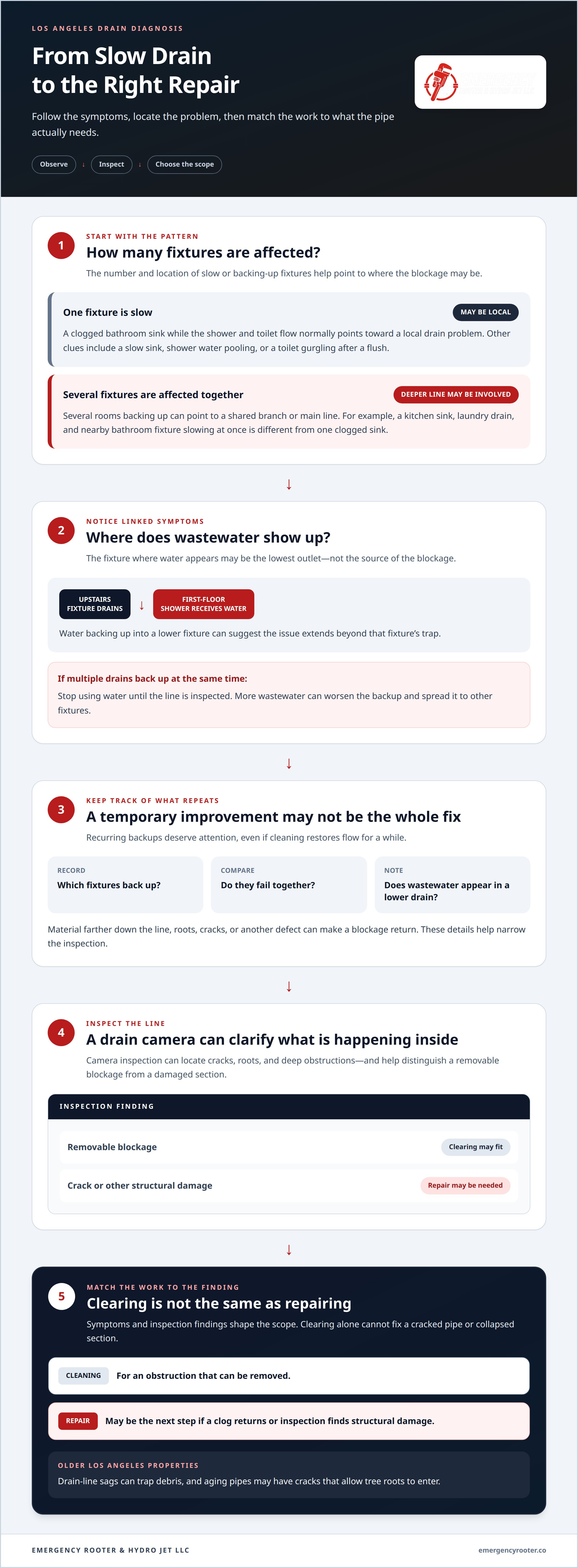
The number and location of affected fixtures can help identify where a blockage sits. A clogged bathroom sink with a normally flowing shower and toilet points toward a local drain problem. If water backs up in several rooms, the issue may involve a shared branch or main line. These patterns guide the next inspection step.
A single fixture often shows the first signs: a sink drains slowly, a shower pools water, or a toilet gurgles after flushing. If the same sink backs up repeatedly in a short period, its drain line needs attention. Clearing it without finding why debris returns can leave the underlying restriction in place.
Watch for linked symptoms. Wastewater backing up into a lower fixture can indicate a problem deeper in the plumbing system. For example, a first-floor shower that receives water when an upstairs fixture drains suggests the issue extends beyond the shower trap. The fixture where water appears may be the lowest outlet, not the source of the blockage.
Several drains backing up together can point to a shared branch or main line. A kitchen sink, laundry drain, and nearby bathroom fixture slowing at once is different from one clogged sink. If multiple drains back up simultaneously, stop using water until the line is inspected. More wastewater can worsen the backup and spread it to other fixtures.
Recurring backups deserve attention, even when cleaning restores flow temporarily. Material farther down the line, roots, cracks, or another defect can cause the blockage to return. Note which fixtures back up, whether they fail together, and whether wastewater appears in a lower drain. Those details help narrow the inspection.
A drain camera lets a plumber examine the line’s interior and locate cracks, roots, and deep obstructions. It can show whether the problem is a removable blockage or a damaged section that needs repair. Camera findings also help pinpoint a drain-line break or obstruction, reducing guesswork before work begins.
Clearing alone cannot fix a cracked pipe or collapsed section. If a clog returns after cleaning or camera inspection reveals structural damage, the next step may be sewer line repair rather than another clearing attempt. The symptoms and inspection findings determine the scope. A fixture-level obstruction calls for a different plan than a main-line defect.
Slow drains and signs of developing blockages
A slow sink or shower can signal debris narrowing the pipe. Spotting the change early gives a professional the chance to address buildup before the water stops flowing.
Early Signs of a Drain Blockage
Watch for water draining more slowly than usual after washing your hands or taking a shower. A small pool around the drain, lingering water, or a change from normal flow can mark an early restriction. Debris on the drain-line walls narrows the passage, slowing the water. Continued buildup can eventually block the drain completely.
Pay attention to whether the slowdown persists. One slow drain may point to buildup in that fixture’s pipe; recurring sluggish flow needs closer attention. For example, a shower that drains poorly after each use may have hair or debris narrowing its path. A professional can assess the pattern and explain whether clearing or further inspection makes sense.
Common Causes of Slow Drains
In a Los Angeles home, a slow drain can develop as hair, food scraps, grease, or other debris collect inside the pipe. A drain snake can break through hair, food scraps, and small clumps of buildup. As residue sticks to the line’s walls, it reduces the space available for water to pass. Continued accumulation raises the chance of a complete blockage.
Professional drain cleaning focuses on the cause and location, not just the visible water in a sink or shower. A technician can assess which fixture is affected and whether the slowdown points to a local obstruction. If the problem keeps returning, the line may need a closer evaluation rather than another temporary clearing.
Professional Clearing of Drain Clogs
Professional clearing matches the method to the blockage’s depth and material. A drain snake can break through smaller clumps; a power snake can reach farther into a drain line and push through heavier debris lodged deeper. Hydro jetting uses high-pressure water to clear debris from pipe walls. The technician selects an approach based on the observed problem and line condition.
Clearing can restore flow when buildup is the cause, but it won’t repair a cracked pipe or correct a collapsed section. If a drain remains slow after cleaning, a plumber can assess whether the line needs further inspection. This distinction helps avoid treating structural damage as though it were only loose debris.
Call an emergency plumber when water backs up into fixtures, especially if several drains are affected together. A multi-fixture backup can indicate a blockage beyond one sink or shower. Stop using water while the line is inspected, since additional flow can worsen an active backup. Describe which drains are affected and when symptoms began to help assess the urgency and likely scope.
Residential and commercial drain repair and replacement
Repair starts by locating the fault and matching the work to the affected drain. A kitchen branch, shared commercial line, and pump-assisted system each need a different assessment.
Residential and Commercial Service Scope
In a home, an inspection may focus on a kitchen drain, bathroom branch, or sewer connection. In a commercial property, the plumber also identifies which fixtures share the affected line and how to access the work area. A restaurant kitchen, for example, uses its drains differently from an office bathroom. The scope should specify the affected section and the repair needed.
Drain Pipe Repair and Replacement
A plumber distinguishes a removable obstruction from a cracked, broken, or collapsed pipe before recommending repair. A camera inspection can show and locate the damaged section, while its condition helps determine whether the line can be repaired or needs replacement. A break beneath a kitchen floor calls for a different plan than a local fixture connection. The estimate should identify the work area and proposed scope.
Clearing debris alone won’t fix a structural fault. If a damaged pipe keeps catching waste, repair addresses the affected section; replacement may be needed when the pipe requires more extensive work. Standing water, repeated blockages, and visible damage provide different clues. Inspection findings help explain whether clearing, repair, or replacement fits the problem.
Pump work requires a separate assessment. If a property’s drain system uses a pump, the plumber checks whether the problem comes from the pump or connected drain line. A pump that fails to move wastewater needs a different response from a clogged pipe that prevents flow. The recommendation should identify the faulty component and explain whether repair or replacement addresses it.
When a repair affects several fixtures, the work plan should account for the shared line and access sequence. A commercial restroom serving multiple rooms, for example, differs from a single residential sink. The plumber identifies which connections need attention and whether the repair can be limited to one section. This helps property owners understand the disruption before work begins.
Replacement decisions depend on the extent and location of damage. A localized break may call for a focused repair, while a collapsed section cannot be corrected by drain cleaning. Ask to see the camera findings and the specific reason for the recommended scope. A clear explanation connects the symptoms, drain-line condition, and proposed work without treating every slow drain as a full pipe replacement.
Common drain problems in older Los Angeles properties
Older Los Angeles properties can have drain problems that routine cleaning won’t correct. A slow kitchen sink may reflect grease buildup, but repeated clogs can point to a sagging, cracked, or obstructed pipe. The age and layout of the drain installation help frame the assessment. A plumber should look beyond the fixture to identify what is happening inside the line.
A sag beneath a house can hold water instead of carrying it away. Grease and food scraps may collect in that low section, gradually narrowing the passage. This can cause recurring slow flow even after loose debris is cleared. A camera inspection helps locate the sag and show whether buildup is the only issue or the pipe also needs repair.
Tree roots pose another risk to aging drain lines. Roots can enter existing cracks and expand, obstructing the pipe as they grow. The blockage may cause recurring backups or slow drainage, while clearing debris alone leaves the entry point in place. Camera findings help locate roots and cracks, giving the plumber a clearer basis for deciding whether cleaning or sewer line repair is needed.
Repeated symptoms matter. If a drain slows again after professional cleaning, tell the plumber which fixtures are affected and how the problem has changed. A single kitchen drain may point to a local section; several drains failing together can indicate a shared line. If wastewater is backing up, treat it as urgent and avoid using water until the line is assessed.
Repair should match the cause. A plumber can clear removable material, inspect suspected damage, and explain whether a pipe section needs repair or replacement. A camera view can connect the visible drain problem with the line’s condition, rather than treating every older installation as a full replacement. The scope depends on the defect’s location and extent, as well as access to the affected pipe.
When recurring slow flow or a backup points to an older drain line, arrange a professional drain assessment to identify the cause and next step.
Emergency Rooter & Hydro Jet: Drain Cleaning
Emergency Rooter & Hydro Jet handles drain cleaning when a fixture slows, debris blocks flow, or a clog keeps returning. Rooter Service can address obstructions, while Hydro Jet Cleaning clears debris from pipe walls. If inspection reveals a damaged sewer line rather than a removable clog, Sewer Line Repair addresses the pipe problem.
Share which drains are affected, when the slowdown began, and whether backups have returned after cleaning. Those details help direct attention to the fixture, branch, or sewer line involved. For active backups or several affected drains, seek plumbing help promptly and limit water use until the line is assessed.
Contact Emergency Rooter & Hydro Jet to discuss the drain problem and the appropriate next step.
Take the Next Step Toward Reliable Drainage
A clear diagnosis gives you a sound basis for deciding what happens next. Before requesting service, note when the slowdown began, which fixtures are affected, and whether previous clearing helped. These details focus the conversation on the problem’s pattern and the inspection or repair it may require.
For slow drain repair in Los Angeles, don’t wait for a minor slowdown to become a disruptive backup. If the drain keeps slowing, water returns, or the affected area spreads, arrange professional attention and explain what you’ve observed. The right next step depends on the pipe’s condition and the cause of the restriction.
Contact Emergency Rooter & Hydro Jet LLC to discuss your drain concerns and determine a practical next step. Clear information helps start the conversation, and professional guidance can help you move forward with confidence.
Frequently Asked Questions
Need Drain Cleaning?
Arrange drain cleaning when a fixture repeatedly drains slowly, water returns after use, or waste causes recurring obstruction. Note which fixture is affected and whether nearby drains behave differently. A bathroom sink slowing by itself presents a different pattern from a sink and shower acting up together. Those details help focus the assessment for properties in Beverly Hills, Los Angeles, and Santa Monica.
Can regular drain service prevent sewer backups?
Regular service can clear accumulated debris before it restricts flow, but it cannot correct a cracked pipe, sagging line, or root entry point. Clearing grease from a kitchen branch addresses that buildup; a pipe defect needs its own repair plan. Maintenance is most useful when it reflects the property’s drain history and line condition, rather than applying the same schedule to every drain.
Does every blocked drain need a camera inspection?
No. A one-time fixture clog that clears and drains normally may not need a camera inspection. A camera is more useful when a blockage returns, multiple fixtures show symptoms, or the assessment points to a concern deeper in the line. It lets the plumber view the pipe’s condition and locate an obstruction or defect, helping distinguish a clearing job from a repair need.
What is the difference between drain snaking and hydro-jetting?
Snaking uses a rotating cable to break through or retrieve an obstruction. Hydro-jetting sends high-pressure water through the pipe to remove debris from its walls. The plumber needs a way to access the affected drain line for rooter work. Hydro-jetting uses pressure up to 4,000 PSI and is safe for most residential and commercial pipes. The appropriate method depends on the obstruction and the pipe’s condition.
What does drain cabling actually clear?
Rooter Service clears physical material that blocks or narrows a pipe. Mechanical rooter equipment cuts through tree roots, grease, paper, and debris. The work requires an accessible cleanout so the plumber can reach the affected drain line. Rooting targets the obstruction, not a damaged pipe. If symptoms continue after clearing, the line may need closer assessment.
How much does slow drain repair cost in Los Angeles?
There isn’t one price for every slow drain repair in Los Angeles. The cost depends on the blockage’s location and severity, access to the line, equipment needed, and whether the work involves clearing or pipe repair. Share which fixtures are affected and whether the problem has returned. Pricing is provided after a quote request, based on the work the diagnosis calls for.
What is the average cost to snake or hydro jet a drain in Los Angeles?
An average figure wouldn’t reflect the differences between a fixture clog and a deeper line obstruction. The price depends on the blockage, pipe access, and whether cabling or hydro-jetting fits the line’s condition. Hydro-jetting also depends on line length and access. Request a quote for the specific drain problem; the estimate should correspond to the method and scope of work proposed.
How do plumbers diagnose a slow drain, and when is a camera inspection needed?
Plumbers begin by identifying which drains are affected, how symptoms change during normal use, and whether previous clearing resolved the problem. A single slow fixture differs from several drains reacting together. Camera inspection is useful when recurring symptoms or other findings point to a deeper obstruction or pipe defect. It helps locate the concern and guide the next repair decision.


