

Tree roots can damage sewer lines and contribute to backups. They are one possible cause in Beverly Hills, but inspection is needed to identify the blockage. A licensed plumber for sewer backup in Beverly Hills can assess the line and recommend the appropriate next step.
A sewer backup is disruptive, so clear answers matter. Learn how roots can enter or damage sewer pipes, what emergency service and a sewer inspection may involve, and how to assess a plumber’s California license and insurance. The right diagnosis is essential: clearing a blockage may restore flow, while inspection can reveal whether roots or another issue caused it.
Key Takeaways
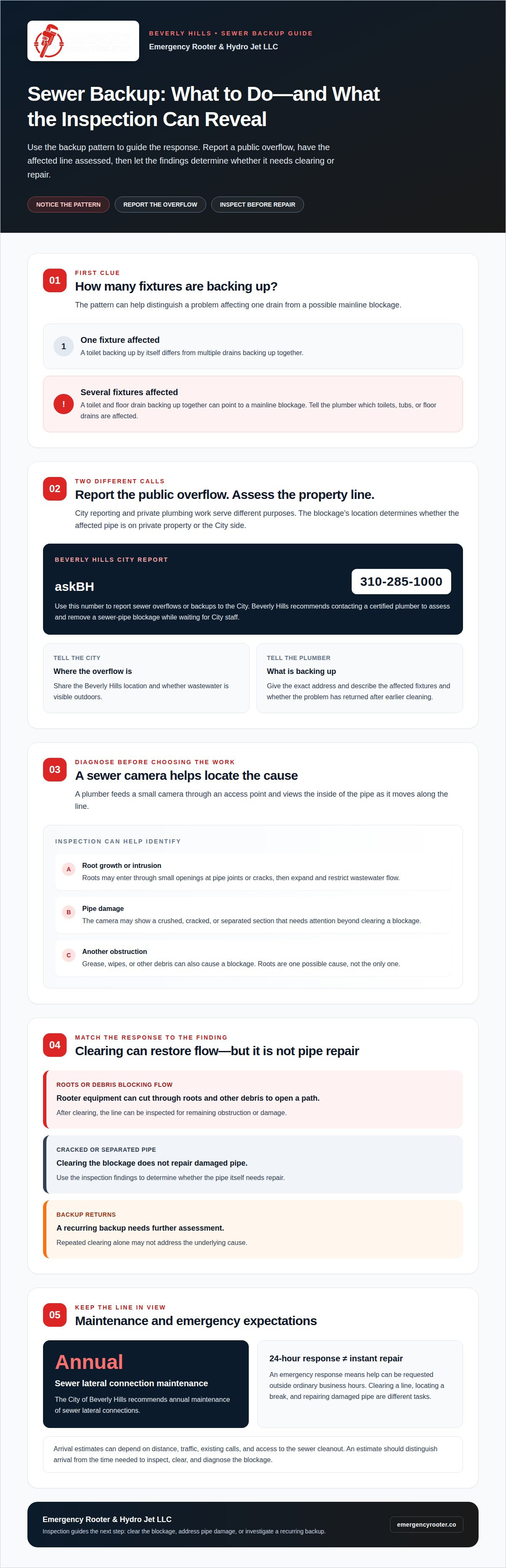
- Backups affecting multiple fixtures can point to a mainline blockage rather than a problem with one drain.
- A sewer camera inspection can help locate root intrusion or other damage before the repair approach is chosen.
- The City of Beverly Hills recommends annual maintenance of sewer lateral connections.
- Learn what a careful blockage-clearing process involves and how it can help reduce the risk of another backup.
- Know what to review when checking a California plumber’s license and insurance before work begins.
Are tree roots a common cause of sewer problems in Beverly Hills?
Yes. Tree roots can damage sewer lines and contribute to backups in Beverly Hills. Roots may enter through small openings at pipe joints or cracks, then expand and restrict wastewater flow. A recurring backup can point to root intrusion, but grease, wipes, pipe damage, or another obstruction can also cause a blockage. Inspection helps identify the cause before choosing a repair.
The blockage’s location determines whether the affected pipe is on private property or the city side. Beverly Hills residents can report sewer overflows or backups to askBH at 310-285-1000; the City recommends contacting a certified plumber to assess and remove a blockage while waiting for City staff.
Which licensed plumbers handle sewer backups in Beverly Hills, California? Choose a California-licensed plumbing professional experienced in assessing and clearing sewer backups. A sewer camera inspection can show whether roots, a damaged section, or another obstruction is affecting the line. The diagnosis guides the work: clearing roots may restore flow, while a damaged pipe may need repair.
Drain cleaning and rooter work address blockages, while inspection helps determine whether pipe damage also needs attention. Rooter equipment can cut through roots and other debris to open a path, then the line can be inspected for remaining obstruction or damage. Clearing can restore flow, but it does not repair a cracked or separated pipe. If a backup returns, the line needs further assessment rather than repeated clearing alone.
Emergency plumbing coverage in the Greater Los Angeles area includes Beverly Hills, Los Angeles, and Santa Monica. These are California communities, and each property needs service matched to its own address and sewer line. Give the plumber the Beverly Hills address and describe which fixtures are backing up so the response can focus on the correct property and line.
For a Beverly Hills home, note whether one fixture or several are affected. A toilet backing up by itself differs from a toilet and floor drain backing up together, which can indicate a mainline blockage. That detail helps guide inspection and cleaning. The City handles reports of sewer overflows, while a plumbing professional assesses the private line and blockage.
Does homeowners insurance cover sewer backup cleanup and plumbing repairs in California? Sudden, accidental plumbing water damage is typically covered by homeowners insurance, while gradual leaks or maintenance issues typically are not. Sewer-backup coverage depends on the cause and policy wording, so keep the plumber’s findings and repair records with your claim.
24/7 Emergency plumbing and sewer-backup response
A sewer backup needs a clear response plan. Report a public overflow to Beverly Hills and arrange an assessment of the affected private line.
Emergency Contact Numbers
Beverly Hills residents can report sewer overflows or backups to askBH at 310-285-1000. The City recommends contacting a certified plumber to assess and remove sewer-pipe blockages while waiting for City staff. Keep the City report and plumbing assessment separate: one alerts the City, while the other addresses the blockage affecting the property.
For an urgent call, provide the Beverly Hills address, describe what is backing up, and say whether wastewater is visible outdoors. Those details help distinguish an indoor fixture problem from a street-side overflow. Use the askBH number to report an overflow to the City, and give the plumber the same location and a concise description of the affected drains.
Emergency Arrival Times
An arrival estimate is useful only when it reflects the current dispatch conditions. Distance to the Beverly Hills address, traffic, existing calls, and access to the sewer cleanout can affect when a plumber reaches the property. A clear estimate should distinguish arrival from the time needed to inspect, clear, and diagnose the blockage.
During a call, give the exact address and describe the affected fixtures. Ask for the expected arrival window and what information the crew needs at the property. These details make the dispatch estimate more relevant than a general promise of fast response.
How do Beverly Hills plumbers compare on response time, reviews, warranties, and equipment? Compare the stated arrival estimate, reviews that describe sewer-backup work, the scope of any warranty, and equipment suited to clearing and inspection. Rooter equipment can cut through tree roots, grease, paper, and debris; a camera inspection can show whether roots or pipe damage remain.
For homeowners, a 24-hour emergency response means help can be requested outside ordinary business hours; it doesn’t mean every repair is completed immediately. Clearing a line, locating a break, and repairing damaged pipe are different tasks. The plumber’s findings, the blockage location, and access to the line shape the next step.
Several fixtures backing up at once can indicate a mainline blockage. Tell the dispatcher whether toilets, tubs, or floor drains are affected, and whether the problem began suddenly or returned after previous cleaning. That pattern helps the plumber prepare for the right inspection and equipment instead of treating each fixture as an isolated drain.
City reporting and private plumbing work serve different purposes. Beverly Hills residents should report a sewer overflow to askBH and arrange a professional assessment of the property’s line. If the blockage is on the City side, City staff can respond; if it is on the private side, a plumber can assess the line and identify the appropriate cleaning or repair.
Sewer camera inspections and root cutting
A sewer camera inspection lets the plumber view the pipe interior and locate blockages, root growth, or visible damage. The plumber feeds a small camera through an access point and watches the live image as it moves along the sewer line. This helps pinpoint the problem before choosing a clearing or repair method and distinguish root obstruction from a crushed, cracked, or separated pipe.
Camera findings guide the next step. If roots are narrowing the passage, rooter equipment can cut through the growth and restore an opening. The plumber can then inspect the affected section again to assess remaining debris and pipe condition. Cutting roots clears the obstruction but does not mend a damaged pipe. A visible crack or separation may call for sewer line repair rather than another round of cutting.
Inspection matters when backups return after cleaning. For example, a toilet that drains briefly after clearing but backs up again may point to persistent roots or damage farther along the line. A camera view can show whether the same location remains restricted or another section needs attention. The plumber uses that information to explain the issue and recommend work that addresses the cause, not just the immediate symptom.
Routine attention can help identify trouble before an urgent backup. The City of Beverly Hills recommends annual maintenance of sewer lateral connections. This can include a professional assessment of the lateral, the private pipe connecting a property to the sewer system. A plumber can note root growth, buildup, or visible deterioration and explain what needs attention. Annual maintenance does not mean every pipe needs root cutting; camera findings determine whether cutting is appropriate.
For a useful inspection, the plumber needs access to a suitable sewer cleanout or another entry point. The camera’s view depends on access and conditions inside the line. Heavy debris or standing wastewater can limit visibility, so clearing may be needed before the camera can show the pipe clearly. The plumber can explain what the footage reveals and where the blockage sits, giving the homeowner a specific basis for deciding between cleaning and repair.
Choose a licensed professional for sewer-lateral video inspection and thorough cleaning, an approach recommended by the City of Beverly Hills. Ask for an explanation of the camera findings, the location of any root intrusion, and whether the pipe itself appears damaged. Clear answers help distinguish a one-time blockage from a recurring condition that needs further work.
Video inspection and cleaning of sewer laterals
A sewer lateral carries wastewater between a property and the sewer system. During a backup, a licensed plumber can inspect the line on video, locate the blockage, and select a cleaning method. The City of Beverly Hills recommends video inspection and thorough cleaning of sewer laterals by a licensed plumber. That sequence helps show whether the problem is debris, root growth, or pipe damage.
The plumber begins by finding an access point and assessing the line’s condition. A camera then travels through the lateral, showing where flow is restricted and whether the pipe appears damaged. If a blockage is present, the plumber can clear it by snaking or hydro jetting. The City of Beverly Hills recommends removing sewer blockages slowly using hydro jetting or snaking to reduce the risk of another mainline backup.
Cleaning and inspection answer different questions. Snaking or hydro jet cleaning targets the obstruction; the camera shows what remains and whether the pipe itself needs attention. A clear passage after cleaning differs from a visible crack or recurring root intrusion. The plumber can explain the camera findings and whether cleaning alone addresses the issue.
What should a licensed plumber do immediately during a sewage backup, and what health risks should homeowners avoid? The plumber should assess the affected line, identify the blockage, and begin appropriate clearing and inspection. Homeowners should avoid contact with sewage and keep people and pets away from the affected area because wastewater can contain contaminants.
Water damage cleanup and wastewater extraction are separate from clearing a sewer lateral. The plumber’s line work focuses on stopping the source of the backup and restoring drainage; standing wastewater inside the property needs careful handling. If documenting the incident for an insurance claim, record visible damage before cleanup. Photos or video can show affected flooring, walls, and belongings.
A water heater is not the cause of every sewer backup. If a separate plumbing emergency requires shutting off the home’s main water supply, turn off the water heater afterward to avoid heating an empty tank. This step concerns the water supply, not lateral cleaning. The plumber can distinguish those issues during the site assessment.
After cleaning, the plumber can review the camera view and explain whether flow is restored or damage remains. If wastewater backs up again, recurring symptoms call for reassessing the lateral rather than assuming the first blockage returned. A clear inspection record connects the observed condition to the recommended next work.
For industrial and commercial properties, the City of Beverly Hills partners with Los Angeles County to administer the Industrial Waste Program and ensure discharges comply with state and federal regulations.
California contractor license and insurance
A California license and proof of insurance answer different questions. The license record identifies the contractor and the work classification attached to that record. Insurance documents describe coverage held by the business. Neither document, by itself, shows what caused a sewer backup or whether a proposed repair will solve it.
For a California contractor, use the Contractors State License Board (CSLB) license lookup to review the license record. Match the listed business or license holder to the name on the estimate and work paperwork. Review the record’s status and classification, then consider whether the described sewer work fits the contractor’s listed scope. Clarify any mismatch before work proceeds.
Keep the paperwork tied to the actual job. The estimate should identify the contractor, describe the sewer work, and distinguish clearing a blockage from repairing a damaged line. A camera inspection may show roots restricting flow, while a cracked section may need repair. A clear written scope helps you understand the proposed work and what the price covers.
Insurance evidence should identify the insured business and show the policy information and coverage period. Review whether the document applies to the business performing the work, rather than assuming a certificate with a similar name belongs to the same company. Insurance and licensing are separate checks: a license record does not demonstrate insurance, and an insurance document does not establish license status.
- License: Review the California license record, its status, and the listed work classification.
- Identity: Check that the business name on the estimate matches the license and insurance documents.
- Coverage: Review the insurance document’s named business and coverage dates.
- Scope: Make sure the written estimate describes inspection, cleaning, or repair clearly.
Look for gaps between the documents and the job description. An estimate might promise sewer line repair, for example, while the paperwork identifies a different business. That discrepancy matters because the paperwork should make clear who is responsible for the work. A complete record also connects inspection findings, the approved scope, and the completed repair.
Before approving work, understand what the plumber found and what the proposed task addresses. Removing a blockage is not the same as repairing a pipe, and an insurance document cannot confirm the technical diagnosis. Review the license and insurance paperwork alongside the written scope, then decide whether the records and proposed work align.
For a sewer backup that needs professional assessment or repair, contact Emergency Rooter & Hydro Jet LLC.
Emergency Rooter & Hydro Jet: Sewer Line Repair
Emergency Rooter & Hydro Jet provides sewer line repair for Beverly Hills homeowners facing a damaged or repeatedly blocked line. When inspection shows that clearing alone will not address the problem, sewer line repair can target the damaged section. For an obstruction without confirmed pipe damage, Rooter Service, Hydro Jet Cleaning, or Drain Cleaning may address the blockage instead.
The right next step depends on the inspection findings: the obstruction’s location, the pipe’s condition, and whether the backup returns after cleaning. Share which fixtures are affected and any inspection findings to help clarify the work needed.
Contact Emergency Rooter & Hydro Jet to discuss sewer backup service.
Move from backup to a clear repair plan
A sewer backup is easier to address when the next step is based on the line’s condition. Share what you are seeing, which fixtures are affected, and any inspection findings with the plumber. That gives the professional a practical starting point for deciding whether the work calls for clearing or repair. A licensed plumber for sewer backup in Beverly Hills can connect the symptoms to the appropriate service.
Emergency Rooter & Hydro Jet offers Rooter Service, Hydro Jet Cleaning, and Drain Cleaning for sewer and drain problems. The aim is to address the obstruction and move toward a clear plan for the affected line.
Contact Emergency Rooter & Hydro Jet to discuss the sewer backup and the service needed. A focused next step can put you on the path toward resolving the problem.
Frequently Asked Questions
When Do You Need a Plumber?
Call a licensed plumber for sewer backup in Beverly Hills when wastewater comes up through a drain or several fixtures stop draining. A backup that returns after a drain clears also needs professional assessment. Tell the plumber which fixtures are affected, when symptoms began, and whether the issue has happened before. For example, a toilet that backs up only when another fixture drains gives useful diagnostic context.
How can I verify a Beverly Hills plumber's California license and insurance?
Use the Contractors State License Board’s lookup to review the contractor’s record, then match the listed business name to the estimate. A licensed plumber for sewer backup in Beverly Hills should have paperwork that identifies the same business performing the work. Emergency Rooter & Hydro Jet LLC operates under California license number 574013. Compare the insurance document’s named business and coverage details with the estimate and proposed sewer work.
Which plumbers offer 24/7 emergency sewer backup service in Beverly Hills?
Emergency Rooter & Hydro Jet LLC provides 24/7 emergency plumbing in Beverly Hills, including sewer-related service. The company also serves Los Angeles and Santa Monica. Describe the backup location and affected fixtures when arranging service. Call now at (310) 889-7979 for emergency plumbing or sewer line help. Beverly Hills residents can separately report a sewer overflow to the City through askBH at 310-285-1000.
Do Beverly Hills sewer backup plumbers provide free estimates or upfront pricing?
Emergency Rooter & Hydro Jet provides upfront pricing before work begins, with a free phone estimate available for hydro jet cleaning. That estimate depends on line length and access, so describe the property and the sewer-line issue when requesting it. Drain cleaning pricing is also provided upfront. Review the proposed work and its pricing before authorizing service so you understand the scope being discussed.
What are common causes of sewer backups in Beverly Hills homes?
Tree roots, grease, paper, and debris can obstruct sewer lines, while roots may enter through damaged joints or cracks. A restricted line can slow drainage in one fixture; a larger blockage may affect several. If the backup returns after clearing, further inspection can help distinguish remaining debris from root intrusion or pipe damage. That distinction helps determine whether the next step is more cleaning or sewer line repair.
How do Beverly Hills plumbers compare on response time, reviews, warranties, and equipment?
Compare the stated arrival estimate, reviews describing sewer-backup work, the scope of any warranty, and whether the equipment suits inspection and clearing. Rooter equipment can cut through tree roots, grease, paper, and debris, while a camera inspection can show whether roots or pipe damage remain.


