

The fastest way to clear a clog isn’t always to use a stronger cleaner or push a tool farther into the pipe. A sink that won’t drain, a shower pooling around your feet, or a blockage that keeps returning can disrupt the whole day. With drain cleaning Santa Monica homeowners and businesses can get help matching the clearing method to the problem instead of treating every clog the same way.
If a drain keeps backing up, the blockage may be deeper in the line, and a quick home remedy could make matters worse. This guide explains what symptoms can reveal, when mechanical rooter clearing may be suitable, and how hydro jet cleaning differs. You’ll also learn what to expect during service and what details to share when arranging help, including which drains are affected and whether the clog has returned. The goal is straightforward: restore normal flow with an approach suited to the pipe and blockage.
Key Takeaways
- Notice whether one fixture or several are draining slowly. That pattern helps describe the problem without trying to diagnose it yourself.
- For drain cleaning Santa Monica, the blockage’s location and type help determine whether mechanical clearing or hydro jet cleaning is the better fit.
- Learn what to expect as a professional assesses the drain, selects a clearing method, and checks the flow afterward.
- Before arranging service, note which drain is affected, when the issue began, and whether it keeps returning. Keep people away from wastewater and don’t add more chemicals.
- See how Emergency Rooter & Hydro Jet handles drain cleaning, rooter service, hydro jet cleaning, and sewer line repair.
Drain Cleaning in Santa Monica: Spot the Clog and Choose the Right Response
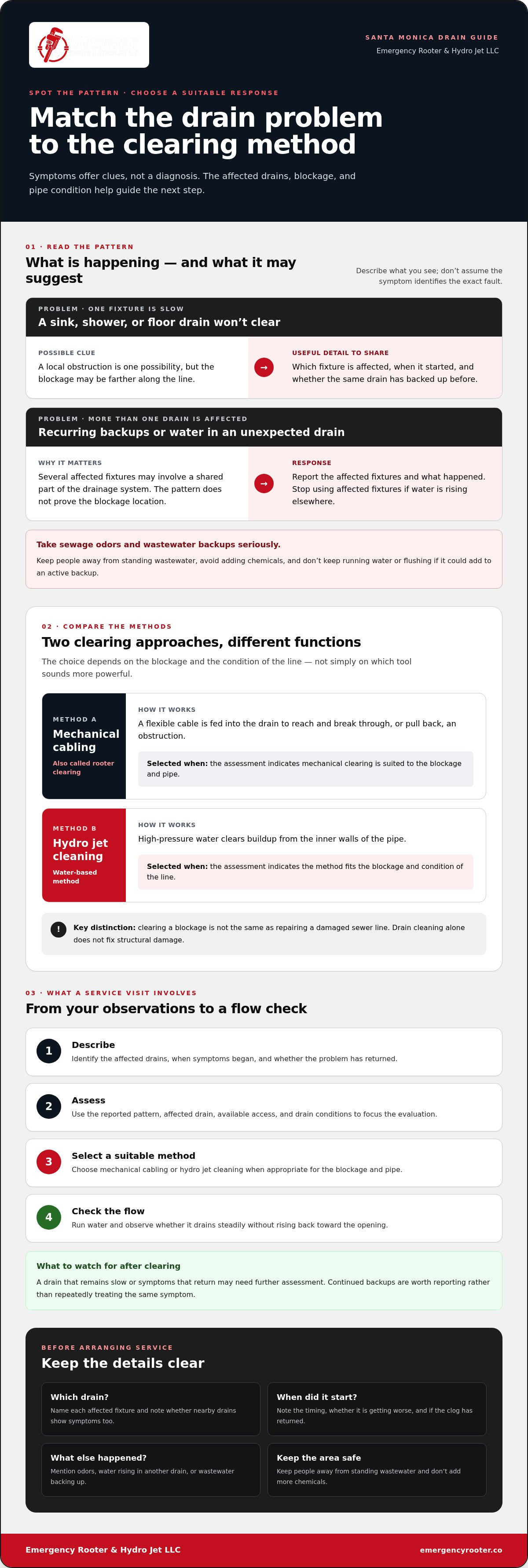
Standing water in the sink. A shower that drains slowly. A floor drain that won’t clear. These symptoms disrupt your routine, but they don’t show exactly where a blockage is or what caused it. One slow fixture may point to a problem close to that drain. If several fixtures are affected, report the pattern promptly because the issue may involve a shared part of the drainage system. Symptoms are clues, not a diagnosis.
Professional drain cleaning means assessing the affected drain and clearing an obstruction with a suitable method. The goal is more than making water disappear once. Flow is restored when water drains steadily without backing up during normal use. This Drain cleaner overview describes different approaches to clearing drains.
What a slow sink, shower, or floor drain can tell you
When just one sink, shower, or floor drain is slow, a local obstruction is one possibility. Hair and soap residue can collect near a bathroom drain; food waste or grease may contribute to a kitchen sink blockage. But the same symptom can have different causes, and the obstruction may be farther along the line than the fixture itself. Don’t assume a slow drain identifies the exact fault.
Before arranging drain cleaning Santa Monica service, track the pattern:
- Which fixture drains slowly or won’t clear?
- When did the problem start, and is it getting worse?
- Has the same drain backed up before, or do nearby fixtures show symptoms too?
These details help explain the problem clearly. A clog that returns after temporary improvement deserves attention, even if the drain seems usable again.
When a Santa Monica drain problem needs prompt service
One slow fixture may be an inconvenience. Several affected fixtures, recurring backups, or water appearing in an unexpected drain raise the urgency. For example, if using a sink is followed by water rising in a nearby shower or floor drain, stop using the affected fixtures and report what happened. That pattern doesn’t prove where the blockage is, but it gives the technician useful information for assessment.
Take sewage odors seriously, especially if wastewater is backing up into a bathroom, kitchen, or other usable space. Keep people away from standing wastewater, and don’t continue running water or flushing fixtures if that could add to an active backup. Avoid pouring in more chemicals. Prioritize keeping the affected area clear and arranging prompt professional assessment.
Clear observations help guide the next step. Identify each affected fixture, note when symptoms began, and mention any odor, returning water, or repeat clog. The assessment can then guide the response without relying on guesswork.
How Professional Drain Cleaning Works: From Blockage Assessment to Restored Flow
A clear service process starts with what you’ve noticed, not a one-size-fits-all tool. Tell the technician which drain is affected, when symptoms began, and whether the problem has returned. That information helps focus the assessment. The blockage’s location and likely type then guide whether mechanical clearing or a water-based method is appropriate.
Professional drain cleaning is the assessment and clearing of a drain obstruction using a method suited to the blockage and pipe. The goal is to restore usable flow and check whether the drain continues to empty as expected.
What happens during a professional drain-cleaning visit
First, the technician uses your description to focus the assessment. A single slow fixture and several drains backing up call for different investigation. The affected drain and available access help determine the next step. The method should fit the condition instead of forcing every clog through the same process.
Mechanical cabling, sometimes called rooter clearing, feeds a flexible cable into the drain to reach and break through or pull back an obstruction. Hydro jet cleaning uses high-pressure water to clear buildup from the inner pipe walls. These methods serve different purposes. The choice depends on the blockage and condition of the line, not simply on which tool sounds more powerful.
How the technician checks whether drainage has improved
After clearing, the technician checks the affected fixture or drain by running water and observing how it moves through the line. Steady drainage without water rising back toward the opening is a useful sign that flow has improved. A drain that remains slow, or symptoms that return, may point to a deeper obstruction or a recurring issue that needs further assessment.
Clearing a blockage isn’t the same as repairing a damaged sewer line. If an obstruction is removed but the line has a break or other damage, drain cleaning alone won’t repair that structural problem. Continued backups after clearing are worth reporting so the next step can address the cause instead of repeatedly treating the same symptom.
A professional visit generally follows a practical sequence:
- Describe: Identify affected drains, timing, and any repeat symptoms.
- Assess: Focus the evaluation using the reported pattern and drain conditions.
- Select: Use mechanical cabling or hydro jet cleaning when suited to the blockage.
- Check: Observe drainage after clearing and note any symptoms that persist.
For a recurring clog or a drain that won’t clear, arrange professional drain cleaning with Emergency Rooter & Hydro Jet LLC. A clear description of the symptoms helps the team assess the problem and select an approach suited to your Santa Monica property.
Mechanical Clearing or Hydro Jetting? Match the Santa Monica Drain Method to the Clog
A cable and a jet of water do different jobs. Mechanical rooter clearing works directly on an obstruction. Hydro jet cleaning uses pressurized water to remove buildup from pipe walls. For drain cleaning Santa Monica properties, the right approach depends on the reported symptoms and the line’s condition. Neither method fits every clog or every pipe.
Method: Mechanical rooter or cable clearing
Typical use: A blockage suited to physical clearing, including certain obstructions in a drain or line.
What it does: A rotating cable or auger moves through the pipe to break through or engage the obstruction so it can be cleared.
Method: Hydro jet cleaning
Typical use: Persistent buildup on pipe walls, when the line is suitable for the method.
What it does: Pressurized water flushes material from the inner pipe surface. It can address buildup beyond a narrow opening through a clog.
When mechanical rooter clearing may be the practical first method
A cable can travel through a drain to reach certain blockages and physically break them apart or catch material. Rooter service is relevant when the obstruction calls for mechanical clearing, including some blockages in a main line. If roots are suspected, assessment matters: a cable can clear an obstruction, but clearing it does not repair damage to the pipe. Root intrusion may require attention beyond unclogging.
For a deeper explanation of main-line root removal, consult the Los Angeles rooter-service guide.
When hydro jet cleaning may address stubborn buildup
Hydro jet cleaning sends pressurized water through a suitable line to scour material from pipe walls. It may be considered for persistent buildup, such as accumulated grease or scale, where simply opening a path through the obstruction may not address residue around it. The method isn’t a universal upgrade. Pipe condition and access matter, and a camera inspection may help assess whether a line can withstand the pressure.
The Los Angeles hydro jetting guide covers the process in more depth.
Selection follows the evidence, not a blanket rule. A professional considers which drains are affected, whether the clog has returned, where access is available, and what the line can safely handle. Mechanical clearing may suit a blockage that needs direct physical action. Hydro jet cleaning may better suit persistent wall buildup in a suitable line. If the pipe is damaged, neither method should be treated as a substitute for sewer line repair.
Don’t assume that a stronger tool is automatically the better choice. The technician assesses the reported blockage and line conditions, then matches the method to the problem. The aim is to clear the obstruction without making the condition worse and identify when the issue calls for repair rather than cleaning.
Santa Monica Drain Cleaning: Preparation Guide
A few clear details can help focus a drain-cleaning visit. Before arranging drain cleaning Santa Monica service, note what the drain is doing and what you’ve already tried. You don’t need to identify the cause. Report the symptoms accurately, keep people away from standing wastewater, and avoid adding more chemicals.
What details to share when requesting drain service
Describe each affected fixture, such as a kitchen sink, shower, toilet, or floor drain. Say when the problem started and whether it has happened before. Mention if other drains are slow, water has appeared somewhere unexpected, or there’s an unusual sewage odor. These details help distinguish an isolated symptom from a wider pattern without guessing at the diagnosis.
- Affected fixtures: List every drain that is slow, blocked, or backing up.
- Timing: Note when the problem began and whether it comes and goes.
- Changes: Describe odors, gurgling, or water returning through another drain.
- Past attempts: Explain whether you used a plunger, drain tool, or chemical product, and what happened afterward.
Be specific about the result of any attempt. For example, say whether the water briefly drained and then slowed again, or whether nothing changed. Don’t keep repeating a method that hasn’t helped. A straightforward account gives the technician a better starting point for assessing the drain.
How to reduce disruption while waiting for service
If water is actively backing up, stop using the affected fixture. Avoid running nearby taps or flushing connected fixtures if doing so could send more water into the blockage. Keep children and pets away from standing wastewater. If sewage is overflowing into a usable area, report it as an emergency plumbing issue so the urgency is clear.
Don’t mix drain products or pour in another chemical treatment. Products can react with one another, and liquid left in a blocked drain may create an added hazard for anyone working on it. Tell the technician what product you used, if any. Don’t try to scoop or push wastewater through the drain.
Clear access helps the visit proceed. Move items that block the affected sink, shower, or floor drain, but leave the drain itself undisturbed. If the access point is behind stored belongings, clear a safe path to it. You don’t need to dismantle plumbing or open a line. Make the symptoms easy to explain and the affected area accessible.
For a recurring blockage or a drain that’s backing up now, arrange drain cleaning service with Emergency Rooter & Hydro Jet LLC. Share the fixtures involved, timing, and any steps already taken so the problem can be assessed with useful context.
Get Santa Monica Drain Cleaning from Emergency Rooter & Hydro Jet
A drain that won’t clear needs a suitable response, not guesswork. Emergency Rooter & Hydro Jet LLC provides drain cleaning, rooter service, hydro jet cleaning, and sewer line repair for residential and commercial customers in Santa Monica. The company also serves Beverly Hills and Los Angeles. Explain what’s happening, and the team can assess the problem and determine a suitable next step.
Drain and rooter service for Santa Monica homes and businesses
Mechanical rooter clearing uses a cable to reach and work through certain obstructions. Hydro jet cleaning uses pressurized water to remove buildup from pipe walls when the line is suitable for that method. The right choice depends on the reported symptoms, the suspected blockage, and pipe conditions. No single approach suits every drain.
If a main-line blockage keeps returning or roots are a concern, assessment can help distinguish a clog that needs clearing from a line that may need repair. Emergency Rooter & Hydro Jet also provides sewer line repair when the issue goes beyond an obstruction. Cleaning and repair address different problems, so recurring symptoms are worth reporting rather than treating as an isolated clog.
Request service when a drain will not clear
You don’t need to know the technical cause before asking for help. Share which fixtures are affected, when the problem began, whether it has returned, and what you’ve already tried. Mention water backing up through another drain or any sewage odor. A clear symptom report gives the team useful information for its assessment.
Emergency Rooter & Hydro Jet is licensed and insured, with California plumbing contractor license number 574013. The company provides 24/7 emergency plumbing service across the Greater Los Angeles area. If sewage is overflowing or an active backup is affecting usable space, describe the urgency clearly when requesting help.
For drain cleaning Santa Monica residents and businesses can turn to a local team for assessment, mechanical clearing, hydro jet cleaning, or sewer line repair as the problem requires. Don’t keep forcing a drain that’s backing up. Request drain-cleaning service and explain what the drain is doing.
Get Your Drains Back to Everyday Use
A blocked drain can put ordinary routines on hold. You don’t need to pinpoint the cause before taking the next step. A clear description of what’s happening is enough to begin a professional assessment. If drainage keeps slowing or a backup returns, addressing the problem before the disruption spreads can help you find a method suited to the drain and its condition.
For drain cleaning Santa Monica residents and businesses can turn to Emergency Rooter & Hydro Jet LLC for help moving from a clogged fixture toward normal use again. Describe the affected drain and the symptoms you’re seeing. The team can assess the issue and determine an appropriate service, whether it calls for drain cleaning, rooter service, hydro jet cleaning, or sewer line repair.
Take the next step and get the blockage assessed. Request Santa Monica drain-cleaning service and start working toward clear, dependable flow.
Frequently Asked Questions
Can I use a chemical drain cleaner before calling a plumber?
You can, but chemical cleaners may not clear a deep or recurring blockage, and combining products can trigger dangerous reactions. Don’t add another dose if one product hasn’t worked. If you’ve already used a cleaner, stop and tell the technician its name and, if you know, how much you poured in. That detail matters because liquid may remain in a blocked drain.
How do I know if more than one clogged drain points to a main-line problem?
Several fixtures draining slowly or backing up around the same time can point to a blockage farther along the drainage system, but symptoms alone can’t confirm it. For example, note if a toilet bubbles when a nearby sink drains. Limit water use in affected fixtures and report the pattern. If you need drain cleaning Santa Monica service, mention whether the symptoms began together and if wastewater has come indoors.
How long does professional drain cleaning take?
There isn’t one reliable time estimate for every drain. A clog near an accessible fixture may take less time to address than an obstruction deeper in a line or one that keeps returning. Access and the clearing method also affect the work. After assessing the drain, the technician can explain the steps involved and whether further evaluation may be needed if the blockage doesn’t clear as expected.
Will hydro jetting damage my pipes?
Hydro jetting uses high-pressure water, so it isn’t automatically right for every pipe. The line’s condition matters, particularly if you know of previous damage or repeated problems. Share those concerns before work begins. A professional assessment helps determine whether hydro jet cleaning or mechanical clearing is appropriate; a camera inspection may also help assess whether the pipe is suitable for the pressure.
What should I do if sewage is backing up into my home?
Stop using fixtures that may feed the affected drain, keep people and pets away from wastewater, and report the overflow as an urgent plumbing problem. Don’t pour chemicals into the drain or try to force the sewage through. Describe exactly where the water is appearing. If it’s near electrical equipment, stay clear and follow appropriate emergency safety guidance while arranging professional help.
Can I keep using a sink if it drains slowly?
Use it as little as possible until you know why it’s slow. If water begins pooling, rising, or appearing in another fixture, stop using it and report the change. Check beneath the sink for leaks or water damage without taking apart the plumbing. Note whether the slowdown happens every time the tap runs or only after heavier use; that pattern can help explain the symptom.


