
What if the blockage isn’t just beneath the sink? Hot grease can cool inside a drain, stick to the pipe walls, and gradually narrow the line. That’s why grease clog drain cleaning may take more than a quick pour of store-bought cleaner, especially when buildup has hardened or collected farther down the pipe.
A slow or backing-up kitchen sink is frustrating, and repeated remedies can leave you unsure what to try next. Some chemical cleaners may not remove the full blockage, so using more can be a poor fix for a recurring clog. This guide explains how grease builds up, which steps are safer to try, and when professional drain cleaning makes sense.
You’ll learn how to spot signs that a clog may be deeper in the line, why a drain snake and hydro jet cleaning serve different needs, and when an active backup calls for prompt help. The right response depends on where the grease has collected and how stubborn it is. Start with the symptoms, then choose a next step that won’t make the problem worse.
Key Takeaways
- Grease clog drain cleaning works best when the clearing method matches the blockage’s location, severity, pipe condition, and access.
- When a sink slows or stops, stop adding grease and food scraps, and avoid repeated chemical treatments.
- Simple sink-level steps may help with a minor obstruction, while stubborn buildup may call for mechanical clearing or professional hydro jet cleaning.
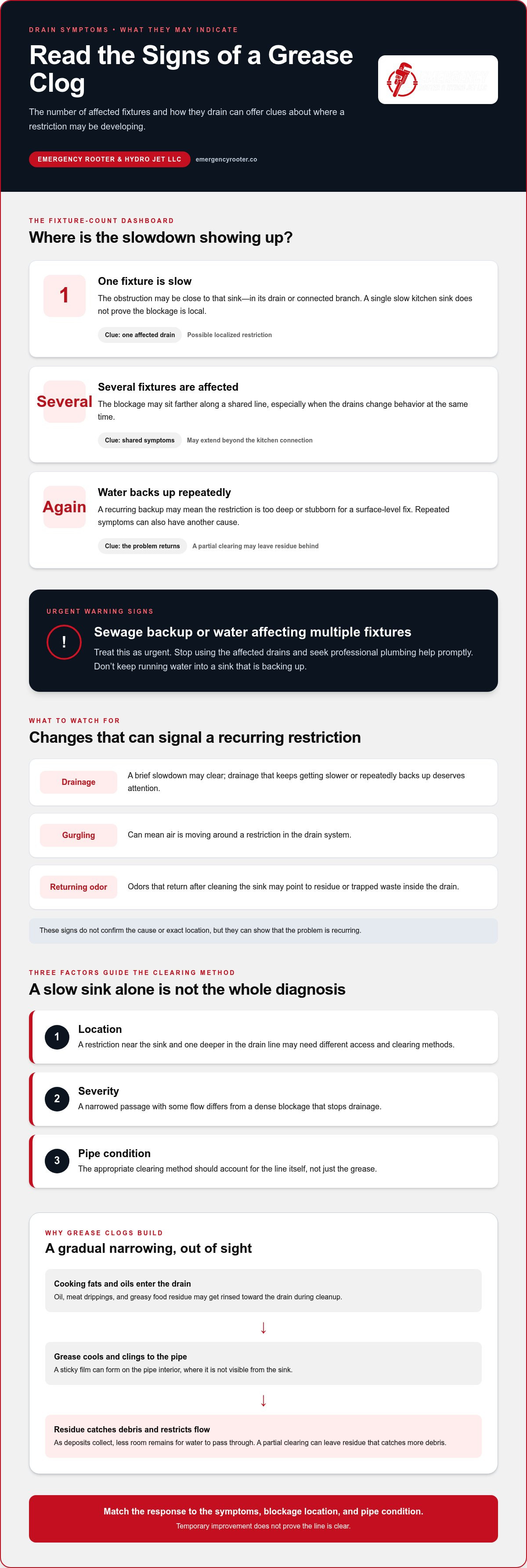
- Repeated grease deposits can build into a blockage. The number of affected fixtures and how they drain can offer clues about whether the problem extends deeper into the line.
- For grease-related drain problems in Los Angeles, Beverly Hills, Santa Monica, and surrounding communities, professional drain cleaning can help address persistent buildup.
Grease Clog Drain Cleaning: Why Kitchen Drains Slow Down
A grease clog forms when fats, oils, and food residue collect inside a drain and restrict water flow. The blockage often develops gradually. A small amount of cooking oil can leave a thin film along the pipe wall. That sticky layer can catch food particles and other debris, narrowing the passage over time. By the time water drains slowly, the buildup may be farther inside the pipe than you can see from the sink.
Effective grease clog drain cleaning starts with understanding the pattern, not just looking at the water in the basin. A single slow kitchen sink may point to a clog near that fixture, but it doesn’t prove the blockage is local. If several drains are affected, the issue may involve a broader section of the line. Which fixtures are affected, and whether their symptoms start at the same time, are useful clues.
How grease gets into kitchen drains
Grease can enter the drain during everyday cooking and cleanup. Oil left in a pan, meat drippings, and greasy food residue may get rinsed toward the drain while dishes are washed. Hot grease may flow at first, then cool and cling to the pipe interior. Food scraps are easy to spot in a sink strainer; grease residue is not. It can collect out of sight, layer by layer, and gradually catch more debris.
Signs the grease blockage may be getting worse
Pay attention to changes over time. A brief slowdown after a heavy wash may clear, but drainage that keeps getting slower or repeatedly backs up deserves attention. Gurgling can mean air is moving around a restriction in the drain system. Odors that return after cleaning the sink may also point to residue or trapped waste inside the drain. These signs don’t confirm the cause or exact location, but they can show that the problem is recurring.
- One fixture is slow: The obstruction may be close to that sink, such as in its drain or connected branch.
- Several fixtures are affected: The blockage may sit farther along a shared line, especially if the drains change behavior at the same time.
- Water backs up repeatedly: The restriction may be too deep or stubborn for a surface-level fix.
- Sewage backs up or water affects multiple fixtures: Treat this as urgent and seek professional plumbing help promptly.
Don’t keep running water into a sink that’s backing up. If more than one fixture is affected, or you see sewage, stop using the affected drains and arrange prompt help. A professional can assess whether the obstruction is limited to the kitchen connection or requires cleaning deeper in the line.
What Happens to Grease Inside a Drainpipe?
Grease doesn’t need to form one solid plug all at once. As cooking fats and oils travel through a drain, they can cool and leave residue on the pipe’s inner surface. That film creates a rough, sticky area where food particles and other waste can collect. Each deposit adds to the restriction, leaving less room for water to pass through.
This gradual process explains why a drain may seem usable for a while before the blockage becomes obvious. Water still moves through the remaining opening, but more slowly. As the passage narrows, trapped debris can collect around the buildup and make the obstruction harder to clear. Pouring grease down the drain contributes to this cycle: it may flow while hot, then cool farther along the pipe and leave residue where it can’t be seen.
Why hot water does not remove grease buildup
Hot water may carry some softened grease farther down the drain, but that doesn’t mean it has cleaned the pipe. As the water cools, grease can settle again, possibly beyond the visible sink connection. A brief flush might make water drain more freely for a short time while leaving the coating and obstruction in place. Don’t treat temporary improvement as proof the line is clear.
Why grease clogs can return
A partial clearing can open a path for water without removing all the residue. The material left behind can catch more debris, and slow drainage may return. Recurring symptoms can also have another cause, so repeated attempts based on guesswork may miss the actual problem.
The right approach depends on where the obstruction sits, how much buildup is present, and the condition of the pipe. A method suited to a localized blockage may not address a restriction farther down the line. If symptoms keep returning, professional drain cleaning service can help assess the blockage and guide the next step.
- Location matters: A restriction near the sink and one deeper in the drain line may require different access and clearing methods.
- Severity matters: A narrow passage with some flow is different from a dense blockage that stops drainage.
- Pipe condition matters: The appropriate clearing method should account for the line itself, not just the grease.
Repeatedly pouring grease into a drain can turn an everyday cleanup habit into a persistent plumbing problem. Scrape greasy food residue into the trash and keep cooking oil out of the sink to limit what enters the pipe. If hot water seems to help only briefly, or the blockage returns, don’t assume another flush will finish the job. The buildup may need a more complete assessment and a suitable clearing method.
Grease Clog Clearing Methods: What Helps and What Has Limits
The right clearing method depends on the blockage, not just the fact that a sink is slow. A minor obstruction near the drain opening may respond to simple steps. A deeper or heavier grease buildup may need mechanical cleaning or professional hydro jet cleaning. These methods aren’t interchangeable: opening a narrow path for water is different from removing accumulated material along the pipe walls.
Depth, severity, pipe condition, and access all matter. Chemical cleaners and boiling water aren’t universal fixes. Chemical products may fail to remove a stubborn obstruction, and repeated use can be corrosive to pipes. Boiling water shouldn’t be treated as a reliable way to clear buildup throughout the drain. Don’t combine cleaning products or keep escalating treatments when the clog isn’t improving.
Household steps for a minor, accessible sink clog
Start with what you can reach safely. Stop pouring grease down the drain, and remove visible food debris from the strainer or sink area. If water isn’t backing up and only this sink is affected, a sink plunger may help shift a minor, nearby obstruction. Follow the plunger’s instructions and use steady pressure. Don’t plunge over chemical cleaner, and never mix drain products.
Stop if the water rises, the attempt makes drainage worse, or more than one fixture is affected. These signs may mean the blockage sits beyond the sink’s accessible section. More force or more cleaner won’t tell you where the obstruction is and can complicate the next step. Keep people away from backed-up water, especially if it may contain sewage.
When mechanical cleaning or hydro jetting may be considered
A drain auger uses a flexible cable to reach and break through some obstructions. It can be useful when the clog’s location and the drain’s access allow the tool to reach it. But clearing a channel through a blockage may not remove grease coating the pipe walls, so recurring symptoms can mean more buildup remains.
Hydro jet cleaning is a professional method that uses high-pressure water to clean inside a drain line. It may suit stubborn buildup, but it isn’t a do-it-yourself tool or the right choice for every pipe. A plumber assesses the obstruction, pipe condition, and available access before selecting equipment. For a closer look at how it works, read about the hydro jetting process in Los Angeles.
Think of grease clog drain cleaning as a choice between a limited household attempt and a method matched to the full problem. If a cautious sink-level step doesn’t help, the clog returns, or multiple fixtures back up, stop guessing. Professional drain cleaning can help identify the blockage’s location and choose a suitable way to clear the line.
What to Do When a Grease Clog Stops the Drain
A stopped kitchen drain can turn a routine cleanup into an urgent mess. Don’t keep running water to test it. First limit the backup, then check whether the problem appears isolated to the sink or affects other fixtures. These clues can help you decide whether a cautious household step is reasonable or professional help is needed.
Immediate steps before more water backs up
Protect the area before trying to clear anything. Avoid pouring in more water, grease, food scraps, or chemical cleaner. Don’t mix drain products, and don’t force tools into the drain if you’re unsure how to use them. If water is standing in the sink, remove it only if you can do so safely and without touching contaminated water.
- Stop using the affected sink. Ask others in the home to avoid running its faucet or using an appliance that drains into the same line.
- Check nearby fixtures. Notice whether a bathroom sink, tub, or toilet is also draining poorly or backing up. Multiple affected fixtures can indicate a broader line problem.
- Look for a safe, visible obstruction. If food debris is sitting in the strainer, remove it carefully. Don’t reach into standing or contaminated water.
- Skip repeated chemical treatments. Don’t add another product, especially if a previous treatment may still be in the drain. Follow product safety directions and stop DIY attempts if the backup persists.
- Watch for escalation. Sewage, water backing up in more than one fixture, or a clog that quickly returns calls for prompt professional attention.
If only the kitchen sink is slow and there’s no active backup, the restriction may be near that fixture. It’s a clue, not a diagnosis: a clog can sit farther along a branch line even when one sink shows the first symptom. A broader backup needs a broader assessment. For additional warning signs and drain-cleaning context, consult this Los Angeles drain-cleaning guide.
When to call for professional drain cleaning
Get professional help for recurring clogs, persistent standing water, sewage backup, or symptoms affecting multiple fixtures. A plumber can assess where the blockage sits, how severe it is, and which clearing method suits the drain. That matters because a tool that opens a path may not remove heavy buildup along the pipe walls.
For local guidance, see what drain cleaning in Santa Monica can involve. If water is actively backing up or the blockage won’t clear, arrange professional drain cleaning. A clear assessment helps avoid worsening the clog with repeated guesswork.
Professional Grease Clog Drain Cleaning in Greater Los Angeles
A grease clog that keeps returning may need more than a quick opening at the sink. Emergency Rooter & Hydro Jet LLC provides professional drain cleaning, rooter service, and hydro jet cleaning for homes and businesses in Los Angeles, Beverly Hills, Santa Monica, and surrounding Greater Los Angeles communities. The right response starts with the symptoms and affected drain, then matches the clearing method to the blockage and the pipe.
What a professional grease-clog visit can address
Tell the plumber which fixture is slow or blocked, whether other drains are affected, and whether water has backed up. Those details help focus the assessment. The plumber considers where the obstruction may be, how severe it appears, the pipe’s condition, and what access is available before selecting a method.
Different blockages can call for different tools. Rooter service may be appropriate for some obstructions that need mechanical clearing. Hydro jet cleaning uses high-pressure water and may be considered for stubborn grease buildup. Neither method is automatic for every line. Pipe condition and access guide the approach, and the method selected depends on the situation.
Professional grease clog drain cleaning can address a blockage that household steps haven’t resolved. An assessment can help distinguish a sink-level problem from one farther along the line. For broader context on warning signs and cleaning approaches, the Los Angeles drain-cleaning overview explains what to watch for.
Get help for a blocked drain
Emergency plumbing is available 24/7 in Greater Los Angeles for urgent needs, such as an active backup. A slow drain doesn’t automatically mean an emergency, but sewage or water backing up across multiple fixtures needs prompt attention. Don’t keep running water or adding chemical treatments while you wait for the blockage to be assessed.
Make the first description clear and practical. Note:
- Which fixture is affected: Identify the kitchen sink or any other drain with symptoms.
- What the water is doing: Explain whether it drains slowly, stands still, or backs up.
- How long it has been happening: Mention if the problem is new, recurring, or worsening.
- Whether other fixtures are involved: This can help distinguish a local issue from a broader line concern.
Emergency Rooter & Hydro Jet LLC is a licensed and insured California plumbing contractor, license #574013. If an active backup or stubborn grease blockage needs attention, request professional drain cleaning. Share which fixtures are affected and what the water is doing so the team can assess the drain and determine an appropriate next step.
Protect Your Drain Before the Next Backup
Make grease control part of your kitchen cleanup routine. Let cooking oil cool, collect it in a container, and put greasy scraps in the trash instead of rinsing them toward the drain. These habits can reduce what enters your plumbing, but they can’t remove buildup that’s already restricting a pipe.
If a slow drain starts returning or water backs up, don’t wait for the problem to spread. Note which fixtures are affected and what you’ve already tried. That information helps guide the next step and keeps you from repeating treatments that aren’t working. For a stubborn blockage, professional grease clog drain cleaning can address the problem based on the obstruction’s condition and location.
A blocked drain doesn’t have to derail your day. Call Emergency Rooter & Hydro Jet LLC for help with a blocked drain.
Frequently Asked Questions
Can hot water clear a grease clog in a drain?
Hot water may soften or move some grease, but it can’t be relied on to clear an established clog. The grease may travel farther into the drain and cool again, leaving residue behind. If the sink drains better briefly but slows again, don’t keep flushing it with hotter water. Stop using the drain and consider professional grease clog drain cleaning if the blockage persists or returns.
Is it safe to use chemical drain cleaner on a grease clog?
Chemical drain cleaner isn’t a dependable fix for every grease blockage, and repeated use may damage some pipes. Check the product label before using anything, and never combine cleaners or add a second product to a drain that may still contain the first. If the sink remains blocked after one treatment, don’t keep pouring in more. A plumber can assess the clog without relying on repeated chemical doses.
Can baking soda and vinegar remove grease from a drain?
Baking soda and vinegar shouldn’t be counted on to dissolve a heavy grease blockage. Their fizz may loosen some light residue near the drain opening, but it doesn’t show that material deeper in the pipe has been removed. If you’ve already used a chemical cleaner, don’t add this mixture afterward. A drain that remains slow or backs up needs a suitable clearing method, not another household combination.
What happens if grease keeps going down the kitchen drain?
Grease can leave residue inside the plumbing and contribute to a narrowing passage over time. That creates more opportunity for food particles to collect, even if you rinse pans with water afterward. A disposal or sink strainer won’t catch liquid oil. Let used cooking oil cool, then place it in a sealed container for disposal instead of washing it into the sink.
Can a garbage disposal prevent grease clogs?
No. A garbage disposal grinds suitable food scraps, but it doesn’t stop grease from coating drain surfaces. Ground food can still travel into the plumbing, and combining it with oil or fat can add to what collects in the line. Scrape greasy plates into the trash before rinsing them, and wipe oily pans with a paper towel when appropriate. Use the disposal according to its manufacturer’s instructions.
How can I tell if a grease clog is in the sink drain or main sewer line?
You can’t confirm the exact location from symptoms alone, but the pattern offers clues. If only the kitchen sink is affected, the issue may be closer to that fixture. If toilets, tubs, or other sinks also drain poorly or back up, the restriction may be farther along a shared line. Don’t deliberately run water to test a suspected backup. A plumber can assess the line and locate the problem.
Do restaurants need a different response to grease-clogged drains?
Yes. Restaurants produce more cooking grease than a typical household, so they need a managed grease-removal system and a maintenance routine suited to the business. A clogged kitchen drain may also involve an interceptor or connected commercial piping, not just a sink branch. Food businesses in Los Angeles, Beverly Hills, and Santa Monica should treat recurring backups as an operational issue and arrange professional assessment of the affected drain system.


