
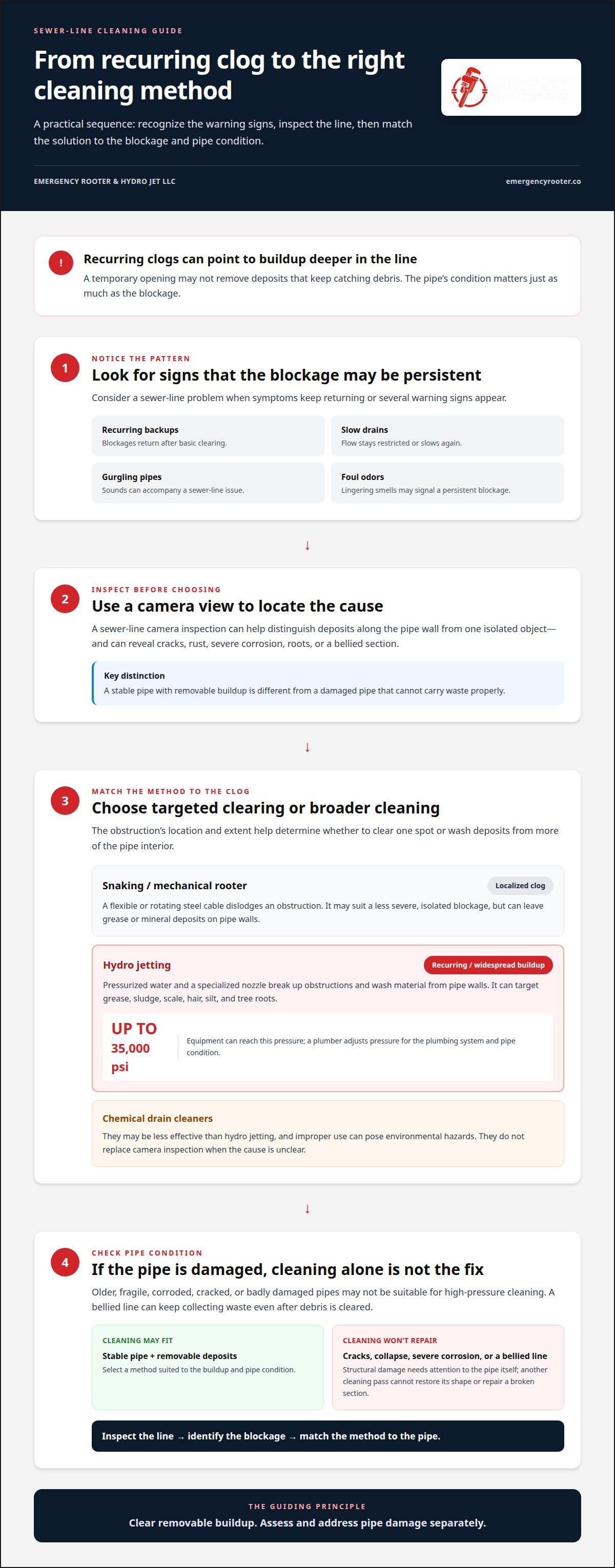
Recurring clogs can point to buildup deeper in the sewer line. The answer to what hydro jetting is and why it is needed is straightforward: it uses pressurized water to clear deposits such as grease, sludge, scale, hair, silt, and tree roots. It may help when drains stay slow, backups return, pipes gurgle, or foul smells linger.
Those symptoms are frustrating, but they don't all call for the same fix. Hydro jetting can wash buildup from pipe walls, while a cable-based method may suit a less severe clog. The pipe’s condition matters too, since older, fragile, or damaged pipes may not be suitable for high-pressure cleaning.
This guide explains how hydro jetting clears a sewer line, which warning signs can make cleaning worth considering, and what pipe conditions may call for another approach. You’ll also learn why a recurring blockage deserves attention rather than another temporary fix.
Key Takeaways
- Recognize recurring backups, slow drains, foul odors, and gurgling as signs of a sewer-line problem that may need attention.
- Understand when water jetting can wash buildup from pipe walls and when snaking may be a better fit for a less severe clog.
- Learn why older, fragile, or damaged pipes may need a different cleaning approach.
- See how pressurized water and specialized nozzles move debris through a sewer line.
- Find out how to match the cleaning method to the blockage and the condition of the pipe.
What is Hydro Jet Sewer Line Cleaning and When Should You Do It?
Hydro jetting uses high-pressure water to clean drain and sewer lines. Whether it is needed depends on the type of blockage and the pipe’s condition. It may be considered when clogs return or deposits keep restricting flow after basic clearing.
Hydro Jetting for Plumbing
In plumbing, hydro jetting sends pressurized water through a hose and nozzle into a drain or sewer line. The water breaks up obstructions and washes material from the pipe walls. That broader cleaning can matter when grease, mineral scale, or sludge keeps catching debris along the line.
Hydro jetting may be useful instead of snaking when buildup extends beyond one spot or blockages keep returning. A mechanical rooter uses a rotating steel cable to cut through obstructions; hydro jetting can also wash deposits from pipe walls. The pipe’s condition matters for either approach, and hydro jetting is safe for most residential and commercial pipes.
Recurring backups, slow drains, and foul-smelling sink drains can signal a persistent blockage. A sewer-line camera inspection can help locate the obstruction and guide the cleaning method. Deposits along a pipe wall, for example, differ from one isolated object blocking flow. That distinction helps determine whether broader cleaning or targeted clog removal fits the problem.
Hydro Jetting Compared With Snaking and Chemical Cleaners
Snaking uses a flexible cable to dislodge a clog. It may suit a localized blockage, such as one slow drain. But a cable can leave buildup on pipe walls, where grease or mineral deposits may continue catching debris and contribute to another clog.
Hydro jetting can clean more of the pipe interior than simply opening a narrow path through a blockage. It may suit recurring or widespread buildup, but it isn’t automatically the right choice. Severe obstructions may resist water jetting, and fragile or damaged pipes may not withstand the pressure.
Chemical drain cleaners may be less effective than hydro jetting. Improper use can also pose environmental hazards. They don’t replace a camera inspection when the cause of recurring sewer-line trouble is unclear. A practical approach is to identify the blockage, assess the pipe, and then select a method suited to both.
A mechanical rooter can suit a localized clog; hydro jetting may help when deposits remain along the line. Neither method repairs structural damage. A bellied, cracked, or badly corroded pipe needs attention to its condition, not another cleaning pass.
Pipe conditions that may make hydro jetting unsuitable
High-pressure water can clear buildup, but it can also harm weak plumbing. A professional should assess older, fragile, or corroded pipes before choosing this method. The key question is whether the pipe can withstand pressure without worsening existing damage. For example, a sound line with surface buildup presents a different situation from a cracked line already close to failure.
Cast-iron pipes need particular attention when they’re old, cracked, or heavily corroded. Hydro jetting can remove scale from a suitable line, but not every cast-iron pipe is in the same condition. A camera inspection can show whether the obstruction is buildup inside a stable pipe or a sign of damaged material.
Pipe condition also determines whether cleaning can solve the actual problem. A bellied sewer line, where a section has sagged, may keep collecting waste even after an obstruction is cleared. Hydro jetting can remove debris, but it can’t restore the line’s shape. If inspection shows a severe collapse, crack, or other structural damage, clearing alone won’t correct the cause.
Tree roots require the same distinction between blockage and damage. Roots entering through a small opening may be cleared when surrounding pipe damage is limited. Extensive root intrusion, a large crack, or failed waterproofing changes the situation. High-pressure cleaning may worsen damage instead of delivering a lasting clear path. The camera view helps locate the roots and reveal the pipe condition around them.
A useful assessment follows a clear sequence: inspect the line, identify the blockage, then match the cleaning method to the pipe. A sewer-line video inspection can locate a clog and help determine whether hydro jetting is suitable. It can also reveal cracks, rust, severe corrosion, or a bellied section that changes the plan. Without that distinction, a temporary opening can be mistaken for a repaired sewer line.
When inspection finds weak or damaged pipe, a plumber may choose another clearing method or recommend sewer line repair. The decision depends on what the camera shows: a stable wall with removable deposits differs from a broken section that cannot carry waste properly. Cleaning addresses material inside the pipe; repair addresses damage to the pipe itself. Keeping those problems separate helps prevent pressure from being used where structural work is needed.
If recurring backups come with signs of pipe damage, a camera assessment can help identify the next step. Explore sewer line repair when the problem points beyond a removable clog.
What Is Hydro Jetting And When Do You Need It?
Hydro jetting uses pressurized water to break up and flush material from drain and sewer lines. It can target scale, tree roots, hair, silt, grease, and sludge. The method is most relevant when those materials restrict flow or cling to pipe walls. For example, grease can collect inside a kitchen drain, while silt may settle in a sewer line and narrow the passage.
Grease and sludge can build into stubborn blockages rather than one loose object. A hydro-jet nozzle directs water through the line, loosening deposits and carrying debris away. Hydro jetting equipment can reach pressures up to 35,000 psi, with a plumber adjusting pressure for the plumbing system. That adjustment matters: the pipe’s material and condition affect the pressure the line can tolerate.
Mineral scale can form a rough layer inside a pipe, especially in cast-iron sewer lines. That rough surface can catch hair, grease, and other passing debris. Water jetting can remove scale buildup and reduce the edges that trap material. Clearing the deposits may restore more open space for wastewater to move through, rather than simply making a narrow path through one clog.
Tree roots can enter a sewer line through an opening and grow into an obstruction. Hydro jetting can cut through roots and flush loosened material from the line. For a heavy root blockage, a plumber may first use a snake to shred the roots into smaller pieces. Jetting can then wash remaining debris through. If roots return, the entry point or pipe damage may still need attention.
Hydro jetting is aimed at solid buildup, such as grease or hair packed into a drain. Hydro jetting may not be the right approach for every type of blockage. A blockage made of several materials can also respond differently from one made mostly of grease. The obstruction’s location, thickness, and makeup help determine whether pressurized water is a suitable clearing method.
Not every blockage is necessarily suited to hydro jetting, so identifying its cause can help determine whether it is an appropriate method. A professional assessment can identify what is actually restricting flow. A camera inspection, for example, can show whether a line contains wall buildup, roots, or a concentrated obstruction. That evidence helps match the cleaning method to the blockage instead of treating every slow drain alike.
The practical distinction is the target: hydro jetting cleans deposits from the line, while some clogs need another approach. It removes material inside a pipe, but it doesn’t repair a break or correct a structural defect. When a blockage keeps returning, identifying its cause matters as much as clearing what is there now.
How pressurized water and specialized nozzles clear sewer lines
A hydro jet system sends pressurized water through a hose and nozzle into a sewer line, often through an accessible cleanout. Residential pumps typically operate between 1,500 and 4,000 psi. The operator adjusts pressure for the plumbing system, since pipe size, condition, and the blockage affect the setup. This is controlled cleaning, not simply forcing water into a drain.
The nozzle’s shape directs the water. A forward-facing jet can break a path through debris, while rear-facing jets propel the nozzle and wash loosened material back through the pipe. Their spray can clean the interior around the line, rather than only opening a narrow channel through a stubborn clog. Selecting a hose and nozzle suited to the pipe and obstruction helps direct that cleaning where it’s needed.
For a main sewer line, the operator can begin at the lower end and work toward the building. The flow carries loosened debris toward larger pipes and the city connection. An outside cleanout, when available, is a preferred access point for pipe cleaning. After the pass, a camera inspection can show whether debris remains or the line still has an obstruction.
Hard water can leave mineral scale inside plumbing, creating rough surfaces where debris catches. Tree roots can enter through openings and obstruct sewer lines. In either case, frequent blockages may signal buildup or intrusion along more than one section. Hydro jetting can wash scale and loosen debris, but root entry points and underlying pipe damage need separate attention if roots return.
Maintenance timing depends on use and buildup. Hydro jetting may help manage deposits in some homes. Homes with older sewer lines, heavy tree roots, or frequent grease buildup may benefit from cleaning every one to two years. These are different maintenance situations, not one fixed schedule for every residence.
Commercial lines face different demands. Restaurants and commercial kitchens can accumulate fats, oils, and food particles, so routine hydro jetting may help keep drains moving. Commercial kitchens and restaurants often need scheduled cleaning quarterly. Some offices or daycares with break rooms may schedule preventative cleaning annually. A plumber can match the maintenance plan to the operation’s drainage use and observed buildup.
Whether a residential sewer line needs cleaning or a commercial drain needs planned maintenance, the process depends on access, blockage, and pipe condition. A camera inspection after cleaning adds a direct view of the line, helping distinguish cleared debris from a persistent obstruction. That final check matters when frequent backups continue despite a cleaning pass.
Common signs hydro jetting may be needed
A drain that slows again after clearing deserves attention. Recurring backups, frequent clogs, foul-smelling sink drains, noisy pipes, and slow drainage are common warning signs. One isolated clog can have a simple cause. When the same sink repeatedly drains slowly or wastewater backs up again, material may remain farther inside the line. Note which fixtures show symptoms and whether they return after clearing.
Recurring backups can affect more than one fixture. For example, a toilet and nearby sink that both drain poorly suggest the problem may involve a shared section of plumbing. A single slow kitchen sink points to a different area. The pattern helps narrow where debris could be restricting flow, but the symptoms alone don’t reveal whether the cause is grease, roots, scale, or pipe damage.
Odor is another useful clue. A foul smell from a sink drain, especially alongside slow drainage, can accompany waste or buildup that isn’t moving freely. A smell by itself doesn’t identify a sewer-line blockage. Pair it with observable changes, such as a recurring clog in the same drain or gurgling after water runs, to describe the issue clearly.
Listen for noisy or gurgling pipes when a sink, toilet, or washing machine drains. A gurgle from a nearby drain after another fixture empties is worth noting, especially if several fixtures also run slowly. The timing and location provide practical information for diagnosis. Record which fixture was running and where the sound came from, rather than treating every pipe noise as proof of one specific fault.
Frequent clogs also deserve a closer look. If a bathroom drain repeatedly slows despite clearing, hair or other debris may continue catching inside the line. A kitchen drain that clogs again can have grease buildup. Hydro jetting cleans pipe interiors with high-pressure water, but symptoms alone don’t establish that it’s the right method. Pipe condition and blockage type still matter.
A camera inspection can help connect visible symptoms to the actual sewer-line condition. It can show whether debris remains, roots have entered, or damage changes the cleaning approach. That distinction matters when a backup returns soon after a drain has been cleared. Cleaning can remove buildup, but it can’t correct a cracked or bellied line.
Write down the affected fixtures, sounds, odors, and how often clogs return. That symptom record gives a drain-cleaning assessment useful context. For recurring backups or multiple slow drains, get help assessing persistent drain problems.
Emergency Rooter & Hydro Jet
Emergency Rooter & Hydro Jet helps assess recurring drain and sewer problems, match the cleaning method to the blockage, and identify when pipe damage needs attention. Rooter Service, Hydro Jet Cleaning, Drain Cleaning, Emergency Plumbing, and Sewer Line Repair address different parts of the problem, from stubborn clogs to damaged lines.
Turn to the team when backups return, several drains slow down, or an inspection shows roots or pipe damage. The right next step depends on what’s restricting flow and the condition of the line. Contact Emergency Rooter & Hydro Jet to discuss your sewer or drain problem and the service that fits it.
Choose the Next Step With Confidence
Before another temporary fix, focus on the outcome you need: restoring dependable flow without overlooking the line’s condition. Knowing what hydro jetting is and why it is needed helps frame the decision, but the goal is to address the cause, not just quiet the symptoms.
The next step depends on what the sewer line shows. Removable buildup may call for cleaning. Structural damage may need sewer line repair. Share which drains are affected and whether the problem keeps returning so the situation can be assessed clearly.
For help deciding how to move forward, contact Emergency Rooter & Hydro Jet LLC to discuss the drain or sewer issue. A clear diagnosis gives you a practical path forward. Your next step can be straightforward.
Frequently Asked Questions
How Does It Work?
A hydro jetting machine pumps water through a hose to a nozzle inside the drain or sewer line. The nozzle directs water against the obstruction and pipe interior. Its design helps move loosened material back through the line. The operator controls the process, adjusting the setup for the pipe and blockage. A camera inspection afterward can show whether debris remains or the flow path is clear.
Is Water Jetting Safe for Pipes?
Water jetting is suitable only when the pipe can withstand its pressure. Sound plumbing can tolerate cleaning when the operator selects an appropriate pressure, but older, corroded, cracked, or fragile pipes can be damaged. For example, a deteriorated cast-iron line needs an assessment before cleaning. A camera inspection can reveal visible damage and help determine whether jetting or another method better fits the pipe’s condition.
Why Do You Need It?
Hydro jetting is useful when buildup restricts flow beyond one small clog. A recurring kitchen drain problem, for example, can involve grease along the pipe interior, not just a single blockage. Water jetting can wash deposits from a broader area. It isn’t a repair for a cracked or sagging sewer line, so identifying whether the cause is removable buildup or structural damage helps guide the next step.
How Does Hydro Jetting Work Step by Step?
A typical cleaning follows an assessment, a controlled cleaning pass, and a final check:
- The plumber identifies access and assesses the pipe and blockage.
- A hose and suitable nozzle enter through an access point.
- Pressurized water breaks up debris and washes it through the line.
- A camera inspection checks for remaining material or visible damage.
If inspection reveals a structural fault, cleaning alone won’t correct it.
What Kinds of Drain and Sewer Clogs Can Hydro Jetting Remove?
Hydro jetting can clear grease, sludge, scale, hair, silt, and tree roots from drains and sewer lines. For example, grease coating a pipe wall differs from a single object caught in one spot. The material and its location affect the result. A plumber may first break up heavy root growth mechanically, then use water to flush loosened debris. A camera can help identify what remains inside the line.
How Long Does Hydro Jetting Take, and How Often Is It Needed?
Cleaning a sewer line takes time based on access, line length, blockage, and the equipment needed. There isn’t one maintenance schedule for every property. Residential cleaning needs depend on pipe age, root activity, and recurring buildup. Commercial kitchens with grease-heavy use may need more planned maintenance than a home without repeated drainage problems.
Can Hydro Jetting Damage Old or Fragile Pipes?
Yes. High-pressure water can damage pipes that are old, fragile, cracked, or severely corroded. For example, jetting a cast-iron pipe that is close to breaking can worsen the damage. Before cleaning an older line, a plumber should assess its condition and look for weak sections. If the pipe cannot withstand pressure, another clog-clearing method or sewer-line repair may be more suitable.
What Should a Plumber Inspect Before Hydro Jetting a Sewer Line?
A plumber should assess the pipe’s material, condition, access point, and blockage before selecting the cleaning method. A video inspection can help locate the obstruction and show cracks, rust, severe corrosion, root intrusion, or a bellied section. These findings matter because a jet can clear debris but cannot restore damaged pipe structure. The inspection helps distinguish a cleanable blockage from a problem requiring repair.


