
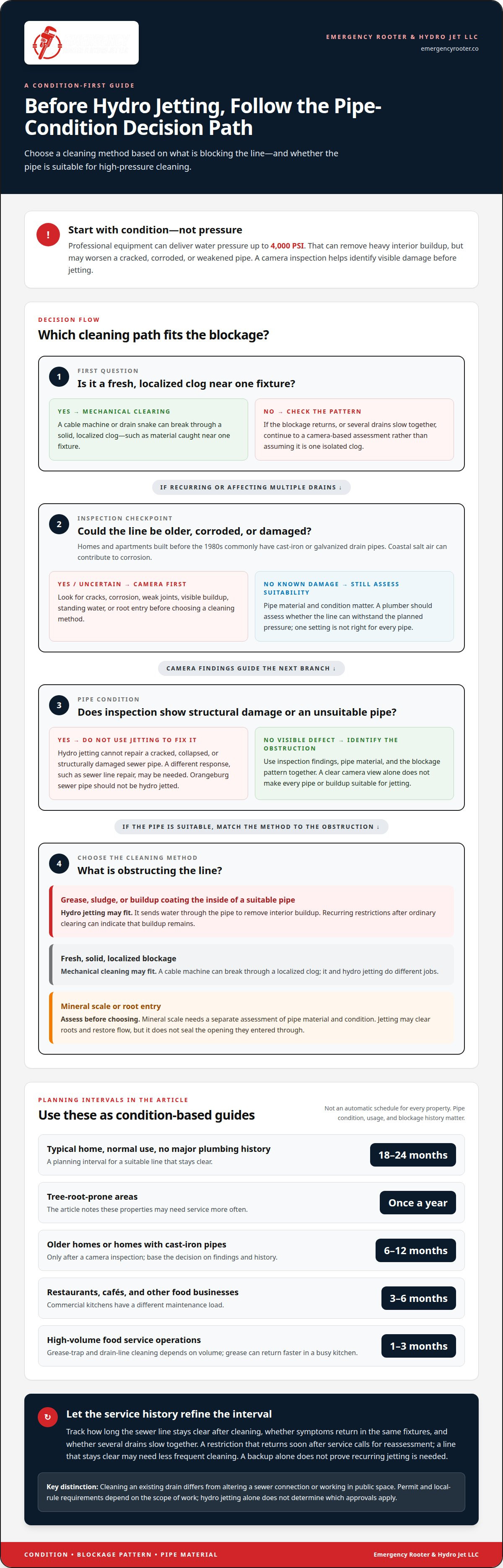
A fixed calendar isn't right for every drain. For a typical Santa Monica home with normal use and no history of major plumbing problems, hydro jetting every 18 to 24 months is usually sufficient; recurring blockages or older pipes can call for a different schedule. Knowing how often drains should be hydro jetted in Santa Monica starts with the pipe’s condition and the kind of clog you’re dealing with.
Snaking and hydro jetting do different jobs. A drain snake can clear a fresh, localized clog, while hydro jetting uses high-pressure water to remove buildup from the inside of suitable pipes. If a blockage keeps returning, choosing the right method matters.
This guide explains how Santa Monica’s coastal conditions, pipe age, and clog history can inform maintenance timing. You’ll also learn when a camera inspection should come first, what recurring symptoms may indicate, and how to tell whether a localized clog could involve a larger drain-line problem.
Key Takeaways
- Set maintenance timing around pipe condition, usage, and recurring blockage patterns rather than relying on one schedule for every property.
- Older or corroded pipes need a condition assessment before high-pressure cleaning, since jetting can worsen existing damage.
- Track where clogs return and how quickly they come back; that history helps distinguish surface buildup from a deeper line problem.
- Several slow drains, gurgling, or sewer odors can point to a shared-line restriction rather than one isolated fixture clog.
- Match the cleaning method to the problem: a localized clog and buildup coating the pipe may call for different approaches.
Is Hydro Jetting Safe for Older Pipes?
Hydro jetting can clean suitable older pipes, but age alone doesn’t show whether a pipe can handle it. Santa Monica homes and apartments built before the 1980s commonly have cast-iron or galvanized drain pipes. Coastal salt air can contribute to corrosion. A camera inspection should come first, especially when a line has recurring clogs or signs of deterioration. It lets a plumber look for cracks, corrosion, weak joints, and other damage before choosing the cleaning method.
Permit and local-rule requirements depend on the scope of work. Cleaning an existing drain differs from altering a sewer connection or working in public space. Hydro jetting alone does not determine which approvals apply to a specific Santa Monica job.
Mechanical drain cleaning and hydro jetting address different types of blockages. A cable machine can break through a solid, localized clog, such as material caught near one fixture. Hydro jetting sends water through the pipe to remove grease, sludge, and other buildup coating its interior. If ordinary clearing opens the drain but the same restriction returns, buildup may remain. Choose the method based on what is obstructing the line, not simply how long the clog has been present.
Professional equipment can deliver water pressure up to 4,000 PSI. That force can clear heavy interior buildup, but it can also worsen a cracked, corroded, or weakened pipe. A trained operator controls the equipment and directs the cleaning through a suitable line. A camera inspection helps identify visible damage before jetting begins. Hydro jetting cannot repair a cracked, collapsed, or structurally damaged sewer pipe. Those conditions need a different response, such as sewer line repair.
For older homes or homes with cast-iron pipes, hydro jetting may be needed every 6 to 12 months after a camera inspection. Treat that interval as a condition-based maintenance guide, not an automatic instruction to jet every old pipe. The inspection findings, blockage history, and pipe material matter. If the camera shows damage, more pressure is not a substitute for addressing the defect.
Commercial kitchens face a different maintenance load. Restaurants, cafés, and other food businesses should have hydro jetting every 3 to 6 months. High-volume food service operations may need professional grease-trap and drain-line cleaning every 1 to 3 months, depending on volume. Grease buildup can return faster in a busy kitchen than in a lightly used residential fixture. A suitable schedule follows actual use and recurring restrictions.
Consider hydro jetting when a restriction repeatedly returns after ordinary drain cleaning, especially if grease or sludge coats the pipe interior. A fresh, isolated blockage may respond to mechanical cleaning instead. Jetting cannot fix structural pipe damage. Match the method to the camera findings and the blockage pattern.
How Often Should You Hydro Jet a Sewer Line in Los Angeles?
Hydro jetting schedules should be based on the sewer line’s condition and service history rather than a fixed interval. A typical home with normal use and no history of major plumbing problems may need hydro jetting every 18 to 24 months. Properties in tree-root-prone areas may need service once a year. These are planning intervals, not a fixed rule for every Los Angeles sewer line.
Santa Monica homeowners often ask, “How often should drains be hydro jetted in Santa Monica?” Set the schedule according to the line’s condition and service history. Note how long the sewer line stays clear after cleaning, whether symptoms return in the same fixtures, and whether several drains slow together. A restriction that returns soon after service calls for reassessment. A line that stays clear may need less frequent cleaning.
Before high-pressure cleaning, a sewer camera can reveal visible defects, buildup, standing water, and root entry. Those findings help distinguish a cleanable restriction from a condition that needs another response. Roots entering through a joint, for example, can narrow the flow path. Jetting may clear roots and restore flow, but it does not seal the opening they entered through. Include root conditions in the inspection when the line is jetted.
Pipe material matters as much as the camera image. A plumber should assess whether the pipe can withstand the planned pressure, rather than treating one setting as right for every line. The operator adjusts pressure to the pipe’s condition and the buildup. Forceful cleaning can affect a weak or unsuitable pipe. Orangeburg sewer pipe should not be hydro jetted.
Mineral scale needs a separate assessment. A narrowed passage may look like ordinary buildup, but the pipe material and condition determine whether jetting is appropriate. Identify the material and assess the scale before choosing high-pressure cleaning. This avoids selecting a method based only on a slow drain or recurring backup.
So, how often drains should be hydro jetted in Santa Monica depends on blockage patterns, household use, and pipe condition. A backup alone doesn’t prove that recurring jetting is needed. A foreign object or structural defect can create similar symptoms, and repeated cleaning won’t correct a damaged section. If camera findings show a defect, sewer line repair may address the underlying problem. If the line is suitable, use how long it stays clear to guide the next interval.
Using blockage history to plan maintenance
A maintenance calendar is most useful when it reflects how the sewer line actually performs. Record each blockage, the affected fixture, the cleaning method, and how long the drain stays clear afterward. For example, a kitchen sink that slows again soon after snaking presents a different pattern from a shower that has never clogged. The record can show whether buildup is returning or a single obstruction caused the problem.
Distinguish single-fixture problems from symptoms affecting the property. A recurring kitchen sink restriction may point to grease near that branch. Several fixtures slowing together can indicate a shared drain or main-line restriction. Note whether snaking clears the line, whether the same spot blocks again, and whether other drains change at the same time. These details help distinguish a local clog from a larger sewer-line issue.
- Track the location: note whether the blockage affects one fixture or several.
- Track the response: record whether snaking restores flow and whether the blockage returns.
- Track changing use: note heavier kitchen use, more occupants, or a change in food-service volume.
Maintenance intervals depend on pipe condition, usage, and the material causing the restriction. Grease and sludge can coat a pipe’s interior, while a solid object may cause a localized blockage. Hydro jetting targets buildup on suitable pipe walls; mechanical clearing often addresses a localized obstruction. If the same restriction repeatedly returns after ordinary cleaning, consider whether buildup is the issue rather than repeating the same clearing method.
Commercial kitchens need maintenance records that reflect operating volume. A high-volume Santa Monica food business can put more grease into its drains than a lightly used kitchen. Professional grease-trap and drain-line cleaning may be needed every one to three months, depending on volume. If kitchen output rises or grease-related blockages recur sooner, the schedule may need to tighten. Review the pattern when the load changes instead of treating an old calendar as permanent.
Building use also shapes maintenance planning. Offices and residential buildings with many tenants may benefit from hydro jetting once or twice a year. More tenants, recurring shared-line blockages, or repeat calls from the same floor can signal changing demand. Compare service records across the building, not just at one sink. This keeps maintenance responsive to actual use and can help identify a shared line that needs attention.
Use the time a sewer line stays clear after service as a practical measure. If restrictions return sooner, reassess the blockage pattern, pipe condition, and cleaning method. If the line remains clear, that history supports keeping the current maintenance plan until usage or symptoms change.
Maintenance frequency for older pipes
Older Santa Monica drains need a schedule based on pipe condition, not age alone. Homes and apartments built before the 1980s commonly have cast-iron or galvanized drain pipes. Salt air can contribute to corrosion, especially near the coast. A plumber should consider the pipe material, visible condition, household use, and past blockages before setting a hydro jetting interval.
For older homes, heavy grease use, or a history of clogs, annual hydro jetting may suit ongoing maintenance. That timing is a starting point, not an automatic schedule for every old line. Results may last one to two years, but restrictions can return sooner if buildup continues or the pipe has an underlying defect. Let the line’s condition and service history guide the next visit.
Location adds another factor in Santa Monica. Properties within a half-mile of the beach can develop drain issues faster than inland properties of the same age. Salt-laden air can also accelerate corrosion in communities one or two miles from the ocean. These conditions make inspection useful, but do not mean every coastal pipe needs the same cleaning frequency.
A camera inspection can identify cracks, corrosion, weak joints, and deposits before high-pressure water enters an older line. If the pipe is structurally sound, jetting may remove grease, sludge, and other interior buildup. If the camera reveals a crack or collapsed section, pressure cleaning will not repair it. A damaged sewer line may need repair instead. Applying force without assessing the pipe can worsen existing damage.
Use blockage history to refine the maintenance calendar. A kitchen drain that repeatedly slows after cooking may have returning grease buildup. A single clog that clears and stays clear shows a different pattern. Record the affected fixture, cleaning method, and time until symptoms return. Recurring clogs after ordinary clearing are a reason to reassess the line, not simply repeat the same approach.
A few habits can reduce material entering older drains. Sink and tub screens catch hair and larger particles before they reach the pipes. Keep fats, oil, and grease out of the kitchen sink, where they can cool and contribute to blockages. After hydro jetting, frequent hot-water flushing can help move residual debris. These measures support maintenance but cannot correct corrosion or structural damage.
For an older Santa Monica property, plan maintenance around inspection findings and the line’s actual blockage pattern. Annual cleaning may suit a home with repeated grease-related restrictions, while a sound line that stays clear may follow a different interval. Adjust the schedule when usage, symptoms, or pipe condition changes.
Warning signs of a main-line restriction
One slow sink often points to a local drain problem. Several slow drains at once raise concern about a shared drain or main line. In a Santa Monica home, notice whether the kitchen sink, shower, and toilet change together. A pattern across fixtures matters more than one isolated slowdown and can help locate the plumbing problem.
Listen for gurgling. A toilet or floor drain that gurgles when water runs elsewhere can signal a restriction in a connected line. Sewer odors near floor drains or in a basement also warrant attention. These signs do not identify the exact cause on their own, but they can indicate a problem beyond one fixture.
Keep track of what happens and where. Note which fixtures slow, whether symptoms occur together, and whether water drains away after use. For example, a bathroom sink that drains slowly while other fixtures work normally presents a different pattern from several drains slowing at once. This simple record gives an inspection a clearer starting point.
A camera inspection can show buildup, standing water, root entry, and visible pipe defects inside a sewer line. Assess the pipe material and condition before high-pressure cleaning. If the camera shows grease or sludge coating a suitable pipe, hydro jetting may clear the interior buildup. If it shows a crack, separation, or collapsed section, jetting will not repair the damage. Inspection helps distinguish a restriction from structural damage that needs another solution.
Root intrusion deserves particular attention when the same sewer line keeps restricting. Jetting can remove roots and restore flow, but it does not close the opening where they entered. If roots return, the line may have a damaged section that needs repair. Repeated clearing without addressing the entry point leaves the underlying problem in place.
If wastewater is actively backing up, stop using plumbing fixtures. Keep people and pets away from contaminated water. Do not run another sink, shower, or toilet to test the line. Continued water use can worsen the backup and spread contamination through the property.
Several slow fixtures, gurgling, or sewer odors call for prompt evaluation of the shared line. A single slow sink may need localized drain cleaning instead. Arrange drain cleaning for recurring symptoms so the restriction and pipe condition can be assessed before choosing the next step.
Emergency Rooter & Hydro Jet: Drain Cleaning
Emergency Rooter & Hydro Jet provides drain cleaning, rooter service, and hydro jet cleaning for recurring clogs. The right approach depends on the blockage: a localized clog may need mechanical clearing, while buildup in a suitable pipe may call for hydro jetting. If several fixtures slow together or symptoms keep returning, an inspection can help identify whether a shared line is affected.
For older or damaged pipes, cleaning alone may not solve the problem. Sewer line repair addresses structural damage that jetting cannot fix. If wastewater is backing up, stop using fixtures and keep people and pets away from contaminated water. Contact Emergency Rooter & Hydro Jet to discuss the drain problem and the service that fits.
Make Your Next Drain Decision With Confidence
Use the next maintenance visit as a baseline for future decisions. Keep the inspection findings and note what changes afterward: whether flow stays steady, symptoms return, or another fixture becomes affected. That record provides useful context for the next service discussion and helps keep the maintenance plan tied to actual conditions.
Deciding how often drains should be hydro jetted in Santa Monica means considering the line’s latest condition, not simply repeating last year’s timing. If the evidence points to a localized clog or pipe damage, high-pressure cleaning may not be the right next step. Matching the response to the cause helps you move forward with a clearer plan.
If another blockage appears or slow drains begin affecting your home, contact Emergency Rooter & Hydro Jet LLC to discuss the problem and a suitable next step. Contact Emergency Rooter & Hydro Jet LLC when you’re ready to get your drain concerns addressed.
Frequently Asked Questions
What’s the difference between snaking a drain and hydro-jetting, and which do I need?
Snaking uses a mechanical cable to break through or pull out a localized obstruction. Hydro jetting uses pressurized water to clear suitable pipes more thoroughly along their interiors. A fresh clog confined to one drain may need snaking; recurring restrictions with grease or sludge buildup may call for jetting. The pipe’s condition matters too, so a camera assessment can help determine whether high-pressure cleaning is suitable.
Does living close to the ocean really affect my drains?
Coastal conditions can contribute to faster drain problems, particularly in older properties with metal pipes. Santa Monica homes within a half-mile of the beach may develop issues sooner than inland homes of similar age. Salt-laden air can also accelerate corrosion in neighborhoods one or two miles from the ocean. Distance alone does not determine when to clean; pipe material, visible condition, and blockage history matter too.
Heavy Grease or Buildup in a Santa Monica Drain Line?
Repeated kitchen restrictions after ordinary clearing can point to grease coating the pipe interior rather than one isolated plug. Hydro jetting may remove that buildup when the line is suitable for high-pressure cleaning. Food businesses with high service volume may need grease-trap and drain-line cleaning every one to three months, depending on volume. Cleaning cannot repair pipe damage, so assess the line before choosing a method.
How often do you need to hydro jet?
There isn’t one safe interval for every property. A typical residential line with normal use and no major plumbing history may need jetting every 18 to 24 months. Tree-root-prone properties may need it once a year, while food businesses can require more frequent cleaning based on volume. Use blockage recurrence and how long the line stays clear to adjust the timing, rather than scheduling repeated jetting without evidence.
How often should residential drains be hydro jetted?
For many homes with normal use and no major plumbing history, hydro jetting every 18 to 24 months is usually sufficient. Older homes, cast-iron lines, or recurring grease and soap-scum buildup may need closer attention. An older pipe should be assessed before setting a recurring schedule. The best interval follows the line’s condition and how quickly restrictions return, not simply the age of the house.
What factors determine hydro jetting frequency for household drains?
Pipe material and condition, household size, cooking habits, root exposure, and prior blockages all affect maintenance timing. A kitchen line used heavily for cooking may collect grease faster than a lightly used bathroom drain. A sewer line near tree roots may also develop repeat restrictions. Track which fixtures slow and how soon symptoms return after clearing; these patterns help distinguish a local issue from recurring line buildup.
How often should commercial drains be hydro jetted?
Restaurants, cafés, and other food businesses should have hydro jetting every 3 to 6 months. High-volume food operations may need grease-trap and drain-line cleaning every one to three months, depending on volume. These schedules address different cleaning needs and should reflect kitchen activity. A commercial building with many tenants may benefit from hydro jetting once or twice a year, with shared-line symptoms informing the maintenance plan.
What are signs a drain in Santa Monica needs hydro jetting?
Several slow drains at once, recurring restrictions after ordinary clearing, gurgling from a toilet or floor drain, and sewer odors near floor drains can point to a shared-line problem. One slow sink may instead have a local blockage. A camera inspection can show whether grease, sludge, root entry, or pipe damage is present. If wastewater is backing up, stop using fixtures and keep people and pets away from contaminated water.


