
A sewer line that flows after clearing can still clog again. Tree roots in sewer line removal can restore flow, but it won’t seal a crack or close a loose joint where roots entered. If the backup keeps returning, the next step is to find out what is happening inside the pipe and what it can safely handle.
Recurring clogs, gurgling toilets, slow drains, or foul odors can make it hard to know whether roots are the cause. Rooter service can break through a blockage and reopen the line, but it may not remove buildup from the pipe walls or reveal a damaged section. A sound approach is to clear the obstruction, inspect the line, and match the next step to what the pipe shows.
This guide explains how rooter service works, when hydro jet cleaning may help clear remaining debris, and why inspection matters before choosing a method for an older or damaged line. You’ll also learn what repeated root growth can signal, when sewer line repair may be needed, and how to choose a practical next step without risking more damage.
Key Takeaways
- Tree roots in sewer line removal clears an obstruction, but the underlying crack, gap, or loose joint may still need attention.
- Follow a clear sequence: assess access, remove the blockage, inspect the pipe, then decide what the findings call for.
- Compare rooter clearing, hydro jet cleaning, targeted repair, and replacement by the problem each addresses, not by force alone.
- During an active backup, stop using affected fixtures, keep people away from wastewater, and identify the cleanout only if it’s safe.
- Use the pipe’s condition to guide the next step for your Greater Los Angeles property.
Tree Roots in Sewer Line Removal: Why Clearing the Roots May Not Be Enough
Tree roots in sewer line removal means cutting or clearing roots that obstruct the pipe. This can reopen a path for wastewater, but it doesn’t close the place where roots entered or restore a damaged pipe. That distinction matters when a blockage returns after a previous clearing.
Household drains connect to sanitary sewer systems, which carry wastewater away from a property. Roots can follow moisture toward a leak and enter through an existing crack, gap, or loose joint. They don’t need to pierce an intact pipe. Once inside, fine roots can spread through the line and catch toilet paper and waste, gradually forming an obstruction.
Clearing roots restores a path through the pipe; repairing the entry point addresses why roots got in. These are different tasks. Clearing alone can’t confirm that the pipe is sound.
How roots get inside a sewer line
A small opening can let moisture escape into the surrounding soil. Nearby roots may grow toward that moisture and find their way through the compromised connection. Inside the pipe, roots can collect debris as wastewater passes. A tree growing near the sewer line is only a clue, not proof that roots caused the blockage. Grease, wipes, scale, or a settled section of pipe can also restrict flow. The blockage’s location and the pipe’s condition help distinguish these causes.
Why a cleared line can block again
A rooter can cut through or pull back roots and restore flow, but the crack, gap, offset joint, or failed section may remain. If the opening is still present, roots can enter again. Even without new growth, debris left behind can continue to catch waste. Whether the blockage returns depends on the pipe’s condition and how much obstruction remains.
A brief improvement after clearing isn’t the same as a confirmed repair. If grease or scale is causing the blockage, the right cleaning approach may differ from root removal. If the line has settled, cutting roots may leave a low spot where waste collects. If a section is damaged, sewer line repair may be more appropriate than another pass through the same blockage.
Don’t assume the tree is the whole diagnosis. Find out what the blockage consists of and what condition the pipe is in once access is restored. Matching the next step to those findings helps avoid treating every backup as a root problem or mistaking temporary flow for a repaired line.
How Professionals Remove Sewer Line Roots and Inspect the Pipe
Effective tree roots in sewer line removal is a sequence, not just a pass with clearing equipment. The goal is to open the line, then understand what caused the blockage and what the pipe can safely handle next. Skipping that assessment can lead to a cleaning method that doesn’t fit the pipe’s condition.
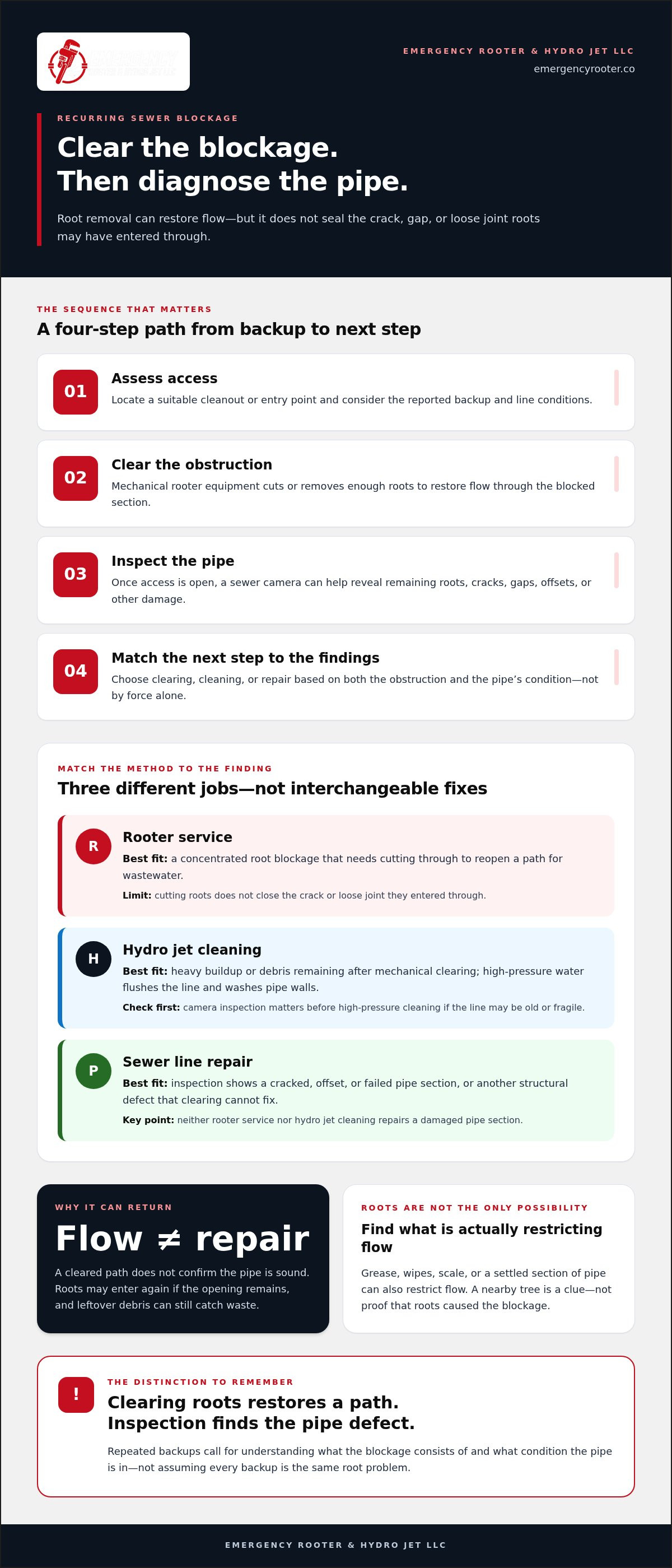
A professional approach generally follows four steps:
- Assess access. Locate a suitable cleanout or entry point and consider the reported backup and line conditions.
- Clear the obstruction. Use mechanical rooter equipment to cut or remove enough roots to restore flow through the blocked section.
- Inspect the pipe. Once access is open, examine the line, often with a sewer camera, for remaining roots, cracks, gaps, offsets, or other damage.
- Interpret the findings. Match the next step to both the obstruction and the pipe condition, rather than assuming every blockage needs the same treatment.
Root removal clears material from the line; inspection identifies the pipe defect that may have let roots enter. This distinction helps prevent a temporary return of flow from being mistaken for a repair.
Mechanical rooter service for a root blockage
A rooter uses a rotating cable and cutting head to break through roots obstructing the sewer line. This can reopen a path for wastewater and provide access for further assessment. Cutting roots doesn’t close the crack or loose joint they entered through. If roots remain or the entry point is still open, another blockage may develop.
When hydro jet cleaning may fit
Hydro jet cleaning sends high-pressure water through the line to clear obstructions and wash debris from pipe walls. It may suit a line with heavy buildup or follow mechanical clearing when debris remains. The pipe’s condition matters: camera inspection is important before high-pressure cleaning if a line may be old or fragile. Learn how hydro jetting in Los Angeles works and where it fits.
Rooter service and hydro jet cleaning do different jobs. A rooter cuts through a concentrated root blockage; hydro jetting flushes and cleans the line more broadly. Neither method repairs a cracked, offset, or failed pipe section. If inspection shows structural damage, sewer line repair may be the more appropriate next step. If the pipe appears intact but debris remains, cleaning may address the immediate obstruction.
Don’t use high-pressure cleaning without considering the line’s condition. For a recurring backup, local rooter and sewer line service can help match clearing and repair options to the findings.
Rooter Service, Hydro Jetting, or Sewer Repair: Which Fits the Findings?
Choose the next step based on what the cleared line reveals, not just on a nearby tree or a backup happening more than once. Tree roots in sewer line removal can restore flow, but it won’t tell you by itself whether cleaning is enough or the pipe needs repair. Use the findings to distinguish a blockage from pipe damage.
| Option | Purpose and what it addresses | What it does not resolve |
|---|---|---|
| Rooter clearing | Cuts through or clears roots blocking flow, creating access for further assessment. | Doesn’t close the root entry point or repair a damaged pipe. |
| Hydro jet cleaning | Uses high-pressure water to clear debris and clean buildup from pipe walls. | Doesn’t fix cracks, open joints, offsets, or failed sections. |
| Targeted repair | Addresses a defined damaged area, such as a cracked or separated section. | Doesn’t automatically resolve deterioration elsewhere in the line. |
| Replacement | Replaces a line or larger section when inspection shows damage is too extensive for a localized fix. | May be unnecessary if the findings show a limited, repairable defect. |
When clearing may restore service
If roots are obstructing flow, rooter service may be the immediate step to reopen the line and make inspection possible. Treat that as a practical starting point, not a final diagnosis. After the obstruction is cleared, assess the pipe for remaining roots or damage that could affect the next choice. For more detail on how clearing works, see this Los Angeles rooter service guide.
When inspection points toward repair
Visible cracks, open joints, offsets, or a failed section call for repair evaluation. A single, clearly defined defect may point toward targeted sewer line repair. Damage across a broader stretch may require considering a larger repair or replacement. The extent and location of documented damage matter. Recurring symptoms alone don’t prove the entire line needs replacing. Explore sewer line repair options to understand how findings guide the fix.
Keep the decision grounded in the inspection. A nearby tree is not proof, and a cleared blockage is not proof that the pipe is sound. If a backup is disrupting your property, local sewer line service can help match rooter clearing, hydro jet cleaning, or repair to the line’s condition.
What to Do Before and After Tree Root Removal in Los Angeles
An active sewer backup calls for a safe, clear response. Stop using affected fixtures, keep people away from wastewater, and share what you know with the plumbing team. These steps help limit exposure and provide useful details before clearing begins. The same approach applies in Los Angeles, Beverly Hills, and Santa Monica.
Before a plumber clears the sewer line
Limit water use while wastewater is backing up. Don’t flush toilets or run sinks, tubs, dishwashers, or washing machines connected to the affected line. Keep children and pets away from sewage, and don’t touch it directly. If you know where the cleanout is, point it out to the plumber. Don’t open it yourself or enter a flooded, confined, or otherwise unsafe area.
Before service, note the details that can help narrow down the problem:
- Which fixtures are affected, and whether the backup appears at more than one drain.
- When the current blockage began and whether it followed heavy water use.
- Whether the line has backed up before, and how soon symptoms returned after clearing.
- Any previous rooter or drain-clearing attempts and what changed afterward.
These observations don’t diagnose the pipe, but they can help distinguish a single-fixture clog from a possible main-line obstruction. Don’t keep testing drains if wastewater is rising. Even a small test can add water to the backup and complicate the work area.
After removal: understand the inspection findings
Once tree roots in sewer line removal restores access, ask what the inspection shows. A clear path through the line may mean the immediate obstruction is gone, while a visible crack, open joint, offset, or damaged section points to a separate pipe concern. The findings help explain whether further cleaning or sewer line repair is proposed, and why. Flow returning is useful, but it doesn’t prove the entry point is closed.
Before agreeing to the next step, make sure you understand:
- What material or defect was found, and where it appears in the line.
- Whether the recommendation addresses remaining debris, a damaged section, or both.
- What work is proposed now, and what it is intended to resolve.
A clear explanation connects the observed condition to the proposed work. If the evidence shows a localized defect, ask how the recommended repair addresses that section. If broader deterioration is reported, understand which areas support a larger scope. The goal is a decision based on the pipe’s condition, not guesswork or tree proximity alone.
Emergency Rooter & Hydro Jet LLC serves residential and commercial properties across Greater Los Angeles, including Los Angeles, Beverly Hills, and Santa Monica. Share the backup details and prior clearing history so the team has useful context.
For help with a sewer backup, get help with a sewer line blockage.
Get Tree Roots Removed from Your Sewer Line in Greater Los Angeles
A blocked sewer line needs the right response, not a one-size-fits-all fix. Rooter service can clear roots and other obstructions to reopen the line. Hydro jet cleaning may help with severe obstructions and buildup on pipe walls when the pipe’s condition makes it appropriate. If diagnosis shows a crack, open joint, or failed section, sewer line repair addresses that damage. Clearing can restore flow, but it doesn’t automatically repair the pipe or prevent roots from returning.
Emergency Rooter & Hydro Jet LLC serves residential and commercial customers across Greater Los Angeles, including Los Angeles, Beverly Hills, and Santa Monica. The company is licensed and insured under California license #574013 and provides 24/7 emergency service. When a backup disrupts your property, share what’s happening and whether the blockage has returned after previous clearing.
What local root removal service can address
Tree roots in sewer line removal starts by clearing the obstruction that restricts flow. Rooter service uses mechanical equipment to cut or clear roots and restore access for diagnosis. Hydro jet cleaning uses high-pressure water to remove obstructions and wash buildup from pipe walls, but the method must suit the pipe’s condition. If inspection identifies a damaged section, sewer line repair addresses the defect rather than just the material blocking the line.
These steps serve different purposes. Clearing targets the obstruction. Cleaning addresses debris along the line. Repair targets pipe damage. The sewer line’s condition guides which option fits. A nearby tree or recurring backup alone doesn’t establish that the pipe needs replacement. A repair recommendation should connect to the diagnosis and explain the area it is meant to address.
The next step when a sewer line is blocked
If wastewater is backing up or root obstructions keep returning, act on the disruption. Stop using affected fixtures, keep children and pets away from wastewater, and note which drains are affected. Tell the service team when the backup started and what clearing has already been attempted. If you know the cleanout location, identify it without opening it or entering an unsafe area.
After clearing, use the inspection findings to understand whether the immediate blockage is gone and whether a pipe defect remains. Ask what was found and how the recommended work responds to it. This keeps the next step tied to the condition of your line, whether the findings point to further cleaning or repair.
Emergency Rooter & Hydro Jet LLC provides rooter service, hydro jet cleaning, and sewer line repair for Greater Los Angeles properties. For an active backup or recurring root blockage, request sewer line service in Greater Los Angeles.
Take the Next Step Toward a Reliable Sewer Line
A backup can make it tempting to focus only on getting water moving again. Use the inspection findings to decide what the pipe needs now and what should be watched or addressed to reduce the chance of another disruption. Clear information turns an urgent repair into a practical plan for the property.
Tree roots in sewer line removal is most useful as part of that bigger decision, not as a fix by itself. If roots are blocking the line, clearing can restore flow and access. The next step depends on what the pipe shows, which could mean further cleaning or repair of a damaged area. There’s no need to assume a full replacement without evidence.
If wastewater is backing up or a root blockage keeps returning, get help based on the condition of your sewer line. Request sewer line service in Greater Los Angeles to take the next step toward restoring flow. A clear diagnosis gives you a firmer path forward.
Frequently Asked Questions
Can tree roots grow back after they are removed from a sewer line?
Yes. Roots can return if the opening that let them into the pipe remains or root material is left behind. Tree roots in sewer line removal clears growth from inside the pipe, but it doesn’t seal a crack or loose connection. If the blockage comes back, arrange an inspection and ask what it shows about the entry point. Repeating a clearing without addressing that defect may only restore flow temporarily.
Is chemical root killer safe to use in a sewer line?
It depends on the product and pipe condition. Use a root-killing product only if its label says it’s suitable for the sewer line, and follow the directions exactly. Don’t mix it with other drain chemicals or assume it will repair a crack or remove a heavy blockage. Chemical drain openers can harm older pipes. For recurring or severe clogs, professional assessment can help avoid relying on chemicals alone.
Can tree roots damage a sewer pipe even after the blockage is cleared?
Yes. Clearing the blockage doesn’t undo damage that may already exist at the root entry point. A crack, separated joint, or shifted section can remain after flow returns, and water or soil may continue moving through the defect. That doesn’t mean every root blockage has caused major damage. Inspection findings help show whether the pipe needs repair or whether the obstruction was the main issue.
How long does professional tree root removal from a sewer line take?
There isn’t one reliable time for every job. The work can depend on how easily the line can be accessed, how extensive the blockage is, and whether inspection or additional cleaning is needed afterward. A clear, accessible obstruction may take less time than a difficult blockage in a damaged section. The service team can give a more useful estimate after assessing the access and condition of the line.
What happens if I leave roots in my sewer line?
Roots can continue catching paper and waste, narrowing the space wastewater can pass through. The blockage may become harder to clear, and wastewater could back up into the property. Waiting also leaves any root entry point unaddressed. If you notice repeated drain problems, stop using affected fixtures during a backup and arrange an assessment before the obstruction causes a larger disruption.
Does homeowners insurance cover tree roots in a sewer line?
Coverage depends on your policy, the cause of the damage, and any sewer or service-line endorsements. Policies may treat gradual root intrusion or wear differently from sudden, accidental damage, so don’t assume either is automatically covered. Review your policy wording and contact your insurer to ask how it applies to your situation. Keep inspection findings and repair records, since they can help document what happened.
Can tree roots affect a water line as well as a sewer line?
They can affect underground water lines if a pipe has a leak or vulnerable connection, though roots don’t typically enter an intact, pressurized line as they do a leaking sewer pipe. Root growth around a water line may also put pressure on it. If you notice an unexplained wet area or a change in water service, have the line checked to identify the source before assuming roots are responsible.


