

What if the clog you keep clearing isn’t the real problem? If the same drain backs up again, or several fixtures start acting up, a recurring drain backup fix means finding out why wastewater can’t move freely, not just getting the drain flowing for now.
Another backup after a line has been cleared is frustrating, especially when the cause may be hidden farther along the sewer line. Repeated clearing can restore flow temporarily, but it may not address roots, heavy buildup, or a damaged pipe.
This guide explains how to recognize signs of a main-line problem, why common quick fixes may only buy time, and what to do next. You’ll learn how drain cleaning, rooter service, hydro jet cleaning, and sewer line repair can address different conditions. In Los Angeles, Beverly Hills, and Santa Monica, mature trees and aging pipes can contribute to recurring backups, so identifying the cause matters. The goal is to help you move from another temporary clearing toward a solution that addresses the underlying issue.
Key Takeaways
- A backup that returns after clearing may point to a blockage or pipe issue farther along the line.
- Track which fixtures are affected and when symptoms occur. Those details can help narrow down where the problem may be.
- Water flowing again doesn’t prove the underlying cause is gone. A recurring drain backup fix starts with identifying why the blockage returns.
- If wastewater backs up, stop using affected fixtures and keep people and pets away from contaminated water.
- The right next step depends on the cause, from drain cleaning or rooter service to hydro jet cleaning or sewer line repair.
Recurring Drain Backup Fix: When Repeated Clogs Point to a Bigger Problem
A drain clears, works for a while, then backs up again. That pattern changes what the symptoms may mean. One slow drain may be a localized fixture clog. When the same problem returns, or other fixtures begin showing symptoms, it’s time to investigate rather than assume the first clearing solved the cause.
A clearing can restore flow; a recurring backup fix identifies why the flow stopped and addresses the cause. Drains connect to a broader system, and understanding drainage systems helps explain why symptoms at different fixtures can sometimes be related. Recurrence is a reason to look closer, not proof of a specific defect. Symptoms alone can’t confirm pipe damage or locate a blockage.
What changes when the same drain backs up again?
Pay attention to what happens after the drain is cleared. Does water start moving slowly again? Does it collect in the sink or tub, or spill out when the fixture is used? Note how soon the symptom returns and whether it follows particular uses. A quick return may mean the first clearing didn’t remove the full obstruction, but it doesn’t establish why. The location and timing are useful clues for diagnosis.
If one fixture acts up while nearby drains work normally, the issue may be localized. If that fixture repeatedly slows or holds water after clearing, record the pattern. Temporary drainage does not confirm that the line is fully clear or that the cause is gone.
When do several fixtures suggest a main sewer line issue?
Several fixtures slowing or backing up around the same time can point beyond one sink or tub. They may share a connected section of drain or sewer line, so a restriction farther along can affect more than one outlet. Note which fixtures are involved, whether symptoms appear together, and what was being used just before they began. These details can help distinguish a single-fixture clog from a problem affecting a wider part of the system.
For example, if a bathroom drain slows and another fixture backs up around the same time, write down both observations. Multiple symptoms don’t prove there’s a main-line blockage, but they suggest the issue may involve a shared path and needs investigation. The main sewer line clog guide explains additional warning signs and next steps.
Keep a simple record: list the affected fixtures, the order symptoms appeared, and whether drainage improved before the problem returned. That timeline is more useful than guessing at a cause. One isolated episode differs from repeated trouble, and one affected fixture differs from several fixtures affected together.
Why Drains Keep Backing Up: The Causes Behind Repeat Blockages
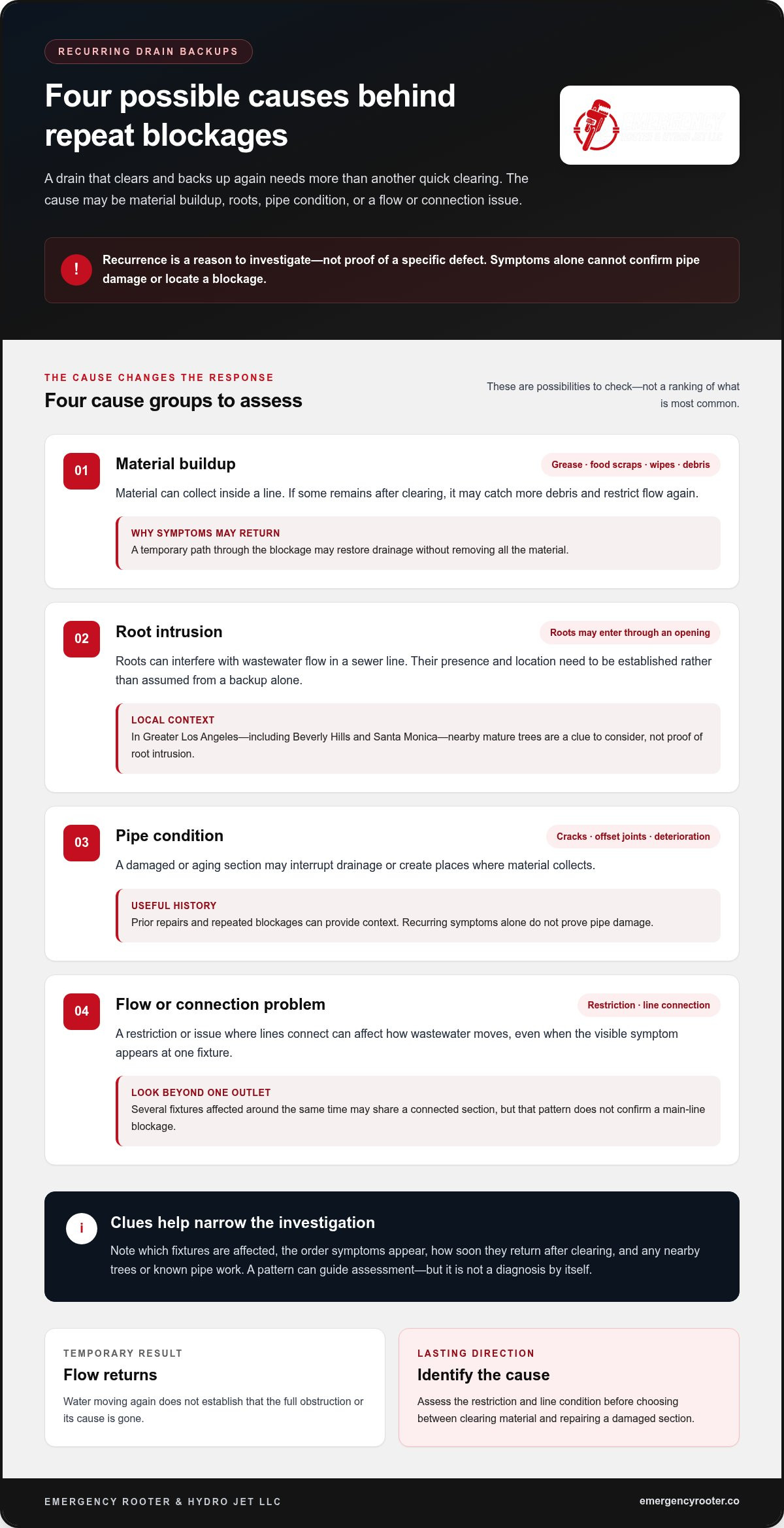
A drain can show the same warning sign for different reasons. Repeat backups can result from material buildup, roots, pipe condition, or a problem with how the line connects or carries wastewater. That’s why the right recurring drain backup fix starts with identifying the cause instead of assuming every repeat clog needs the same response.
Common causes fall into four groups:
- Material buildup: Grease, food scraps, wipes, and other debris can collect inside a line. Material left behind after a clearing may catch more debris and restrict flow again.
- Root intrusion: Roots may enter a sewer line through an opening and interfere with wastewater flow. Their presence and location need to be established, not guessed from a backup alone.
- Pipe condition: A crack, offset joint, or deteriorated section may disrupt drainage or create places where material collects.
- External flow or connection problems: A restriction or issue at a connection can affect how wastewater moves through the system, even if the visible symptom appears at a fixture.
Can buildup or tree roots cause a drain to clog repeatedly?
Yes, both are possible. Clearing a narrow path through grease or debris may restore drainage without removing all the material coating or caught in the line. What remains can collect more debris, and symptoms may return. Roots can also interfere with a sewer line, so removing an obstruction at the surface may not address the underlying issue. A Los Angeles rooter service guide explains how rooter service relates to blockages and root removal.
In Greater Los Angeles, including Beverly Hills and Santa Monica, consider whether mature trees are near the sewer line route, but treat that as context, not proof. Plumbing engineering guidance, including plumbing engineering best practices, can help explain why system layout and connections matter when tracing a drainage problem.
Could a damaged or aging pipe be behind the backup?
It’s possible. Cracks, misaligned sections, or deterioration may interrupt flow or let material catch inside the pipe. A property’s pipe history can provide useful context, especially if the line has had prior repairs or repeated blockages. Recurring symptoms alone can’t establish the pipe’s condition or prove that damage is present.
When the same problem keeps returning, or several fixtures are affected, assessment can help locate the restriction and evaluate the line before choosing a repair method. Clearing material and repairing a damaged section address different conditions.
Keep a record of where backups occur, nearby trees, and any known history of pipe work. These details help narrow down what to assess without turning a clue into a diagnosis. If repeat backups are disrupting your home, get help tracing the drain or sewer problem before relying on another temporary clearing.
Recurring Drain Backup Myths: Why Clearing It Once May Not Be Enough
A drain starts flowing again, and it’s tempting to call the problem solved. Restored flow only shows that water can pass at that moment. It doesn’t prove the full obstruction is gone, explain why it formed, or show whether the pipe is in good condition. Clearing can relieve the symptom without correcting the cause.
Myth: If the drain works now, the problem is gone
Not necessarily. A clearing method may open a path through a blockage while leaving residue or material elsewhere in the line. If the drain slows or backs up again, the cause may remain, or a different issue may be affecting flow. Reassess instead of repeating the same response by default. A repeat clog doesn’t automatically mean the sewer line needs replacement.
Routine maintenance and corrective work are different tasks. Maintenance can help manage ordinary buildup, but recurring symptoms call for attention to what keeps restricting flow. If a pipe has a damaged section, cleaning may remove material without repairing it. The right response depends on what’s found, not just on the fact that a drain backed up.
Myth: The same clearing method works for every backup
A removable obstruction and a root intrusion are different problems. A damaged or misaligned pipe is different again. Clearing may suit some blockages; deeper cleaning or sewer line repair may be appropriate for other diagnosed conditions. No single method is right for every repeat backup. Professional trade resources, including plumbing contractor insights, offer broader context on plumbing work and training.
Diagnosis should guide the choice. A recurring drain backup fix isn’t simply “use a stronger tool.” First, determine what is restricting flow and whether the line appears intact. Then match the response to the finding: drain cleaning or rooter service for a blockage, hydro jet cleaning when appropriate, or sewer line repair if assessment identifies a pipe problem. The Los Angeles hydro jetting guide explains that method in more detail.
Keep the distinction clear:
- Temporary relief: Flow returns, but the underlying cause may still be present.
- Maintenance: Cleaning supports routine care but doesn’t repair a damaged pipe.
- Corrective work: The response targets the condition identified through assessment.
If the same obstruction returns, note what was cleared, which fixtures are affected, and how soon symptoms came back. That history helps guide the next assessment instead of treating every episode as an unrelated clog. For recurring drain or sewer trouble in Greater Los Angeles, get help assessing the backup and choosing a response based on the cause.
What to Do When a Drain Backs Up Again in Los Angeles
A repeat backup calls for a calm, practical response. Stop using the affected fixtures first. Note what’s happening and keep people and pets away from water that may contain sewage. Don’t touch contaminated water or try to force a quick fix while the cause is unknown.
- Stop adding water. Avoid using affected sinks, tubs, toilets, or appliances that drain into the problem area. If several fixtures are backing up, pause water use across the home until the line can be assessed.
- Keep clear of wastewater. If sewage or dirty water has entered a room, keep people and pets out of the affected area. Avoid direct contact.
- Record what you see. Note which fixtures are affected, when symptoms started, and whether they appeared together or one after another.
What information should you note before calling for help?
Write down whether the backup began suddenly or returned gradually after a previous clearing. Include recent clearing attempts, unusual odors, gurgling, standing water, or visible wastewater. In Los Angeles, Beverly Hills, and Santa Monica, note nearby trees and any known history of sewer-line trouble or prior work. These details can focus the assessment without being mistaken for a diagnosis.
Be specific. “The bathroom sink drains slowly” is useful; “the plumbing is broken” is a guess. If you can observe safely, note whether other fixtures change when one is used. Don’t run water just to test a suspected backup.
When should you treat a backup as urgent?
Act promptly if wastewater is entering living areas, several fixtures stop draining, or the backup is spreading. Stop running water into affected drains while waiting for professional assessment. Avoid repeated chemical treatments or forceful DIY attempts. They may not address the cause and can make an uncertain situation harder to manage safely.
A persistent sewer odor alongside a backup is another detail to report. Odor alone doesn’t identify the cause, but a clear account of when and where it occurs can help guide the next step. For more context on persistent smells, see this sewer odor guide for Los Angeles homes.
Keep the affected area clear and share your notes when arranging help. If a recurring drain backup needs professional assessment, request drain or sewer backup help in Greater Los Angeles.
A Lasting Recurring Drain Backup Fix Starts With Diagnosis
A drain that keeps backing up needs more than another attempt to make water move. The next step is to identify where the restriction or possible failure is and what may be causing it. That gives the response a clear target. A recurring drain backup fix should match the condition found, because clearing an obstruction and repairing a pipe are different jobs.
Assessment helps distinguish a blockage from a possible problem with the line itself. Symptoms and their location matter, but they don’t establish the cause on their own. Once the issue is assessed, the appropriate response may involve clearing material, cleaning the line, or repairing a damaged section. No single service is right for every repeat backup.
How professional diagnosis guides the next repair step
The goal is to understand what is affecting flow before choosing a response. Rooter service may address a blockage; drain cleaning or hydro jet cleaning may suit other buildup conditions. If assessment points to a pipe problem, sewer line repair may be the relevant path. The line’s condition and the cause found guide the decision, not the name of the symptom alone.
Think of the process as a match between finding and response:
- Obstruction: Consider a clearing approach suited to the blockage.
- Buildup: Determine whether drain cleaning or hydro jet cleaning is appropriate.
- Possible pipe damage: Assess whether sewer line repair is needed.
This keeps the focus on the actual condition and avoids treating every backup as though it has the same cause or requires the same work.
Get help with repeat backups in Greater Los Angeles
Emergency Rooter & Hydro Jet LLC provides emergency plumbing, drain cleaning, rooter service, hydro jet cleaning, and sewer line repair across Greater Los Angeles, including Los Angeles, Beverly Hills, Santa Monica, and surrounding communities. The company is licensed and insured in California, license #574013. Emergency plumbing service is available 24/7.
When arranging service, share which fixtures are affected, how often the backup returns, and what clearing has already been attempted. Mention any known history of line problems. Those details can help focus the assessment and support a response based on the cause, whether the next step involves rooter service, cleaning, or sewer line repair.
Don’t settle for repeated temporary relief when the same backup keeps returning. Contact Emergency Rooter & Hydro Jet LLC for help assessing a recurring drain or sewer backup in Greater Los Angeles.
Take the Next Step Toward Reliable Drainage
Another backup shouldn’t become part of your household routine. Use this moment to move from reacting to the mess toward deciding what needs attention. A recurring drain backup fix isn’t about trying every clearing method in turn. It’s about choosing a next step based on what’s affecting your plumbing.
You don’t need to know the technical cause before asking for help. Describe what you’ve noticed and share what has already been tried. That information can help guide the assessment and next step. Acting before another backup disrupts your home can help you address the problem sooner.
Contact Emergency Rooter & Hydro Jet LLC for help with a recurring backup. A clear assessment can help you decide what to do next.
Frequently Asked Questions
Can a drain backup keep returning after it has been snaked?
Yes. Snaking can open a path for water without removing all recurring buildup, roots, or another issue affecting the pipe. The returning backup doesn’t identify which cause is responsible. Note whether the problem stays at one fixture or appears elsewhere, and whether it follows a particular use, such as flushing a toilet. If it returns, share that pattern when arranging plumbing service so the next step can address the cause identified.
Is chemical drain cleaner safe for a recurring drain backup?
It depends on the product and situation, so follow its label carefully. Chemical cleaners can create handling risks, especially if they splash or are mixed with another cleaner. They may also fail to address a restriction farther along the sewer line. Avoid repeated treatments when the blockage is unknown. If you’ve already used a product, tell the plumber what it was before work begins so they can account for it.
Can heavy rain cause a sewer backup in a home?
Yes, heavy rain or an overloaded system can contribute to a backup in some circumstances, but rain isn’t the only possible cause. Note whether symptoms started during rainfall or shortly afterward, and whether they affected one fixture or several. That timing can inform an assessment, but it can’t prove rain caused the problem. A backup that coincides with a storm still needs its source identified before choosing a response.
Does a backwater valve stop recurring drain backups?
No, a backwater valve isn’t a universal fix for recurring backups. Whether it suits a property depends on the plumbing setup and what is causing the problem. A valve may not address a blockage, buildup, or pipe condition that is already affecting drainage. Before treating a protective device as the answer, have the repeat backup assessed. Share when it happens and which fixtures are affected so the cause can guide the decision.
How often should a sewer line be inspected if drains keep backing up?
There’s no fixed inspection schedule that fits every property. Repeated backups, previous line problems, and the observed condition of the pipe can all affect when assessment makes sense. A recurring symptom is a reason to seek attention rather than wait for a routine maintenance interval. Note when the problem began, how often it returns, and what clearing has already been done. That history helps determine an appropriate next step.
What happens if sewage backs up into a home?
Limit contact and keep children and pets away from the affected area. Stop using fixtures that may send more water into the backed-up line. Sewage-contaminated water needs prompt attention, but first the source of the backup must be addressed. Avoid handling the water or making cleanup decisions before the situation has been assessed. Note where the wastewater appeared and whether other drains are affected, then share those details when arranging help.


