

An overflowing sewer cleanout needs prompt professional attention, not a wait-and-see approach. A sewer cleanout overflowing in Santa Monica can indicate a blockage or another sewer-line problem. A plumber can assess the line, clear an obstruction, and determine whether repair is needed.
An overflow is disruptive, and continued water use can add wastewater to the backup. Limit use of affected drains and have the cause assessed before the overflow worsens.
This guide explains how emergency plumbing, hydro jet cleaning, rooter service, and sewer line repair can address the problem. You’ll learn what a plumber may do, how the line’s condition guides the solution, and what details help move the response forward.
Key Takeaways
- Learn why an overflowing cleanout needs prompt professional assessment and what details help explain the problem.
- Understand how emergency plumbing service can address sewage backups and identify where the blockage may be.
- See when sewer cleaning or hydro-jetting may clear a main-line obstruction, and what can affect the approach.
- Recognize signs that a sewer line may need repair or replacement rather than another cleaning.
- Know what to expect when a plumber responds and how to limit additional wastewater entering the affected drains.
24/7 Service availability
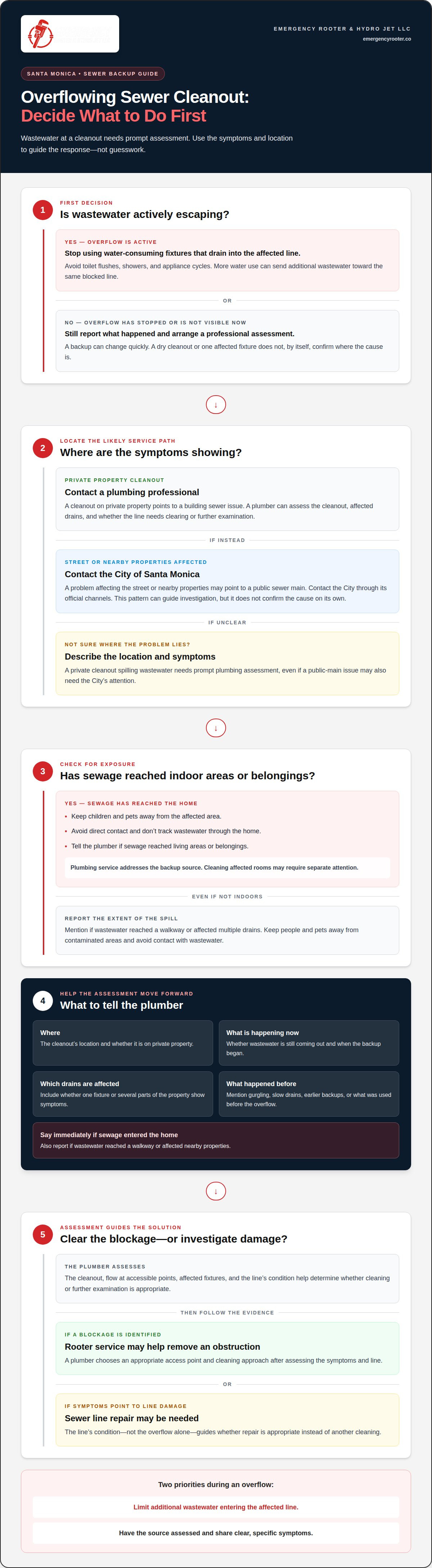
An overflowing sewer cleanout needs prompt attention, whether it starts during the day or overnight. The urgency comes from wastewater escaping, not the hour. If the cleanout keeps spilling, stop using water-consuming fixtures and arrange a professional assessment. Every toilet flush, shower, or washing-machine cycle can send more wastewater toward the same blocked line.
The City of Santa Monica sewer emergency contact number is not available in the verified details for this section, so it cannot be stated accurately here. For a suspected problem in a public sewer main, contact the City of Santa Monica through its official channels. A cleanout on private property points to a building sewer issue that a plumbing professional can assess.
A backup can change quickly. A cleanout that releases wastewater after one fixture runs may overflow further when another fixture drains. For example, you might notice water rising near the cleanout after using a bathroom. That pattern gives the plumber a useful starting point, but it does not confirm where the blockage is.
When arranging urgent help, share the cleanout’s location and what happened before the overflow began. Describe whether wastewater is still coming out, which fixtures are affected, and whether the issue has happened before. These details help distinguish a single-drain problem from a backup affecting several parts of the property. Mention any sewage inside the home right away.
A professional response focuses on controlling the immediate problem and locating its cause. The plumber can assess the cleanout, check which fixtures show symptoms, and determine whether clearing the line or examining it further is appropriate. If the line is blocked, rooter service may help remove an obstruction. If the symptoms point to damage, sewer line repair may be needed instead.
Emergency plumbing is available around the clock, including outside ordinary daytime hours. Not every sewer issue is the same: an isolated backup calls for a different assessment than wastewater emerging from an exterior cleanout and affecting multiple drains. The extent and location of the backup, along with the line’s condition, guide the response.
- Stop using affected fixtures while wastewater is actively escaping.
- Report the cleanout’s location and whether the overflow continues.
- Describe affected drains and any earlier backups.
Clear details help the plumber respond to the actual symptoms. For a sewer cleanout overflowing in Santa Monica, prompt assessment can determine whether the immediate need is line clearing or repair.
Emergency plumbing and sewage backups
An overflowing cleanout can signal a blockage affecting several drains. The right response depends on whether the problem is on your property or in the public sewer.
Choosing Whom to Call
For a cleanout on private property, contact a plumber to assess the building sewer and address the backup. Contact the City of Santa Monica if signs point to a public sewer main, such as a problem affecting the street or nearby properties. The cleanout’s location and the drains affected can help distinguish the situations.
If you’re unsure where the problem lies, describe the overflow and its location when requesting help. A private cleanout spilling wastewater needs prompt plumbing assessment, even if a public-main issue may also need the city’s attention.
Immediate Overflow Response
A plumber starts by assessing the cleanout and affected drains. They need to know whether wastewater is still rising, which fixtures are affected, and when the backup began. Mention recent gurgling, slow drains, or earlier overflows. These details help the plumber understand the symptoms before choosing how to inspect and clear the line.
Keep water use to a minimum while the cleanout is overflowing. Avoid flushing toilets or running appliances that drain into the affected line. Tell the plumber whether sewage has entered the home, reached a walkway, or affected multiple drains. This helps establish the immediate scope of the response.
Health Risks and Cleanup Precautions
Sewage overflow creates a contamination concern, especially when wastewater reaches indoor surfaces or items people handle. Keep children and pets away from the affected area. Avoid direct contact with the wastewater, and don’t track it through the home on your shoes. Tell the plumber if the spill has reached living areas or belongings.
During cleanup, professionals can limit contact with the affected area and remove wastewater and contaminated material using appropriate protective precautions. Plumbing service addresses the source of the backup; cleaning affected rooms may require separate attention. Don’t assume a cleared drain has also resolved contamination on floors or belongings.
Share observations, not guesses. For example, report that the exterior cleanout is overflowing while a bathroom drain is gurgling. That combination gives the plumber specific symptoms to assess. If only one fixture is affected and the cleanout stays dry, report that too. Different symptoms can point to different parts of the drainage system.
For a sewer cleanout overflowing in Santa Monica, focus on two priorities: stop adding wastewater to the line and get the source assessed. A plumber can evaluate a private sewer line; contact the City of Santa Monica about a suspected public-main problem. Prompt, accurate details help direct the response.
Main sewer line cleaning
An overflowing cleanout often points to restricted flow in the sewer line. A plumber assesses the symptoms and access point before choosing a cleaning method.
To distinguish a private sewer lateral problem from a city sewer main issue, a plumber assesses where the backup occurs, checks flow at accessible cleanouts, and may inspect the line. Backups limited to one property can point to its lateral; problems affecting nearby properties may suggest a public-main concern. The pattern guides further investigation but does not establish the cause on its own.
Cleaning starts with an appropriate access point and an assessment of the blockage. Rooter Service uses rotating steel cables to cut through tree roots, grease, paper, and debris. The method depends on what is blocking the line and how the pipe responds. Different obstructions can restrict flow in different ways.
Hydro-jetting uses pressurized water to clear buildup from pipe walls and move debris through the line. It can be useful when deposits coat a section rather than form one simple plug. Before using this approach, a professional considers the pipe’s condition and the location of the obstruction. A damaged or fragile section calls for a different plan than a sound pipe with heavy buildup.
A cleaning visit should address more than the point where wastewater appeared. The plumber considers whether several fixtures drain slowly, whether the backup returns after water use, and whether the line has a history of recurring blockage. For example, wastewater at a cleanout while multiple drains gurgle suggests a broader drainage restriction than one isolated sink clog.
After clearing the obstruction, the plumber checks whether flow has improved and symptoms remain. If water still backs up, the blockage may not be fully cleared, or another restriction or pipe defect may remain. Repeated cleaning without identifying the cause can leave the underlying issue unresolved. Recurring roots, for example, may require further examination of the affected pipe.
Cleaning is not the same as repair. If inspection shows a break, collapse, or other damage, removing debris cannot restore the pipe. The plumber can explain whether cleaning is suitable or the line needs repair. A clear diagnosis helps avoid treating a damaged section as though it were only clogged.
- Tell the plumber which fixtures are affected and whether backups recur.
- Describe where wastewater appeared, such as the cleanout or an indoor drain.
- Ask what the assessment shows about blockage, flow, and pipe condition.
These details help focus the assessment on the right section of line. In Santa Monica, the pattern across cleanouts, fixtures, and nearby properties can help determine whether the issue appears limited to one property or may involve the public sewer main.
Sewer line repair and replacement
Cleaning can restore flow when debris causes a blockage, but it cannot fix a cracked or collapsed pipe. Repair decisions depend on the damaged section, the line’s condition, and whether the problem is on private property or in a public sewer.
Santa Monica permit and inspection requirements depend on the repair’s scope and location. Establish the applicable requirements before excavation or replacement begins, especially if work may affect a public connection or street area.
Responsibility depends on where the damaged section is and whether it belongs to a private lateral or public sewer main. A plumber can identify the apparent problem area; the property boundary and sewer ownership determine who arranges the repair.
Signs that cleaning may not be enough include repeated backups after the line has been cleared, persistent drainage problems, or a camera inspection showing pipe damage. One overflow does not prove the line needs replacement. The diagnosis should connect the symptoms to a specific defect.
A repair assessment typically starts with the backup pattern and an inspection of accessible parts of the line. If the problem remains unclear, a sewer camera can show the pipe’s interior and help locate a break, separation, or collapse. The findings guide whether a targeted repair or broader replacement is appropriate.
A localized defect may call for repair of the affected section. Widespread damage, or a pipe that cannot reliably carry wastewater, may make replacement the better option. The decision turns on the condition and extent of damage, not simply on the fact that a cleanout overflowed. One damaged joint, for example, differs from several failed sections along the line.
Before work proceeds, the plumber should explain the diagnosed defect, proposed work area, and how the repair addresses the cause. If excavation is needed, the pipe’s location and access shape the work. Replacement addresses the damaged run, while a targeted repair focuses on a limited section.
After repair, the line needs to be assessed to determine whether wastewater can pass through the affected section as intended. If symptoms continue, the plumber may need to examine another part of the system or reassess the diagnosis. A repaired pipe and a cleared blockage are different outcomes, so the findings should explain which problem was addressed.
- Share whether backups returned after earlier cleaning.
- Ask which section appears damaged and what inspection showed.
- Clarify whether the affected pipe is private or part of the public sewer.
- Establish permit and inspection requirements before repair begins.
These details help connect the repair plan to the cause. For an overflowing cleanout in Santa Monica, the key decision is whether the line is blocked, damaged, or affected by a public sewer issue.
What should I do immediately if a sewer cleanout is overflowing?
When a plumber arrives, the first priority is assessing the active overflow and avoiding a rushed diagnosis. The plumber examines the cleanout, checks affected drains, and asks what happened before wastewater appeared. Those observations help distinguish a main-line blockage from a problem isolated to one fixture.
Give the plumber direct details about the property and symptoms. Say whether the overflow is still active, whether bathroom and kitchen drains are affected, and whether the cleanout has backed up before. Mention sewage inside the home or near an entrance so the plumber can account for affected areas during the assessment.
The plumber’s initial response typically follows a practical sequence:
- Locate the overflowing cleanout and assess the amount and direction of wastewater.
- Identify which fixtures or drains show slow flow, gurgling, or backup.
- Review the reported timing and any earlier incidents at the property.
- Choose an inspection or clearing approach suited to the symptoms and pipe condition.
- Reassess flow after clearing and determine whether further diagnosis is needed.
The sequence matters because clearing a blockage without checking the result can leave a restriction behind. If the cleanout stops spilling but several fixtures still drain poorly, the plumber needs to investigate further. If flow returns and symptoms disappear, the findings can help determine whether the issue was a blockage or something more persistent.
Access and visible conditions also shape the response. A cleanout beside a driveway presents a different work area from one in a landscaped section or near an indoor floor drain. Tell the plumber where the cleanout is and point out any access constraints. Don’t disturb the cap or try to clear the line yourself while the plumber assesses it.
Keep the timeline specific. “The laundry drain backed up after the bathroom” gives a clearer sequence than simply saying “the drains are bad.” Report recent plumbing work or recurring symptoms if relevant. These details help the plumber connect the overflow to the wider drainage pattern and decide whether line cleaning, further inspection, or sewer line repair is appropriate.
- State whether wastewater continues to escape.
- Name every affected fixture or drain.
- Describe prior backups and when symptoms began.
- Point out the cleanout location and access conditions.
For an overflowing cleanout in Santa Monica, pass these details to a professional and arrange an assessment. Request professional sewer overflow help so the source can be assessed and the next step identified.
Emergency Rooter & Hydro Jet: Sewer Line Repair
Emergency Rooter & Hydro Jet LLC can assess an overflowing cleanout and address the sewer-line problem behind it. If a blockage is restricting flow, Rooter Service or Hydro Jet Cleaning may help clear the line. If an assessment points to pipe damage, Sewer Line Repair addresses the damaged section rather than treating it as another clog.
Drain Cleaning can help with drainage problems; the right approach depends on the symptoms and the line’s condition. Share which drains are affected, whether wastewater is still escaping, and whether the overflow has happened before. These details help focus the assessment and identify the next step.
If you need professional help with an overflowing sewer cleanout, contact Emergency Rooter & Hydro Jet LLC.
Take the Next Step Toward a Clear Sewer Line
If your sewer cleanout is overflowing in Santa Monica, make the next decision part of resolving the problem. A clear account of where wastewater appeared, which drains were affected, and whether the issue has returned gives the plumber a stronger starting point. The goal is not just to stop the visible overflow, but to identify what will prevent the same disruption from continuing.
Keep the affected area clear and avoid adding wastewater to the line while arranging professional help. A plumber’s assessment can connect the symptoms to a practical next step, whether that means clearing an obstruction or addressing pipe damage. This distinction helps you move forward with a plan based on your sewer line’s condition.
Contact Emergency Rooter & Hydro Jet LLC for help with your sewer cleanout overflow. Take the next step toward restoring normal drainage and getting the issue assessed.


