

Several backed-up drains usually point to a problem beyond one fixture. When multiple drains back up in Los Angeles, the obstruction may be in a shared branch line or the main sewer lateral. A main-line blockage can cause wastewater to rise through the lowest available drain first.
That pattern is alarming, but it can help narrow down the source. The key is to distinguish a local clog from a blockage affecting a shared line, then avoid actions that could push more wastewater into the home.
This article covers the warning signs technicians look for, what to stop doing during an active backup, and how a plumber locates and clears an obstruction. It also explains when drain cleaning or rooter service may help, and when inspection points to pipe damage that needs repair.
Key Takeaways
- Gurgling toilets and slow drains in separate rooms can help professionals tell whether the blockage affects one fixture, a branch, or the main sewer line.
- During an active backup, stop water use throughout the home; avoid chemical cleaners and don’t open a cleanout if wastewater may be under pressure.
- For recurring or severe backups, camera inspection can reveal roots, cracks, sagging, or other pipe damage after the line is cleared.
- Rooter service or hydro jetting may clear some obstructions, but a collapsed or badly damaged pipe may need repair instead.
- Share which fixtures are affected and when symptoms occur so the plumber can narrow down the likely blockage and choose an appropriate diagnostic approach.
Distinguishing fixture, branch-line, and main sewer blockages
When reporting a backup to the Los Angeles Bureau of Sanitation, provide the property address, affected fixtures, and when symptoms began. Explain whether wastewater is entering the home and whether nearby units or properties have similar problems.
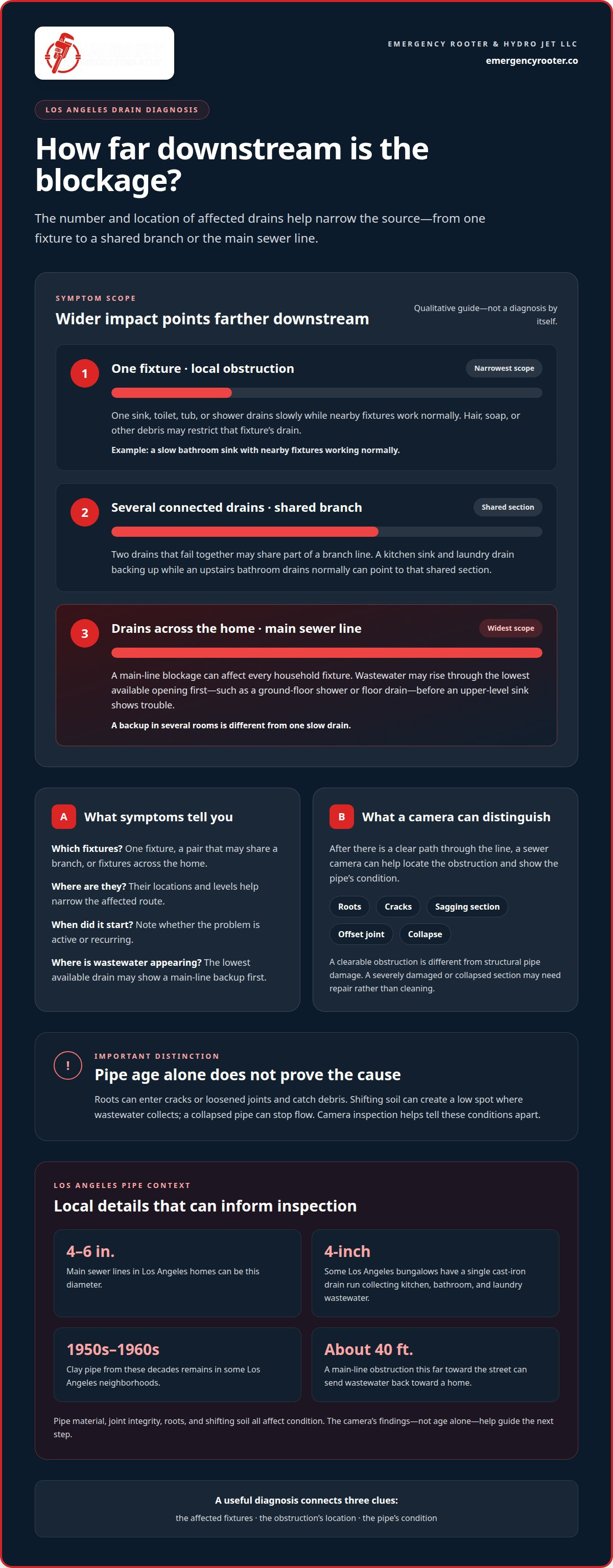
A fixture clog affects one sink, toilet, tub, or shower. For example, a bathroom sink that drains slowly while nearby fixtures work normally suggests a local obstruction. Hair, soap, or other debris can restrict that fixture’s drain without blocking the rest of the plumbing. One slow drain is different from wastewater rising in several rooms.
Household drains connect through smaller pipes before reaching a shared branch and the main sewer line. A kitchen sink and laundry drain, for example, may share part of a branch. If both back up while an upstairs bathroom drains normally, the obstruction may be in that shared section. If fixtures across the home fail, the blockage may be farther downstream.
A main sewer blockage can affect every household fixture. Wastewater may rise through the lowest available opening, so a ground-floor shower or floor drain can show trouble before an upper-level sink. Los Angeles bungalows may have a single four-inch cast-iron drain run collecting wastewater from kitchens, bathrooms, and laundry. One obstruction in that shared route can disrupt the whole house.
Roots can enter cracks or loosened joints in older Los Angeles sewer pipes, then catch debris and narrow the flow. Vitrified clay laterals use short pipe sections joined every few feet, creating multiple possible entry points when seals loosen. Los Angeles neighborhoods still have clay pipe installed in the 1950s and 1960s. Older properties may also have pre-1960 drainage made from cast iron and vitrified clay, with some systems laid about ninety years ago.
Pipe age alone doesn’t prove the cause. A camera inspection can distinguish root intrusion from a sag, offset joint, or collapsed section. Shifting soil can create a low spot where wastewater collects, while a collapsed pipe can stop the flow. A main-line obstruction about forty feet toward the street can send wastewater back toward a Los Angeles home, even when indoor drains seem clear between episodes.
Los Angeles homes can have main sewer lines four to six inches in diameter. Their condition depends on pipe material, joint integrity, and whether roots or shifting soil have affected the route. A camera inspection gives the technician evidence of the obstruction’s location and the pipe’s condition. This helps distinguish clearable buildup from structural damage and identify whether the affected fixtures connect to one branch or the main sewer.
How Do Professionals Diagnose Multi-Drain Backup Issues?
A technician starts by mapping the symptoms, rather than assuming every backup has the same cause. They note which fixtures are affected, where they are in the building, and whether the problem is active or recurring. A kitchen sink and laundry drain failing together can point to a shared branch. Backups across separate floors suggest a wider sewer-line obstruction.
Next, the technician locates the cleanout and assesses whether the line is safe to access. The cleanout provides an entry point for clearing and inspection. A fully obstructed pipe may need to be cleared before a camera can pass through and show its condition. This avoids stopping the diagnosis at debris blocking the camera’s view.
Once there is a clear path, a sewer camera inspection can show what is happening inside the line. The technician looks for roots, cracks, a sagging section, an offset joint, or a collapse. These findings matter because a removable obstruction is different from a damaged pipe. A camera can locate trouble without digging and help determine whether clearing may restore flow or sewer line repair is needed.
Camera inspection is especially useful when backups recur, roots are suspected, or the pipe is old. It also helps before recommending excavation or hydro jet cleaning, since a fragile, collapsed, or severely offset line may not be suitable for aggressive cleaning. If excavation is needed, a camera locator beacon can help mark the problem’s position from above ground.
In an apartment building, diagnosis may involve plumbing stacks shared by multiple units. The technician compares which floors and fixtures are affected to determine whether the issue is inside one unit, in a shared stack, or farther along the sewer line. This pattern helps narrow the inspection route and avoid treating an isolated fixture as a building-wide failure.
How much does sewer camera inspection cost in Los Angeles? The cost depends on the access point, the blockage, and whether the line must be cleared before inspection; the price is provided after a quote request. The camera’s findings also guide the next decision, because a clear, intact pipe calls for a different response than a damaged section.
A useful diagnosis connects three things: the affected fixtures, the obstruction’s location, and the pipe’s condition. If several drains are backing up, professional sewer-line diagnosis can help identify the cause before the wrong clearing method is used.
What Professionals Advise Clients to Avoid During a Backup
During an active backup, stop using water throughout the home. Don’t run a washing machine, shower, dishwasher, or faucet. More wastewater entering a restricted line can increase the risk of sewage coming through a tub, shower, or floor drain. Even a washing machine’s discharge can trigger a backup behind a partial blockage.
Skip chemical drain cleaners. They can be dangerous when wastewater is standing, and they won’t remove root intrusion or repair a collapsed pipe. Don’t open a cleanout if wastewater may be under pressure. A technician can assess the line and choose a safe access point instead of sending chemicals or backed-up water into the room.
A partial obstruction can make symptoms come and go. One toilet may gurgle after another fixture drains, then seem normal until a larger discharge enters the pipe. Warning signs can appear days or even weeks before a full backup. A technician uses this pattern, along with the affected fixtures, to distinguish a shared blockage from a local drain problem.
Several different failures can create similar symptoms: grease buildup, root intrusion, a sagging pipe, an offset clay joint, collapsed cast iron, a blocked cleanout, or a shared-line issue. A camera inspection can help identify roots, pipe damage, or a low section once the line is accessible. Clearing debris alone won’t correct a collapsed or bellied pipe.
When is a multiple-drain backup a plumbing emergency? Treat it as an emergency if wastewater is actively rising, the backup keeps returning, property is being damaged, or sewage, odor, heat, or comfort risks are present. Don’t keep testing drains while symptoms are active.
Raw sewage exposure can pose respiratory and infection risks, and lingering moisture can contribute to mold growth. Keep people away from contaminated areas. After the backup is controlled, sewage and affected surfaces should be cleaned using appropriate protective measures.
To help prevent recurring sewer line backups in Los Angeles homes, put fats, oils, and grease in the trash, not the sink. A garbage disposal doesn’t remove grease from wastewater. Flush only toilet paper and human waste, and avoid wipes and hygiene products. These habits reduce avoidable buildup, but they can’t correct roots or damaged pipe sections.
Share the timing and location of each symptom with the technician. For example, note whether a toilet gurgles when the washing machine drains, or whether a floor drain backs up after several fixtures run. These details help connect intermittent warning signs to the obstruction without repeatedly sending water through the line.
What Solutions Effectively Clear Main Line Blockages?
Clearing restores flow when grease, soap scum, or loose debris restricts an otherwise sound pipe. A technician chooses a method based on the obstruction and the pipe’s condition. Drain cabling can break through or pull out a blockage; hydro jet cleaning can wash buildup from pipe walls. Neither method repairs a sagging, collapsed, or badly offset line.
Access affects the work required. A sewer cleanout gives the technician an entry point for clearing and inspection. Missing cleanouts can make access more complex, especially where mature Los Angeles trees surround older sewer routes. Camera inspection can locate the affected section and help assess whether cleaning is suitable before further work is recommended.
Hydro jet cleaning is not right for every pipe. A fragile, collapsed, or severely offset sewer line may be damaged by forceful cleaning. Camera findings help distinguish removable buildup from structural failure. If roots are caught in a cracked pipe, clearing can reopen the route, but the crack may continue admitting roots and debris. Repeat backups after cleaning can signal that the underlying fault remains.
Repair may suit an isolated failure when replacement parts are available, safety is restored, and the rest of the system is sound. For example, a limited damaged section may need repair while the remaining pipe stays intact. Replacement may be considered when damage is extensive or the pipe can no longer reliably carry wastewater. The technician’s inspection of the affected line guides that choice.
Trenchless rehabilitation or replacement can be performed through small access points rather than excavating an entire yard. This can matter when a sewer line runs beneath landscaping, a driveway, or a walkway. The repair method depends on the pipe’s condition and access. If the line is collapsed or severely displaced, cleaning alone won’t restore its structure.
Repair costs depend on the location and extent of damage, access, and whether clearing or replacement is needed; the price is given after a quote request. A cleanout’s location, nearby mature trees, and the amount of excavation required can affect the work. The goal is to match the repair to the actual pipe failure, not to treat every blockage as a replacement project.
After clearing, a camera inspection can show whether the pipe is intact or still has an offset or collapsed section. This follow-up matters when backups recur, because restored flow alone doesn’t prove the structural problem is fixed. A sound line may need cleaning; a damaged line needs repair suited to its condition.
Signs that multiple fixtures share a main-line blockage
Watch what happens across the home, not just at one drain. If a toilet bubbles while the shower drains, wastewater may be meeting resistance farther along a shared pipe. If a sink slows by itself while nearby fixtures work normally, the pattern points more toward a local clog. With multiple drains backing up in Los Angeles, the combination of affected fixtures gives a technician stronger evidence than one symptom alone.
Pay attention to how drains react. A toilet that gurgles when a nearby sink or tub empties can signal trapped air and restricted flow in a shared line. Water rising in a shower after another fixture releases wastewater is a stronger warning than slow drainage alone. Note the sequence: which fixture drains first, and where does water appear afterward?
Low drains can reveal a main-line problem early. When wastewater cannot move through the main sewer, it may rise through the lowest available opening, such as a ground-floor shower or floor drain. An upstairs sink that drains slowly may be less affected at first. A technician uses the location and direction of the backup to assess how far downstream the restriction may be.
Some warning signs are intermittent. Drains may clear between episodes, then gurgle or back up again when more water enters the system. Symptoms can appear days or even weeks before a larger backup. A technician can use the timing, affected rooms, and fixture reactions to determine whether the pattern fits a partial blockage rather than an isolated drain issue.
Not every gurgle means sewage is about to enter the home. A blocked plumbing vent can cause gurgling and slow drainage, but typically doesn’t cause the same active sewage backup as a full line obstruction. A technician compares that symptom with standing water, repeated backups, and changes across separate fixtures. These combined clues help distinguish a vent issue from restricted sewer flow.
Note the first sign, the fixtures involved, and what was draining at the time. For example, record whether a toilet bubbles after a tub empties or whether a shower holds standing water after the washing machine runs. For multiple drains backing up in Los Angeles, these details help the technician connect separate symptoms without repeatedly running water through a restricted line.
Active sewage, water rising through a floor drain, or backups in several rooms call for prompt professional attention. Don’t pour chemical cleaner into standing wastewater; it won’t resolve a main-line obstruction. If these signs appear, arrange professional drain diagnosis so the cause can be located and addressed.
Emergency Rooter & Hydro Jet: Drain Cleaning
Emergency Rooter & Hydro Jet can assess a multi-drain backup and address the blockage with drain cleaning or rooter service. When buildup calls for a more thorough line cleaning, hydro jet cleaning may be appropriate after the pipe’s condition is assessed. If inspection finds structural damage rather than a clearable obstruction, sewer line repair may be the right next step.
Turn to Emergency Rooter & Hydro Jet when several fixtures are affected, wastewater is rising, or backups keep returning. Emergency plumbing is available for urgent drainage problems. Share which fixtures are affected, when symptoms began, and whether wastewater is actively entering the home. That information helps the team understand the problem and plan an appropriate response.
Contact Emergency Rooter & Hydro Jet to discuss a drain backup.
Let the Diagnosis Guide the Next Step
Don’t judge the result only by whether water drains again. Flow may return while a damaged pipe section remains. The next step is to understand whether the diagnosis points to a clearable obstruction or a structural failure, so further work addresses the cause, not just the symptom.
With multiple drains backing up in Los Angeles, note whether symptoms return after service and which fixtures react first. That pattern can help connect a recurrence to the original findings. Keep any inspection details with your household maintenance records, especially if a later decision involves repair rather than another round of clearing.
Emergency Rooter & Hydro Jet LLC offers Drain Cleaning, Rooter Service, and Hydro Jet Cleaning for drain and sewer blockages. The suitable approach depends on what the line inspection reveals. For help with a backup, contact Emergency Rooter & Hydro Jet LLC. Take the next step with a clearer picture of the problem and a focused plan for your home.
Frequently Asked Questions
What Do Professionals Do When Several Drains Are Backing Up?
They identify the affected fixtures, locate a suitable access point, and determine whether the obstruction is in a branch or the main sewer line. If debris blocks the camera’s view, they may clear the line before inspecting it. Camera findings help show whether the pipe is intact or damaged. That distinction guides whether drain cleaning, rooter service, or sewer line repair suits the problem.
Can Partial Blockages Cause Intermittent Multi-Drain Problems?
Yes. A partial blockage can let some wastewater pass, then back up when a larger volume enters the line. A washing machine can discharge thirty gallons or more at once, potentially exposing a restriction that smaller sink flows didn’t reveal. Symptoms may disappear between episodes. Record which fixtures react and what was draining, since that sequence helps a technician trace the obstruction.
Can the line be cleared without cutting into the driveway or the walkway?
Often, yes. Drain cabling or hydro jet cleaning can usually clear a Los Angeles main line through an existing access point without cutting into a driveway or walkway. The available cleanout and the obstruction’s location affect access. If inspection finds a collapsed or severely offset pipe, clearing may not solve the structural problem, and repair planning may require different access.
Could the public sewer be involved?
Yes. A blockage in the public sewer can affect a property, especially when symptoms extend beyond one home or appear in the street. A backup limited to one building may instead involve its private sewer lateral or internal plumbing. The obstruction’s location matters. A technician can inspect the property-side line and help distinguish a private blockage from signs of a wider sewer issue.
What causes multiple drains to back up at the same time?
Common causes include tree roots, grease buildup, a sagging pipe, an offset clay joint, collapsed cast iron, a blocked cleanout, or a shared-line problem. These faults restrict wastewater in a route serving several fixtures. For example, roots can catch debris inside a cracked pipe, while grease narrows the passage. The right diagnosis depends on the obstruction’s location and the pipe’s condition.
How do professionals determine whether a sewer main line or an individual drain is clogged?
They compare where symptoms occur and how fixtures respond to one another. One slow kitchen sink points toward a local drain; problems across separate rooms suggest a shared route. A camera inspection can then show whether the main line contains debris, roots, or structural damage. If the pipe is fully blocked, the technician may need to clear it before the camera can assess its condition.
What should you do while waiting for a professional when multiple drains are backing up?
Stop running water, including laundry, dishwashers, showers, and taps, to limit additional wastewater entering the line. Keep people away from sewage or standing water, and don’t add chemical cleaner. Note which fixtures are affected, when the backup started, and whether nearby properties show symptoms. This gives the technician useful details without testing the drains and risking more overflow.
Does the City of Los Angeles handle sewer backups on private property or in the public sewer?
The City’s role depends on where the blockage is. A problem within a home’s drains or private sewer lateral needs property-side diagnosis; a blockage in the public sewer may involve the City. If several properties or the street show signs, report the possible public issue to the City of Los Angeles. A technician’s inspection can help locate whether the obstruction is on the private or public side.


