
A sewer backup calls for two immediate decisions: stop wastewater from entering and find out whether cleanup may be covered. To understand how to stop a sewer backup in a Los Angeles basement, stop flushing toilets and using sinks or showers until a plumber clears the line. Standard homeowners policies often exclude sewer and drain backups unless you have added water or sewer backup coverage.
That uncertainty is stressful, especially when sewage is spreading. Sewage can carry harmful pathogens, so don’t start cleanup until the source has been identified and stopped. A blockage, tree roots, or heavy rain may contribute, and the right response depends on where the wastewater is coming from.
This guide explains when a basement backup is an emergency, what to do first, and what insurance may cover. You’ll also learn how a sewer camera inspection can locate recurring problems and how backflow protection and footing-drain planning may reduce risk. The goal is straightforward: contain the problem, identify its cause, and choose the right next step.
Key Takeaways
- Backwater valves can help block sewage from flowing into footing drains, but they also stop wastewater from leaving the home while closed.
- Keep fats, oils, grease, wipes, and hygiene products out of drains to reduce the risk of sewer-line blockages.
- Heavy rain, tree roots, and sewer-line blockages can all contribute to a basement backup.
- Review your homeowners policy for sewer-backup coverage, and understand which parts of the sewer line you’re responsible for maintaining.
- A camera inspection can help locate trouble inside a sewer line and guide the right repair when backups keep returning.
Preventing sewer backflow through footing drains
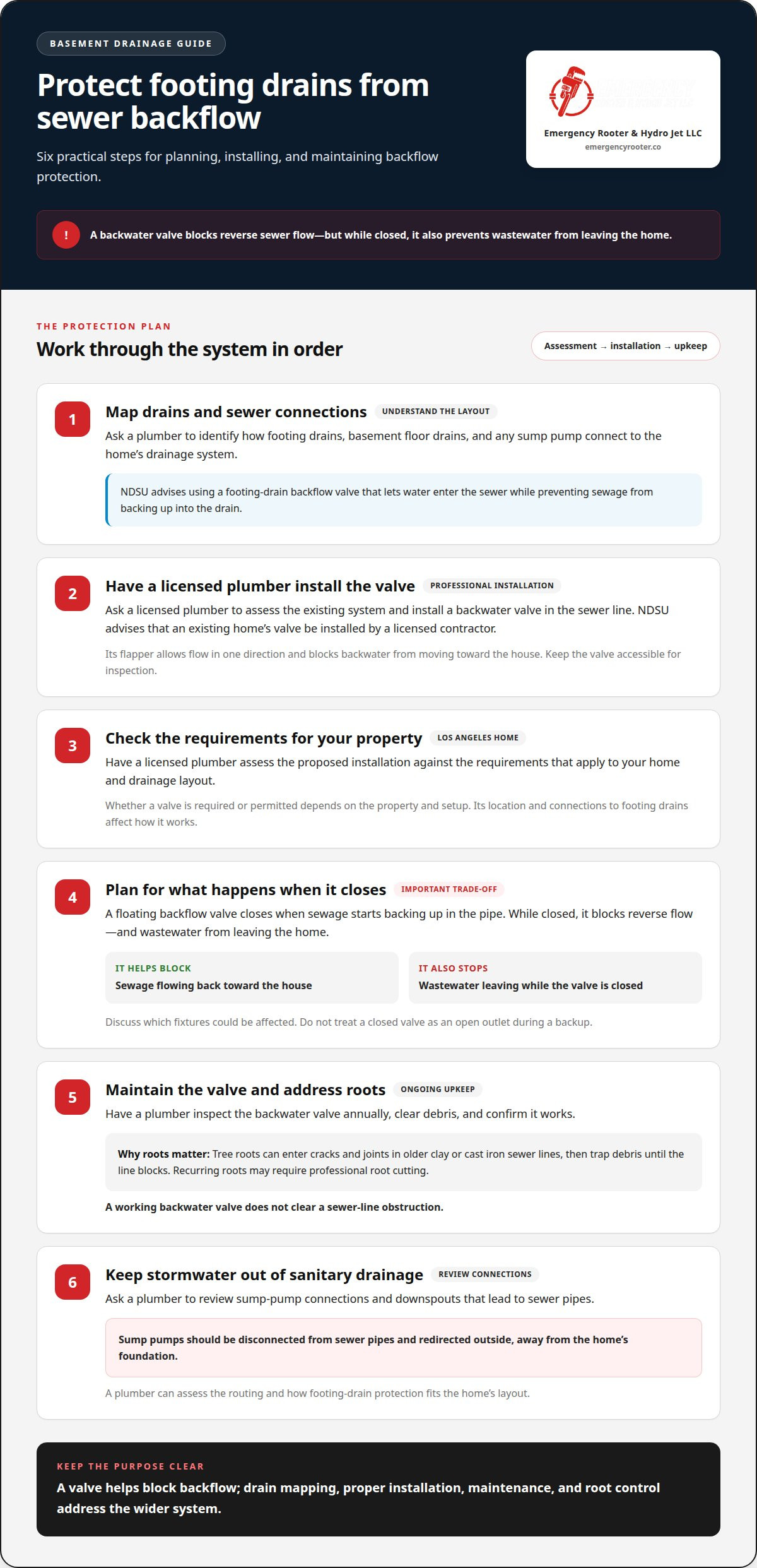
Protect footing drains and basement floor drains by addressing backflow, roots, and connections that may add water to the sewer. A plumber can assess the drain layout, install suitable backflow protection, and maintain the line.
- Map the footing drains and sewer connections. Ask a plumber to identify how footing drains, floor drains, and any sump pump connect to your home’s drainage system. NDSU advises using a backflow valve for footing drains that allows water to enter the sewer while preventing sewage from backing up into the drain. This distinction matters: a footing drain needs an outlet, but sewage must not flow backward through it.
-
Professional Installation of a Backwater Prevention Valve
Have a licensed plumber assess the existing system and install a backwater valve in the sewer line. NDSU advises homeowners to have a backwater valve installed in an existing home by a licensed contractor. The valve’s flapper allows flow in one direction, then blocks backwater from moving toward the house. Ask the plumber to account for connected drains and ensure the valve remains accessible for inspection.
-
Check Backwater Valve Requirements
Have a licensed plumber assess the proposed installation against the requirements that apply to your Los Angeles home and its drainage layout. Whether a backwater valve is required or permitted depends on the property and proposed setup. Don’t assume one valve suits every home: its location and connections to footing drains affect how it works.
- Plan for the valve’s closed position. A backwater valve blocks reverse sewer flow, but it also prevents wastewater from leaving the home while it is closed. A floating backflow valve closes when sewage starts backing up in the pipe. Discuss which fixtures could be affected during that time, and don’t treat the device as an open outlet during a backup.
- Schedule maintenance and address roots. Have a plumber inspect the backwater valve annually, clear debris, and confirm it works. Tree roots can enter cracks and joints in older clay or cast iron sewer lines, then trap debris until the line blocks. Recurring roots may require professional root cutting. Address buildup as well as the valve: a functioning backwater device does not clear an obstruction.
- Separate stormwater from sanitary drainage. Have a plumber review sump-pump connections and downspouts that lead to sewer pipes. Sump pumps should be disconnected from sewer pipes and redirected outside, away from the home’s foundation. This reduces extra water entering the sewer and helps limit pressure on basement drains. A plumber can assess the routing and how footing-drain protection fits the home’s layout.
Is a sewer backup in the basement an emergency?
Yes. Sewage can contain bacteria, protozoans, and other pathogens. Stop using plumbing and have the source assessed before cleanup begins.
Cleanup and repair costs depend on the affected area, contaminated materials, and whether the sewer line needs repair. Request an assessment for upfront pricing before work begins.
- Stop wastewater from entering the line. Don’t flush toilets, run sinks, or use showers while sewage is backing up. These fixtures send more wastewater toward the blockage and may push it through a basement floor drain. Keep household members away from the affected area. Call a licensed plumber before cleanup so the source can be identified and stopped.
- Keep wipes, diapers, toys, and clothing out of toilets. These items can catch inside sewer lines and contribute to clogs. Flush only toilet paper and human waste. Even a wipe labeled “flushable” can contribute to buildup. Keep toys and clothing away from toilets, and put used diapers and hygiene products in the trash.
- Dispose of grease and cooking oil without using a drain. Fats, oils, and grease can cool, congeal, and clog pipes. Don’t pour cooking grease or oil into a sink, toilet, or floor drain. Let cooled cooking oil collect in a heat-resistant container, then dispose of it with household waste. Scrape greasy food scraps into the trash before washing cookware.
- Keep paper products and food debris out of plumbing. Paper towels, tissues, and other paper products don’t break down like toilet paper. Put them in a waste bin rather than flushing them. Grease, wipes, paper products, and debris can build up in a main sewer line and force wastewater through the lowest available drain. Recurring basement backups need a plumbing assessment, not repeated flushing.
- Use professional cleanup for sewage-contaminated areas. Don’t handle contaminated carpet, insulation, or drywall as ordinary household waste. The CDC advises removing and discarding drywall and insulation contaminated with sewage. Carpet, padding, cardboard, and upholstered items soaked with sewage generally need to be discarded. After cleanup, dry the affected area within a day or two to help limit mold growth. Photograph the damage, list affected belongings, and keep cleanup and repair receipts for your insurance professional.
If sewage is entering through a basement drain, an emergency plumbing assessment can help identify the source and stop the backup.
Common causes of basement sewer backups
Trace the backup pattern before choosing a repair. A basement floor drain, toilet, or several fixtures can point to different problems in the plumbing or sewer system.
- Note which fixtures are affected. If wastewater appears at a basement floor drain while upstairs fixtures still drain, the obstruction may be downstream of that low point. If several fixtures slow or back up together, the blockage may affect a shared branch or the main sewer line. Record where water appears and which fixtures were used beforehand. These details help a plumber narrow the inspection.
- Consider a blockage inside the sewer line. Grease, wipes, paper products, and other debris can collect in a main line, restricting flow until wastewater returns through the lowest drain. Tree roots can enter cracks or joints in older clay or cast iron pipes, then catch debris and grow into a larger obstruction. Repeated backups may mean the line needs a closer inspection.
- Check whether heavy rainfall coincided with the backup. Stormwater can overwhelm sewer capacity, especially where stormwater and sanitary systems connect. Excess rain increases the volume entering those systems. If the sewer cannot carry that volume away, water can back up at low points such as basement drains and toilets. Note whether nearby homes or streets also flooded, since widespread symptoms may point beyond one property’s plumbing.
- Account for flooding outside the home. A community treatment plant or part of the sanitary sewer system can flood, allowing sewage to back up into connected homes. Backflow can also occur when floodwater rises above a home’s drains, including basement floor drains. A backup that starts during area flooding may have a different cause from a recurring blockage in a private sewer line. The timing and location help distinguish the two.
- Review where roof and groundwater drain. Sump pumps, roof drains, and gutters connected to a sanitary sewer can add water during storms. That extra flow may contribute to capacity problems and backups. Stormwater and groundwater should be directed to a yard, rain garden, or rain barrel rather than discharged into the sanitary sewer. Have a plumber assess the connections and explain how they relate to basement drains.
- Use recurring symptoms to guide the next inspection. Sewer lines in the United States average over thirty years old, and older pipes may have cracks or separated joints where roots enter. Age alone does not identify the cause in a particular home. A plumber can inspect the sewer line for roots, debris, damage, or another restriction before recommending a repair. Accurate diagnosis matters because rain-related overload and a private-line blockage require different responses.
Does homeowners insurance cover sewer backup?
Coverage depends on your policy and the cause of the backup. Treat the insurance question separately from pipe responsibility, and document the damage.
- Read the policy for sewer-backup coverage. Standard homeowners insurance policies often exclude sewer and drain backups unless you added a water or sewer backup endorsement. Look for those terms in your policy documents, then review the coverage limits and exclusions that apply to your home. A general water-damage provision does not necessarily cover sewage backup. Ask your insurance professional about the specific event and policy language.
- Identify whether the affected pipe is private or public. Homeowners are generally responsible for maintaining and repairing the sewer lateral connecting the building to the city sanitary sewer main. That responsibility may include the portion extending into the street or public right of way. The municipality maintains the public sewer main beneath the street. The distinction matters: a blockage in a private lateral is different from one in the public sanitary sewer.
- Ask where the blockage sits before assigning responsibility. Sewage backups can originate in either the public sanitary sewer or a private sewer service lateral. If neighbors are also affected, or the blockage appears beyond the property line, contact municipal public works to check the public sewer main. If the problem is isolated to your home, a plumber can assess the private lateral. Symptoms alone cannot pinpoint the obstruction.
- Clarify local requirements before a lateral repair. Requirements for sewer lateral repairs or replacements depend on the property’s jurisdiction and the work involved. First determine whether the pipe is part of your private lateral or the municipal main. Then assess the proposed work against applicable Los Angeles-area requirements before repairs begin. Don’t assume rules for the public main also apply to a private lateral.
- Build a clear claim record after the backup. Photograph the affected basement, damaged belongings, and visible sewage before cleanup changes the scene. Itemize property losses and keep repair and cleanup receipts together. Share these records with your insurance professional and describe where the backup entered, such as through a basement floor drain. The photos, itemized losses, and receipts help document the event and support review of your claim.
- Keep pipe repair and claim decisions separate. Insurance coverage depends on your policy’s sewer-backup terms, while pipe responsibility depends on whether the damage involves a private lateral or public main. Record both findings. Documentation of a private-line problem can guide repair planning, while a suspected public-main blockage gives municipal public works a specific issue to assess.
Sewer line camera inspections and repairs
Use a camera inspection when backups return, several fixtures drain slowly, or clearing the line doesn’t resolve the problem. Seeing inside the sewer line helps locate an obstruction or damage before repair work begins.
- Describe the symptoms and their pattern. Tell the plumber which drains or fixtures are affected, when the backup started, and whether clearing the line helped. A basement floor drain that backs up repeatedly may point to a restriction farther along the sewer line. Share any known history of tree-root problems or previous repairs. These details help focus the inspection instead of treating each symptom as a separate problem.
- Have a plumber inspect inside the line. A sewer camera can reveal conditions that aren’t visible from a drain opening, including roots, accumulated debris, cracks, or separated joints. The Water Authority uses video cameras and equipment to inspect sewer lines. For a private sewer lateral, the findings help locate the issue and determine whether cleaning can address it or repairs are needed.
- Use the inspection findings to choose the repair. A blockage and a damaged pipe need different responses. Rooter Service or Drain Cleaning can address an obstruction, while a cracked or compromised section may need Sewer Line Repair. Ask the plumber to explain what the camera shows, where the problem is, and how the recommended work addresses it. A clear diagnosis helps avoid relying on repeated clearing alone.
- Address recurring roots, not just the immediate blockage. Roots can enter joints or cracks, then trap debris as it moves through the pipe. Homeowners dealing with recurring tree-root problems in a sewer lateral may need professional root cutting regularly. If the camera shows root intrusion, discuss removal and the pipe condition that allowed the roots inside. Cutting roots may restore flow, but it does not repair a damaged joint or crack.
- Confirm the line’s condition after the work. A follow-up camera view can show whether the obstruction was removed and whether visible damage remains. Use that information to plan any further sewer line repair or follow-up for recurring roots. If wastewater returns after clearing, report when it happened and which drains were affected. This pattern gives the next assessment a useful starting point.
For a recurring blockage or visible pipe damage, request a sewer line inspection and repair.
Emergency Rooter & Hydro Jet: Sewer Line Repair
Emergency Rooter & Hydro Jet provides Sewer Line Repair when an inspection finds damage, not just a blockage. A recurring backup, root intrusion, or cracked sewer lateral calls for identifying the cause so the repair addresses the affected line.
For a clog, Rooter Service or Drain Cleaning can clear the obstruction. Hydro Jet Cleaning can remove buildup from a line and is safe for most residential and commercial pipes. The right service depends on the inspection findings. If sewage is backing into the basement, stop using plumbing fixtures and arrange emergency plumbing help to assess the source.
Bring details about which drains backed up and whether the problem returned after clearing. Contact Emergency Rooter & Hydro Jet to discuss sewer line repair or a recurring backup.
Take the Next Step Toward a Reliable Repair
Knowing how to stop a sewer backup in a Los Angeles basement starts with choosing the right response for the problem. If wastewater is returning, don’t mistake temporary improvement for a lasting fix. Keep the inspection findings and repair recommendations together, then decide whether the next step is clearing a blockage or addressing sewer-line damage.
Emergency Rooter & Hydro Jet LLC offers Rooter Service, Hydro Jet Cleaning, and Drain Cleaning for sewer and drain problems. When an inspection finds a damaged line, Sewer Line Repair can address it directly. Share what happened, which drains were affected, and whether the backup has returned. This helps start a focused discussion about the work needed.
Reach out to Emergency Rooter & Hydro Jet LLC to discuss the next step. A clear plan can put you on firmer ground and help you move forward with confidence.
Frequently Asked Questions
What should I do if a sewer backup occurs, and when should I call an emergency plumber?
Call an emergency plumber as soon as sewage enters the basement or returns through a drain. Keep people away from the affected area, and tell the plumber which fixtures are backing up and whether the problem is worsening. If water is entering rapidly, report it to the city public works office as well. Don’t wait for the basement to fill before requesting help.
Who is responsible for fixing a sewer backup, me or the city?
Responsibility usually depends on whether the problem is in your private sewer lateral or the public sewer main. Homeowners generally maintain and repair the lateral connecting the building to the city sewer, including portions that may extend into the street. The municipality maintains the public main. If you’re unsure which section is affected, have the blockage located before deciding who should handle the repair.
Why does my basement still smell after cleanup?
A dry drain trap can let sewer odors enter the basement after cleanup. If the smell comes from a floor drain, restoring water to the trap may help. If the odor remains, returns quickly, or comes from another drain, have a plumber inspect the drain and sewer line. Lingering odor can signal an unresolved plumbing issue, not just contaminated materials left behind.
What causes sewer backups in Los Angeles basements?
Common causes include a blocked sewer line, tree-root intrusion, and heavy rain that overwhelms sewer capacity. Flooding at a community treatment plant or in the sanitary sewer can also cause backups. The pattern offers useful clues: a problem that returns during storms may have a different source from one that repeatedly affects a single home. Tell the plumber when it happens and which drains are involved.
How can a plumber stop an active sewer backup safely?
A plumber first assesses where wastewater is entering and what may be blocking the line. To understand how to stop a sewer backup in a Los Angeles basement, identify the source, then clear the obstruction or repair damaged pipe. Don’t keep using toilets, sinks, or showers while sewage is backing up. Tell the plumber whether several fixtures are affected and whether heavy rain came before the problem.
Who should I call for a sewer backup in Los Angeles: a plumber or the city?
Call a plumber when the backup seems limited to your home or private sewer lateral. Contact city public works if neighbors also have backups or the blockage may be in the public sewer main. When deciding how to stop a sewer backup in a Los Angeles basement, the blockage’s location helps determine who should respond. Mention affected drains, nearby flooding, and similar problems at neighboring properties.
Does the City of Los Angeles handle sewer line blockages on private property?
Generally, the city maintains the public sewer main, while homeowners maintain the private sewer lateral connecting their property to it. A blockage in a private line is different from one in the public main. Because the lateral may extend toward or into the street, the location of the obstruction matters. A plumbing assessment can help identify which section is affected.
What health risks come from sewage in a basement, and how should cleanup be handled?
Sewage can contain bacteria, protozoans, and other pathogens, so keep people away from contaminated areas and arrange safe cleanup. The CDC advises removing and discarding drywall and insulation contaminated with sewage. Carpet, padding, cardboard, and upholstered items soaked with sewage generally need disposal. Have the affected space dried after cleanup, and consult a cleanup professional about materials that cannot be safely restored.


