

What if recurring backups aren’t just a stubborn clog? When several drains slow down or back up, sewage smells linger, or the yard changes suddenly, the signs of collapsed sewer line damage can be hard to ignore. Symptoms are clues, not proof. A blockage, root intrusion, or damaged pipe can cause similar trouble, so guessing may delay the right fix.
This checklist will help you spot patterns, compare them with signs of a simple clog, and decide what to do next. You’ll learn which symptoms call for prompt professional assessment and how a sewer camera inspection can help identify a problem before repair decisions are made. If sewage is backing up, limit water use and keep people and pets away from contaminated areas. Take the signs seriously, but don’t assume the pipe has collapsed until it has been inspected.
Key Takeaways
- Use the signs of collapsed sewer line checklist to spot patterns across drains, your home, and yard, but treat each symptom as a clue, not a diagnosis.
- Recurring backups in multiple drains can point to a main-line problem, while one slow drain may have a more localized cause.
- Limit water use, avoid sewage and contaminated standing water, and keep people and pets away from affected areas.
- Document what you notice and request a professional assessment to distinguish a clog from pipe damage or collapse.
- Emergency Rooter & Hydro Jet LLC provides sewer line repair and emergency plumbing in Los Angeles, Beverly Hills, Santa Monica, and surrounding communities.
Signs of a Collapsed Sewer Line: Start with This Homeowner Checklist
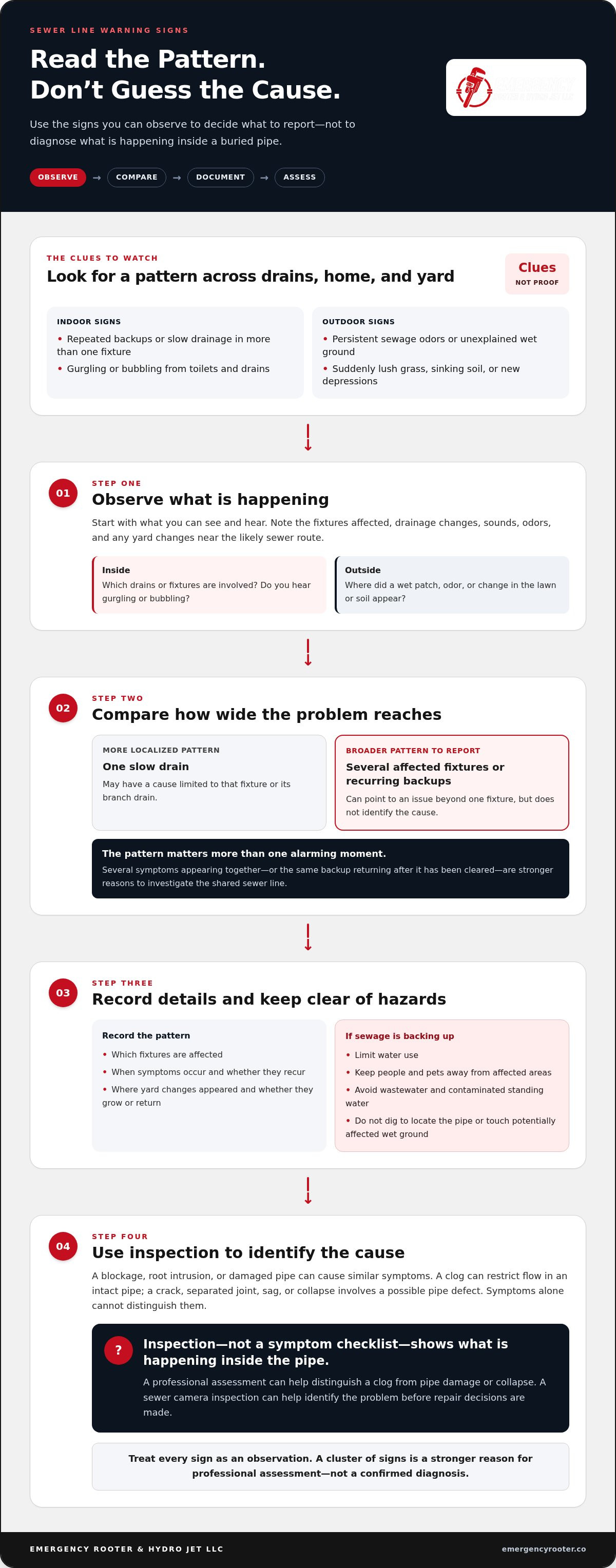
Start with what you can observe. Look for a pattern rather than one alarming moment:
- Repeated backups or slow drainage affecting more than one fixture.
- Gurgling or bubbling sounds from toilets and drains during use.
- Persistent sewage odors indoors or outdoors.
- Unexplained wet ground, unusually lush grass, sinking soil, or new depressions near the sewer route.
One sign alone cannot confirm a collapsed sewer line. A single slow sink, for example, may have a localized cause. Several symptoms appearing together, or the same backup returning after it has been cleared, are stronger reasons to investigate the shared sewer line. Track which fixtures are affected, when symptoms occur, and whether the yard changes. Those details can help a professional assess the problem.
A suspected sewer line collapse is a possible physical restriction or failure in the pipe that carries wastewater away from the home. Household drains connect to a larger sewer system. What is a Sewer Line? offers a general overview of how sewer systems function. A symptom checklist can raise suspicion, but it cannot show what is happening inside a buried pipe.
Indoor warning signs: repeated backups, slow drains, and gurgling
Pay attention to how many fixtures are involved. If a toilet backs up while a nearby tub or floor drain also drains slowly, the shared pattern deserves more attention than a single sluggish sink. Note whether symptoms recur during normal use or return after a drain has been cleared. Repeated trouble across several drains can point to an issue beyond one fixture, but it doesn’t identify the cause by itself.
Gurgling or bubbling may happen when wastewater struggles to move through a restricted drain or pipe. Listen for sounds from more than one fixture and note when they occur. Gurgling alone is not proof of a collapse. Alongside recurring backups or slow drainage in several areas, it becomes a useful clue to report.
Outdoor warning signs: sewage odors, wet ground, and sudden lawn changes
A persistent sewage smell outside or an unexplained wet patch near the likely sewer route warrants attention, especially alongside indoor drainage problems. A small area of grass that suddenly looks unusually lush can also be a clue, as can soil that sinks or develops a new depression. These changes may have other explanations, so treat them as observations, not a diagnosis.
Stay clear of wastewater and contaminated standing water. Don’t dig to locate the pipe or touch wet ground that may be affected by sewage. From a safe distance, note where the change appeared and whether it grows or returns. Report those details along with any indoor symptoms. A cluster of indoor and outdoor changes is a stronger reason for professional assessment than any single sign.
Why a Collapsed Sewer Line Can Look Like a Main-Line Clog
A blockage and a damaged pipe can disrupt wastewater flow in similar ways. Waste may drain slowly, back up, or make nearby fixtures gurgle. A clog can restrict the opening inside an otherwise intact pipe. A crack, separated joint, sag, or collapse can also limit flow, but these involve physical defects that symptoms alone can’t reveal.
Recurring backups point to a persistent problem, but inspection helps identify its cause. Clearing an obstruction may restore drainage temporarily, yet symptoms can return if material remains or the pipe itself is damaged. The EPA’s overview of wastewater systems explains how wastewater moves through pipes in a septic system. A home connected to a municipal sewer follows a different route, but the basic point is the same: trouble along the flow path can affect multiple drains.
Clog, damaged pipe, or collapse: what the symptom pattern can suggest
An isolated slow drain may be limited to that fixture or its branch drain. If several fixtures have trouble around the same time, the issue may involve a shared section of the drainage system. That pattern raises concern, but it doesn’t prove the main line is damaged or collapsed. Odor, gurgling, or one backup cannot identify a specific cause on its own.
Notice what happens after a drain is cleared. If the same fixtures back up again, or more drains become affected, the problem may not have been fully resolved. Record which fixtures are involved and whether symptoms return after normal use. That timeline helps an assessment focus on the pattern without treating the signs of collapsed sewer line as a confirmed diagnosis.
How roots and pipe defects can contribute to repeated trouble
Roots may enter through openings in a pipe or its joints and interfere with flow. Debris can also collect and obstruct wastewater. These are possible causes of blockage, not interchangeable diagnoses. Roots don’t automatically mean the pipe has collapsed, and a recurring clog doesn’t establish that roots are present.
Cracks, separated joints, or a sag in the line are other possible defects. A sag can allow material to collect, while a crack or failed joint may affect the pipe’s integrity. Inspection is needed to distinguish these conditions. The Los Angeles sewer line repair guide covers broader damage and repair considerations.
For recurring backups or problems affecting several fixtures, a professional assessment can help determine whether the issue is a blockage or pipe damage. Emergency Rooter & Hydro Jet LLC provides sewer line repair and drain services in Greater Los Angeles. Learn about sewer line repair support if the symptoms keep returning.
How to Assess the Warning Signs Without Guessing at a Diagnosis
Use the pattern to decide what to report, not to name the fault. Signs of a collapsed sewer line can overlap with symptoms of a clog or another drain problem. Separate what you observed from what you suspect: which fixtures were affected, whether the problem returned, and what changed outside. Each interpretation below is a clue, not a confirmed diagnosis.
| Symptom pattern | Possible interpretation | Appropriate next step |
|---|---|---|
| One fixture drains slowly | A localized drain issue is a clue, but it doesn’t rule out a wider problem. | Note the fixture and whether other drains change. |
| Several fixtures back up or drain slowly | A shared drainage restriction is a clue, not proof of a damaged or collapsed sewer line. | Record which fixtures are affected and request professional assessment if it recurs. |
| Backups return after clearing | A persistent obstruction or pipe defect is a clue; the cause remains unknown. | Track when the problem returns and request an assessment of the line. |
| Indoor drainage trouble with odors or wet ground outside | A sewer-line problem is one possible explanation, not a confirmed diagnosis. | Keep clear of wastewater and report the locations and timing of changes. |
What a sewer camera inspection can clarify
A professional sewer camera inspection lets a technician view the pipe’s interior and look for visible restrictions or damage along the inspected section. The view can help distinguish an obstruction from a structural concern and show where an issue appears to be located. It may not answer every repair question. Findings need to be considered alongside the symptoms and the condition of the line.
When a symptom log helps the assessment
Keep a brief, factual record. List which fixtures back up, how often it happens, whether the problem spreads, and when each episode occurs. Add when you first noticed any sewage odor, wet area, sinking ground, or sudden lawn change. Record observations, not conclusions. Don’t open or enter the sewer line, and don’t dig to investigate it yourself.
Bring the log to the assessment and describe what happened before and after each backup. For example, note whether one toilet was affected first, whether another fixture changed later, and whether symptoms returned after clearing. This sequence can help focus the inspection without treating a pattern as proof. A camera view provides direct information about visible pipe conditions, while the broader assessment helps determine what those findings mean for next steps.
What to Do If You Suspect a Collapsed Sewer Line
Act on the immediate risk, not on an assumed diagnosis. Signs of a collapsed sewer line can point to several kinds of drainage trouble, so first reduce exposure and prevent more wastewater from entering an affected area. If sewage is actively backing up indoors, seek prompt professional help.
- Limit water use. Stop using affected sinks, toilets, showers, and appliances that send water into the suspected line. If several fixtures are involved, reduce household water use where practical. Continued use may worsen an active backup, but it won’t reveal whether the cause is a clog or pipe damage.
- Keep clear of wastewater. Don’t touch sewage or contaminated standing water. Keep children and pets away from affected rooms and outdoor areas. Avoid trying to clean or move wastewater if doing so would bring you into contact with it.
- Document what you see. From a safe distance, note affected fixtures, backup locations, odors, and any wet or sunken areas outside. Record when each change began and whether it has spread or returned.
- Request a professional assessment. Share your observations and ask for the sewer line to be assessed. Symptoms can raise concern, but inspection is needed to determine whether the issue is a blockage, pipe damage, or another problem.
Immediate steps for active sewage backup
If sewage is coming up through a floor drain, toilet, or other fixture, keep people and pets out of the affected area. Stop using affected fixtures and limit water flowing into the suspected line. Don’t reach into drains or attempt to open or enter the sewer pipe. An active indoor backup needs prompt professional attention. The Los Angeles emergency plumber guide offers additional guidance on urgent plumbing response.
What to tell the plumbing professional
Give a clear account of the pattern. List every affected fixture, how often backups have happened, whether symptoms appeared in other drains, and when odors or yard changes first showed up. Mention any previous drain clearing and whether the problem returned afterward. These details help guide assessment, but don’t establish what has happened inside the pipe.
Keep your notes factual. For example, write, “The downstairs toilet backed up twice this week, and the floor drain was slow yesterday,” rather than concluding that the sewer line has collapsed. If you took photos of visible yard changes from a safe location, keep them available. Don’t dig, open the line, or touch wastewater to gather more evidence.
Emergency Rooter & Hydro Jet LLC provides emergency plumbing and sewer line repair in Greater Los Angeles, including Los Angeles, Beverly Hills, and Santa Monica. If you’re dealing with active sewage or repeated backups, request emergency plumbing help and describe what you’re seeing.
When to Call for Sewer Line Help in Los Angeles
Don’t wait for certainty before requesting an assessment. One slow drain may be minor, but repeated backups, trouble involving several fixtures, or a backup that returns after clearing deserve prompt attention. Active sewage inside the home needs prompt professional help. These patterns can suggest a sewer-line problem, but they don’t confirm a collapse. The goal is to find out what is happening before choosing a response.
What a professional assessment can establish
An assessment can help determine whether symptoms come from a blockage or visible pipe damage. A sewer camera inspection can show conditions inside the portion of line being viewed, giving the technician useful information about restrictions or defects. Findings guide the next steps, but recommendations depend on the observed line condition. Don’t assume a repair method is suitable before the pipe is assessed.
Share the history, not a guessed diagnosis. Explain which fixtures are affected, how often backups occur, and whether the problem returned after drain clearing. Include any sewage odors or changes in the yard. This context helps connect what you’ve observed with what the inspection shows. Signs of a collapsed sewer line are reasons to investigate, not proof that the pipe has failed.
Get help for recurring sewer symptoms in Greater Los Angeles
Call for professional help when backups keep returning, several drains show trouble, or you notice active sewage. These symptoms shouldn’t be left to guesswork, particularly if wastewater is entering living areas. Until the line is assessed, avoid unnecessary water use and keep people and pets away from sewage or contaminated standing water.
Emergency Rooter & Hydro Jet LLC provides sewer line repair and 24/7 emergency plumbing in Greater Los Angeles, including Los Angeles, Beverly Hills, Santa Monica, and surrounding communities. The company reports an average arrival time of 45 minutes.
You don’t need to decide whether the problem is a clog or a collapsed pipe before reaching out. Describe what’s happening and request an assessment. Contact Emergency Rooter & Hydro Jet LLC for help with recurring sewer symptoms or an active plumbing emergency. A clear diagnosis can guide the next step without treating symptoms alone as a confirmed collapse.
Take the Next Step Toward a Clear Answer
Seeing possible signs of collapsed sewer line damage can be unsettling, but you don’t have to diagnose the pipe yourself. A professional assessment can replace guesswork with a clearer picture of what’s happening and help you decide what to do next. If symptoms are active or keep returning, act before the disruption grows.
Emergency Rooter & Hydro Jet is a licensed and insured California plumbing contractor, license #574013, with more than 10,000 completed jobs reported. For help assessing sewer line concerns, contact Emergency Rooter & Hydro Jet for sewer line help.
Take it one step at a time. Getting the line assessed is a practical move toward protecting your home and restoring peace of mind.
Frequently Asked Questions
Can a sewer line collapse without warning?
Yes, a sewer line may seem to fail suddenly, even if warning clues developed gradually. Recurring backups, several slow drains, sewage odors, or wet ground can appear before a major disruption, but they don’t prove collapse. Sometimes the first obvious clue is an abrupt backup. Note whether the problem starts in one fixture or several, and whether symptoms are worsening. If wastewater is backing up indoors, arrange prompt professional assessment.
Can one slow drain mean the sewer line has collapsed?
One slow sink or tub doesn’t establish that the underground sewer line has collapsed. The issue may be limited to that fixture or its nearby drain. Concern rises if multiple fixtures begin draining slowly or backing up around the same time, or if the same problem keeps returning. Compare what you observe across the home, note when it happens, and seek an assessment if the pattern persists.
What happens if a sewer line collapses?
A collapsed section can restrict or stop wastewater from moving through the pipe. Depending on where the damage is, wastewater may back up into fixtures or escape into nearby soil. The effects can differ from home to home, and similar symptoms can come from a blockage or another pipe problem. Don’t assume signs of collapsed sewer line damage confirm a failure. An inspection helps establish the pipe’s condition and guide the next step.
Can a collapsed sewer line cause a wet or unusually green patch in the yard?
It can be one possible cause, but a wet or unusually green patch doesn’t confirm a sewer-line problem. A sprinkler leak, runoff, or another source of water may create a similar change. Notice whether the patch persists, spreads, or appears alongside indoor drainage trouble. Record its location and when you first saw it. Don’t dig or touch suspicious water; report the observation during a professional assessment.
Should I keep using water if sewage is backing up into my home?
No. Stop using affected fixtures and reduce water flowing into the suspected line while sewage is backing up. Avoid flushing toilets or running appliances connected to the affected drainage system. Keep children and pets out of the contaminated area, and don’t try to open or enter the sewer line. Contact a plumbing professional promptly. Tell them whether the backup is limited to one fixture or is appearing in several.
Does a camera inspection confirm whether a sewer line has collapsed?
A sewer camera inspection can show visible conditions inside the section of pipe being viewed, including restrictions or apparent damage. A professional uses those findings alongside your symptom history to assess whether the issue looks like a blockage or a structural problem. The camera view may not answer every question about the full line or repair needs. Ask the professional to explain what was visible and what remains uncertain.
Does Emergency Rooter serve Los Angeles, Beverly Hills, and Santa Monica for sewer line problems?
Yes. Emergency Rooter & Hydro Jet provides sewer line services in Los Angeles, Beverly Hills, Santa Monica, and surrounding Greater Los Angeles communities. The company also provides 24/7 emergency plumbing service in its Greater Los Angeles service area. When you contact the team, describe which fixtures are affected, whether sewage is actively backing up, and any changes you’ve noticed outside. Clear details help the issue be assessed.


