
What if the next backup isn’t caused by a simple clog? Recurring backups and slow drains can point to a problem farther down the sewer line, where you can’t see it. A sewer line camera inspection Los Angeles property owners arrange can reveal visible roots, blockages, or pipe damage, giving you evidence to consider before choosing what to do.
It’s reasonable to worry that an inspection could lead to repairs you don’t need, or that the video won’t clearly explain what’s wrong. A camera shows the pipe along the route it can access, but its view has limits. Interpret the images alongside the property’s symptoms and the inspection findings.
This guide explains how the inspection works, what its footage can and can’t establish, and how to connect common findings to a practical next step. You’ll learn when drain cleaning or hydro jet cleaning may address a blockage, and when visible damage may call for sewer line repair. The goal is an evidence-based decision for your Los Angeles home or commercial property, not a guess based on symptoms alone.
Key Takeaways
- A camera inspection shows visible conditions inside the accessible sewer line, but access and pipe layout affect what the camera can capture.
- Use the inspection findings to distinguish diagnosis from action: snaking and hydro jet cleaning clear blockages, while repair addresses pipe damage.
- For a sewer line camera inspection Los Angeles property owners can use to guide next steps, consider the observed condition, its location, and any limits in visibility.
- Match the response to the evidence and symptoms. Active backups, recurring problems, and visible damage may call for different follow-up.
- Sewer diagnostics and repair can help residential and commercial property owners make practical decisions based on observed line conditions.
What a Sewer Line Camera Inspection in Los Angeles Can Reveal
Recurring backups, slow drains, or sewage odors can signal trouble below ground, but symptoms at a fixture don’t show where the problem is. A sewer line camera inspection Los Angeles property owners use is a visual assessment of accessible pipe interiors with a camera-equipped inspection tool. The camera travels through the line from an available access point, showing conditions along the route it can reach. This gives you a view of the pipe itself rather than a diagnosis based only on what a drain is doing at the surface.
Underground pipes are hidden from view, and different conditions can cause similar symptoms. A camera may help narrow down what’s happening and where, but the footage is evidence to interpret, not an automatic repair verdict. For background on the method and equipment, see this overview of pipeline video inspection.
What the camera can show inside a sewer line
The camera may capture roots entering through joints, cracks, breaks, buildup on pipe walls, or sections where the line has shifted out of alignment. It may also show standing water, which can obscure the pipe surface or suggest that flow isn’t moving freely through that section. These are visible observations, not conclusions about the exact cause or the amount of work needed.
A recorded view can help locate an observed concern along the inspected route. That context matters: a blockage in one section and a crack farther down the line call for different follow-up questions. Look for whether the footage shows:
- A clear view of the pipe wall, joint, or obstruction.
- The concern’s position relative to the inspection route.
- Water or debris that blocks a reliable view beyond that point.
- A change in alignment or a visible opening in the pipe.
If roots or buildup fill the frame, the camera may not show what lies behind them. Treat a limited view as a limitation to document, not a reason to assume the unseen section is damaged.
What a camera inspection cannot establish by itself
Footage can document what the camera visibly reaches. By itself, it can’t always establish why a crack formed, how serious it is, whether the pipe is failing across a larger area, or whether cleaning, repair, or replacement is the right response. Those decisions depend on the visible condition, its location, the symptoms, and any limits in the inspection.
Camera footage is visual evidence of accessible pipe conditions, not a complete assessment of every part of the sewer line or a repair plan by itself.
Coverage can stop short when the camera can’t pass an obstruction, water prevents a clear image, or a section can’t be reached from the available access point. Keep those gaps distinct from confirmed findings. A useful report separates what’s clearly visible from what remains uncertain, then identifies practical follow-up that could clarify the line.
That distinction helps keep the next decision grounded. A visible obstruction may point toward cleaning; a clear break may warrant an evaluation for repair. Neither conclusion should be based on an unclear image alone. Review the recorded observations in context before deciding what work fits the problem.
How a Sewer Camera Inspection Works from Access Point to Findings
A useful inspection follows a clear path: understand the symptoms, choose an access point, view the reachable pipe, record observations, then explain the options. For a sewer line camera inspection Los Angeles property owners can use to make a practical decision, the route matters. The camera can only show sections it can reach and view clearly. Pipe layout, bends, distance, obstructions, and available access all affect how much of the line appears in the footage.
Getting the sewer line ready for inspection
Before the camera goes in, the technician reviews the problem and identifies a suitable access point based on the property and sewer-line layout. Share which fixtures are affected, when backups or slow drains happen, and whether the line has had previous drain work. These details help focus the inspection. Access varies by property, so the camera route may not begin at the same opening each time.
The inspection generally moves through these steps:
- Assess symptoms. Describe recurring backups, slow drainage, or other changes, including where they occur and how often.
- Identify access. The technician determines a workable entry point and considers how the line’s route may shape camera coverage.
- Inspect reachable pipe. The camera is advanced through accessible sections while the technician watches the live view for visible conditions.
- Document observations. Relevant footage and locations are noted, along with any point where an obstruction or unclear image limits the view.
- Explain options. Findings are discussed separately from possible next steps, so a visible condition isn’t mistaken for an automatic repair decision.
Following the camera footage and interpreting observations
As the camera moves, note where the view is clear and where it changes. The technician can identify the location of an observation along the inspected route and explain what the footage appears to show. If standing water, buildup, or an obstruction blocks the camera’s view, that matters too. Record the unseen area as a visibility limit, not as a confirmed defect.
Ask for a plain-language summary that separates three things: what the footage shows, what those observations may mean, and what follow-up is proposed. For example, the footage might show an obstruction at a particular point; the interpretation may be that it’s restricting flow; the proposed next step could involve cleaning or further evaluation. Those are related, but they aren’t the same conclusion.
Keep the distinction clear: the camera documents visible pipe conditions; it doesn’t clear a blockage or, by itself, determine the full repair scope. Cleaning is a separate action. If an active backup is disrupting the property, connect the inspection findings with practical local plumbing diagnostics so the response addresses both the observed condition and the immediate symptoms.
Camera Inspection vs. Snaking, Hydro Jetting, and Sewer Repair
These options do different jobs. A camera inspection shows visible conditions inside the accessible line. Snaking and hydro jetting are cleaning methods. Sewer repair addresses pipe damage. Knowing the difference helps you avoid treating a recurring symptom without understanding what the footage shows, or assuming every visible defect calls for the same fix.
| Option | Main purpose | What it does not do |
|---|---|---|
| Camera inspection | View and document accessible pipe conditions. | Clear a blockage or decide a repair scope by itself. |
| Mechanical snaking | Work through a clog to restore drainage. | Provide a full visual record of the pipe. |
| Hydro jetting | Use pressurized water to clean buildup from a suitable line. | Repair a cracked or broken pipe. |
| Sewer repair | Address documented damage to the pipe. | Serve as a cleaning method for every obstruction. |
The condition of the line matters. A cleaning method that suits a blockage may not suit a damaged or fragile section. Inspection footage can inform that choice, but it doesn’t dictate one fix. The next step should account for what’s visible, the symptoms, and whether the camera had a clear view of the relevant area.
When inspection is more useful than another clearing attempt
If a drain clears but the backup returns, another clearing attempt may relieve the symptom without explaining why it keeps happening. An inspection can help show whether there’s a recurring obstruction or a visible pipe condition along the camera’s route. That distinction gives the next decision a clearer basis. For more on evaluating damage and repair choices, see this Los Angeles sewer line repair guide.
When cleaning or repair may follow the inspection
Roots or buildup visible in the line may lead to a discussion about clearing, depending on the pipe’s condition and the inspection findings. Hydro jetting is one cleaning approach, but it isn’t automatically right for every line. Review how hydro jetting works in Los Angeles before treating cleaning as the answer to every obstruction.
If footage shows a crack, break, or alignment change, the finding may prompt an evaluation of repair options. It doesn’t automatically mean the whole line needs replacement. A sound decision separates the observed damage from the proposed work and explains how that work relates to the documented condition.
Use the camera to guide the choice, cleaning to address a suitable blockage, and repair to address confirmed pipe damage. For a sewer line camera inspection Los Angeles property owners can use to compare these next steps, focus on what the footage shows and what remains unclear.
How to Use Inspection Findings to Choose Your Next Step
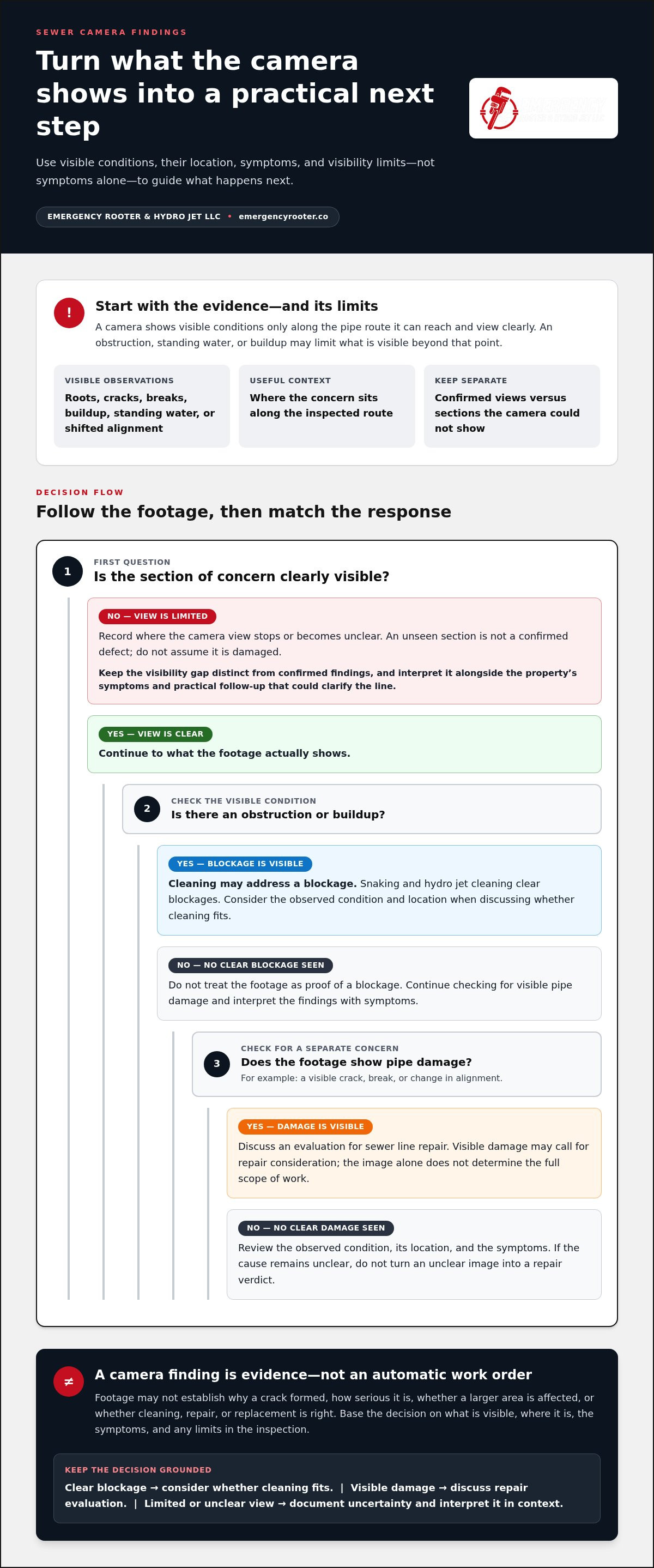
Turn the footage into a decision by separating four details: the condition observed, where it appears, how clearly it was visible, and what follow-up is recommended. A clear view of a blockage is different from an image partly hidden by water or debris. Keep those distinctions in the report and in any discussion about next steps. They help you respond to what the camera actually showed, not what you fear it might have shown.
Questions the inspection findings should answer
Before choosing work, make sure the findings address the basics. A useful explanation connects the visible observation to the affected area and clarifies what remains uncertain. The recommendation should be tied to the documented condition, not presented as a fix without an explanation.
- Condition: Does the footage show a blockage, visible damage, or no clear defect?
- Location: Where along the inspected line does the condition appear?
- Visibility: Was the view clear, or did water, buildup, or an obstruction limit what could be seen?
- Follow-up: What action is proposed, and how does it address the observed condition?
Then match the response to the evidence. If there’s no visible damage and symptoms have stopped, monitoring may be reasonable when the inspection findings support that approach. A visible, removable obstruction may lead to a clearing discussion. A crack, break, or major alignment change calls for a repair assessment, not an automatic decision to replace the line. If the footage is unclear at the relevant spot, treat that as a limit in the evidence and discuss what further evaluation could clarify it.
Recognizing findings that call for prompt attention
An active sewage backup is an urgent plumbing problem. Arrange prompt professional attention, especially if wastewater is entering the property. Repeated backups also deserve follow-up because the symptoms may return if the cause remains. The urgency depends on what’s happening now and what the inspection documents, so act promptly without assuming the worst from an unclear image.
Cracks, breaks, or major changes in pipe alignment should lead to an assessment of repair options. They don’t prove that the entire sewer line has collapsed or that full replacement is necessary. Review related warning signs in this guide to signs of a collapsed sewer line, then compare them with the actual inspection findings.
Project pricing depends on the job conditions and equipment required, so a camera finding alone doesn’t set the cost of cleaning or repair. Ask for the proposed work to be linked to the documented condition. That gives you a practical basis to compare monitoring, clearing, and repair without treating them as interchangeable.
If you have active backups or documented pipe damage, get help interpreting the findings and planning sewer-line service.
Sewer Line Camera Inspection in Los Angeles: Get Clear Local Help
A camera view is most useful when it leads to a practical decision, not a guess. Emergency Rooter & Hydro Jet LLC serves residential and commercial properties across Greater Los Angeles, including Los Angeles, Beverly Hills, and Santa Monica. The company is licensed and insured, with California plumbing license #574013, and provides emergency plumbing, rooter service, drain cleaning, hydro jet cleaning, and sewer line repair.
What local property owners can expect from a clear diagnosis
Pipe conditions differ from property to property. A home with recurring backups may need a different response than a commercial building with a single slow drain. The useful starting point is a clear explanation of what the inspection footage shows, where the condition appears, and whether visibility was limited. That context helps connect symptoms and observations to appropriate follow-up without treating every finding as a repair mandate.
Emergency Rooter & Hydro Jet LLC handles rooter service, hydro jet cleaning, drain cleaning, and sewer line repair. These services address different needs. A blockage may call for clearing; visible pipe damage may call for a repair assessment. The recommendation should fit the evidence and the property’s symptoms. A camera view can inform that discussion, but it doesn’t automatically determine the repair method or scope.
For owners and managers, a plain-language explanation makes it easier to act. Ask that visible findings, image limitations, and proposed work be described separately. That way, you can understand what was observed and why a particular follow-up makes sense before deciding how to proceed.
If you have inspection footage or a report, use those findings to focus the conversation about next steps. The documented condition can help determine whether the issue points toward clearing, repair, or further evaluation.
Take the next step when sewer symptoms keep returning
Repeated backups deserve attention, especially when symptoms return after a drain has been cleared. An active sewage backup needs prompt professional attention. Visible cracks, breaks, or major alignment changes also warrant a repair assessment. Respond to the actual condition and urgency, without assuming that one unclear image proves widespread damage.
For a sewer line camera inspection Los Angeles property owners can use to guide a decision, the goal is simple: connect the recorded evidence with the property’s symptoms and choose a suitable next step. Emergency Rooter & Hydro Jet LLC helps residential and commercial customers across Greater Los Angeles with emergency plumbing, rooter service, drain cleaning, hydro jet cleaning, and sewer line repair.
Recurring backups or a visible sewer concern? Contact Emergency Rooter & Hydro Jet LLC for local plumbing help and a practical path forward.
Make Your Next Sewer Decision With Confidence
Don’t let uncertainty push you into work before you understand the recommendation. Use the inspection record to keep the next conversation focused on the condition that matters, especially if you manage a rental, commercial property, or a home with recurring symptoms. Clear documentation can help owners and property managers discuss the same findings and plan a response based on the evidence.
A sewer line camera inspection Los Angeles property owners arrange is a starting point for a sound decision, not a reason to assume the worst. If the footage raises concerns or backups are active, move promptly and get practical guidance for the property. You can contact Emergency Rooter & Hydro Jet LLC for local plumbing help to discuss the symptoms and appropriate next step.
With clear information and the right follow-up, you can move forward without guesswork. Your next step can be measured, practical, and grounded in what the line actually shows.
Frequently Asked Questions
How much does a sewer line camera inspection cost in Los Angeles?
The cost depends on the inspection’s scope, access, and equipment required. A straightforward route from an accessible point differs from a job where the camera can’t reach the area of concern or visibility is blocked. Ask for the inspection work to be described separately from any proposed cleaning or repair, so you can understand what the estimate covers. Emergency Rooter & Hydro Jet LLC determines plumbing service fees on a per-job basis.
Can a sewer camera inspection find a leak under a house?
A camera may show a visible crack, break, standing water, or another condition inside the pipe, but footage alone can’t always confirm that water is leaking into the ground beneath the house. A defect inside the line is evidence of pipe damage, not proof of the leak’s path or extent outside it. A plumber can interpret the footage alongside symptoms such as recurring backups or unexplained damp areas.
Will a camera inspection damage my sewer pipe?
A camera inspection is a visual check, not a digging or pipe-cutting procedure. The camera is guided through an accessible section of pipe, but no inspection should be treated as risk-free in every condition. A severely damaged, collapsed, or fragile section may prevent safe passage or limit the view. If the camera meets resistance, the technician can assess whether to stop rather than force it farther into the line.
Can a sewer camera inspection find tree roots in a sewer line?
Yes, if roots have entered the pipe and the camera can reach and clearly view that spot, the footage may show root intrusion. The image can help identify where roots appear, but it may not show how far they extend beyond the visible area or whether the pipe has other damage. In Los Angeles, mature trees can make root intrusion a useful condition to look for when sewer symptoms keep returning.
Is a sewer camera inspection useful before buying a Los Angeles home?
Yes. An inspection before purchase can reveal visible sewer-line conditions that a standard walk-through of the home won’t show, helping buyers discuss concerns before committing. This can be useful for a property in Los Angeles, Beverly Hills, or Santa Monica, particularly if there are drainage symptoms or questions about the line’s condition. The footage only covers accessible, visible sections, so it doesn’t certify every part of the sewer system.
How long does a sewer line camera inspection take?
The time varies with access, the route and length of pipe that can be inspected, and whether obstructions or poor visibility slow the camera’s progress. A clear route may be simpler to assess than one where the camera can’t pass a blockage or needs another access point. The visit may also include reviewing footage and explaining observations. Share any known access issues or prior drain work to help set expectations.
Does a sewer camera inspection clear a clog?
No. The camera shows the inside of the accessible pipe; it doesn’t remove a clog. If a blockage prevents the camera from seeing farther, clearing may be a separate step before the remaining line can be viewed. Rooter service or hydro jet cleaning may be considered based on the blockage and pipe condition. The right approach depends on the findings, not on the camera inspection alone.


