

The cost of trenchless sewer repair in Los Angeles depends on the damage, pipe length and depth, access, and repair method. Most trenchless CIPP repairs can be completed in one or two days. The final price depends on the case and is provided after a quote request, with those site conditions shaping the estimate.
A sewer problem may seem like a simple blockage, but clearing the line won’t fix a cracked, separated, or collapsed pipe. Identifying the damage is the first step to understanding the repair and its scope. This guide explains what affects the cost, how inspection and cleaning fit into the work, and what to expect from a trenchless repair.
You’ll also learn how different types of sewer damage affect the repair approach, when trenchless lining may be suitable, and why some pipes need another solution. The goal is to help you understand the work involved and the factors that shape the estimate, without guessing at a price before the line is assessed.
Key Takeaways
- See how pipe length, depth, access, and repair method shape a sewer replacement estimate.
- Understand why cleaning and camera inspection may be separate parts of the work.
- Learn what a sewer camera can reveal about the location and type of damage.
- Find out which pipe conditions can suit trenchless lining and which may call for another repair approach.
- Recognize when a blockage needs cleaning and when physical pipe damage requires repair or replacement.
How Long Does a Trenchless Sewer Line Replacement Take in Los Angeles?
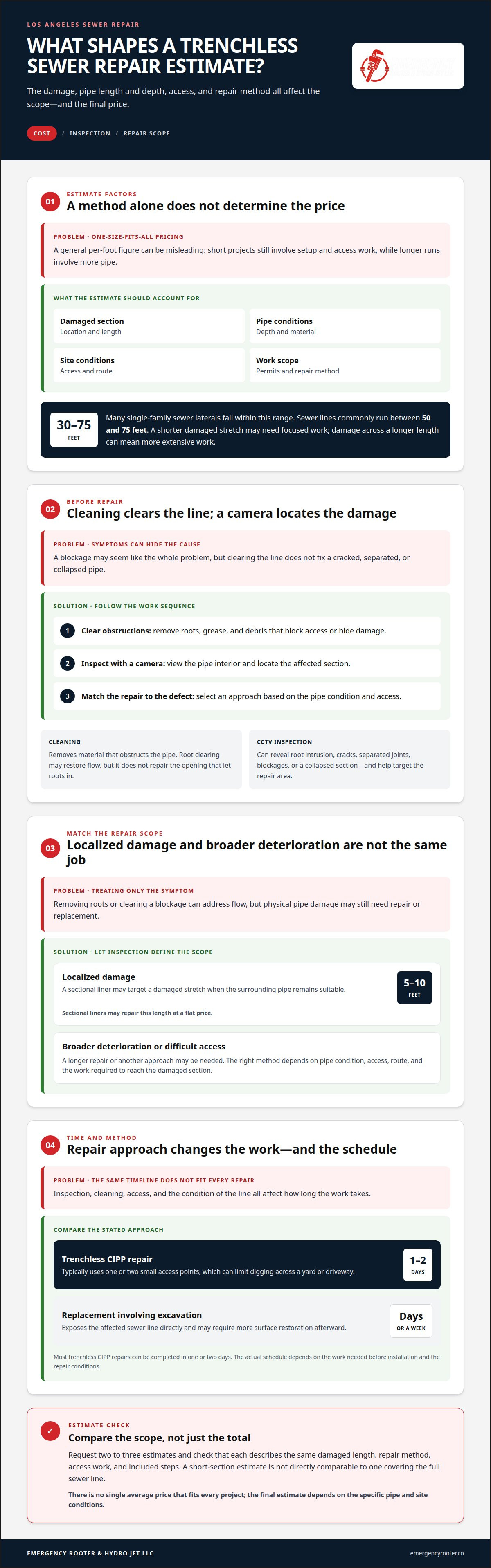
Most trenchless CIPP sewer repairs can be completed in one or two days. The total schedule depends on inspection, cleaning, repair access, and the condition of the line. A replacement involving excavation can take days or even a week. The repair method and the work needed before installation both affect how long the job takes.
In Los Angeles, sewer repair cost depends on the damaged section’s location and length, pipe depth and material, access, permits, and repair method. A collapsed section may call for a different approach than localized root intrusion. Difficult access can also change the work required. The cost of trenchless sewer repair in Los Angeles depends on the pipe and site conditions, not just the method selected.
Length matters because it determines how much pipe needs repair or replacement. Sewer lines commonly run between 50 and 75 feet, while many single-family sewer laterals fall within a 30-to-75-foot range. A shorter damaged stretch may need a focused repair; damage across a longer length can require more extensive work. The location of the damage also matters: a break near an access point differs from one beneath a hard-to-reach area.
Per-foot pricing can be higher for a short project because setup and access work are spread across fewer feet. A longer run may involve more work overall, while those fixed tasks make up a smaller share of the project. Ask for an estimate that identifies the repair length, method, and site work. The price is determined for the specific case after a quote request, based on the pipe’s length, depth, condition, access, permits, and repair method.
To get and compare estimates, request two to three and make sure each describes the same damaged length, repair method, access work, and included steps. Compare the scope, not just the total: an estimate for a short section is not directly comparable to one covering the full sewer line. Clear details help show why proposed work and pricing differ.
Standard homeowners insurance policies typically cover sudden, accidental water damage inside the home, but not the underground sewer line itself. That distinction matters because damage to indoor belongings and damage to the pipe beneath the property are separate parts of a sewer incident.
Before repair begins, the line must be inspected and prepared for the selected method. Cleaning can remove debris that blocks access, while a camera inspection helps locate damage and define the affected section. These steps shape the work plan and schedule. Once the pipe’s condition and route are understood, the repair method can be matched to the job.
Additional costs such as cleaning and CCTV inspection
Cleaning and camera inspection serve different purposes. Cleaning removes roots, grease, and debris that obstruct the pipe or hide damage. A CCTV inspection then shows the line’s interior and helps identify where repair is needed. Cleaning clears the route; the camera helps guide the repair plan.
Root intrusion may need attention before lining begins. Clearing roots can restore flow, but it won’t repair the crack or opening that let them in. If the pipe is damaged, the repair scope must address that defect too. When reviewing an estimate, distinguish between root removal and structural repair: they solve separate problems.
Trenchless repair and traditional excavation involve different work. Trenchless methods typically use one or two small access points, which can limit digging across a yard or driveway. Traditional excavation exposes the affected sewer line directly but may require more surface restoration afterward. The suitable method depends on the pipe’s condition, access, route, and the work needed to reach the damaged section.
For Los Angeles homeowners asking about an average, there isn’t one figure that fits every trenchless sewer project. The price is determined for the specific case after a quote request, based on the damaged length, depth, access, permits, cleaning needs, and repair method. Compare estimates by checking whether they include the same inspection, preparation, repair area, and restoration scope.
Per-foot rates can also mislead when projects differ in size. A short repair still requires setup and access, while a longer run involves more pipe. National pipe-lining figures may not reflect a Los Angeles property’s depth, route, or site access. Review the stated repair length and scope to understand what each estimate covers, rather than relying on a general per-foot figure alone.
A sectional liner can target a damaged stretch instead of lining the full sewer line. These liners may repair a 5-to-10-foot section at a flat price. That can make sense when inspection shows localized damage and the surrounding pipe remains suitable. Broader deterioration may call for a longer repair instead, so the camera findings should match the proposed scope.
Before work starts, the sequence is practical: clear obstructions, inspect the pipe, locate the defect, then select the repair method. This helps distinguish a blockage from pipe damage and clarifies whether root clearing, sectional lining, or excavation is involved. For a closer look at the next step, review sewer-line inspection options.
Camera inspections and locating damaged pipes
A sewer camera inspection helps locate a defect before repair begins. A technician feeds a camera through an accessible opening and views the pipe’s interior. The footage can reveal root intrusion, cracks, separated joints, blockages, or a collapsed section. It also helps pinpoint the damage so the proposed work targets the affected area rather than relying on symptoms inside the home.
The inspection is part of a practical sequence. First, the line is accessed and cleared if debris prevents a clear view. Then the camera travels through the sewer line while the technician records the pipe’s condition and the damage location. Those findings guide the repair plan, including whether the problem is a blockage or structural damage. Clearing an obstruction can restore flow, but it cannot close a crack.
Camera footage can help explain why a drain backs up repeatedly. For example, roots visible at a joint can point to an entry route, while a break or collapsed section indicates physical pipe damage. A blockage may need to be cleared before the camera can show what lies beyond it. Inspection findings can shape the work sequence and help avoid unnecessary digging or a repair that misses the damaged section.
In the City of Los Angeles, trenchless sewer work requires city permits and post-completion inspections. Permit requirements can affect the project plan, while the inspection after the work reviews the completed sewer repair. These steps are separate from the initial camera inspection, which locates and assesses damage before the repair method is selected. Make sure each step is clear in the project scope.
A post-repair camera inspection can review the finished pipe from the inside. It may show whether the repaired section is open and whether the work covers the intended area. Treat this as an inspection step separate from the repair itself, and check whether it is included in the estimate.
Clear records are useful. Camera footage and notes can connect the visible defect to the repair scope, such as a localized break rather than a problem along the full line. That makes it easier to understand what the estimate covers and why the work is proposed. During an emergency backup, inspection can help distinguish an urgent blockage from damage that needs sewer line repair.
Before approving the work, review the findings alongside the proposed repair area, permit steps, and final inspection. Camera footage is most useful when it informs each decision, from locating the defect to reviewing the completed repair. This supports a focused scope and helps prevent avoidable work caused by treating symptoms without identifying the damaged pipe.
What conditions are ideal for trenchless lining?
Trenchless lining suits some sewer lines, but not every damaged pipe. Pipe condition, diameter, depth, and access help determine the right method.
Pipe Condition and Lining Suitability
A camera inspection helps show whether a pipe is suitable for lining. A line with cracks or root intrusion may be a candidate if its structure remains suitable. A collapsed pipe or severe deformation can require a different repair approach. The decision should account for the damage, route, connections, access points, and surrounding pipe condition, not just one visible flaw.
Diameter, Depth, and Accessibility
Pipe diameter affects whether a lining method fits the sewer line. Depth and access affect how crews reach the pipe and position equipment. A line beneath a street, driveway, or other hard surface can make digging disruptive, while a clear access point can simplify the work. The route and connections also matter when deciding whether trenchless repair is practical.
Scale and debris can hide structural flaws or prevent equipment from moving through the line. Cleaning may be needed before inspection or lining, especially when roots or buildup obstruct the pipe. This preparation can reveal whether the damage is localized or extends along the sewer. A blockage alone does not prove the pipe needs lining; the underlying condition should guide the repair plan.
Material and condition shape durability expectations. Sewer pipe liners are rated to last up to 50 years. Trenchless CIPP liners and high-quality PVC or HDPE replacement pipes generally have a lifespan of 50 to 100 years. These figures describe different lining and replacement materials, so the proposed method and pipe condition matter when assessing long-term value.
Pipe bursting is another trenchless method. Its cost per linear foot depends on the amount of pipe replaced, access points, depth, connections, and surrounding ground conditions. A long run beneath a street involves different work from a short, accessible section. The estimate should identify the replacement length and included site work rather than give a per-foot figure without context.
Inspection findings help homeowners understand why a method may fit. A stable pipe with localized damage may support lining; an extensively collapsed or misshapen line may need replacement. The route, diameter, depth, access, and nearby connections all affect feasibility. Trenchless work can reduce surface digging, but the pipe’s condition still sets the limits.
Sewer repair services and types of damage
A sewer backup can result from a blockage or structural failure, and the problems need different fixes. Tree roots may enter through an existing break and restrict flow. Clearing roots can open the sewer line, but it won’t close the break that let them in. A crack, separated joint, or collapsed pipe needs repair or replacement, not cleaning alone.
Start by distinguishing a flow problem from pipe damage. Grease, debris, or roots can obstruct a line without proving that the pipe has failed. If wastewater keeps backing up after an obstruction is cleared, the line needs a closer assessment. A visible crack or collapse points to structural damage. This distinction helps clarify whether the immediate task is restoring flow or repairing the sewer itself.
Cleaning helps when material blocks the pipe. Hydro jetting can clear debris and roots, but it cannot repair a cracked, separated, or collapsed sewer pipe. Treat it as preparation or blockage removal, not a structural fix. If roots return through the same opening, the damaged section still needs attention. The repair plan should address both the obstruction and the defect causing it.
For a localized defect, a sectional liner may repair a 5-to-10-foot section at a flat price. A focused repair can limit work when the surrounding sewer line remains in suitable condition. If damage extends across the line, a longer lining or replacement scope may be needed. The key is matching the repair area to the actual damage, rather than applying a small fix to an extensive failure.
Trenchless methods can reduce surface digging by using one or two small access points. That can limit disruption to landscaping or hardscaping compared with traditional excavation, where restoration afterward can add thousands of dollars to the plumbing bill. But trenchless repair isn’t right for every line. The damage, route, connections, access, and condition of the surrounding pipe all affect which method fits.
Use the inspection findings to connect each symptom to a specific repair need. Root intrusion without a confirmed break calls for a different response than roots entering through a cracked joint. A collapsed section is different again. The estimate should identify the affected area, proposed method, and any included cleaning or surface restoration. That makes the scope easier to understand before work begins.
Act promptly if wastewater is backing up or the line shows signs of structural failure. The right response depends on whether the problem is an obstruction, a damaged section, or widespread deterioration. Get help assessing sewer damage and matching the repair to the condition of the line.
Emergency Rooter & Hydro Jet: Sewer Line Repair
Emergency Rooter & Hydro Jet LLC provides sewer line repair when a blockage or pipe defect disrupts your plumbing. The right response depends on the problem: root intrusion can restrict flow, while a crack, separated joint, or collapsed section requires structural repair. Clearing a blockage can restore flow, but it won’t fix damaged pipe.
For an obstruction, Rooter Service, Hydro Jet Cleaning, or Drain Cleaning may address the flow problem. Damaged sewer lines need repair suited to the condition and extent of the defect. Clear findings help define the work and distinguish cleaning from repair.
If you’re dealing with a sewer backup or pipe damage, contact Emergency Rooter & Hydro Jet LLC to discuss sewer line repair.
Take the Next Step Toward a Clear Repair Plan
Before deciding how to proceed, turn the inspection findings into a clear repair scope. The cost of trenchless sewer repair in Los Angeles depends on the work the damaged line needs, so a useful estimate should connect the proposed method to the specific problem. That gives you a practical basis for deciding what to do next.
A blockage and a damaged pipe call for different responses. Rooter Service, Hydro Jet Cleaning, and Drain Cleaning address flow problems; sewer line damage calls for repair suited to the pipe’s condition. Keeping that distinction clear helps you describe the issue and move toward the appropriate service.
If a backup or damaged sewer line needs attention, contact Emergency Rooter & Hydro Jet LLC to discuss the next step. A clear plan can help you move forward with confidence.
Frequently Asked Questions
Can tree roots damage a sewer line?
Yes, tree roots can enter through an existing break and restrict sewer flow. For example, recurring backups after clearing may point to an opening that still needs repair. Root removal can clear the obstruction, but it doesn’t close the damaged entry point. A camera inspection can help distinguish roots inside an otherwise clear pipe from roots entering through a structural defect.
How is sewer relining done?
Sewer relining installs a liner inside an existing pipe to repair its interior without replacing the entire line. The pipe must be accessible, and debris or roots may need clearing so the liner can be installed. The repair scope depends on where damage appears and whether the surrounding pipe can support the method. Camera footage helps identify the section to be lined.
How long do results from trenchless pipelining last?
Sewer pipe liners are rated to last up to 50 years. Trenchless CIPP liners and high-quality PVC or HDPE replacement pipes generally have a lifespan of 50 to 100 years. These figures describe different materials and work types, so identify what the proposed repair uses. Pipe condition and the extent of damage also matter when deciding whether lining suits the sewer.
Re-line or repipe?
Relining repairs the inside of an existing sewer pipe, while repiping replaces the damaged pipe. A line with limited damage and suitable surrounding structure may be a candidate for relining. Extensive collapse or damage can call for replacement instead. The choice depends on the pipe’s condition, route, access, and connections. Camera findings help define whether the repair should cover one section or a longer run.
How much does trenchless sewer pipe lining cost per linear foot in Los Angeles?
There isn’t one per-foot price that applies to every Los Angeles property. The project price depends on the damaged length, pipe depth and material, access, permits, and repair method. A short section and a longer run can have different scopes even when both use lining. The price is determined for the specific case after a quote request.
What factors affect trenchless sewer repair prices in Los Angeles?
Repair prices depend on the length and location of the damage, pipe depth and material, access points, permits, and the method selected. For example, a deep section beneath a hard-to-reach area can involve different work from a shallow, accessible line. Root intrusion or debris may also require cleaning before repair. The estimate should connect each part of the proposed scope to the pipe’s condition.
How do trenchless sewer repair costs compare with traditional sewer excavation in Los Angeles?
The methods differ in access and surface work, so totals depend on the property and repair scope. Trenchless work typically uses one or two small access points, while excavation exposes the pipe from above. Traditional digging can require landscaping or hardscaping restoration, which may add thousands of dollars. Compare estimates with the same repair length and included work, including any surface restoration.
Are permits required for trenchless sewer repair in Los Angeles, and what do they cost?
Trenchless sewer work in the City of Los Angeles requires city permits and post-completion inspections. Permit costs can reach up to $1,000, depending on location. Keep permit charges separate from the repair work when reviewing the project scope. The permit process and final inspection are distinct steps, so an estimate should make clear whether permitting and post-work inspection are included.


