
A sewer line can often be repaired without digging a long trench. With trenchless sewer repair in Santa Monica, a camera inspection can locate damage, and pipe lining may create a new inner surface inside a suitable existing pipe. If the line has collapsed or lost its shape, excavation may still be necessary.
Keeping a driveway, yard, or street largely intact is a clear advantage, but trenchless methods aren’t right for every pipe. The sewer line’s condition and route matter. A camera inspection provides a clearer view before the repair method is chosen.
Here’s how pipe lining works, how pipe bursting replaces a damaged line, and what an inspection can reveal. You’ll also learn when excavation is the practical option, so you can understand the work involved and what determines the next step.
Key Takeaways
- A camera inspection reveals pipe defects and helps determine whether lining is suitable.
- Pipe lining creates a new inner surface, while pipe bursting replaces the damaged pipe through access points.
- Collapsed sections, severe offsets, or poor slope can make excavation necessary.
- Trenchless methods can limit disruption to the surface, but they aren’t always the least expensive option.
- The right repair depends on the sewer line’s condition, layout, and the method suited to the damage.
HOW DOES TRENCHLESS PIPE LINING WORK?
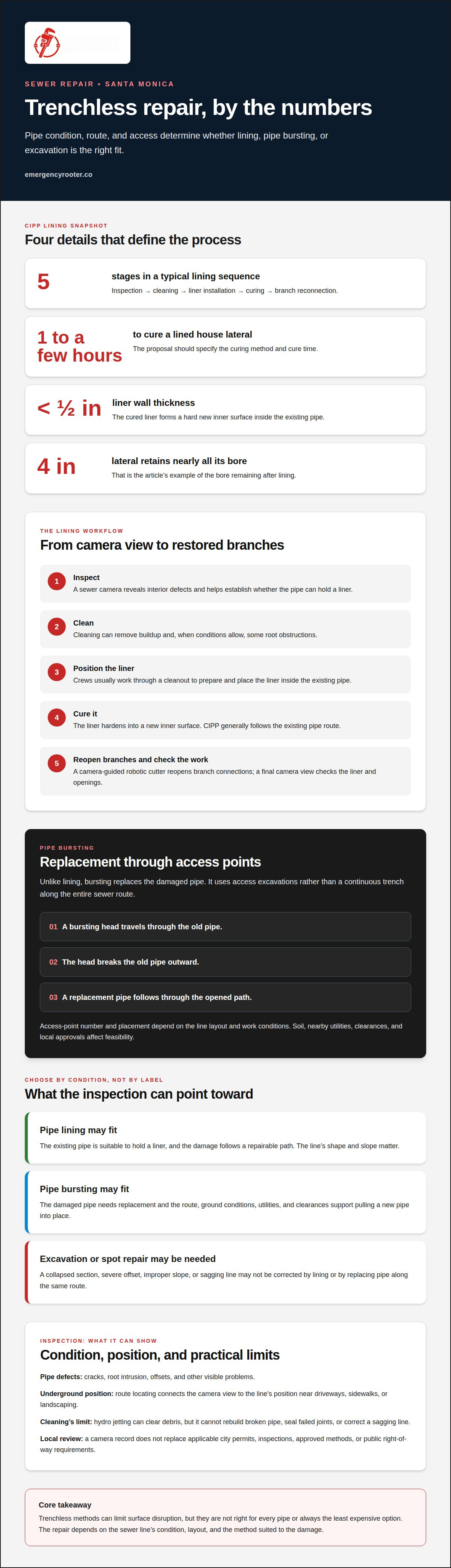
Cured-in-place pipe lining, or CIPP, repairs a suitable existing sewer line from an access point. The process involves inspection, cleaning, liner installation, curing, and branch reconnection.
Pre-Lining Inspection and Pipe Cleaning
A sewer camera inspection shows the pipe’s interior before lining begins. It can reveal cracks, root intrusion, offsets, and other defects after cleaning if needed. This view helps establish whether the pipe can hold a liner and whether the damage follows a repairable path.
Cleaning removes buildup and, when pipe conditions allow, some root obstructions. Hydro jetting can clear debris, but it cannot rebuild broken pipe, seal failed joints, or correct a sagging line. An inspection should identify defects and show whether the line’s shape and slope are suitable for CIPP.
The camera record also helps map branch connections and damaged sections. This matters because the liner later covers openings into the sewer. A clear inspection record gives the repair plan a reference point and helps explain which sections the lining will treat.
Cured-in-Place Pipe Lining Process
For sewer lining in Santa Monica, crews usually work through a cleanout. They prepare a liner, position it inside the existing pipe, and cure it until it forms a hard inner surface. Curing a lined house lateral usually takes one to a few hours. The proposal should specify the curing method and cure time.
The cured liner wall measures well under half an inch thick. A four-inch sewer lateral retains nearly all of its bore after lining. Once curing is complete, a camera-guided robotic cutter reopens each branch connection. This reinstatement step restores flow from connected drains into the repaired line.
After cutting the branches, a camera can check the finished liner and reopened connections. This final view helps show whether the repair covers the intended section and whether openings are clear. CIPP generally follows the existing pipe route, so lining does not correct a badly sagging sewer.
Ask what the written warranty covers, how long coverage lasts, and whether it applies to the liner, workmanship, or both. Review its exclusions and claims process. A warranty describes specific coverage; it does not change the repair’s physical limits. A collapsed pipe, or a line with unsuitable access or conditions, may require another repair approach.
Pipe bursting
Pipe bursting replaces a damaged sewer line rather than installing a liner inside it. Compared with lining, it requires access excavations, but it can install a new pipe along the existing route.
Pipe Bursting Suitability
Suitability depends on the sewer’s condition and the route around it. An assessment considers soil, nearby utilities, clearances, and local approvals. These factors determine whether equipment can move through the route and whether the new pipe can be pulled into place without disrupting other underground services.
During pipe bursting, a head travels through the old pipe and breaks it outward. A replacement pipe follows behind through the opened path. The method requires access excavations rather than a continuous trench along the entire sewer route. The number and placement of access points depend on the line’s layout and work conditions.
Pipe bursting isn’t a fix for every defect. A collapsed section, severe offset, or improper slope may require excavation or spot repair instead. Bursting replaces the pipe, but it doesn’t automatically correct the route’s grade. If a line sags, replacing it along the same path may leave the drainage problem in place.
Durability and Pipe Diameter
Modern pipe bursting systems are designed to perform reliably for decades. That expected service life depends on correctly installing the replacement pipe and addressing the damaged section. The repair plan should clearly describe the work area and the pipe being installed, rather than treating “trenchless” as a guarantee of a particular result.
Unlike lining, bursting doesn’t place a new wall inside the old pipe. It pulls a replacement pipe into the route, so liner thickness doesn’t reduce the bore. The replacement diameter depends on the design and site constraints. Soil conditions, nearby utilities, and available clearance all affect what size can be installed.
Existing utilities matter. The bursting head pushes broken pipe outward, so nearby lines and the surrounding ground affect feasibility. Tight clearances can limit the method. Access excavations also cause localized disruption to landscaping, sidewalks, or paved areas, even though the technique avoids opening a continuous trench.
For a Santa Monica sewer line, the choice comes down to damage, slope, access, and underground clearances. Pipe bursting can replace a line when the route and ground conditions support it. If those conditions don’t fit, excavation or a spot repair may be more suitable. A sewer line repair assessment can help identify the approach that addresses the actual defect.
Sewer camera inspections
For sewer construction in Santa Monica, check applicable city permits, inspections, approved methods, and public right-of-way requirements. A camera inspection records pipe condition, but it doesn’t replace applicable city review.
Camera Inspection and Route Locating
A camera travels through the sewer and sends back a view of its interior. The inspection can reveal cracks, roots, offsets, and other defects. If buildup blocks the view, cleaning first can help expose the pipe surface and make the recorded findings more useful.
Route locating connects what appears on screen with the line’s position underground. A technician can trace the camera’s progress to understand where a damaged section lies relative to a driveway, sidewalk, or landscaping. This information helps plan access and limit unnecessary digging.
The recording also helps distinguish between problems. Root intrusion may appear near a joint, while an offset shows adjoining pipe sections out of alignment. A camera view can reveal a crack or collapsed area, but the defect’s position and extent matter when selecting a repair method.
Before work begins, the inspection record should make the proposed repair area clear. It can show which section is damaged, where branch connections enter, and whether the pipe’s route has a visible sag. These details help explain why one repair method may fit better than another.
In Santa Monica, the line’s location matters when work approaches a public right-of-way. The camera record can help identify the sewer route, while applicable city requirements address permits, inspections, and approved methods. Treat these as separate checks: a video documents pipe conditions, not project approval.
Post-Repair Camera Inspections
After a repair, a camera can examine the treated section and connections. With lining, the view can show the finished inner surface and reopened branch openings. With replacement, it can show the installed pipe’s interior. The post-repair recording provides a visual record of the completed work.
Compare the final view with the earlier inspection. Look for the repaired section, clear branch connections, and visible flow through the line. If the repair addressed a specific damaged area beneath a driveway, the recording can help show its condition after the work.
Keep inspection records with the repair details. Before-and-after views can clarify what changed and which section received treatment. They also help distinguish a repaired segment from untreated connections or adjacent pipe. A camera can document visible conditions, but it cannot establish that every part of the sewer line is defect-free.
Can every sewer line be repaired without digging?
No. Trenchless repair can avoid a long trench, but severe damage, collapse, or poor slope may require excavation. Camera findings and the pipe route help show which option fits.
Trenchless Repair Methods
Available methods include cured-in-place pipe lining, pipe bursting, slip lining, spray lining, and brush coating. Lining creates a new inner surface within a suitable pipe; bursting replaces the old pipe through access excavations. The right method depends on the defect, pipe shape, route, access, and surrounding conditions.
Repeated backups, slow drains, or sewage odors can signal sewer line problems, but these symptoms don’t identify the exact cause. A camera inspection can distinguish roots, cracks, offsets, and collapsed sections before a repair method is selected. Clearing a blockage can restore flow, but it won’t rebuild broken pipe or correct a sag.
For a lined section, a robotic cutter reopens branch connections after curing. This robotic branch-line reinstatement restores openings where smaller drains join the main sewer. The camera-guided step matters because a covered branch can restrict flow, even when the repaired pipe itself appears sound.
Sewer Line Replacement
Replacement may be needed when a sewer line has lost its shape or sections have collapsed. Pipe bursting can replace a line with limited access excavation when ground conditions, utilities, clearances, and approvals allow. Severe offsets or improper slope may instead call for excavation or targeted spot repair.
Trenchless work can use one or two small access points instead of a long trench across the property. Still, the method doesn’t eliminate every disruption or repair every defect without digging. Untreated connections and adjacent damaged piping may remain vulnerable, so the proposed work area should match the camera findings.
Choosing a Trenchless Sewer Contractor
Choose a licensed contractor who explains the camera findings, proposed method, repair limits, and any excavation points. The work plan should identify the section being treated and how branch connections will be reopened. For work in Santa Monica, the plan should also address applicable permits, inspections, approved methods, and public right-of-way requirements.
Ask for a written proposal that describes the curing method and cure time if lining is recommended. For pipe bursting, the plan should explain access locations and how utilities and clearances along the route affect the work. These details make it easier to understand what the repair includes and what remains outside its scope.
For sewer construction in Santa Monica, check applicable city permits, inspections, approved methods, and public right-of-way requirements. Requirements depend on where the work occurs and whether it affects public space. Don’t assume a private-lot repair and right-of-way work follow identical steps.
Trenchless sewer repair pricing depends on the damage, selected method, access, route conditions, and required work area; the price is provided after a quote request. A collapsed section, difficult access, or work near the public right-of-way can change the repair scope.
Trenchless sewer repair in Los Angeles
In Los Angeles, sewer lines can run beneath driveways, landscaping, sidewalks, or streets. Trenchless repair can limit surface disruption by using small access points instead of opening a long trench. The practical benefit is that less surface area may need restoration. But the method still depends on the pipe’s condition, route, access, and surrounding utilities.
For a Santa Monica property, start by identifying the sewer route and damaged section. A camera inspection records cracks, roots, offsets, and other visible defects. This information helps determine whether lining can follow the existing pipe or replacement is needed. It also identifies where access is required, including work near a sidewalk or public right-of-way.
Trenchless work can reduce restoration needs, but it isn’t always the least expensive solution. Cost depends on the repair method, damage, access, route conditions, and work area. For example, lining a suitable section through a cleanout differs from replacing a collapsed pipe that requires access excavation. A clear scope should connect the proposed work to the inspection findings.
Timing also depends on the sewer line and repair method. Many trenchless projects can be completed within one to two days. A typical residential pipe-lining job takes one day. These timeframes describe different scopes, not a promise for every property. A damaged line, difficult access, or additional work can change the schedule.
Los Angeles-area sewer work may involve private property and public space. For sewer construction in Santa Monica, check applicable city permits, inspections, approved methods, and public right-of-way requirements. The work location matters: a repair beneath a private driveway presents different access conditions from work extending toward the public sewer in the street.
Trenchless methods can help restore sewer function while limiting disruption to lawns, driveways, and streets above the line. They don’t correct every defect. A liner follows the existing route, so it won’t fix a badly sagging pipe. A collapsed section or severe offset may call for excavation or spot repair. Match the method to the defect, not simply to the desire to avoid digging.
Once the repair is complete, a camera view can document the treated section and reopened connections. Keep that record with the repair scope. It helps show what work was performed and which area was addressed. If sewer backups or drain problems persist, request a sewer-line assessment to identify the cause and the next repair step.
Emergency Rooter & Hydro Jet: Sewer Line Repair
Emergency Rooter & Hydro Jet handles sewer line repair when recurring backups or damaged piping require more than routine drain clearing. Rooter Service and Drain Cleaning address blockages; Hydro Jet Cleaning can remove buildup and some root obstructions when pipe conditions allow. These clearing methods don’t rebuild broken pipe, seal failed joints, or correct a sagging line.
For structural damage, sewer line repair addresses the affected pipe rather than treating symptoms alone. The right approach depends on the damage and line conditions, including whether trenchless work is suitable or excavation is needed. If drains keep backing up or an inspection shows a damaged sewer, contact Emergency Rooter & Hydro Jet to discuss sewer line repair.
Take the Next Step Toward a Clear Repair Plan
Before work begins, make the decision practical. Keep the inspection recording, note where backups or odors occur, and ask how the proposed repair addresses those symptoms. This gives you a focused basis for discussing trenchless sewer repair in Santa Monica and the work your property needs.
If drains are backing up again, don’t let another temporary clearing stand in for a repair plan. Emergency Rooter & Hydro Jet can help assess sewer line concerns and discuss the next step. A clear conversation can turn an uncertain problem into a manageable decision.
Contact Emergency Rooter & Hydro Jet to discuss your sewer line concerns. Take the next step with a clearer view of the problem.
Frequently Asked Questions
Can lining be done through the cleanout, or do you have to dig?
Yes, lining is usually installed through a sewer cleanout, avoiding a continuous trench. The crew still needs a usable access point and a pipe that can hold the liner. If the cleanout is blocked, damaged, or poorly positioned, another access opening may be needed. Ask where equipment will enter and exit, and whether localized digging is part of the repair plan.
Does the liner reduce the size of my pipe?
A cured liner adds a thin inner wall, but a four-inch lateral retains nearly all of its bore after lining. The liner wall measures well under half an inch thick. Ask the proposal to identify the section being lined and note any existing narrowing or deposits. A camera view after cleaning helps distinguish liner thickness from buildup already inside the pipe.
How do I arrange a lining quote?
Call now at (310) 889-7979 to arrange a discussion with Emergency Rooter & Hydro Jet LLC. Share the Santa Monica property location, recurring symptoms, and any earlier camera recording or repair notes. Useful details include where backups occur, how often they return, and whether the line has a cleanout. This helps focus the quote discussion on inspection needs, access, and repair scope.
How is the resin cured, and does the method matter?
The resin cures inside the prepared pipe to form a solid liner. The proposal should identify the curing method and cure time. These details matter because the method affects the work sequence and when the sewer can return to service. Compare the stated cure time with the planned branch reopening and final camera check to understand what must happen before the repair is complete.
How long will I be unable to use water?
Keep water out of the lined sewer until curing is complete and reopened branch connections are ready for flow. The interruption depends on the curing method and job sequence, not only on liner placement. Before work starts, get the expected shutoff window and when drains can be used again. This gives your household a clear plan for water use during the repair.
Is hydro jetting an alternative to replacement?
No. Hydro jetting cleans buildup and can remove some root obstructions when pipe conditions allow, but it doesn’t rebuild broken pipe, seal failed joints, or correct slope. It clears material inside the pipe; it doesn’t replace a structural repair. If backups return after clearing, camera findings can help identify whether sewer line repair is needed. A collapsed section needs a method that addresses the damaged pipe.
How much does trenchless sewer repair cost in Santa Monica?
The price depends on the case and is provided after a quote request. Factors include the type and extent of damage, selected repair method, access to the line, route conditions, and work area. For example, lining an accessible section and replacing a collapsed section involve different scopes. A quote should connect the proposed work to the inspection findings and property conditions.
What signs indicate a sewer line needs trenchless repair?
Repeated backups, slow drains in multiple fixtures, or sewage odors can point to a sewer line problem. A single clogged sink may involve only that fixture, while several affected drains can suggest a shared-line issue. These signs don’t identify the repair method by themselves. A camera inspection can show whether roots, cracks, offsets, or another defect require pipe repair.


