

A straightforward residential trenchless sewer repair often takes 1 day; extensive cleaning or multiple pipe runs can stretch the work to 2 days. For trenchless pipe lining in Beverly Hills, a camera inspection helps show whether the pipe is suitable for lining and what the project involves. Larger or more complex jobs can take longer, with timing shaped by the repair method, pipe condition, and access.
Sewer trouble can disrupt a home quickly, and a fast fix is not always the right fix. The first step is identifying the damage and choosing a repair suited to the pipe. This guide explains which conditions may suit trenchless pipe lining in Beverly Hills, how common trenchless methods work, and what can affect a repair timeline. It also covers warning signs that may point to sewer line damage, so you can better understand what is happening below ground.
Key Takeaways
- A straightforward residential trenchless sewer repair often takes 1 day; extensive cleaning or multiple runs can extend the work to 2 days.
- A camera inspection helps identify whether a pipe’s condition and access make lining a suitable repair option.
- Cracks, root intrusion, and leaking joints may be candidates for trenchless repair when the pipe remains structurally present.
- CIPP, sliplining, pipe bursting, and spray-in-place pipe address sewer damage in different ways, so the repair method depends on the pipe and the problem.
- Recurring clogs, sewer odors, and other warning signs can point to damage below ground. Learn what to watch for and how to respond.
How long does it take to complete underground sewer line repair with trenchless methods?
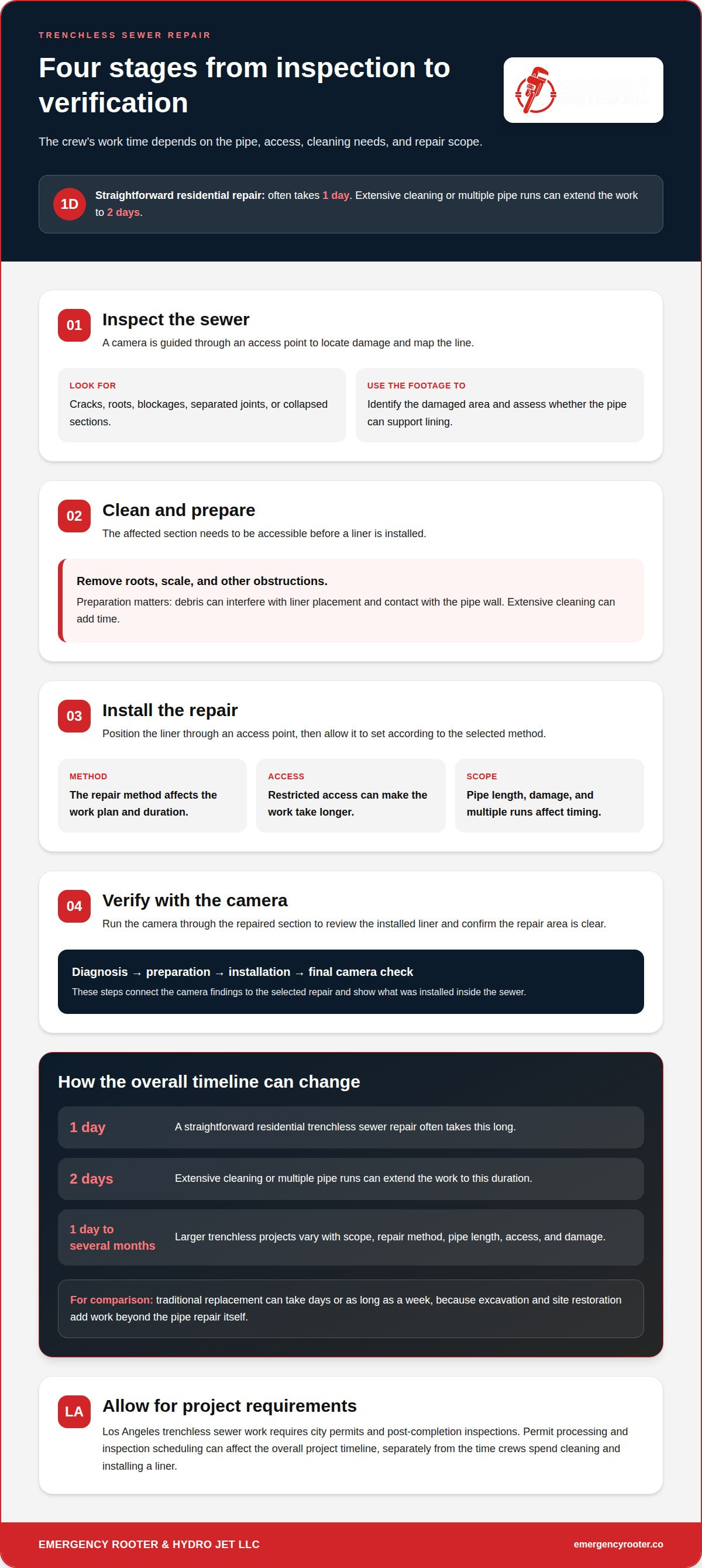
A single residential trenchless sewer repair often takes 1 day. Extensive cleaning or multiple pipe runs can extend the work to 2 days. Larger projects vary with the repair method, pipe length, access, and damage. Some trenchless projects can take from 1 day to several months, depending on their scope. For trenchless pipe lining in Beverly Hills, the camera inspection and condition of the sewer help shape the work plan.
The process starts with a camera inspection. A technician guides a camera through the sewer to locate cracks, roots, blockages, separated joints, or collapsed sections. The footage helps identify the damaged area and assess whether the pipe can support lining. If buildup or roots obstruct the pipe, it must be cleaned first. Preparation matters because debris can interfere with liner placement and contact with the pipe wall.
Typical stages include:
- Inspect: Feed a camera through an access point and map the damage, pipe route, and connections.
- Clean: Remove roots, scale, and other obstructions so the damaged section is accessible for repair.
- Install: Position the liner through an access point, then allow it to set according to the selected method.
- Verify: Run the camera through the repaired section to review the installed liner and confirm the repair area is clear.
The time needed for these steps varies when access is restricted, cleaning is extensive, or several pipe runs need attention. Traditional replacement can take days or as long as a week because excavation and site restoration add work beyond the pipe repair itself. Trenchless repair avoids a full-length open trench, but still requires preparation, installation, and a final camera check.
Los Angeles trenchless sewer work requires city permits and post-completion inspections. Permit processing and inspection scheduling can affect the overall project timeline, separate from the time crews spend cleaning and installing a liner. The approved work plan also needs to account for access and the repair method. These steps help keep the installation aligned with project requirements.
Beverly Hills plumbing companies that handle sewer line repairs may offer trenchless lining. The key is whether the repair plan includes camera inspection, pipe preparation, and post-installation verification. These steps connect the diagnosis to the selected repair and show what was installed inside the sewer.
To verify a contractor’s license, request the license number and match it with the contractor’s name in California’s official contractor licensing records. Review the written warranty before work begins. It should identify what the warranty covers, its duration, and any conditions affecting coverage. A clear written scope should also name the inspected section and describe the repair method, so you can compare the camera findings with the completed work.
What conditions are ideal for trenchless lining?
Trenchless lining may suit a sewer pipe that still holds its shape and is accessible. A camera inspection helps determine whether cracks, root intrusion, leaking joints, or minor corrosion have damaged the pipe without destroying its structure. Pipe material matters, too. Cured-in-place pipe lining can be used in clay, cast iron, PVC, concrete, and Orangeburg pipes when the line is not fully collapsed and technicians can reach it.
The damage pattern helps guide the method. A crack or small leak in a structurally intact pipe may suit lining, which creates a new interior surface. Offset connections and root intrusion also need close inspection: camera footage shows where the defect is and how much of the pipe it affects. Corroded cast iron or galvanized steel may also be considered for trenchless repair when the remaining structure supports the selected method.
- Cracks or minor corrosion: Consider lining when the surrounding pipe remains intact.
- Root intrusion or leaking joints: Inspect the full affected section and connections before choosing a method.
- Under-slab or under-foundation lines: Trenchless methods can address pipes that are difficult to reach through excavation.
- Collapsed or inaccessible pipe: Lining isn’t suitable when the pipe is fully collapsed or cannot be accessed.
Trenchless pipe lining and pipe bursting solve different problems, and neither is automatically better. The U.S. Environmental Protection Agency says pipe bursting typically provides the largest increase in hydraulic capacity, while lining suits pipes that remain structurally intact. Camera findings, pipe condition, and capacity needs help guide the choice.
Ground conditions affect access and the practical benefit of avoiding excavation. A line beneath a foundation, driveway, or established landscaping can be difficult to reach with an open trench. Nearby structures and the route to the damaged section also affect equipment access. Trenchless work can limit surface disruption, but still depends on accessible entry points and a pipe the selected method can handle.
Excavation may be necessary if the pipe has collapsed, lost too much structure, or cannot be reached with trenchless equipment. Severe damage can prevent a liner from forming a usable path through the pipe. A camera inspection helps locate the failure and distinguish a repairable section from a break that requires access to the outside of the line.
A sound choice starts with the pipe material, the defect, and access. A sewer line repair assessment can connect camera findings to the repair method, including whether lining or excavation fits the damage.
Cured-in-place pipe lining
Cured-in-place pipe lining, usually shortened to CIPP, creates a new lining inside an existing sewer. It suits a pipe that is accessible and structurally intact, rather than one that has fully collapsed. CIPP can address cracks, root intrusion, and minor corrosion without replacing the entire line. Clay, cast iron, PVC, concrete, and Orangeburg pipes may be candidates when their condition supports the work.
Installation starts with a clean, accessible pipe section. A felt tube is saturated with a two-part epoxy resin, then placed inside the damaged pipe. The liner is positioned along the repair section and cured to form a firm interior layer. A camera inspection helps locate defects before installation and review the finished liner afterward. Each step connects the pipe’s actual condition to the structural rehabilitation performed.
The new interior surface can seal cracks and cover smaller defects while retaining the existing pipe route. CIPP liners can reduce the pipe’s inside diameter by about ¼ inch on each side, or ½ inch total. This matters when evaluating capacity, especially if flow is already restricted. The pipe’s starting diameter, defect location, and remaining structure all help determine whether CIPP is suitable.
Standards offer a reference for the work. ASTM International identifies ASTM F1743-17 as a standard for CIPP. A standard is one part of evaluating the method; the camera findings still show whether the damaged section can be lined and accessed. For a Beverly Hills sewer, the inspection should identify the repair area, connections, and any obstruction that could interfere with placement.
Installation planning follows the inspection. The work area needs access to the pipe, and the damaged section must be prepared for the liner. If roots or deposits block the path, the pipe needs cleaning before the tube can be placed. After the liner is installed and cured, a camera check can show whether it covers the intended section and leaves the pipe open for flow.
Durability depends on proper installation and the condition of the original line. Quality CIPP liners are rated to last more than 50 years when properly installed. That rating does not make every damaged pipe a candidate. A collapsed pipe, inaccessible section, or severe loss of structure may call for another repair approach. CIPP is strongest as a targeted rehabilitation method when the existing pipe can support a liner and the repair can reach the damaged area.
Sliplining, pipe bursting, and spray-in-place pipe
Sliplining, pipe bursting, and spray-in-place pipe repair differ from cured-in-place pipe lining. The right method depends on the existing pipe’s condition, access, corrosion, and required capacity. These options can rehabilitate a sewer without continuous digging, but each changes the inside of the line differently. A camera inspection helps locate the damage and show which repair approach suits that section.
Sliplining places a smaller pipe inside the damaged one. It can suit a sewer with a usable, accessible route, but the new pipe reduces the available diameter. That reduction is a key factor when the line already struggles with flow. Sliplining is listed for pipes from 4 to 150 inches in diameter, covering a broad range of infrastructure. The final fit depends on the existing pipe and the liner selected.
Pipe bursting breaks apart the old pipe as a replacement pipe is pulled through its route. It can replace a damaged line without digging a continuous trench, though access points are still needed. The method may suit a pipe that cannot support an interior liner. Pipe bursting can also accommodate HDPE replacement pipe, but the route’s condition and surrounding ground affect whether it is suitable.
The U.S. Environmental Protection Agency says pipe bursting typically provides the largest increase in hydraulic capacity, while other trenchless methods may also increase capacity by reducing friction. The EPA also reports CIPP liners have been in service for up to 30 years in the U.S. and nearly 40 years in the U.K. That history provides context for comparing lining with replacement, but the pipe’s actual condition remains central to method selection.
Spray-in-place pipe applies a lining material to the inside surface of an existing pipe. It can address corrosion or surface wear when the pipe remains accessible and suitable for coating. The listed application range is 4 inches to over 200 inches in diameter. Like sliplining, it changes the pipe interior, so the available flow area and defect type need consideration before work begins.
Point repairs target a specific damaged section rather than rehabilitating the full line. They may make sense when a camera inspection shows a localized defect, such as one cracked joint, while the surrounding pipe remains serviceable. By comparison, CIPP relines a longer section with a continuous liner, while pipe bursting replaces the old pipe along its route. These approaches are not interchangeable. A contractor considers the damage’s length and location, corrosion, access, and capacity needs before selecting a repair.
Common signs of sewer line damage
A sewer line problem can affect several fixtures at once. A slow kitchen sink alone may point to a local drain blockage. Slow drains in both a bathroom and kitchen raise concern about a shared sewer line. Note which fixtures are affected and whether the problem returns with ordinary use.
Listen for gurgling. A toilet that bubbles when a nearby sink drains, or a shower that gurgles after flushing, can signal trouble in connected plumbing. Note which fixture makes the sound and when it occurs. Repeated symptoms in separate rooms matter more than one isolated noise.
Watch for these warning signs around the home:
- Recurring clogs: A drain that blocks repeatedly after clearing can point to an ongoing obstruction or pipe defect.
- Frequent toilet plunging: Weekly plunging may indicate a structural sewer defect.
- Sewage odors: A persistent sewer smell near a floor drain or yard can signal a drainage problem.
- Backups: Wastewater returning through a shower, tub, or floor drain calls for prompt attention.
Odors and backups deserve careful attention. A single unpleasant smell near one fixture may have a local cause, while odor across several drains suggests a broader plumbing issue. If wastewater appears indoors, stop using affected fixtures and keep people away from the contaminated area. Record where the backup appeared and which fixtures were running.
Check the yard for changes near the sewer route. A persistently wet patch, unusual settling, or an unusually green strip of ground can accompany a leaking underground line. These surface clues do not show the exact break, but their location gives a technician useful context for a camera inspection and sewer line assessment.
Patterns can help distinguish a smaller drain obstruction from a line-wide concern. If one sink drains slowly but toilets and other fixtures work normally, the issue may be limited to that branch. If several fixtures slow, gurgle, or back up together, the main sewer line should be inspected. A camera can reveal cracks, roots, separated joints, or other visible damage inside.
Keep a brief symptom record before the inspection. Note the affected fixtures, when symptoms began, recurring clogs, odors, and any visible backup. These details help connect what you have observed at home with the camera findings. An assessment can then guide whether cleaning, a targeted repair, or broader rehabilitation suits the damaged section.
Don’t wait through repeated backups or weekly plunging. Arrange a sewer line assessment to locate the problem and identify the next repair step.
Emergency Rooter & Hydro Jet: Sewer Line Repair
Emergency Rooter & Hydro Jet helps Beverly Hills homeowners address recurring clogs, slow drains, and sewer backups. When symptoms affect several fixtures, prompt plumbing service can help determine whether the problem is a blockage or a damaged sewer line.
Rooter Service can clear obstructions, while Hydro Jet Cleaning and Drain Cleaning address buildup that restricts flow. For an active backup or urgent plumbing disruption, Emergency Plumbing can tackle the immediate problem. These services address drainage issues, and the right next step depends on what is causing the symptoms.
If recurring clogs, sewer odors, or wastewater backups are disrupting your home, contact Emergency Rooter & Hydro Jet to discuss the problem.
Move from sewer warning signs to a clear next step
Persistent sewer trouble calls for a practical plan, not another cycle of temporary fixes. For trenchless pipe lining in Beverly Hills, the next step is matching the pipe’s condition to a suitable repair. A focused sewer line assessment can turn recurring symptoms into a clear direction for the work. That helps you make decisions based on the actual problem, rather than guessing from a slow drain or unusual sound.
Emergency Rooter & Hydro Jet LLC addresses drainage problems with Rooter Service, Hydro Jet Cleaning, and Drain Cleaning. If backups or recurring clogs are disrupting your home, describe what you have noticed and which fixtures are affected. That information helps pinpoint the plumbing issue.
Take the next step when sewer symptoms persist. Contact Emergency Rooter & Hydro Jet LLC to discuss the problem and move toward a clear repair plan. A direct assessment can help you regain confidence in what happens next.
Frequently Asked Questions
Do I Need City Approval for Trenchless Sewer Work in Los Angeles?
Yes. Trenchless sewer work in Los Angeles requires city permits and post-completion inspections. Include these steps in project planning because they are separate from the physical repair. The approved scope and inspection process help define the work and verify the completed project. A Beverly Hills sewer repair timeline should account for city review, inspection, preparation, and installation.
How is sewer relining done?
Sewer relining places a new lining inside an existing pipe, creating a renewed interior surface without replacing the entire run. For CIPP, the pipe is prepared, a resin-saturated liner is positioned through an access point, and the liner cures in place. The finished section is then inspected. The repair plan identifies the affected stretch and connections so the liner serves the intended area.
How long do results from trenchless pipelining last?
Quality CIPP liners are rated to last more than 50 years when properly installed. The result depends on the liner being placed and cured correctly, along with the condition of the existing pipe. A camera review after installation helps assess the finished lining and confirm it covers the planned section. Keep the inspection record with sewer maintenance documents for future reference.
Is Trenchless Sewer Line Replacement More Expensive Than Traditional Methods?
There is no single cost ranking for every sewer project. The total depends on the repair method, damaged pipe length, access, pipe material, and extent of damage. Traditional excavation also involves digging and restoring disturbed surfaces, while trenchless work has its own preparation and installation requirements. Comparing the actual work scope gives a more useful cost picture than comparing method names alone.
Re-line or Repipe?
Relining renews the inside of an existing pipe, while repiping replaces the damaged line with new pipe. Relining may suit a pipe that remains structurally intact and accessible. Replacement is relevant when the existing line cannot support a liner or the damage calls for a new pipe. The assessment should consider the defect’s location, the pipe’s condition, and the work needed to restore flow.
What problems can be addressed with trenchless repair?
Trenchless repair can address cracks, root intrusion, leaking joints, offset connections, and some corrosion when the pipe suits the selected method. A camera inspection helps distinguish a localized obstruction from structural damage. For example, a recurring blockage may need cleaning, while a cracked section calls for a repair that addresses the pipe itself. The defect and pipe condition guide the response.
What is trenchless pipe lining and how does CIPP work?
Trenchless pipe lining repairs a sewer from inside the existing line, reducing the need for continuous excavation. In CIPP, a felt tube saturated with two-part epoxy resin is placed inside the pipe and cured to form a lining. The process can repair a damaged section without removing the full pipe run. Suitability depends on access and the existing pipe’s structural condition.
How much does trenchless pipe lining cost in Beverly Hills, CA?
The price depends on the project and is provided after a quote request. Factors include the damaged section’s length, pipe material, access, repair method, and extent of damage. For a quote from Emergency Rooter & Hydro Jet LLC, call now at (310) 889-7979. A clear description of recurring backups, affected fixtures, or known access points can help explain the work needed.


