

A small-looking crack doesn’t always mean a small repair. The cracked sewer line repair cost depends on where the damage is, how far it extends, how deep the pipe sits, and what lies above it. A short, isolated defect may call for a limited repair; widespread damage or difficult access can change the scope significantly.
Excavation can affect a driveway, paving, or landscaping, and estimates are difficult to compare when they describe different work. Before weighing options, check what each estimate says about the damaged section, access, repair method, and restoration.
This guide explains the factors that shape a project-specific estimate, how repair approaches differ, and what details to look for in a proposal. You’ll also learn why pipe condition and site access matter when considering spot repair, excavation, or trenchless work. For a property in Greater Los Angeles, start with an assessment that identifies the crack and its extent. Then you can compare estimates on the same basis and understand what work your sewer line needs.
Key Takeaways
- The cracked sewer line repair cost depends on the damage, access to the pipe, and work required, so an estimate should reflect your property.
- Camera findings can help show whether the problem is limited to one spot or extends farther along the line.
- Spot repair, excavation, and trenchless approaches differ in scope, access needs, and disruption. The pipe’s condition guides the comparison.
- Paving, landscaping, and structures above the sewer line can affect the repair plan and the work involved.
- For a Greater Los Angeles property, describe the symptoms, review the line assessment, and compare the proposed repair scopes.
Cracked Sewer Line Repair Cost: What an Estimate Actually Covers
A useful repair estimate explains the work your sewer line needs rather than relying on a generic figure. The cracked sewer line repair cost is specific to the property. It depends on the confirmed damage, how the pipe can be reached, and the work required to repair it. Before an assessment, the cause and extent of the problem may still be uncertain.
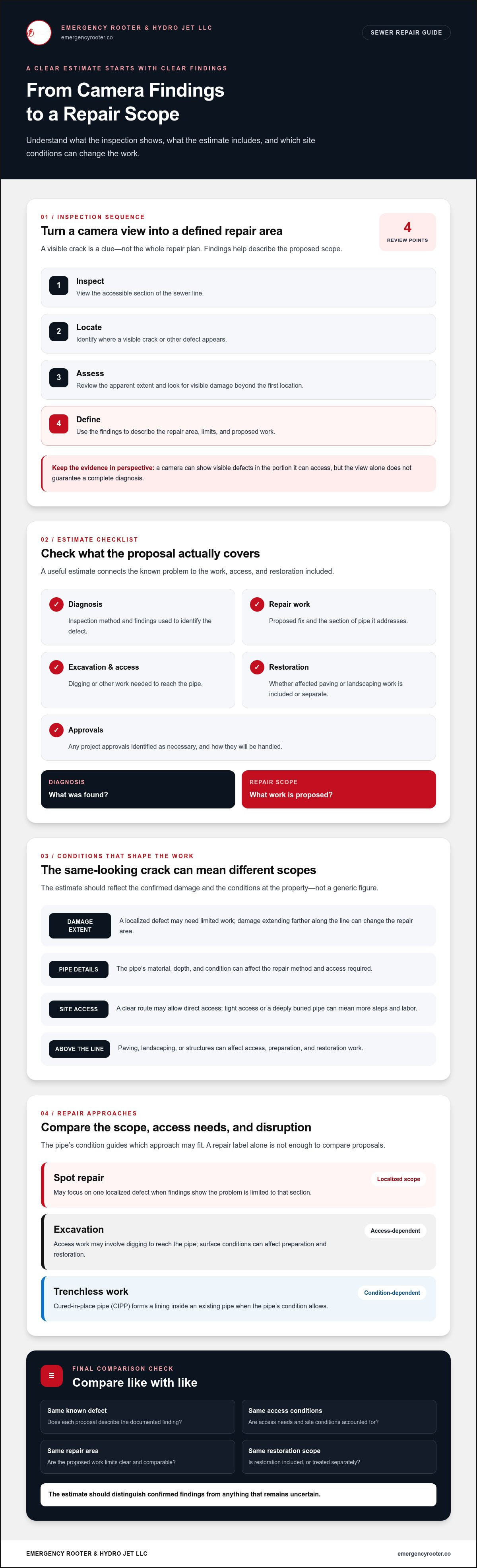
A clear estimate separates the main parts of the job so you can see what is included:
- Diagnosis: The inspection method and findings used to identify the defect.
- Repair work: The proposed fix and the section of pipe it addresses.
- Excavation and access: Digging or other work needed to reach the pipe.
- Restoration: Work to address affected surfaces, such as paving or landscaping, if included in the scope.
- Approvals: Any project approvals identified as necessary and how they will be handled.
These details separate the cost of diagnosing a problem from the work required to correct it. They also show whether restoring disturbed areas is included or treated separately. If trenchless lining is being considered, Cured-in-place pipe (CIPP) is one method to understand. It forms a lining inside an existing pipe when the pipe’s condition allows. The assessment helps determine whether that approach fits.
What information makes a sewer repair estimate specific?
Inspection findings should identify where the crack is, its visible length, and its apparent severity. The pipe’s material and depth also matter because they can affect the repair method and the access required. A camera view may show one localized defect, or it may reveal damage extending beyond the first visible break. The estimate should distinguish confirmed findings from anything that remains uncertain.
For example, a crack beneath open soil may require different preparation from one beneath a paved area. An estimate is more useful when it connects those site conditions to the proposed work and explains why the repair method fits.
Why a cracked pipe does not have one standard repair price
Property layout changes the work. A clear route to the pipe may allow workers and equipment to reach it directly. Tight access, a deeply buried pipe, or hard surfaces above the line can mean more steps, labor, or restoration. These conditions are specific to the site, so broad averages cannot replace an assessment of a property in Los Angeles, Beverly Hills, or Santa Monica.
Two cracked sewer lines can require different scopes because their damage, depth, and access conditions are rarely identical. A localized defect may call for a limited repair, while widespread damage can require work across a longer section. Compare estimates by checking that each describes the same known defect, access conditions, repair area, and restoration scope. That makes differences easier to understand before work begins.
How Sewer Camera Findings Clarify the Repair Scope
A crack is a clue, not a complete repair plan. A sewer camera inspection can help show where a visible defect is located and whether the line appears damaged beyond that point. Those findings can help define the work, but a camera view alone doesn’t guarantee a complete diagnosis. The assessment must account for what is visible and the condition of the accessible line.
The decision follows a practical sequence:
- Inspect: View the accessible section of sewer line.
- Locate: Identify where a visible crack or other defect appears.
- Assess: Review the apparent extent and look for visible damage beyond the first location.
- Define: Use the findings to describe the proposed repair area and work.
This sequence matters. If the view shows one isolated crack, the proposed scope may focus on that section. If it shows additional damage along the line, a repair limited to the first visible spot may not address the full problem. When comparing estimates, the inspection record can help explain why one proposal covers a localized repair while another describes broader work. It gives you a clearer basis for understanding the cracked sewer line repair cost without treating an assumption as a confirmed finding.
What a sewer camera inspection can establish
An inspection can help locate visible defects in the portion of sewer line the camera can access. Recorded views and inspection notes make it easier to review where an issue appears and whether other visible trouble spots are present. The location and apparent extent help determine which repair approaches may fit. A camera view is useful evidence, but it doesn’t guarantee that every part of the line or every cause of a problem has been identified.
From inspection findings to a written repair scope
Match the proposed work to the documented problem. Look for a clear description of the affected section, the repair limits, and any access work included. If the findings show a localized crack, the scope should explain why the proposed work extends beyond it, if it does. This connection helps you compare estimates based on the work described, rather than on a repair label alone.
- Note where the visible defect is located.
- Check whether the inspection record shows damage beyond that point.
- Compare the documented findings with the repair area and work limits in the estimate.
If the footage or written findings don’t make the proposed scope clear, ask for a plain-language explanation of how the assessment led to that plan. Emergency Rooter & Hydro Jet LLC provides sewer line repair across Greater Los Angeles. To discuss your property and the repair process, get help with your sewer line repair.
Spot Repair, Excavation, or Trenchless Work: Compare the Options
There isn’t one repair method for every cracked sewer line. The right scope depends on the damaged section, the condition of the surrounding pipe, and what sits above or around the line. Use this comparison to understand how the approaches differ. It’s a starting point, not a substitute for matching the proposed work to inspection findings and site conditions.
| Approach | Typical scope | Access and disruption | When it may fit |
|---|---|---|---|
| Spot repair | Repairs a defined, localized damaged section. | Requires access to that section; reaching it may involve digging. | The damage is limited and the rest of the line supports a localized scope. |
| Excavation | Opens the ground to expose and repair or replace the affected pipe section. | Needs surface access and can disturb paving, landscaping, or other features above the line. | The pipe condition or site makes direct access and repair appropriate. |
| Trenchless work | Repairs or replaces pipe through access points, depending on the method and pipe condition. | May reduce the need to open a long trench, but still requires suitable access and conditions. | The line and site are suitable for the proposed trenchless approach. |
These options aren’t interchangeable. A spot repair focuses on one known area. Excavation exposes the pipe directly, while trenchless work aims to address the line through access points with less continuous digging. Neither trenchless work nor excavation is automatically the better choice. A lower-disruption approach may not suit a pipe that is too damaged for it, and direct excavation may involve surface restoration that matters to the property owner. The cracked sewer line repair cost depends on the selected scope and the access work it requires, not simply the method’s name.
When a localized repair may fit the documented damage
A spot repair may fit when inspection findings point to one defined damaged section and the surrounding pipe appears sound enough for a limited scope. Access matters: a single crack beneath an open area can be easier to reach than one under paving or near a structure. A localized repair addresses the identified section, but it can’t guarantee that unrelated or future sewer problems won’t occur.
When excavation or trenchless work may be considered
Damage across a wider area, or a pipe condition that makes a single-section fix unsuitable, may call for broader work. Excavation involves digging to reach the affected pipe. Trenchless methods can address a line through access points when the pipe and site allow. The repair plan should connect the observed condition to the chosen method, explain the work limits, and account for property access.
Compare proposals by scope, not just by their labels. Check which pipe section each covers, what access work is included, and whether disturbed surfaces are addressed. For a broader overview of diagnosis and repair decisions, use a sewer line repair Los Angeles guide to understand how the assessment connects to the fix.
Los Angeles Sewer Repair Estimates: Property Access and Local Scope
Two properties can have similar sewer damage and still need different work plans. One line may run beneath an open yard; another may pass under a driveway, patio, landscaping, or part of a structure. In Greater Los Angeles, property layouts vary from site to site. An estimate should reflect the actual route to the pipe and the surfaces that could be affected.
Access shapes more than the repair itself. It can affect where workers can reach the line, what must be moved or opened, and how much surface work is involved. That’s why the cracked sewer line repair cost should be tied to the assessed property and proposed scope, not assumptions based on a nearby address or a general regional average.
How access and restoration can change the project
Digging may be needed to reach a damaged section. If it lies beneath paving or established landscaping, the estimate should explain what access work is included and which surfaces may be disturbed. Repairing the sewer line and restoring a driveway, walkway, or planting area are related but distinct tasks. Clarify whether restoration is part of the quoted scope or handled separately. Don’t assume it is included.
Before comparing proposals, note the features above the line and look for clear descriptions of the work around them:
- Access route: Where workers need to reach the pipe and what may need to be opened.
- Surface impact: Whether paving, landscaping, or another feature could be disturbed.
- Restoration limits: Which repairs to affected surfaces are included, if any.
- Work boundaries: Where the sewer repair begins and ends.
This makes differences in scope easier to spot. One estimate may describe pipe repair only; another may also account for access work or surface restoration. Compare those items line by line rather than treating the totals as equivalent.
Why Los Angeles-area jurisdiction matters
A property in Beverly Hills, Los Angeles, or Santa Monica may fall under different local processes. Permit requirements can depend on the project and the authority responsible for the property. Don’t assume a rule or fee applies across the whole region. Before work is scheduled, verify current requirements with the relevant local authority and make sure the proposed scope accounts for applicable approvals.
Keep location details with your inspection notes. Record the property address, the surface above the damaged section, and any access limits that could affect the work. If you’re in Beverly Hills and need local repair context, use a Beverly Hills sewer repair guide alongside the property-specific assessment. Emergency Rooter & Hydro Jet LLC provides sewer line repair across Greater Los Angeles. Request a sewer line assessment to discuss the damage, access conditions, and repair scope for your property.
Get a Clear Sewer Repair Plan from Emergency Rooter & Hydro Jet
Unclear sewer symptoms can leave you wondering whether the line needs a small repair or more extensive work. Move through the decision one step at a time: describe what you’re seeing, have the line assessed, review the proposed scope, then schedule the work. This connects the repair plan to the actual condition and access needs of your property instead of relying on guesswork.
Emergency Rooter & Hydro Jet provides sewer line repair for residential and commercial properties across Greater Los Angeles, including Beverly Hills, Los Angeles, and Santa Monica. The company is licensed and insured in California, license #574013. An assessment helps clarify the findings and proposed work. It doesn’t mean every repair will follow the same plan.
- Describe the symptoms. Share what is happening and when it began.
- Assess the line. Inspection findings help establish the damage and its extent.
- Review the scope. Understand the proposed repair area, access work, and related project details.
- Schedule the work. Once you understand the plan, arrange the repair based on the agreed scope.
What to prepare before requesting an assessment
A few practical details can help explain the issue. You don’t need to diagnose the pipe or attempt sewer work yourself. Describe what you’ve noticed and point out site conditions that may affect access.
- When the symptoms started and whether they have changed.
- Which fixtures or areas are affected, and whether the problem is recurring.
- Any visible backup or leakage and where it is occurring.
- Known access limits, such as paving, landscaping, or structures above the sewer line.
These notes help frame the assessment. The inspection and site conditions determine what can be established and what repair scope is appropriate.
When a cracked sewer line needs prompt attention
Active sewage backup or leakage calls for prompt professional attention. Don’t wait for a convenient planning window if wastewater is entering the property or escaping from the line. If there are no active symptoms and you’re arranging a planned repair, document the issue and review the assessment. Symptoms alone can’t confirm the cause or the repair needed.
After the line is assessed, review how the proposed work addresses the findings and which access or restoration details are included. That gives you a clearer basis for understanding the cracked sewer line repair cost for your property, without treating a general estimate as a quote for your specific job.
For sewer line repair in Greater Los Angeles, contact Emergency Rooter & Hydro Jet to discuss your symptoms and request an assessment. If you’re dealing with an active backup or leak, make that clear when you reach out.
Take the Next Step With a Clear Plan
Don’t let uncertainty about a cracked sewer line leave you stuck between repair options. A property-specific assessment can turn visible symptoms into a defined scope of work. That gives you a practical basis for understanding the cracked sewer line repair cost and deciding how to move forward.
Emergency Rooter & Hydro Jet LLC serves residential and commercial properties across Greater Los Angeles, including Beverly Hills, Los Angeles, and Santa Monica. The company is licensed and insured, holds California license #574013, and reports more than 10,000 completed jobs. Its reported average arrival time is 45 minutes.
Gather a few notes about the symptoms and any access concerns, then discuss the repair with Emergency Rooter & Hydro Jet LLC. Request sewer line repair help from Emergency Rooter & Hydro Jet LLC to take the next step for your property.
Frequently Asked Questions
How much does it cost to repair a cracked sewer line?
There’s no single amount that applies to every cracked sewer line. The cracked sewer line repair cost depends on factors such as the defect’s location and extent, pipe material and depth, site access, and repair approach. An online average can’t account for conditions at your property. For a useful estimate, look for a clear description of the affected section and proposed work, including restoration or approval items. The cost is determined on a per-job basis according to the damage and equipment required.
Does homeowners insurance cover a cracked sewer line?
Coverage depends on your policy, what caused the damage, and any endorsements or exclusions. A sudden event may be treated differently from gradual deterioration, wear, or root intrusion. Review your policy and contact your insurer about the specific loss before assuming which work is covered. Ask how the policy treats pipe repair, excavation, cleanup, and surface restoration, since coverage for one part of the job doesn’t necessarily mean every related expense is covered.
How long does cracked sewer line repair take?
The repair schedule depends on the damage, pipe location and depth, access, work scope, and any approvals that apply. A repair limited to an accessible section may involve a different sequence from work on a longer damaged area beneath hardscape. Ask for the expected work stages and any access preparations before setting plans around the job. The property assessment helps establish a schedule that reflects the actual conditions.
Can a cracked sewer line cause damage to a home’s foundation?
A leak near a structure may contribute to soil or moisture problems, but the effect depends on the leak, soil, location, and how long it has been present. A sewer inspection can help locate line damage, but it can’t determine whether a foundation is structurally affected. If you notice new cracks, movement, or persistent moisture, arrange appropriate professional evaluations. Don’t assume the sewer line is the only possible cause.
Who is responsible for a cracked sewer line between a home and the street?
Responsibility depends on the damaged section’s location, property boundaries, and applicable local utility guidance. A symptom inside the home or near the street doesn’t establish who maintains the pipe. First identify where the defect is, then check with the relevant utility or local jurisdiction before authorizing work on a section that may not be privately maintained. This can be especially useful for properties in Los Angeles, Beverly Hills, or Santa Monica, where local processes may differ.
Can tree roots cause a sewer line to crack?
Roots can enter through existing openings or weakened joints and may contribute to blockages or further pipe damage. Finding roots doesn’t by itself prove that a crack exists or show how much pipe is affected. Have the line’s condition and the location of the problem assessed before choosing a repair. Clearing roots may address an obstruction, but it won’t necessarily fix a damaged pipe section that allowed them to enter.
What should I do if sewage is backing up while I suspect a cracked sewer line?
Stop using affected fixtures if possible, keep people away from contaminated water, and arrange prompt professional help. Don’t open or attempt to repair the sewer line yourself. Tell the service team where wastewater is appearing, when the backup began, and which fixtures are affected. For an active backup or leak in Greater Los Angeles, including Beverly Hills, Los Angeles, or Santa Monica, contact Emergency Rooter & Hydro Jet for sewer line repair assistance.


