

What if the safest way to handle a kitchen drain clog Los Angeles homeowners face is knowing when to stop? Standing water and a slow sink need attention, but harsh chemical cleaners or repeated, forceful plunging can make the problem worse.
A backed-up sink is stressful, especially when you’re unsure whether the cause is grease, food scraps, or a blockage farther down the drain. Start with safe, simple steps and watch how the sink responds. If water still won’t move or the clog keeps returning, don’t keep guessing.
This guide explains how to spot common causes and try practical ways to restore kitchen sink flow safely. You’ll also learn which warning signs, including gurgling, foul odors, or trouble in more than one drain, can point to a deeper blockage. When basic clearing doesn’t work, professional drain cleaning can address the obstruction with appropriate equipment. Let the symptoms guide your next step and protect your plumbing from unnecessary damage.
Key Takeaways
- Compare slow drainage, standing water, and a complete blockage to gauge how serious the sink problem may be.
- Check for food particles, soap residue, and debris near the drain opening before trying to clear the line.
- For a kitchen drain clog Los Angeles homeowners can address safely, remove visible debris without pushing it deeper, and stop if water backs up elsewhere.
- Use simple habits to keep debris out of the drain, but remember that prevention won’t clear an obstruction that’s already there.
- Recurring clogs, multiple affected fixtures, or an unsafe backup are signs to stop DIY attempts and consider professional drain cleaning.
Kitchen Drain Clog in Los Angeles: What the Symptoms Can Tell You
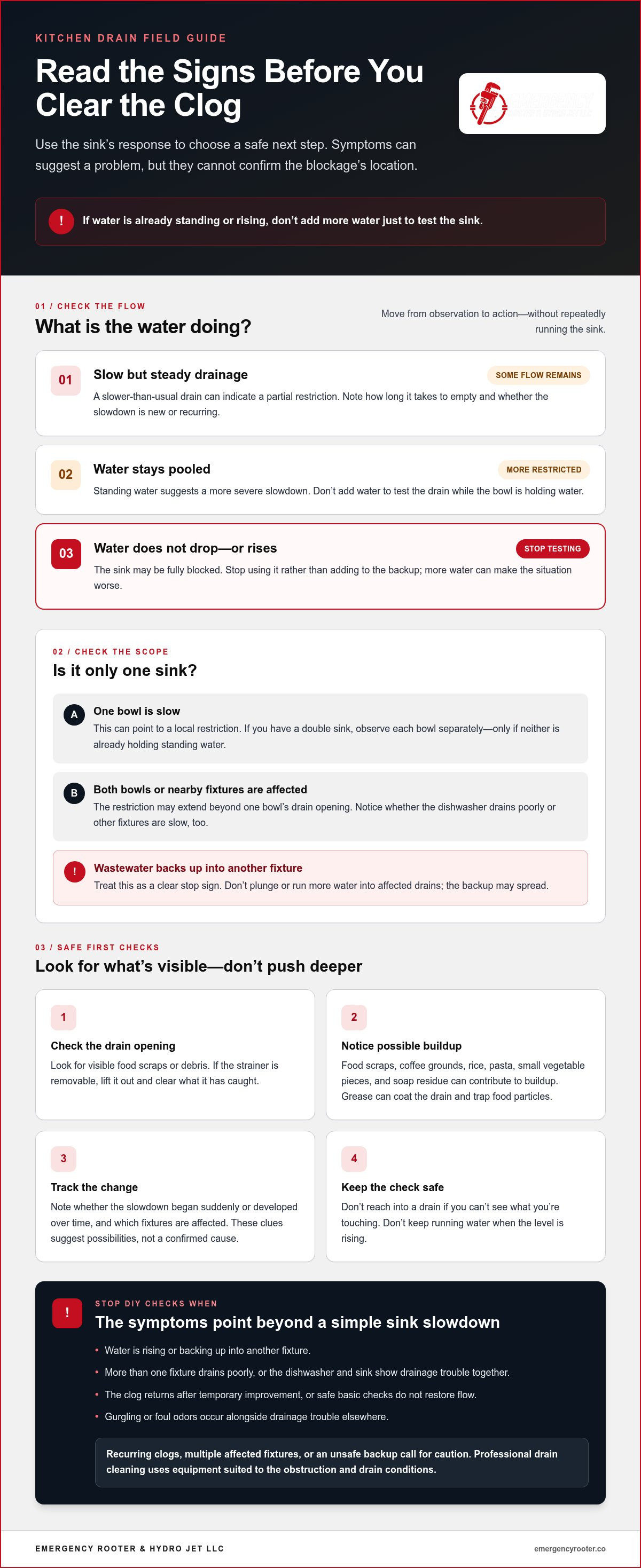
A kitchen drain clog restricts the path wastewater takes from the sink into the drain system. The first clue is usually a change in flow. Water that drains more slowly than usual can indicate a partial restriction; water that stays pooled in the bowl suggests a more severe slowdown. If the water level doesn’t drop after use, the sink may be fully blocked.
Pay attention to what happens across the kitchen, not just at the drain opening. Is one bowl affected or both? Does the dishwasher drain unusually, or do nearby fixtures also run slowly? These observations can help distinguish an isolated sink problem from a wider drainage issue, but symptoms alone can’t confirm where the blockage is.
A drain’s path and common sources of blockage are described in this overview of common causes of drain clogs. Keep your observations simple: note which fixture drains poorly, whether water moves at all, and whether symptoms change during normal use. Don’t run extra water just to test a sink that’s already filling.
How to tell whether the kitchen sink is fully blocked
Run a small amount of water only if the sink isn’t already holding standing water. A slow but steady drop suggests some flow remains. If the water stays at the same level or rises, stop using the sink rather than adding to the backup. Check each bowl separately if you have a double sink. If both are affected, the restriction may be beyond one bowl’s drain opening, although that still doesn’t pinpoint its location.
If practical, observe the dishwasher during its drain cycle. Water appearing in the sink or draining poorly at the same time can signal a shared drainage problem. Don’t keep testing by running more water if the sink is already filling.
When a kitchen clog may point beyond the sink
One slow kitchen sink can indicate a local restriction. If several fixtures drain poorly, the issue may involve a larger section of the drain system. That pattern calls for more caution than a single sluggish bowl. Wastewater backing up into another fixture is a clear stop sign. Don’t plunge or run more water into affected drains, because the backup may spread.
A kitchen drain clog Los Angeles residents notice alongside gurgling, odors, or drainage trouble elsewhere can have more than one possible explanation. A blocked drain is one possibility, but symptoms can’t confirm the cause or location. If several fixtures are affected, the Drain Cleaning Los Angeles guide explains broader warning signs and what professional clearing can involve.
Keep track of which fixtures are affected and when symptoms appear. That pattern helps distinguish a sink-only slowdown from a problem that may need a wider inspection. When safe basic checks don’t restore flow, professional drain cleaning uses equipment suited to the obstruction and drain conditions.
Why Kitchen Sink Drains Clog, and What to Check First
Kitchen drains collect more than water. Food scraps can lodge around the strainer or gather farther down the pipe instead of washing through. Coffee grounds, rice, pasta, and small vegetable pieces can contribute to buildup. Soap residue may also cling to debris and narrow the path over time. A sink strainer catches larger scraps before they enter the drain, but it won’t remove a blockage that’s already formed.
Grease is another possible contributor. It can coat the inside of a drain and trap food particles, so don’t assume a quick chemical treatment will solve a suspected grease blockage. For focused advice on this type of buildup, see the grease clog drain cleaning guidance.
The cause isn’t always visible at the sink. Debris caught near the opening may be easy to spot, while a restriction farther along the drain can look identical from above. Observe the symptoms before choosing a clearing method. A kitchen drain clog Los Angeles homeowners encounter may develop gradually or seem to appear all at once, and that difference can help you describe what’s happening.
- Water drains slowly: Some flow remains, but the sink takes longer than usual to empty.
- Water stays pooled: The obstruction may be limiting flow more severely. Don’t add more water to test it.
- The problem returns: A temporary improvement followed by another slowdown can mean the underlying restriction remains.
- Water rises or backs up: Stop testing. More water can worsen the backup.
Before trying a fix, note whether the slowdown began suddenly after food scraps went down the drain or developed over time. A gradual change may point to buildup, while a sudden change could follow a larger piece of debris getting caught. These clues suggest possibilities, not a confirmed cause. Symptoms alone can’t identify the location.
Check what’s visible without pushing anything deeper. If you have a removable strainer, lift it out and clear the debris. Don’t reach into a drain if you can’t see what you’re touching, and don’t keep running water when the level is rising. Repeated testing adds water without providing much more information.
A strainer can help keep new scraps out once the sink is flowing again, but it won’t restore flow on its own. If the blockage persists after safe basic checks, professional kitchen drain cleaning can address an obstruction beyond the drain opening.
How to Clear a Kitchen Drain Clog Safely at Home
Start with the least forceful steps. Don’t keep running water into a sink that’s filling, and stop immediately if wastewater backs up into another fixture. That can signal a broader drain problem, not a blockage you should keep testing from the kitchen.
For a localized kitchen drain clog Los Angeles homeowners may be able to try a sink plunger after clearing visible debris. Work carefully. If water stays in place, returns, or appears elsewhere, leave further clearing to professional drain cleaning.
Start with visible debris and a sink plunger
Follow this sequence only if there’s no backup elsewhere and no chemical cleaner in the drain:
- Make the area safe. If standing water blocks access to the drain opening, remove enough to reach it without splashing. Use a container and take care not to spill wastewater.
- Clear what you can see. Remove the strainer, if present, and lift out visible scraps near the opening. Don’t push debris farther into the pipe or reach blindly into the drain.
- Set up the plunger. Use a sink plunger with the cup centered over the drain. For a double-bowl sink, seal the second drain opening with a wet cloth or stopper so pressure is focused on the blocked side.
- Plunge with control. Keep the cup sealed against the sink surface and use steady, measured strokes. Avoid forceful jabs that could splash water or strain the fixture.
- Reassess flow. Lift the plunger and watch whether the water level drops. If it drains, run a small amount of water to check that flow continues. Stop if the level rises or the clog remains stubborn.
Don’t pour boiling water into the sink as a shortcut. Without guidance specific to your pipes and fixture, very hot water may be unsuitable. Warm tap water isn’t a guaranteed way to clear a blockage either.
Know when to stop a DIY attempt
A home method shouldn’t turn one slow sink into a larger backup. Stop if the sink begins to overflow, wastewater appears in another fixture, or several drains start acting up. Don’t force a wire, tool, or other object into the pipe if you meet resistance. It can damage plumbing or push the obstruction deeper.
Use chemical drain cleaners only according to the product label, and never mix them with each other or with another cleaner. If one product has already gone down the drain, don’t add a second product or plunge, since splashing may expose you to the cleaner. Follow the label for safe handling and next steps. If the blockage persists after visible debris removal and careful plunging, stop DIY attempts. Professional drain cleaning uses equipment suited to the obstruction and drain conditions.
How to Prevent Repeat Kitchen Drain Clogs in Los Angeles Homes
Good sink habits reduce the food and grease that enter your drain. They can lower the risk of future clogs, but won’t remove a blockage that’s already there. If water is still draining slowly or the clog returns after clearing, prevention alone isn’t enough.
Daily habits that help keep the sink flowing
Make these steps part of kitchen cleanup. They keep scraps from collecting in the drain and are easy to repeat after meals:
- Use a sink strainer. Empty it into the trash or compost regularly instead of rinsing trapped scraps through the drain.
- Scrape plates first. Put food waste in the trash or compost before washing dishes. Don’t use the sink drain as a disposal bin.
- Wipe greasy cookware. Use a paper towel to remove excess oil or grease before washing pans. This reduces residue entering the drain.
- Keep the strainer clear. A full strainer can let water pool and make it easier for scraps to wash around or past it.
These habits help limit new debris, but they can’t correct an existing obstruction farther down the pipe. If your kitchen drain is already slow, don’t rely on a strainer or routine cleanup to restore normal flow. Address the current symptoms safely first, then use prevention to reduce the chance of another blockage.
What recurring clogs can signal
A clog that returns soon after clearing deserves attention. So does drainage that repeatedly slows, even if the bowl eventually empties. These patterns can mean the restriction hasn’t been fully removed or that another issue is affecting flow. Keep track of when the symptoms return and whether other fixtures are involved. That history can help guide a closer assessment.
Don’t assume every Los Angeles home has the same drain layout or plumbing condition. Homes can differ in pipe routes, fixtures, and how kitchen drains connect to other lines. Keeping food scraps out is useful in any kitchen, but recurring symptoms call for attention to the actual drain system, not another round of guesswork. If the sink keeps clogging, professional drain cleaning can use equipment suited to the obstruction and drain conditions.
For homeowners in Santa Monica, the local drain cleaning guidance covers ways to address clogs and restore flow. If repeated blockages are disrupting your kitchen, arrange professional kitchen drain cleaning to address the obstruction rather than relying on prevention alone.
When to Call for Kitchen Drain Cleaning in Los Angeles
A kitchen sink that stays completely blocked after cautious basic steps needs more than another round of plunging. The same is true when a clog returns soon after clearing or affects more than one fixture. These signs can point to an obstruction beyond the sink opening, and repeated DIY attempts may add water or pressure without solving it.
Stop using affected fixtures if wastewater backs up into the sink, dishwasher, or another drain. Don’t run more water to see what happens. A kitchen drain clog Los Angeles homeowners can’t safely clear, especially alongside a backup elsewhere, calls for professional assessment.
Signs a kitchen clog needs professional attention
Call for help if the sink remains fully blocked after careful basic clearing, drainage repeatedly slows or clogs again, several fixtures are affected, or wastewater appears where it shouldn’t. Stop using any fixture that’s backing up. Note which drains are affected and when symptoms occur. Those details can help the technician assess whether the issue is limited to the kitchen or involves a wider section of the drain system.
What professional drain cleaning can address
A technician can assess the drain, consider the symptoms and drain conditions, then select an appropriate clearing method. Professional drain cleaning and rooter service use equipment to address obstructions that basic household steps may not reach. For a persistent or recurring blockage, hydro jet cleaning can use high-pressure water to clear obstructions and clean line walls. The appropriate method depends on the cause and location of the blockage, so symptoms alone shouldn’t be treated as a diagnosis or a promise of a particular result.
Emergency Rooter & Hydro Jet LLC provides drain cleaning, rooter service, and 24/7 emergency plumbing across Greater Los Angeles, including Beverly Hills, Los Angeles, and Santa Monica. If the sink is blocked or wastewater is backing up, stop using affected fixtures and arrange professional help rather than forcing tools into the line or adding more water. The service team can assess the drain and determine an appropriate next step.
Before help arrives, keep the affected area clear and avoid using connected fixtures if they’re contributing to the backup. Share whether one sink bowl or several fixtures are affected, whether the clog has returned, and what steps you’ve already tried. This gives the technician useful context without requiring you to keep testing the drain.
For a persistent blockage or recurring backup, Request Los Angeles drain-cleaning help from Emergency Rooter & Hydro Jet LLC. Professional assessment can identify the next safe step for restoring flow.
Get the Sink Flowing With Confidence
A kitchen drain clog Los Angeles homeowners can’t clear safely doesn’t have to become a cycle of repeated backups and temporary fixes. If the blockage persists or keeps returning, let a professional assess the drain and choose a clearing method suited to the obstruction and plumbing conditions.
Emergency Rooter & Hydro Jet LLC provides drain cleaning and rooter service across Greater Los Angeles, including Beverly Hills, Los Angeles, and Santa Monica. The company is licensed and insured in California under license #574013. Share which fixtures are affected and what you’ve already tried, then let the team guide the next step.
Request Los Angeles drain-cleaning help when your sink needs professional attention. Emergency Rooter & Hydro Jet LLC provides professional drain cleaning and rooter service to help you address a persistent blockage without guesswork.
Frequently Asked Questions
Can I use a plunger to clear a kitchen drain clog?
Yes, a sink plunger can help with some clogs near the sink. First remove visible debris, then center the plunger over the drain and press firmly enough to form a seal. For a double-bowl sink, block the other drain opening while plunging the affected side. Use controlled strokes, then check whether water drains. Stop if it rises elsewhere, the sink threatens to overflow, or a careful attempt makes no difference.
Is it safe to pour boiling water down a clogged kitchen drain?
No. Boiling water isn’t a reliable fix for every clog, and very hot water may be unsuitable for some plumbing materials or connections. If standing water is in the sink, the water may not reach the obstruction anyway. Avoid pouring boiling water into a blocked drain. Choose cautious mechanical steps instead, and stop if the water level rises or drainage gets worse.
What causes a kitchen sink to keep clogging?
Recurring clogs may come from food particles, grease, soap residue, or an obstruction that wasn’t fully cleared the first time. The blockage may also sit farther along the drain than the sink opening. Notice whether the slowdown follows a particular use, such as washing greasy cookware, and whether other fixtures are affected. Avoid repeated chemical treatments. If the same sink keeps slowing or blocking, professional drain cleaning can help assess the obstruction.
Can I use chemical drain cleaner in a kitchen sink?
Chemical drain cleaner may not remove the blockage and can create a hazard if products are mixed or one cleaner is added after another. If you’ve already used a product, follow its label for safe handling and tell the technician exactly what it was. Don’t plunge aggressively afterward, since cleaner could splash. Avoid adding another treatment and get professional help if the drain remains blocked.
Why does my kitchen sink clog when the dishwasher runs?
The sink and dishwasher may share part of a drain pathway, so a restriction can interfere with wastewater from either fixture. If the sink fills or wastewater backs up during the dishwasher’s drain cycle, stop using both fixtures rather than running another cycle to test them. That timing is useful information, but it doesn’t reveal the exact blockage location. A technician can assess the connected drain.
When should I call a plumber for a kitchen drain clog in Los Angeles?
Call for professional help if the sink stays blocked after cautious basic steps, clogs repeatedly, or backs up into another fixture. Stop using affected drains if wastewater is rising or overflowing. Emergency Rooter & Hydro Jet LLC provides 24/7 emergency plumbing in Greater Los Angeles, including Los Angeles, Beverly Hills, and Santa Monica. Professional drain cleaning can assess the obstruction and determine an appropriate clearing method.


