

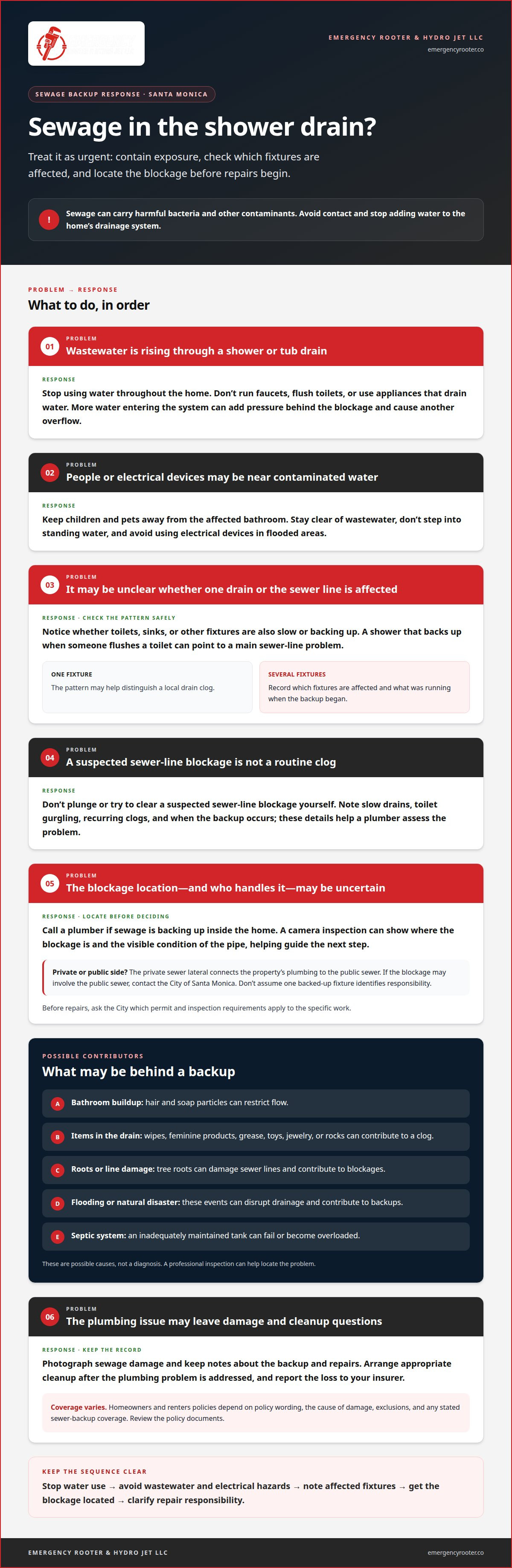
Treat sewage in a shower drain as an urgent plumbing problem, not a routine clog. If you’re wondering what to do about sewage in a shower drain in Santa Monica, stop using water throughout the home, keep away from the wastewater, and avoid electrical devices in flooded areas. Sewage can carry harmful bacteria and other contaminants, so don’t plunge or try to clear a suspected sewer-line blockage yourself.
Seeing wastewater come up where you shower is unsettling, especially when you don’t know whether one drain or the whole home is affected. First, limit further backup and avoid contact with contaminated water. This guide explains how to check nearby drains safely, what to do during a sewage flood, and what can cause a backup. You’ll also learn when signs point to a main sewer line problem and how a professional inspection can locate a blockage and help determine the next step.
Key Takeaways
- Notice whether toilets, sinks, or other fixtures are also slow or backing up; the pattern can help distinguish a local drain clog from a main sewer line problem.
- Hair, soap buildup, grease, wipes, and tree-root damage can contribute to sewer blockages. Learn which habits can help reduce the risk of repeat clogs.
- A camera inspection can help locate a sewer-line blockage and guide the right repair or cleaning approach.
- Keep a record of sewage damage, including photographs, and arrange appropriate cleanup after the plumbing problem is addressed.
- Understand when drain cleaning, rooter service, or hydro jet cleaning may be used to address a backup.
Professional sewer inspection and repairs
Call a plumber if sewage is backing up inside your home. If the blockage may involve the public sewer, contact the City of Santa Monica. Responsibility depends on where the obstruction is: the private sewer lateral connects your property’s plumbing to the public sewer. Locate the obstruction before deciding who handles the repair. Permit and inspection requirements depend on the work, so ask the City what applies before repairs begin.
- Record the warning signs. Note when water drains slowly, when a toilet gurgles, and whether clogs keep returning. A shower that backs up when someone flushes the toilet can point to a main sewer line problem. Write down which fixtures are affected and what was running when the backup started. Those details help a plumber distinguish a single-drain clog from a blockage farther along the line.
- Arrange a camera inspection. A plumber can feed a specialized camera into the sewer line to view the pipe and locate the blockage. This inspection helps show whether the trouble is near a fixture or farther along the shared drain route. The location and visible condition guide the next step, such as clearing a blockage or assessing a damaged section. Camera diagnosis is more informative than guessing from one slow drain.
- Clarify the public or private side. Ask for the inspection findings to identify where the blockage sits relative to the property’s sewer lateral and public sewer. A home’s sinks, tubs, and toilets connect to a drain pipe leading toward the main sewer line. That connection makes location important when deciding whether to contact a plumber or report a suspected public-side problem to the City of Santa Monica. Don’t assume that one backed-up fixture identifies who is responsible.
- Confirm requirements before repairs. Tell the plumber whether the proposed work involves clearing, excavation, or replacing a sewer line. Contact the City of Santa Monica about permits and inspections that apply to that specific repair. Keep the inspection findings and repair description together. They give the City the practical details needed to address the permitting question without confusing a camera diagnosis with physical repair work.
- Plan routine maintenance. Arrange periodic main-line inspection and cleaning, especially when slow drains, gurgling, or recurring clogs appear. A drain line cleaned once a year can help reduce sewage overflow risk. Keep a record of repeat problems and completed work, so a later inspection can compare the sewer line’s condition over time. If warnings return after cleaning, request diagnosis rather than relying on repeated clearing alone.
Common causes of shower sewage backups
- Trace what entered the drain. Hair and soap particles can collect inside bathroom plumbing and restrict flow. Wipes, feminine products, grease, toys, jewelry, and rocks can also contribute to a sewer-line clog. If you find sewage in your shower drain in Santa Monica, note what may have gone down the drain and whether the problem returned after clearing. A small item can catch on buildup farther along the pipe, so those details can help narrow down the cause.
- Consider tree roots near buried pipes. Roots can damage sewer lines and contribute to blockages. If backups recur near a landscaped area, note where trees and large plants sit compared with the home’s sewer route. Don’t dig near a suspected line to investigate. A professional inspection can help locate the problem before a repair plan is chosen. Take care when landscaping near sewer lines, since digging or planting can affect buried plumbing.
- Account for flooding or natural disasters. Flooding or a natural disaster can disrupt drainage and contribute to sewage backups in Santa Monica and surrounding areas. If the backup starts during or after flooding, record the timing and which drains are affected. Treat the event as more than a routine shower clog if wastewater returns through multiple fixtures. Conditions outside the shower drain may be causing the overflow, so include the timing and observed damage when describing the problem.
- Check whether a septic system is involved. An inadequately maintained septic tank can fail or become overloaded, allowing raw sewage to seep into a home. If the property uses a septic system, include its recent problems or maintenance history when explaining the backup. Don’t assume that a shower drain alone identifies the source. A plumber can assess the symptoms and determine whether the sewer line or another part of the system needs attention.
- Review insurance documents before cleanup. Homeowners and renters policies don’t share one standard answer for sewage-backup cleanup or sewer repairs in California. Coverage depends on policy wording, the cause of damage, exclusions, and any sewer-backup coverage stated in the policy. Read those terms and report the loss to the insurer. Keep records of the backup and resulting damage. If you’re asking what to do about sewage in a shower drain in Santa Monica, address the plumbing source as well as the cleanup. If inspection identifies line damage, consider professional sewer line repair.
Sewage or wastewater backing up through a shower or bathtub drain
- Stop water use and treat the backup as urgent. Sewage or wastewater rising through a shower or bathtub drain in Santa Monica can signal a main sewer line backup. Don’t run faucets, flush toilets, or use appliances that drain water. More water entering the sewer system can add pressure behind the blockage and cause another overflow. Keep children and pets away from the affected bathroom, and don’t step into standing wastewater.
- Don’t try to force the blockage through. A plunger cannot reach an obstruction in the sewer line, and plunging can spread contaminated water around the bathroom. Don’t attempt to clear a suspected sewer-line clog yourself, especially without plumbing experience. A shower backup after flushing the toilet is a warning that the issue may extend beyond the shower drain. Report what happened and which fixtures were in use.
- Notice related plumbing symptoms. Gurgling from a toilet while the shower or bathtub drains can indicate a toilet clog or overflow problem. Slow drainage and wastewater returning through more than one fixture can point to a wider sewer blockage. Record the sequence: for example, whether the tub filled after a toilet flush or sewage appeared before anyone used the shower. These details help distinguish an isolated fixture issue from a shared drain problem.
- Keep people away from contaminated surfaces. Sewage can contain harmful bacteria and microorganisms that can make people ill. Avoid touching wastewater, splashes, or items it has soaked. Don’t use electrical devices or appliances in a flooded area. If sewage reached rugs, towels, or stored belongings, leave them in place until the cleanup approach is clear. Avoid carrying contaminated materials through clean rooms.
- Arrange plumbing diagnosis and cleanup. A professional can inspect the sewer line and locate the blockage instead of treating the shower drain alone. Ask for the likely cause and affected area to be identified before cleanup starts. Sewage cleanup can include assessing contamination, removing affected materials, and sanitizing surfaces to help prevent mold growth. Plumbing repairs address the backup source; cleanup addresses sewage that has already spread. Both needs matter after wastewater enters a bathroom.
The Santa Monica drain-cleaning service identifies sewage or wastewater coming up through a shower as an emergency drain-cleaning situation. Treat that classification as a reason to seek prompt professional attention rather than waiting to see whether the fixture drains normally again. When arranging help, explain that wastewater is rising through the shower, rather than simply describing slow drainage.
A drain snake may break up a blockage. If wastewater drains from the tub after the toilet and shower drain have been snaked, that indicates the effort was successful. This outcome relates to the described clearing process, but it does not make sewer-line work suitable for an untrained homeowner. A plunger cannot reach an obstruction in the sewer line, and attempting to clear a clogged sewer line without plumbing expertise can cause more damage. Leave that clearing effort to someone with the relevant plumbing expertise instead of escalating the problem with improvised tools.
Checking whether other drains are affected
Check for symptoms that are already present without running water or flushing toilets. The pattern across fixtures can help distinguish a shower-drain clog from a main sewer line blockage.
-
Check Other Drains
Look at nearby sinks, tubs, and toilets without using them to test drainage. Note visible standing water, any slow drainage before the backup, and wastewater at other fixtures. Multiple drains backing up at once can signal a main sewer line problem. Don’t enter a flooded area or touch electrical devices near water.
-
Distinguish a Clog from a Main Line Blockage
Compare the shower symptoms with what you can see at other fixtures. A shower or bathtub filling during normal use may indicate a bathroom sink or shower-drain clog. If several drains back up together, or other household drains were slow before the shower backed up, the problem may be in the main sewer line. A toilet that gurgles as the shower drains is another warning sign.
- Record the fixture pattern. Write down which drains show symptoms and when they began. For example, note whether the shower is affected alone, or whether a sink and toilet also drain slowly. Include any gurgling sounds and whether wastewater appeared at more than one fixture. This record gives a plumber a clearer picture of the affected plumbing without requiring you to run water.
- Keep the check visual. Don’t flush the toilet or turn on faucets to see what happens. During an active backup, added water can worsen the overflow. Observe from a dry, safe area instead. If water has spread near an outlet, appliance, or electrical device, keep clear and don’t operate the equipment.
- Use the pattern to describe the problem. Tell the plumber whether one shower drain is affected or multiple fixtures show symptoms. A single slow shower drain during regular use aligns with a localized bathroom drain problem. Several affected drains at once indicate a main sewer line concern. A clear description helps direct the inspection toward the right part of the system.
- Stop checking when sewage is present. Don’t approach or touch wastewater to inspect another drain. Sewage can contain harmful bacteria and microorganisms. Keep household members and pets away from affected rooms, and report the visible locations of backup instead. If the shower and other drains are affected, arrange professional diagnosis rather than trying to clear a sewer-line obstruction yourself.
Emergency steps after a sewage flood
- Stop water use throughout the home. Don’t flush toilets, run faucets, or start appliances that drain water. Added flow can worsen flooding through the shower or another fixture. If sewage is backing up, turn off the home’s main water valve to limit more water entering the pipes. Tell everyone in the household to stop using water until the backup has been assessed.
- Keep clear of electrical hazards. Don’t operate appliances, switches, or other electrical devices in a flooded area. Water near electrical equipment creates a shock risk. If you can open windows and doors without entering contaminated water or approaching electrical hazards, ventilate the affected room. Keep children and pets out, and don’t walk through sewage to reach a window or door.
- Avoid direct contact with sewage. Wastewater can carry harmful bacteria and viruses. Don’t touch it with bare hands or move contaminated belongings through clean areas. If you must handle an item during immediate safety measures, use waterproof gloves, rubber boots, and a mask. Wash your hands thoroughly afterward. If exposure has occurred, consider consulting a physician or other medical specialist about health concerns.
- Report the spill and request an inspection. For a sewer spill or wastewater overflow in Santa Monica, contact local code enforcement and public health agencies to report it and request a property inspection. Give the location, the fixtures affected, and whether sewage has entered living areas. If you rent, notify your landlord or property manager promptly as well. Keep a record of whom you contacted and when.
- Document visible damage from a safe area. Take photographs of affected floors, walls, and belongings without entering contaminated water. Images can help support an insurance claim and show how far the flooding spread. Note which rooms were affected and when you discovered the backup. Don’t delay immediate safety actions to take pictures, and don’t move contaminated materials just to document them.
- Arrange plumbing repair and professional cleanup. Contact a plumbing professional to inspect the sewer line and address the source of the backup. Arrange cleanup as soon as possible after a toilet overflow or sewage flood, since wastewater may contain contaminants. Cleanup can include assessing affected materials, removing contaminated items, and sanitizing the area. For the plumbing problem, arrange emergency plumbing service to inspect the blockage and determine the repair needed.
After a sewage flood, wash your hands thoroughly and frequently, especially after possible contact. Cleanup after a septic tank failure should remove contamination and other hazards from the property.
Emergency Rooter & Hydro Jet: Drain Cleaning
Emergency Rooter & Hydro Jet LLC can help when shower sewage points to a blocked drain or sewer line. Drain Cleaning and Rooter Service address clogs, while Hydro Jet Cleaning can clean drains. If inspection shows sewer-line damage, Sewer Line Repair can address the damaged pipe. For an active backup, Emergency Plumbing can help respond to the plumbing problem. The right service depends on where the blockage is and what inspection finds. Stop using water and keep clear of sewage while the cause is assessed. Contact Emergency Rooter & Hydro Jet LLC to discuss the backup and next steps.
Take the Next Step Toward a Clear Drain
If you’re deciding what to do about sewage in a shower drain in Santa Monica, focus on what happens after the immediate backup: address the cause, then keep a record of recurring symptoms and completed work. That history can help reveal a pattern if a drain slows or backs up again. Don’t resume normal water use until the affected plumbing is ready.
The next step depends on the inspection. A blockage may call for drain cleaning, rooter service, or hydro jet cleaning. Damage to the sewer line may require repair. Focus the work on the source, not just the visible mess, so you can understand the condition of your plumbing and what needs attention.
Contact Emergency Rooter & Hydro Jet LLC to discuss the sewer problem and the next step. A clear plan can help you move forward with confidence.
Frequently Asked Questions
What Steps Must Santa Monica Tenants Take After Suffering A Sewage Flood in Their Rental Home?
Tenants should notify their landlord or property manager, report the sewage flood, and stay elsewhere until the backup is corrected and the home is fully remediated. Keep a written record of notifications and photograph damage only from a safe area. Wash your hands thoroughly after possible contact. If concerned about sewage exposure, consult a physician or other medical specialist. Local code enforcement and public health agencies can also provide guidance about reporting the incident and requesting an inspection.
What should I do immediately if sewage is backing up through a shower drain?
Stop using water in the home and keep people and pets out of the affected bathroom. Don’t plunge or snake a suspected sewer-line obstruction. If you rent, notify the property manager promptly and describe which fixtures are affected. Take photographs only from a safe, dry location. Avoid electrical devices in flooded areas, and arrange a plumbing inspection to locate the blockage before cleanup begins.
Is sewage in a shower drain a health hazard, and how should it be disinfected?
Yes. Sewage can contain harmful bacteria and microorganisms that may cause illness. Don’t assume a contaminated shower is clean after wiping away visible wastewater. Cleanup should assess the affected area, materials, and contamination, then follow an appropriate plan to remove contaminated items and disinfect surfaces. Professional cleanup can help address contamination and reduce the risk of mold growth. Keep people away until the area has been properly cleaned.
When should I evacuate or avoid using water during a sewage backup?
Stop using water as soon as sewage backs up, since additional water can worsen flooding. Tenants should leave until the sewage problem is corrected and the property is fully remediated. Keep clear of flooded areas, especially where electrical devices or appliances are present. Don’t return to affected rooms or resume normal water use while sewage remains or the plumbing is still backing up.


