

A toilet bubbling when a shower drains in Beverly Hills can signal a blockage in a shared drain or sewer line, rather than a toilet-only problem. Tree roots can restrict wastewater flow, and trapped air from a blockage or venting issue may escape through the toilet bowl as the shower drains. The bubbling may stop temporarily, but that does not rule out a partial blockage.
Sewer gas is another concern. A plumbing vent problem can allow sewer gases into the home, and a persistent rotten-egg smell needs prompt attention. This guide explains how roots, drain buildup, and venting issues can cause bubbling, which warning signs may indicate a larger sewer problem, and when to call a plumber. It also covers how drain cleaning and sewer line service can help locate and address the cause.
Key Takeaways
- Bubbling can point to trapped air from a blockage or a venting problem, even when the toilet still flushes.
- Roof vent obstructions can disrupt airflow through the plumbing and may contribute to gurgling at multiple fixtures.
- Drain cleaning and a sewer camera inspection can help locate whether the trouble is in a drain or farther along the sewer line.
- Recurring bubbles, several slow drains, sewage odors, or wastewater backing up are signs to take seriously.
- Hair, soap residue, grease, and debris can build up and restrict water flow, so the right fix depends on where the blockage is.
Is sewer gas from a gurgling toilet dangerous?
Bubbling can be a warning sign. A blocked vent or sewer line can disrupt airflow and allow sewer gases, including methane and hydrogen sulfide, into the home. Whether sewer line repair or replacement requires a permit in Beverly Hills depends on the work and location, and applicable local requirements govern.
Blocked Plumbing Vent Stacks
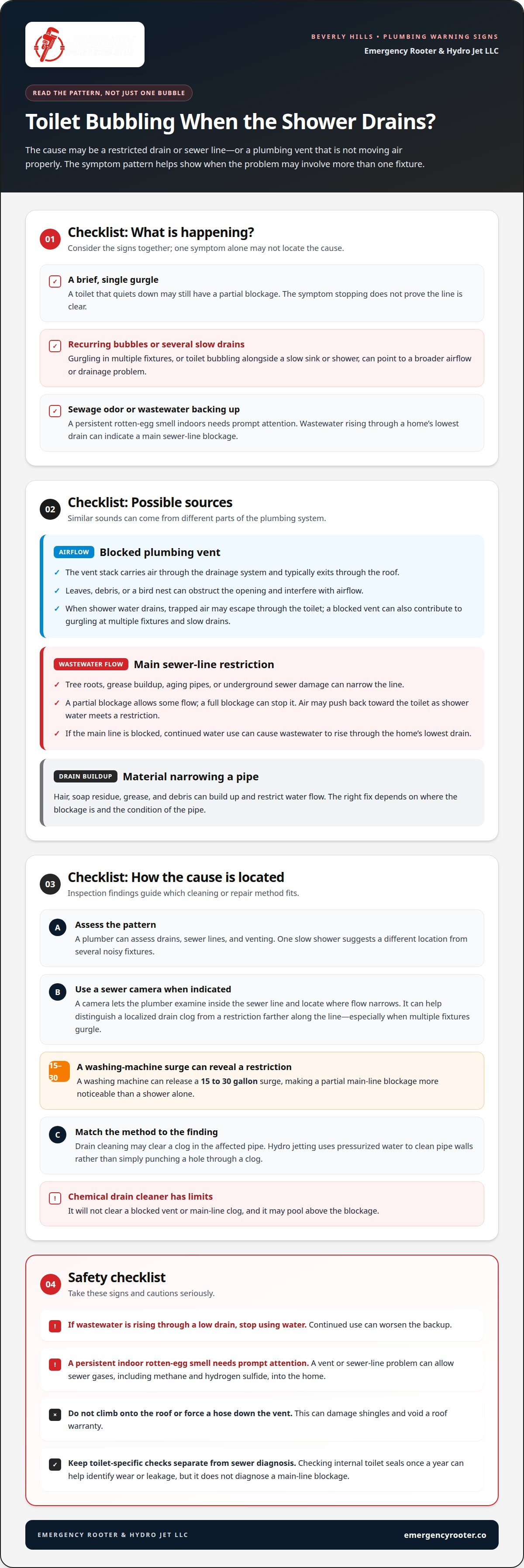
A plumbing vent stack carries air through the drainage system and typically exits through the roof. Leaves, debris, or a bird nest can obstruct its opening and interfere with airflow. When shower water drains, trapped air may escape through the toilet bowl instead. A blocked vent can also cause gurgling at multiple fixtures and slow drains around the house.
Look at the pattern, not just one bubble. A toilet that gurgles as the shower drains, along with a slow sink, may point to a broader airflow or drainage problem. A persistent rotten-egg smell indoors also needs prompt attention because sewer gases may be entering the home. Don’t climb onto the roof or force a hose down the vent, which can damage shingles and void a roof warranty.
Main Sewer-Line Blockages
A main sewer-line blockage restricts wastewater leaving the house. A partial blockage allows some flow, while a full blockage can stop it. Tree roots, grease buildup, aging pipes, or underground sewer damage can narrow the line. When shower water meets the restriction, air may push back toward the toilet and cause bubbling.
Several noisy fixtures or multiple slow drains may indicate a blockage farther into the plumbing system. If the main sewer line is blocked, continued water use can cause wastewater to rise through the home’s lowest drain. A toilet that quiets down temporarily may still have a partial blockage, so the symptom stopping does not prove the line is clear.
Consider the signs together. A single brief gurgle is different from recurring bubbling paired with a sewage smell or water backing up into a tub. In Beverly Hills, note which fixtures are affected and whether the problem returns when the shower drains. This pattern can help distinguish a localized toilet issue from a vent or main-line concern. Stop using water if wastewater is rising through a low drain, since continued use can worsen the backup.
A persistent indoor sewer odor needs prompt attention, even if the toilet bubbles only while the shower drains. Vent obstructions and sewer-line restrictions require different solutions, so finding the cause matters. If several fixtures gurgle or drain slowly, treat the combination as a plumbing-system warning rather than assuming the toilet alone is at fault.
Drain cleaning and sewer camera inspections
When the shower drain and toilet act up together, the obstruction may be beyond either fixture. A plumber can assess the drains, sewer lines, and venting to locate restricted water or airflow. The pattern matters: one slow shower suggests a different location from several noisy fixtures. If multiple fixtures gurgle, a sewer camera inspection can help locate a blockage.
A camera inspection lets the plumber examine the inside of the sewer line and identify where flow narrows. It can help distinguish a localized drain clog from a blockage farther along the line. For example, if the toilet bubbles when a washing machine drains, the surge can expose a partial main-line blockage. A washing machine can release a 15 to 30 gallon surge, making the restriction more noticeable than a shower alone.
Inspection findings guide the next step. Drain cleaning may clear a clog in the affected pipe, while a camera can help locate a restriction that returns or affects several fixtures. The diagnosis matters because a venting problem and a sewer-line blockage have different causes. Chemical drain cleaner will not clear a blocked vent or main-line clog, and it may pool above the blockage.
Hydro jetting uses pressurized water to clean the pipe walls rather than simply punch a hole through a clog. This distinction matters when buildup coats the pipe and continues to catch debris after a narrow opening is made. The right method depends on the blockage and pipe condition. A camera inspection can help locate the problem before drain cleaning or hydro jetting.
Not every bubbling toilet points to a sewer-line obstruction. If inspection finds no drain restriction, a plumber may check the vent for an airflow problem. Leaves, debris, or a bird nest blocking the roof vent can interfere with drainage. Don’t climb onto the roof or force a hose down the vent, which can damage shingles and void a roof warranty.
A toilet’s internal seals are another separate inspection point. Checking them once a year can help identify wear or leakage around the fixture. This does not diagnose a main-line blockage, but it can help distinguish a toilet-specific issue from trouble affecting connected drains. The symptom pattern and inspection findings together help determine the next repair.
If bubbling recurs or several drains are affected, professional drain cleaning can address a blockage after its location is assessed. Matching the method to the finding helps avoid treating only the visible symptom.
When to call a plumber
Arrange an inspection if bubbling keeps returning, affects several fixtures, or occurs with slow drainage. A sewer-line blockage and a venting problem can cause similar sounds but require different checks.
Warning Signs of Broader Plumbing Problems
Broader plumbing problems often affect more than one fixture. Watch for recurring toilet bubbles, multiple slow drains, sewage odors, or wastewater backing up into a tub or shower. For example, bubbling in the toilet and a slow shower drain together deserve more attention than one brief noise.
On a property with a septic system, the U.S. Environmental Protection Agency lists gurgling sounds, very slow shower drains, and wastewater backups as signs of a failing system. Drain-cleaning costs depend on the case and are provided after a quote request; factors include blockage location, access, and the work required.
Distinguishing Sewer Clogs from Blocked Vents
A sewer-line clog restricts wastewater flow, while a blocked vent interferes with airflow through the plumbing. Several slow drains or water backing up may point to a sewer-line problem; gurgling at multiple fixtures can also signal a venting issue. These patterns help identify what needs inspection, but do not prove the cause on their own.
Note which fixtures make noise and what is draining at the time. For example, report if the toilet bubbles whenever the shower runs and other drains are also slow. These details can help a plumber focus the inspection on the vent or sewer line.
Immediate Responses to Toilet Bubbling
Stop running water if wastewater begins rising through a tub, shower, or other low drain. Continued water use can push wastewater back into the home when the main sewer line is blocked. Keep people away from the affected area and arrange a plumbing inspection if bubbling persists or multiple fixtures are involved.
Don’t pour chemical drain cleaner into the toilet or shower as a quick fix. It will not clear a blocked vent or main-line clog and may pool above the blockage. Tell the plumber which fixtures are affected, whether water backed up, and whether the problem returns when the shower drains.
Finding a Licensed Emergency Plumber
For urgent bubbling in Beverly Hills, contact an emergency plumber who handles drainage and sewer problems. Ask whether the plumber working on the job holds a California license, and verify that license with the state licensing authority. Describe the affected fixtures and any sewage smell or backup so the call reflects the severity.
Choose a response that matches the symptoms. A persistent sewer odor, repeated bubbling, or wastewater backing up calls for prompt attention, not repeated plunging. If the issue continues after the shower stops, arrange an inspection to find out whether a sewer-line blockage or venting problem is pushing air back through the toilet.
Hair, soap residue, grease, and debris buildup
Hair and soap residue can collect inside a shower drain, while grease and debris can cling to other pipes. As material builds up, it restricts the space water and air need to move. For example, a shower may drain more slowly as hair catches soap residue near the drain. If the toilet gurgles during that slowdown, a restriction somewhere in the connected plumbing may be affecting drainage.
Different kinds of buildup behave differently. Hair can tangle into a mat that traps more material. Soap residue can coat the pipe and hold debris against its surface. Grease can collect farther along a drain, narrowing the path for wastewater. Toilet paper and other debris can add to a blockage, especially when flow is already restricted. These materials can slow drainage without stopping it completely.
Location matters. A clog near the shower may affect that fixture first, while buildup in a shared drain can affect multiple fixtures. For instance, a slow shower paired with toilet bubbling points beyond the shower strainer alone. Gurgling occurs as water and air struggle past a restriction. A temporary return to normal flow does not prove the buildup has cleared.
Avoid chemical drain cleaners as a shortcut. They can generate heat that corrodes pipes and damages residential plumbing. They also will not remove a blockage in a plumbing vent or clear a main-line clog. If cleaner pools above a restriction, it may remain in the pipe instead of reaching the cause. Don’t keep adding chemicals when a drain remains slow or the toilet continues bubbling.
Using infrequently used drains from time to time may help reduce buildup, but it is not a fix for an existing blockage. This is a preventive measure, not a repair for an existing blockage. If the shower remains slow to drain or bubbling returns when water runs, the restriction may be deeper than the visible drain opening. Multiple affected fixtures make that pattern especially important to report during an inspection.
Pay attention to the combination of symptoms: a slow shower, toilet gurgling, or sewage backing up. A shower-only clog and a shared-line blockage need different responses. When buildup keeps returning or several fixtures are affected, professional drain diagnosis can locate the restriction and guide the repair. Don’t assume recurring bubbling proves hair or soap caused the problem; the source may be elsewhere in the drainage system.
Toilet bubbling while a shower or tub drains
A toilet can bubble as a shower drains when both fixtures connect to the same drain line. Water moving past a blockage can trap air and push it toward the toilet bowl. The bubbles are that air escaping. This explains why toilet bubbling when the shower drains in Beverly Hills can occur even when the shower still drains and the toilet has not overflowed.
The timing offers a useful clue. If bubbling starts as shower water flows and stops when it stops, the drainage system is reacting to that discharge. A tub can trigger the same symptom because its water also enters the drain system. Note whether bubbling happens during draining, whether the water rises in the bowl, and whether another fixture is affected.
A partial obstruction can still let some wastewater through. The shower may seem to drain, but restricted flow can force air back through the toilet. If the blockage worsens, water can back up through the home’s lowest drain. A symptom that disappears between showers does not mean the main sewer line has cleared.
Not every toilet bubble points to the main sewer line. A restriction near one fixture can affect that drain, while problems involving several fixtures may indicate an issue farther into the plumbing system. A blocked vent can also interfere with airflow and contribute to gurgling. The toilet bowl alone cannot identify the cause.
Compare the pattern across fixtures. For example, bubbling during shower drainage along with a slow tub drain suggests a wider drainage concern than a single brief bubble. If wastewater rises in a tub or shower, stop running water. More water entering a blocked main sewer line can push wastewater out through a low drain.
Repeated bubbling deserves attention, even if the water level settles afterward. A partial blockage can return and worsen, while a persistent sewer smell indoors is another reason to arrange prompt inspection. Describe when the bubbles begin, which fixtures are affected, and whether water backs up. For a toilet bubbling when the shower drains in Beverly Hills, those details help a plumber assess the drain and sewer line.
For recurring bubbles tied to shower or tub drainage, arrange a drain inspection to locate the restriction before it leads to a backup.
Emergency Rooter & Hydro Jet: Drain Cleaning
Emergency Rooter & Hydro Jet LLC provides drain cleaning when recurring bubbling points to a blockage in a connected drain. Rooter service and hydro jet cleaning address drain buildup, while emergency plumbing can help when symptoms include wastewater backing up or multiple affected fixtures. If inspection identifies sewer-line damage, sewer line repair addresses that separate problem.
Share when the bubbling starts, which fixtures drain slowly, and whether water has backed up. Those details help focus the work on the likely trouble area instead of treating the toilet alone. Contact Emergency Rooter & Hydro Jet LLC to discuss the bubbling and next steps.
Take the Next Step Toward Clear Drains
For Beverly Hills homeowners, a toilet bubbling when the shower drains is a reason to focus on the underlying plumbing, not just the sound. The next step is a professional assessment to connect the symptom to the right repair. You do not need to identify the blockage or choose a clearing method yourself. Share when the bubbling occurs and whether any other fixture behaves differently. That gives the plumber a useful starting point.
Act promptly if the bubbling keeps returning or you notice a backup or persistent sewer odor. Addressing the cause can help prevent a drainage problem from disrupting more of your home. Emergency Rooter & Hydro Jet LLC can help determine the appropriate plumbing service.
Contact Emergency Rooter & Hydro Jet LLC to discuss the problem and take the next step with confidence.
Frequently Asked Questions
Can tree roots cause a bubbling toilet?
Yes. Tree roots can enter sewer lines through joints or cracks and restrict wastewater flow. A root-related blockage may cause recurring trouble rather than a one-time bubble, especially if more than one drain is affected. A plumber can assess the sewer line and determine whether roots are involved. Rooter service can cut through root obstructions from an accessible cleanout; damaged pipe may require separate repair.
Quick Answer: Why does my toilet bubble when the shower drains?
The shower and toilet may share a drain path, and a restriction can push trapped air through the toilet bowl as water drains. Notice whether bubbling starts with the shower and stops when it does. That timing is useful when describing the problem. If the toilet bubbles during other water use too, mention which fixtures trigger it and whether their drainage has changed.
Can a bubbling toilet lead to sewage backups?
It can signal a blockage that may worsen and contribute to a backup. If wastewater appears in a tub, shower, or other low drain, stop running water and keep people away from the affected area. Note where the water rises and whether it smells like sewage. Those observations help a plumber understand the immediate problem and focus the inspection.
Fast Plumbing Answers: Toilet Bubbling and Gurgling?
Repeated bubbling needs attention if it comes with a sewage odor, recurring clogs, or trouble at multiple fixtures. Record which fixture makes noise and what was draining at the time. For urgent plumbing help in Beverly Hills, Emergency Rooter & Hydro Jet LLC is licensed and insured in California, license number 574013. Call now at (310) 889-7979 to request service.
Who fixes it if the clog is in the city's line?
Responsibility depends on where the blockage sits and local jurisdiction. Homeowners are generally responsible for the sewer line from the house to its connection point, while the city maintains the main; exact responsibility varies. A plumber can help locate whether the restriction is on the property line or in the municipal main. That location helps determine the appropriate next step.
Why Does My Toilet Gurgle When the Shower Runs?
Shower discharge can disturb air pressure in connected plumbing, making air escape through the toilet. A shared drain restriction or venting issue can contribute. If the toilet gurgles only while the shower runs, note the timing. If a sink or tub also gurgles, mention those fixtures too, since the pattern can help direct a plumbing inspection.
Why does a toilet bubble when a shower drains?
As shower water moves through the drain, trapped air can travel back toward the toilet and escape through the bowl. The toilet may bubble even if it still flushes. A brief symptom that returns with each shower deserves attention because a partial obstruction may remain. Don’t assume a quiet period means the drain has fully cleared.
What plumbing problems cause toilet bubbling and shower drain backups?
A partial blockage in a shared drain or main sewer line can restrict wastewater flow and contribute to both symptoms. Hair, soap residue, grease, and debris can build up in pipes, and blocked venting can also interfere with drainage. If the shower backs up while the toilet bubbles, report both symptoms together. Their combination can help distinguish a fixture-level clog from a broader plumbing issue.


