
Sewage in your home is a health hazard, not just a plumbing mess. If you’re figuring out what to do when a sewer backs up into your Los Angeles home, keep people and pets away from the contaminated area, stop using water, and arrange for the line to be inspected and cleared. Standard homeowners insurance policies generally don’t automatically cover sewer backup damage, so document the affected area and review your policy.
A sewer backup in your Los Angeles home can come from a blockage in the private sewer line or a problem in the public main. First, keep people and pets away, stop water use, and avoid spreading contaminated water. Then arrange an inspection to identify the cause and decide whether the line needs clearing or repair. This guide explains the urgent steps, cleanup considerations, and ways to reduce the risk of another backup.
Key Takeaways
- Keep people and pets out of the affected area, and stop using water until the backup is assessed.
- Learn how a plumber can clear the sewer line and use a camera to locate the cause.
- Find out how to handle sewage-soaked porous materials and document damage.
- Recognize common Los Angeles blockage causes and practical ways to reduce repeat backups.
- Understand why sewer backup damage may not be automatically covered by a standard homeowners policy.
Keeping people and pets away from contaminated water
Keep people and pets out of the affected area, and stop water use throughout the property if the sewer line serves a shared lot. If you’re wondering what to do when a sewer backs up into a house in Los Angeles, start by keeping everyone away from sewage. Shut off water only from a dry, accessible location. Turn off electricity only from a dry, safe position; never enter sewage to reach a switch.
- Block access to every contaminated room. Close doors or set up a barrier, and keep children and pets away from wastewater, wet flooring, and splashed belongings. Sewage can contain pathogens such as E. coli, salmonella, and hepatitis. Don’t touch the water or let pets walk through it and track contamination elsewhere. If sewage emerges from a bathroom fixture, keep people out of that room too.
-
Shut Off Water and Electricity Safely
Stop using sinks, toilets, showers, dishwashers, and washing machines. On a shared lot, tell occupants to stop using water throughout the property, since additional flow can worsen the backup. If the electrical panel is dry and accessible without crossing contaminated water, switch off circuits serving the affected area. If reaching a switch means entering the water or approaching wet electrical equipment, stay back and seek qualified help.
- Don’t use fans that blow across sewage or wet, contaminated materials. Air movement can spread contamination beyond the spill area. Don’t walk through wastewater to move belongings, and don’t handle soaked items with bare hands. If you can photograph the affected room and waterline from a clean, dry position, take pictures before moving items. These photos can document where sewage reached and which belongings were affected. If you’re unsure what to do when a sewer backs up into a house in Los Angeles, leave the spill undisturbed while arranging cleanup.
-
Dispose of Contaminated Porous Items
Separate porous belongings that absorbed sewage, such as rugs, carpet padding, upholstered furniture, and mattresses. Don’t simply rinse and keep them; sewage can remain in absorbent materials. Avoid carrying wet items through clean rooms, where they can spread contamination. Keep people and pets clear while affected materials are handled, and follow local disposal requirements for items being discarded.
Plumber sewer-line clearing and camera inspection
A plumber can clear a private sewer line through an accessible cleanout, then use a camera to locate a blockage or damage. Permit requirements depend on the work: clearing a blockage differs from repairing or replacing a pipe. Identify the work involved and check applicable Los Angeles requirements before structural repairs begin.
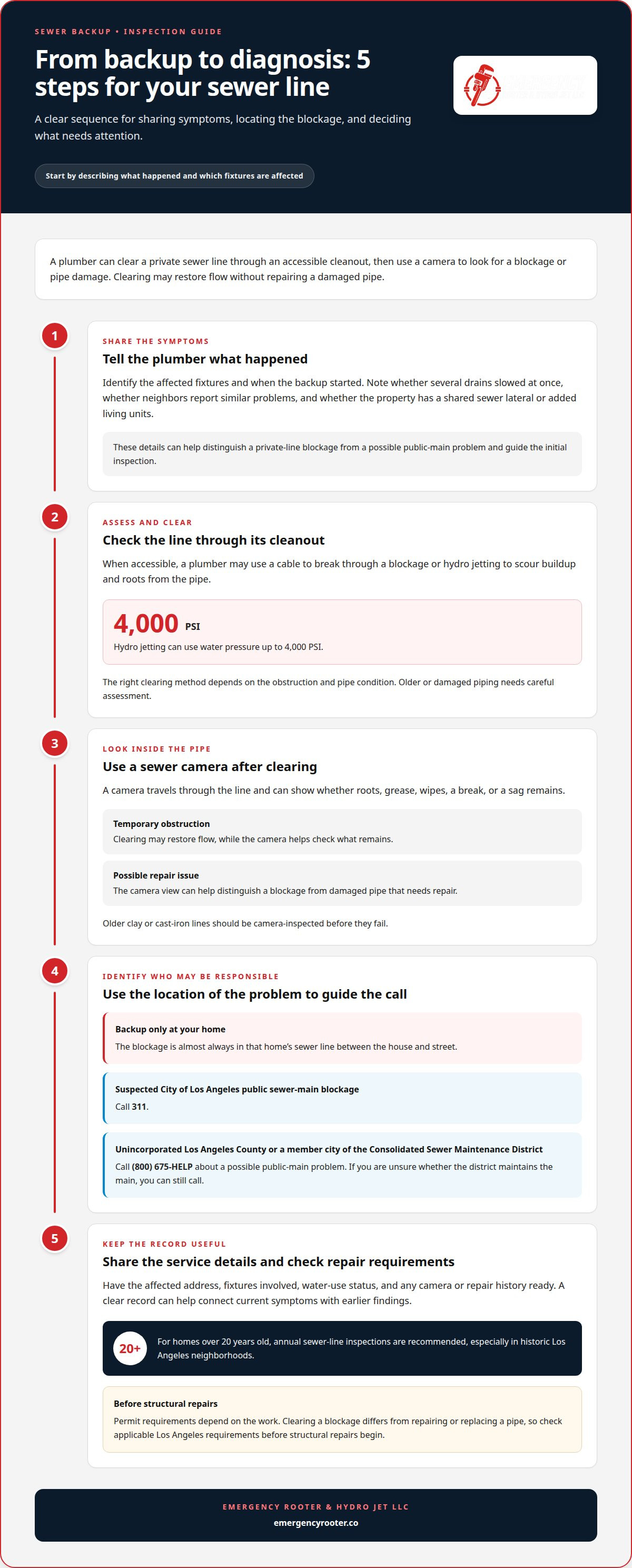
- Tell the plumber what happened and which fixtures are affected. Note when the backup started, whether several drains slowed at once, and whether neighbors report similar problems. Mention if the property has a shared sewer lateral or added living units. These details can help distinguish a private-line blockage from a possible public-main problem and guide the initial inspection.
- Ask for the line to be assessed through its clean-out, when accessible. A plumber may use a cable to break through a blockage or hydro jetting to scour buildup and roots from the pipe. Hydro jetting can use water pressure up to 4,000 PSI. The right clearing method depends on the obstruction and pipe condition, so older or damaged piping needs careful assessment.
- Have the cleared line checked with a sewer camera. The camera travels through the pipe and can show whether roots, grease, wipes, a break, or a sag remains. Clearing can restore flow without fixing damaged pipe, so the camera view helps distinguish a temporary obstruction from a repair issue. Older clay or cast-iron lines should be camera-inspected before they fail.
- Choose the right call based on where the problem appears. If sewage backs up only at your home, the blockage is almost always in that home’s sewer line between the house and street. For a suspected City of Los Angeles public sewer-main blockage, call 311. Residents in unincorporated Los Angeles County or a member city of the Consolidated Sewer Maintenance District can call (800) 675-HELP about a possible public-main problem. If you’re unsure whether the district maintains the main, you can still call.
- Keep the service details ready. Share the affected address, the fixtures involved, whether water use has stopped, and any camera or repair history you have. For homes over 20 years old, annual sewer-line inspections are recommended, especially in historic Los Angeles neighborhoods. A clear record helps the plumber connect current symptoms with earlier findings and determine whether clearing or repair is needed.
Permit requirements depend on the work: clearing a blockage differs from repairing or replacing a pipe. Identify the work involved and check applicable Los Angeles requirements before structural repairs begin.
Preventing backups with drain habits and line maintenance
- During a backup, stop water use across the property. Don’t flush toilets, run faucets, or start appliances that drain into the sewer line. Keep people and pets away from sewage, and avoid electrical switches or equipment near wet areas. If several drains slow or back up at once, treat it as a possible sewer-line problem, not an isolated sink clog.
- On a shared lot, tell every household to stop using water until the blockage is assessed. A toilet flush or washing-machine cycle can add flow to the shared lateral. Sewage may emerge from the lowest fixture, even if that fixture is farthest from the blockage. Make sure occupants know which drains to avoid, then arrange an inspection to identify the cause.
- Keep grease, cooking oil, wipes, and other unsuitable waste out of drains. Grease can cool and cling to pipe walls, narrowing the passage for wastewater. Wipes can snag inside the line and collect other debris. In Los Angeles, roots, grease, wipes, and lost pipe slope are among the causes of sewer backups. Better drain habits can help, but they can’t correct a broken or sagging pipe.
- Pay attention to large trees near the sewer route. Tree roots cause about 50% of sewer backups in Los Angeles. Roots can enter joints and grow into the pipe, restricting flow or catching waste. If roots caused a previous backup, schedule regular cleanings or repair damaged joints. Clearing roots without addressing damaged joints can leave the same entry point open for future growth.
- Plan maintenance around the pipe’s age and surroundings. General guidance recommends sewer-line inspections every 2-3 years for Los Angeles homeowners. Annual professional drain cleaning is recommended, especially for homes with older pipes or large trees. Older clay or cast-iron lines may need closer attention because cracks, roots, and pipe movement can develop out of view.
- Ask whether a backwater valve suits the property. This device can help stop sewage from flowing back into a home, but it doesn’t remove a blockage or repair a damaged line. A plumber can assess the line layout and backup history. Keep records of repeated slow drains, previous root clearing, and inspection findings. These details can help determine whether the next step is routine maintenance or sewer-line repair.
Sewage cleanup and contaminated porous materials
Treat sewage as contaminated water, not an ordinary household spill. Consider the material when planning cleanup: hard surfaces may be cleaned and disinfected, while porous items need careful handling.
- Keep people and pets out while sewage remains, and don’t use a shop vacuum to remove it. A shop vacuum can spread contamination around the room instead of containing it. Avoid moving contaminated belongings through clean areas. Sewage from a sanitary line is Category three water, so handle the spill with caution and keep the affected area separate from living spaces.
-
Arrange Professional Cleanup and Inspection
Use a water damage restoration company for a sewage spill larger than a small spill. Professional cleanup includes sanitization and disinfection with EPA-approved solutions to eliminate pathogens. Have the affected area inspected, including flooring and nearby materials sewage may have reached. Don’t assume that cleaning the visible surface alone addresses contamination absorbed below or behind a material.
- Separate hard, nonporous surfaces from absorbent items before cleanup begins. Affected hard surfaces can be cleaned and disinfected, but porous materials that absorbed sewage shouldn’t simply be rinsed and kept. A hard floor and soaked carpet, for example, need different handling. Keep contaminated items away from clean belongings to prevent sewage from being carried into other rooms.
-
Handle Contaminated Porous Materials
Set aside sewage-soaked carpet, padding, upholstery, and similar porous belongings for appropriate disposal. Rinsing may remove visible soil without removing contamination absorbed into the material. Don’t return a porous item to use just because it looks clean or no longer feels wet. Keep it separate while cleanup is arranged, and avoid dragging it across clean flooring.
- Document what the sewage reached before cleanup changes the scene. Record affected rooms, flooring, and belongings, and keep available cleanup or inspection records together. Standard homeowners insurance policies generally don’t automatically cover sewer backup damage. Review your policy to understand the coverage that applies to your home, and use your documentation when discussing the loss with your insurer.
- Match the cleanup to the extent of the spill. Sewage confined to a small area is different from sewage reaching several rooms, floor coverings, or nearby belongings. Note which surfaces were contaminated and which materials absorbed wastewater. This distinction helps show where cleaning and disinfection may be appropriate and where porous materials need removal rather than rinsing.
Common causes of sewer line blockages in Los Angeles
- Use the pattern of the backup to narrow down its likely source. If only one home is affected, the blockage is almost always in that home’s sewer line between the house and street. About 80% of sewer backups affecting Los Angeles properties are attributed to private lateral blockages. The house lateral includes the pipe connecting the home to the public sewer main.
- Consider tree roots as a possible cause of recurring trouble. Roots can enter pipe joints and grow into the sewer line, restricting wastewater flow. Los Angeles backups are also linked to grease, wipes, and lost pipe slope. A camera inspection can help distinguish root intrusion from a sag, break, or buildup that needs a different fix.
- Grease and wipes can both contribute to blockages. Grease can cling to pipe walls, while wipes can catch on rough joints or other debris. Each obstruction narrows the route for wastewater and makes it easier for more waste to snag. Keep cooking grease and wipes out of drains, and mention recurring slow drains during the inspection.
- Check whether several homes or units share the same sewer lateral. A Los Angeles lot’s lateral may serve two, three, or four households. Added accessory dwelling units across the Los Angeles region can also make it important to know which homes connect to the same line. If neighbors report similar backups, a shared lateral or public sewer main may be involved.
- Distinguish a private-line issue from a public-main problem before deciding what to do next. If similar sewage backups affect neighbors in Los Angeles County, the public sewer main may have a problem. If only one property is affected, a private lateral blockage is more likely. Share which fixtures are affected and whether nearby residents report backups when arranging an assessment, so the likely section of pipe can be investigated.
- Address pipe damage, not just the immediate obstruction. Lost slope, a broken pipe, and sagging sections can slow wastewater and repeatedly catch debris. Clearing may restore flow temporarily, but a damaged section can continue causing trouble. If an inspection identifies structural damage, arrange a repair that addresses the affected pipe rather than relying only on repeated clearing.
- Get the cause assessed before another backup occurs. Arrange a sewer-line assessment to identify whether roots, buildup, a damaged lateral, or a possible shared-main issue needs attention.
Emergency Rooter & Hydro Jet: Sewer Line Repair
Emergency Rooter & Hydro Jet can help when a backup points to a blocked or damaged private sewer line. Rooter Service or Hydro Jet Cleaning can clear obstructions such as buildup or roots; Sewer Line Repair addresses a damaged line. The right work depends on what an inspection finds.
Turn to sewer-line service when multiple drains back up, a blockage returns after clearing, or an inspection shows pipe damage. If nearby homes also have backups, first consider whether the public sewer main is involved. For a suspected main blockage in the City of Los Angeles, call 311.
Share which fixtures are affected and any previous inspection findings to help focus the assessment. For a private-line backup, contact Emergency Rooter & Hydro Jet.
Make the next step count
Once the immediate disruption is under control, use the cause of the backup to guide your next decision. A recurring blockage or an inspection showing pipe damage calls for more than a temporary response. Keep the findings with your home records so future maintenance can address the line’s actual condition.
If you’re deciding what to do when a sewer backs up into your Los Angeles home, focus on addressing the source, not just clearing the symptoms. Emergency Rooter & Hydro Jet LLC offers Rooter Service, Hydro Jet Cleaning, and Drain Cleaning for sewer and drain blockages. The right next step depends on what the line needs.
Contact Emergency Rooter & Hydro Jet LLC to discuss the sewer-line problem and its next step. With a clear plan, you can move forward with confidence.
Frequently Asked Questions
Does homeowners insurance typically cover sewer backup damage?
Standard homeowners insurance policies generally don’t automatically cover sewer backup damage. Coverage depends on your individual policy, including any sewer-backup provision and its limits. Review the policy language for coverage of the building, belongings, and cleanup, since these may be treated differently. Keep photos and records of affected items and work performed so you have clear documentation when discussing a claim with your insurer.
What’s the difference between a simple clog and a main sewer line backup?
A simple clog often affects one fixture, such as a slow kitchen sink. A sewer-line backup can affect several drains at once, including toilets, tubs, and floor drains. For example, wastewater appearing in a shower while a toilet is used points beyond a single sink drain. Symptoms can suggest the likely location, but a plumber’s camera inspection can show whether the line has an obstruction or damage.
What should you do immediately when sewage backs up into a house?
Keep everyone out of the affected area and stop water use, including toilets, faucets, and draining appliances. Don’t use a shop vacuum or aim a fan across sewage. If you can safely take photos from a dry area, record the affected rooms and waterline before cleanup. Note which fixtures backed up and when; those details can help distinguish a one-fixture clog from a problem affecting the sewer line.
When should you call 911, the Los Angeles sewer hotline, or a plumber for a sewage backup?
Call 911 if someone faces an immediate threat to life or needs emergency medical help. For a suspected public sewer-main blockage in the City of Los Angeles, call 311. Residents in unincorporated Los Angeles County or a member city of the Consolidated Sewer Maintenance District can call (800) 675-HELP about a possible public-main problem. Contact a plumber when the backup appears limited to your home’s private sewer line.
How do you report a sewer backup to the City of Los Angeles and request an inspection?
Call 311 to report a suspected City of Los Angeles sewer-main blockage. Give the property address, describe where sewage appeared, and explain whether nearby homes have similar problems. Be clear that you suspect a public-main issue and want it inspected. If only your property is affected, the blockage may instead involve the private lateral. Keep a record of when you called and the symptoms you reported.
Who is responsible for a sewer backup in Los Angeles: homeowner or city?
Responsibility depends on where the blockage occurs. The homeowner is responsible for the house lateral, including the pipe connecting the home to the public sewer main. The Los Angeles Sanitation District is identified as responsible for public sewer main lines. If multiple nearby properties have backups, report a suspected public-main problem. A camera inspection can help locate a private-line obstruction or damage.
Does homeowners insurance cover sewer backup cleanup and repairs in California?
Standard homeowners insurance policies generally don’t automatically cover sewer backup damage, including cleanup or repairs. Don’t assume coverage for other water damage also applies to sewage. Read the policy terms for sewer-backup coverage, exclusions, limits, and how cleanup and building repairs are handled. Keep photos, receipts, and inspection records together. Your insurer can explain how the policy applies to the damage at your home.
What are the health risks of sewage exposure, and what protective gear is needed?
Sewage can contain pathogens, including E. coli, salmonella, and hepatitis. Avoid direct contact, keep children and pets away, and don’t walk through contaminated water. No specific household protective-gear checklist is established here, so don’t rely on gloves or other gear as a reason to enter or handle a spill. For a spill larger than a small one, use a water damage restoration company for cleanup and disinfection.


