

Trenchless sewer lining can repair an old home’s line without turning the yard into a worksite. Sewer lining for old homes in Beverly Hills often takes 1-2 days per run, though the damaged section and repair scope affect the schedule. The first priority is finding out whether the pipe can be lined or needs replacement.
It’s reasonable to compare repair time and disruption with the work involved in excavation, especially when aging pipes are cracked, blocked by roots, or causing backups. This guide explains how sewer lining for old homes in Beverly Hills works, what can affect the job, and how its disruption and costs compare with digging up and replacing a pipe. You’ll also learn how a camera inspection helps identify the right repair, so you can make an informed decision about your home’s sewer line.
Key Takeaways
- Repair time depends on the damaged section, line length, and whether lining or replacement is needed.
- A camera inspection can reveal roots, clogs, cracks, and structural damage that affect the repair plan.
- Compare the full impact of each method, including excavation, labor, and possible landscaping repairs.
- Pipe condition guides the choice: lining may suit a pipe that can be rehabilitated, while severe structural damage can call for replacement.
- For recurring backups or a suspected sewer-line failure, sewer line repair can address the underlying problem rather than just the immediate blockage.
How long does it take to complete underground sewer line repair with trenchless methods?
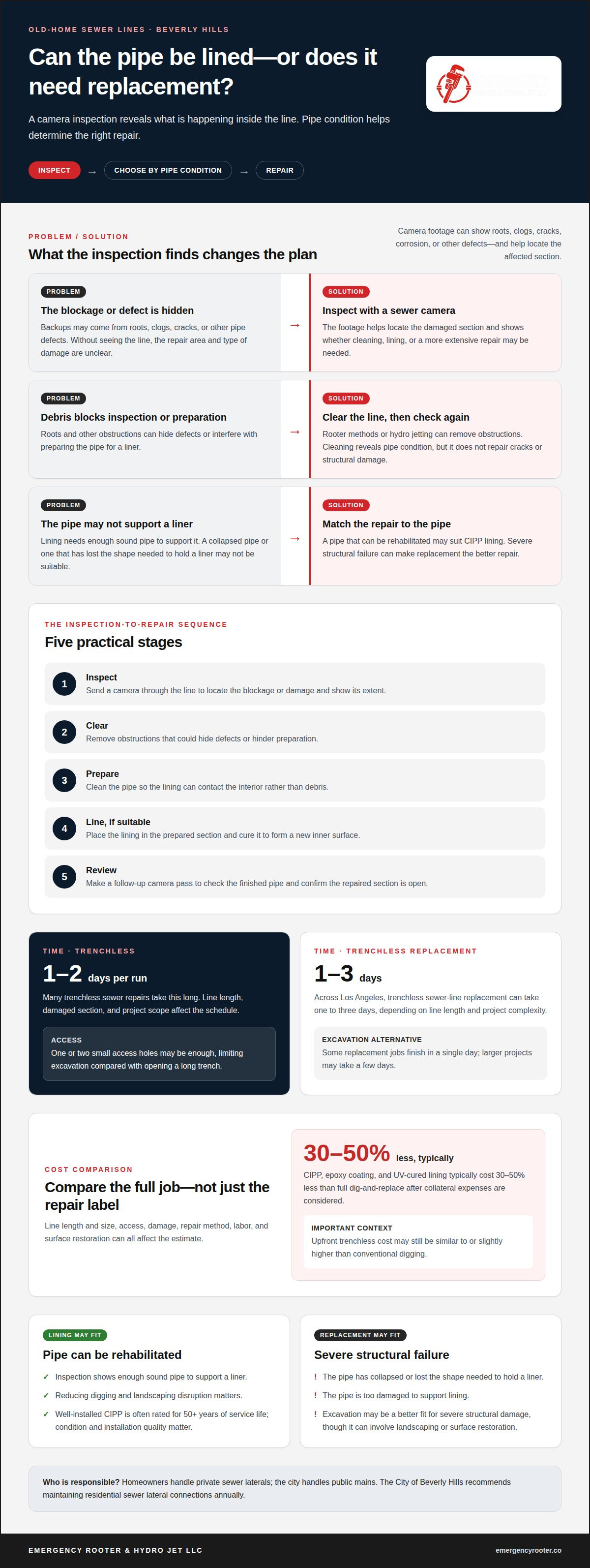
Many trenchless sewer repairs take 1-2 days per run. Across Los Angeles, trenchless sewer-line replacement can take one to three days, depending on line length and project complexity. One or two small access holes may be enough, limiting excavation compared with opening a long trench. A camera inspection helps locate the damage and define the repair area before work begins.
Responsibility depends on the pipe’s location: homeowners handle private sewer laterals, while the city handles public mains. The City of Beverly Hills recommends maintaining residential sewer lateral connections annually. Before deciding which section needs attention, locate the blockage or damage.
Older Beverly Hills homes may have clay tile or cast-iron sewer pipes. Clay was common in early- to mid-1900s installations, and many Los Angeles homes built from the 1920s to 1950s still have original clay or cast iron lines. CIPP, or cured-in-place pipe lining, can create a new lining inside an existing pipe; trenchless lining also suits a wide range of pipe sizes. A camera inspection shows whether roots, cracks, or corrosion have left enough sound pipe to support lining.
Roots can enter through joints or cracks, while corrosion can thin cast iron and clay can crack or shift. Thorough cleaning removes debris that could interfere with lining, but cleaning alone does not fix structural damage. If the pipe has collapsed or lost the shape needed to hold a liner, replacement may be the better repair. Well-installed CIPP lining is often rated for 50+ years of service life, though condition and installation quality matter.
Trenchless work can reduce digging, labor, and landscaping repair costs. After collateral expenses are considered, CIPP, epoxy coating, and UV-cured lining typically cost 30-50% less than full dig-and-replace. The upfront cost may still be similar to or slightly higher than conventional digging. Trenchless sewer lining for old homes in Beverly Hills can therefore make sense when the pipe is suitable and avoiding surface disruption matters; excavation may fit severe structural failure better. Some replacement jobs finish in a single day, while larger projects may take a few days.
Camera inspection and installation process
A camera inspection turns a hidden sewer problem into a visible repair plan. In Beverly Hills, a plumber can investigate backups by sending a camera through the sewer lateral. The footage may reveal roots, clogs, cracks, or other defects inside the pipe. This helps locate the affected section and determine whether cleaning or structural repair is needed.
Before lining, the pipe needs a clear interior. Debris can block the camera’s view and interfere with preparation. Beverly Hills recommends hiring a licensed plumber for video inspection and thorough cleaning of a property’s sewer lateral. Hydro jetting can clear a blockage, after which the line can be checked. Cleaning reveals the pipe’s condition, but it won’t repair a crack or restore a damaged section.
A typical process moves through these steps:
- Inspect: The camera travels through the sewer line to locate the blockage or damage and show its extent.
- Clear: Rooter methods or hydro-jetting remove obstructions that could hide defects or hinder preparation.
- Prepare: The pipe is cleaned so the lining can contact the interior rather than sit against debris.
- Line: The lining is placed in the prepared section and cured to form a new inner surface.
- Review: A follow-up camera pass checks the finished pipe and confirms the repaired section is open.
Each step has a practical purpose. A camera may show roots causing a blockage, while a second inspection after cleaning can reveal a cracked pipe wall. That distinction matters: a clear pipe may still have structural damage that needs repair. A camera inspection after lining can also reveal visible gaps, obstructions, or areas that need further attention.
After work, keep the inspection footage and repair details with the home’s maintenance records. Periodic inspections every 5-10 years are described as sufficient for many properties, unless unusual loads or site conditions apply. Recurring backups, slow drainage, or renewed root intrusion can justify an earlier look. The camera gives the next inspection a useful comparison point, showing whether the same area has changed.
Trenchless sewer work in Los Angeles requires city permits and post-completion inspections. These steps form part of the project, alongside the pipe work itself. For persistent backups or a damaged lateral, sewer line repair can address the underlying line problem rather than only the immediate obstruction.
Lining versus excavation costs
In Beverly Hills, homeowners are responsible for private sewer laterals, while the city handles public sewer mains. Repair costs depend on the specific job. Line length, access, damage, repair method, and surface restoration can all affect the estimate.
Repair Labor Costs
Labor can include locating the affected section, preparing the pipe, completing the repair, and checking the result. Excavation adds work when crews need to open a trench and restore landscaping or other disturbed surfaces. Trenchless work can limit heavy excavation and some restoration, but preparation and repair still depend on the pipe’s condition and accessibility. Compare what each estimate includes, not just the repair label.
Factors Affecting Lining Costs
For older homes, lining costs depend on the sewer line’s length and size, the damage, and the method used. A short section with accessible entry points is a different job from a long run with extensive cracks or roots. A camera inspection helps identify the conditions. If the pipe is broken or too damaged to support a liner, replacement may require excavation.
Surface restoration can change the comparison. Digging may disturb a driveway, planting beds, or other landscaping, creating additional work after the sewer line is replaced. Trenchless lining can limit excavation and reduce restoration work, but still requires labor to clean and prepare the pipe, install the liner, and inspect the finished section. The estimate should separate pipe work from restoration.
A sewer main blockage is different from a broken sewer line. Clearing debris may resolve a clog, while cracks, root intrusion, or structural failure call for repair or replacement. Costs depend on the blockage’s location, the cleaning required, and whether inspection reveals damage. A thorough diagnosis helps avoid treating a recurring structural problem as a simple obstruction.
For example, roots may cause a localized blockage, while camera footage reveals a cracked joint nearby. Clearing the roots resolves the immediate obstruction; repairing the damaged joint addresses the underlying issue. The right solution depends on the inspection findings, whether the pipe can hold a liner, and whether failed sections require excavation.
Compare estimates by checking whether they include inspection, cleaning, lining or replacement, and restoration. For a Beverly Hills property, a clear comparison covers the full repair scope and any landscaping affected by excavation, not just the initial pipe work.
Choosing a method based on pipe condition
Camera findings guide the repair choice, not the home’s age alone. In Beverly Hills, older clay tile and cast-iron sewer lines can show different kinds of wear. A camera inspection helps determine whether the pipe is open and stable enough for lining or whether damaged sections need replacement. The key question is whether the existing pipe can support the repair.
If a line has cracks or root entry but retains a usable shape, lining may create a new interior surface without opening a trench along the entire route. Cleaning comes first: roots and debris must be cleared so the liner can sit against the pipe. A collapsed, badly separated, or misshapen line may not be suitable for lining. In that case, replacing the damaged section may be the practical option.
- Open pipe with localized cracks: Lining may be considered when the camera shows a continuous route and the section can be prepared.
- Roots or blockages: Clear the obstruction, then inspect again. The second view distinguishes a temporary clog from a cracked joint or other structural fault.
- Severe deformation or collapse: Replacement may be needed where the pipe no longer holds a usable shape for a liner.
- Damage near the street: Identify whether the affected section belongs to the private lateral or public sewer before planning work.
Material matters, but condition matters more. Clay tile was common in early- to mid-1900s installations, while Los Angeles homes built from the 1920s to 1950s may still have original clay or cast iron. Lining can be used across a wide range of pipe sizes, but that does not mean every old pipe is a candidate. Corrosion, shifted joints, cracks, and remaining pipe shape all affect the choice.
Work through the decision in order. First, use camera footage to locate the defect. Next, clear debris and roots that obscure the pipe. Then inspect the cleaned line for cracks, deformation, or a failed section. Finally, consider lining if the pipe can be rehabilitated, or replacement if structural failure prevents a sound lining job. This ties the repair to the pipe’s visible condition.
Property boundaries also matter. Beverly Hills homeowners are responsible for private sewer laterals, while the city handles public sewer mains. If a backup appears near the street, locating the fault helps distinguish a private plumbing repair from a public-line issue. Choose the repair method based on the diagnosis, not the backup’s location alone.
Contractor estimates and emergency services
A useful sewer estimate starts with evidence, not a guess based on a backup alone. In Beverly Hills, a camera inspection can reveal whether roots, debris, cracks, or a broken section are causing the problem. The estimate should identify the affected pipe, proposed repair, access needs, and any work required to restore the property. This gives owners a consistent scope for comparing repair options.
Repair cost depends on the job. Key factors include the damaged line’s length and condition, access, cleaning needs, repair method, and any landscaping or concrete excavation could disturb. Ask for an itemized scope that separates inspection, preparation, repair, and surface restoration. That makes it easier to understand what’s included and how the plan might change if the camera reveals more damage.
A useful estimate connects each proposed task to a visible condition. For example, footage showing roots at a joint may support cleaning and further inspection, while a collapsed section points to a larger repair. Beverly Hills recommends hiring a licensed plumber for video inspection and thorough cleaning of a property’s sewer lateral. A clear written scope should also explain how the finished work will be inspected.
Act quickly when sewage backs up into a home or wastewater spills outside. Stop adding water to the affected drains and report a street-level overflow to the City of Beverly Hills at 310-285-1000. For sewer issues after city service hours, Beverly Hills provides an emergency line at 310-550-4900. These contacts address city sewer concerns; a private lateral problem may need separate plumbing attention.
- Repeated backups: Record which fixtures are affected and when the blockage returns.
- Standing sewage: Keep people away from the affected area and report a public overflow promptly.
- Estimate review: Match the camera findings to the proposed repair, cleaning, and restoration work.
- Work completion: Keep the repair scope and inspection details with the home’s records.
In Los Angeles, trenchless sewer work requires city permits and post-completion inspections. Permit and inspection steps can affect the schedule, so include them in the project plan rather than treating them as an afterthought. For urgent plumbing trouble or a recurring blockage, request help with a sewer backup and provide the address, symptoms, and any visible overflow details.
Emergency Rooter & Hydro Jet: Sewer Line Repair
Emergency Rooter & Hydro Jet provides sewer line repair when inspection shows damage beyond a temporary blockage. Camera findings such as cracks, root intrusion, or a broken section can help determine whether the line needs repair rather than another clearing.
For blockages, Rooter Service or Hydro Jet Cleaning can clear debris and help restore flow. Drain Cleaning addresses drain obstructions, while Sewer Line Repair targets damage to the pipe itself. The right service depends on the inspection and whether the pipe can be rehabilitated or needs replacement.
If backups keep returning or sewage is surfacing, describe the symptoms and affected drains when you contact Emergency Rooter & Hydro Jet. Contact the team to discuss the sewer line problem.
Move from diagnosis to a clear repair plan
Choosing sewer lining for old homes in Beverly Hills starts with the pipe’s condition, not the property’s age alone. Keep inspection findings and repair details with your home records. That history can make future maintenance decisions clearer and provide a useful reference if symptoms return.
Before arranging service, note which drains are affected, whether backups recur, and where you see signs of a problem. These details help focus attention on the right part of the plumbing system. Treat sewage backups as urgent and explain the symptoms when you reach out.
Emergency Rooter & Hydro Jet LLC offers Rooter Service, Hydro Jet Cleaning, and Drain Cleaning for blockages and drain problems, along with Sewer Line Repair for damaged lines. The right next step depends on whether the issue is an obstruction or a pipe defect.
Contact Emergency Rooter & Hydro Jet LLC to discuss the sewer line issue and move toward a practical repair plan. A clear next step can help you protect your home and get the problem addressed.
Frequently Asked Questions
Do I Need City Approval for Trenchless Sewer Work in Los Angeles?
Yes. Trenchless sewer work in Los Angeles requires city permits and post-completion inspections. Include these steps in the project schedule: they are part of completing the work, not optional extras. Permits relate to the sewer project, while inspection follows the work. For a Beverly Hills property, clarify whether the affected pipe is the private lateral or public sewer before planning repairs.
How is sewer relining done?
Sewer relining repairs an existing pipe from the inside, rather than replacing the entire line through a continuous trench. First, the line is inspected and cleared so its interior can be assessed and prepared. A liner is positioned inside the damaged section and cured to form a new inner surface. A final camera inspection can show whether the repaired route is open and unobstructed.
How long do results from trenchless pipelining last?
Well-installed cured-in-place pipe lining, or CIPP, is often rated for 50+ years of service life. That figure describes expected durability, not a guarantee for every old pipe. Installation quality and the condition of the existing line matter. For example, a liner placed in a properly prepared pipe has a different starting point from one installed where debris or severe structural damage remains.
Is Trenchless Sewer Line Replacement More Expensive Than Traditional Methods?
Not necessarily. Trenchless work may cost about the same upfront as digging, or slightly more, while avoiding some excavation, labor, and landscaping restoration. The total depends on the property and repair scope. A useful estimate separates pipe work from surface restoration, such as repairing a driveway or garden disturbed by excavation, so you can compare the full project impact.
Re-line or Repipe?
Choose relining when inspection shows the existing pipe can be prepared and still support a liner. Choose replacement when collapse, severe deformation, or extensive structural failure leaves no sound route for lining. For example, a cracked but continuous section may be suitable for lining, while a collapsed section may require replacement. Let the camera findings and pipe condition guide the decision, not the home’s age alone.
What conditions are ideal for trenchless lining?
Trenchless lining is best suited to a sewer pipe with a continuous route, enough remaining structure to hold the liner, and access for preparation and installation. Cracks or root entry may be repairable if the pipe remains stable after cleaning. A camera inspection helps reveal whether the line is open and properly shaped. A collapsed or badly deformed section can rule out lining as the practical option.
What problems can be addressed with trenchless repair?
Depending on the pipe’s condition, trenchless repair can address cracks, root intrusion, and other localized defects without opening a trench along the full line. Cleaning can remove roots or debris that block wastewater flow, but it does not repair a damaged pipe wall. For example, a recurring blockage may clear while a cracked joint remains. Inspection distinguishes an obstruction from structural damage that needs repair.
What is trenchless sewer lining and how does it work in older homes?
Trenchless sewer lining creates a new inner surface inside an existing sewer pipe, often using cured-in-place pipe lining. It can suit older homes with clay tile or cast-iron lines when the pipe is suitable for rehabilitation. The pipe is inspected and prepared, then the liner is installed and cured. This approach can limit digging, but it cannot restore a pipe that has collapsed or lost its usable shape.


