

Several drains backing up at once can point to a main sewer line clog rather than a problem with one fixture. If you’re deciding who to call for a sewer backup in Santa Monica, contact a local plumber who handles sewer emergencies. Stop using water fixtures if possible, and keep children and pets away from the affected area.
A sewage backup needs prompt attention. You need to know who can assess the blockage, what to expect when you call, and how to judge whether the proposed service fits the problem. This guide explains how emergency response works, what details to share about affected fixtures and symptoms, and how to understand the difference between clearing a blockage and addressing damage to the sewer line. You’ll also learn what to look for when verifying a local provider, so you can make a clear decision and move toward resolving the backup.
Key Takeaways
- Backups affecting multiple fixtures can signal a main sewer line problem. Stop using water and keep children and pets away from the affected area.
- When you call, describe which fixtures are affected, any gurgling or odor, and whether you know the cleanout location.
- Before work begins, understand the proposed method, whether an inspection is recommended, and what the quote includes.
- Clarify whether sewage cleanup and disinfection are part of the service or separate from clearing the blockage.
- Learn how the location of the problem can help determine whether to contact a plumber, the city, or a utility.
24/7 Emergency response for sewage backups
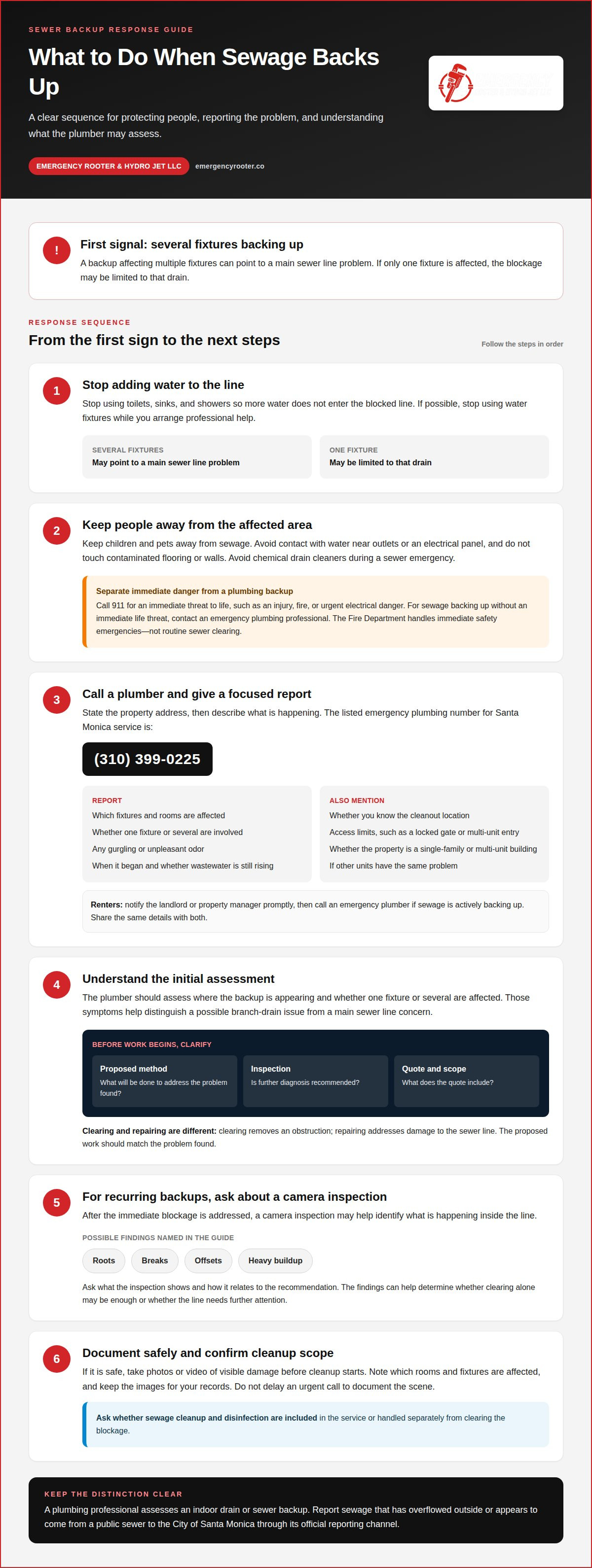
Respond quickly if sewage rises through a toilet, tub, or shower. Stop using toilets, sinks, and showers so more water doesn’t enter the blocked line. A backup affecting several fixtures can point to a main sewer line problem. If only one fixture is affected, the blockage may be limited to that drain. Tell the plumber what you’re seeing so they can assess the urgency and prepare for the call.
Call 911 if the backup creates an immediate threat to life, such as an injury, fire, or urgent electrical danger. The Santa Monica Fire Department is for immediate safety emergencies, not routine sewer clearing. For sewage backing up without an immediate threat to life, contact an emergency plumbing professional. Keep the two calls distinct: emergency responders address immediate danger, while plumbing professionals assess the drain or sewer line.
Protect people before focusing on the plumbing. Keep children and pets away from sewage, and avoid contact with water near outlets or an electrical panel. Don’t touch flooring or walls contaminated by the backup. Avoid chemical drain cleaners during a sewer emergency. They won’t resolve a main-line blockage and can complicate the work area for the responding professional.
Share clear details on the call. Describe:
- Which fixtures are backing up, such as a toilet and shower.
- Whether you hear gurgling or notice an unpleasant odor.
- When the backup began and whether it is still rising.
- Whether one fixture or several rooms are affected.
These details help the plumber distinguish a likely branch-drain issue from a main-line concern. In Santa Monica, backups may follow storms, and possible causes include main-line clogs, root intrusion, or inflow issues. The response time depends on factors such as the property’s location, access, and the reported severity. Give the service address and explain any access restrictions clearly.
For recurring backups, ask whether a camera inspection is appropriate after the immediate blockage is addressed. A camera can help identify roots, breaks, offsets, or heavy buildup inside the line. The findings can show whether clearing alone may be enough or whether the sewer line needs further attention. A one-time backup and a recurring pattern call for different assessments.
Before cleanup starts, document visible damage with photos or video if it’s safe to do so. Note which rooms and fixtures are affected, and keep the images for your records. Don’t delay an urgent call to document the scene. A clear report, a safe distance from contaminated materials, and prompt professional assessment help move the emergency toward the right next step.
Calling a local plumber for sewer emergencies
Call a plumber when sewage is backing up inside the property, especially across multiple fixtures. Give a clear account of the affected rooms, symptoms, and access conditions.
Finding the Sewer Emergency Phone Number
The listed emergency plumbing number for Santa Monica service is (310) 399-0225. Use it for a plumbing emergency involving a drain or sewer backup. When calling, state the property address first, then describe which fixtures are affected and whether wastewater is still rising. Mention any access limits, such as a locked gate or multi-unit entry.
Keep the call focused. A toilet backing up alongside a shower gives the plumber different information than one slow sink. Mention any gurgling or odor, and share the location of the cleanout if you know it. These details help the plumber prepare to assess the right part of the drainage system.
Renters: notify the landlord or property manager promptly, then call an emergency plumber if sewage is actively backing up. Share the same details with both, including the affected fixtures and whether other units have the same problem. In a multi-unit building, tell the property manager which apartment and rooms are affected. Don’t assume a neighbor’s call covers your unit.
What Professionals Do Immediately When Sewage Backs Up
A professional should first assess where the backup is appearing and whether one fixture or several are affected. These symptoms can help guide the inspection and determine whether the issue may involve a branch drain or the main sewer line. The next step may be clearing the obstruction or assessing whether a repair is needed. The proposed work should match the problem found.
Expect the plumber to ask when the problem started, whether you’ve noticed gurgling or odor, and whether there is cleanout access. For recurring backups, a camera inspection can help identify roots, breaks, offsets, or heavy buildup. Ask what the inspection shows and how it relates to the proposed repair. Clearing an obstruction and repairing a damaged line address different problems.
Reporting a spill: if sewage has overflowed outside or appears to come from a public sewer, report the location to the City of Santa Monica through its official reporting channel. Describe the street address or nearest intersection, where the wastewater is visible, and whether it is still flowing. For sewage inside a home, call a plumber about the property’s drain or sewer problem. A city spill report does not replace addressing an active indoor backup.
Before work begins, explain whether the building is a single-family home or multi-unit property. If several fixtures or units are affected, say so clearly. You can also ask what the first inspection will cover and whether the recommended work includes clearing, further diagnosis, or a sewer line repair. For a plumbing emergency, emergency plumbing response is the relevant service to request.
Choosing and verifying a local provider
For a Santa Monica sewer backup, clarify the response plan before work starts. Ask about the guaranteed average response time, the proposed method, whether an inspection is recommended, and what the quoted price includes. These details connect the reported symptoms to the work being proposed. The plan should explain what happens next if clearing the blockage doesn’t resolve the backup.
Start with response time. Describe the address, affected fixtures, and whether wastewater is still entering the home. Then ask when help is expected to arrive. Timing can depend on the location, access, and severity described during the call. A specific estimate gives you a clearer basis for planning than a vague promise to respond quickly.
Next, match the proposed method to the symptoms. One slow sink differs from a toilet and shower backing up together. Several affected fixtures can indicate a main sewer line clog, so the assessment should consider that possibility. Ask what the plumber plans to inspect and why that approach fits the problem. If backups keep returning, a camera inspection can help identify roots, breaks, offsets, or heavy buildup.
Clarify the scope before approving work. The quote should explain the proposed service and whether further inspection or sewer line repair is included. Ask whether cleanup and disinfection are part of the quoted service or separate from unclogging. Clearing a line addresses an obstruction; cleanup addresses contaminated areas. Knowing which tasks are included helps prevent confusion after the blockage is handled.
- Response: Get an estimated arrival time based on your address and reported conditions.
- Method: Ask how the proposed work relates to the affected fixtures and likely blockage location.
- Inspection: Find out whether a camera inspection is recommended, especially for recurring backups.
- Scope: Clarify what the quote includes, including any cleanup or disinfection.
Use the answers to identify gaps in the plan. If sewage returns after a line is cleared, ask what diagnostic step will help locate the cause. If multiple fixtures are affected, make sure the assessment considers the main line rather than only one drain. Direct answers should connect each proposed task to a symptom, inspection finding, or repair need.
The price depends on the case and is given after a quote request. The scope, access, diagnosis, and repair needed affect the quoted work. Before service begins, make sure you understand the recommended method and what the quote covers. That gives you a practical basis for deciding whether the proposed response addresses the backup, not just its visible symptoms.
Discuss the remaining scope, including who will handle cleanup if it is not part of unclogging. Before work begins in Santa Monica, confirm the provider’s response time, proposed method, whether an inspection is recommended, and what the quoted price includes. Ask specifically whether cleanup and disinfection are included in the sewer backup service or are separate from unclogging. Keep the answers together so you can compare the proposed work with the symptoms and decide whether the scope is clear enough to approve. Emergency Rooter & Hydro Jet LLC states that it is C-36 licensed and fully insured.
Who handles sewer backups in Santa Monica: city, property owner, or utility?
First identify where sewage appears and who else is affected. A backup inside one home points to a property plumbing problem that needs professional assessment. A spill from a street or public access point should be reported to the City of Santa Monica. Symptoms help direct the call, but they don’t establish who owns the affected pipe.
For an indoor backup, contact the property owner or manager if you rent, and arrange prompt plumbing assessment. Homeowners can contact a plumber directly. Share whether the problem affects one fixture, multiple fixtures, or several units. A toilet backing up in one apartment presents a different pattern from the same problem appearing across a building.
For a multi-unit property, notify the property manager and describe the affected units and shared areas. Ask whether other residents have reported the same symptoms. Several units backing up at once can help professionals assess whether a shared drain or broader sewer issue may be involved. That pattern is useful evidence, but it doesn’t identify who owns the affected pipe.
A street-level overflow calls for a different report. Contact the City of Santa Monica through its official reporting channel when sewage is visible in a public area or appears to come from public sewer infrastructure. Give the street address or nearest intersection, describe where the wastewater is coming from, and say whether it is still flowing. If the source is unclear, report the observed location rather than guessing who owns the line.
A utility may be relevant if it operates the infrastructure connected to the suspected problem, but the word “utility” alone doesn’t establish responsibility. The affected pipe’s location, the property layout, and where sewage surfaces all matter. Don’t assume a public spill means every indoor backup is the city’s responsibility, or that a home backup automatically comes from a private line.
- Inside one home: notify the owner or manager if renting, and arrange a plumbing assessment.
- Across multiple units: inform the property manager and report which units have symptoms.
- In a public area: report the location and visible flow to the City of Santa Monica.
Keep the plumbing response and public report separate when both are needed. If sewage backs up inside a home while an outdoor spill appears nearby, arrange an indoor assessment and report the outdoor condition. A plumber can assess the affected property line; the city or relevant utility can assess infrastructure it operates. Clear locations and symptom details help each party determine the next step.
A backup confined to one home points to a property plumbing problem, while backups across several units or sewage surfacing in a public area may indicate a shared drain or broader sewer issue. These patterns don’t identify who owns the affected pipe. A professional assessment of the pipe location and property layout can help determine the source.
What is the Santa Monica sewer emergency phone number?
For emergency plumbing help with a sewer backup in Santa Monica, call (310) 399-0225. If you’re deciding who to call for a sewer backup in Santa Monica, use this number for sewage backing up inside a home or building. Describe the affected fixtures so the plumbing team can assess the problem.
Keep the type of emergency clear. Sewage rising through a bathroom toilet calls for plumbing help. A visible spill in a public street should be reported to the City of Santa Monica through its official reporting channel. If both conditions occur, report the outdoor spill separately and arrange help for the indoor backup.
When you call (310) 399-0225, give the service address first. Then explain whether the backup affects one fixture or several, and whether wastewater is still rising. Mention gurgling or an odor if present. Knowing who to call for a sewer backup in Santa Monica helps you direct an indoor plumbing emergency to the right response.
- State the Santa Monica property address and building type.
- Name each affected fixture, such as a toilet, sink, tub, or shower.
- Describe whether the backup is active, recurring, or accompanied by gurgling.
- Share the cleanout location if you know it, plus any entry restrictions.
For renters, contact the property manager as well as arranging a plumbing response. In a multi-unit building, specify which apartments or shared areas are affected. Backups in two units give the plumber different information than one clogged sink. Keep the owner or manager updated on the call and the symptoms reported.
After hearing the details, the plumber can assess the next step. That may involve checking the affected drains, clearing an obstruction, or determining whether sewer line repair is needed. If the backup keeps returning, a camera inspection can help identify roots, breaks, offsets, or heavy buildup. Ask how the proposed work relates to the symptoms and inspection findings.
Use the city channel for a spill that appears in public space, and call a plumber for an indoor backup. Don’t assume one report automatically alerts the other party. If sewage is coming through a home fixture while wastewater is also visible outdoors, make both calls and describe each location clearly.
For an active indoor sewer backup, request emergency plumbing help and provide the address and affected fixtures first. Keep the line clear for the professional’s follow-up questions. A concise report helps direct attention to the immediate problem and determine whether further sewer line assessment is needed.
The plumbing company targets a 60-minute on-site response for emergency calls in the Santa Monica and Westside service area. It says 95% of emergency repairs are completed on the first visit and charges no overtime for emergency plumbing service.
Emergency Rooter & Hydro Jet: Sewer Line Repair
Emergency Rooter & Hydro Jet provides sewer line repair for backups that may involve damage beyond a blockage. If the backup keeps returning or an inspection identifies a break or offset, sewer line repair may address the underlying problem. Rooter Service, Hydro Jet Cleaning, and Drain Cleaning address other drain and sewer issues, depending on the condition found.
Share which fixtures are affected, whether the problem has returned, and any inspection findings. That information helps connect the next step to the symptoms and the condition of the line. Contact Emergency Rooter & Hydro Jet to discuss sewer line repair or related drain service.
Move From Backup to the Right Next Step
A sewer backup can disrupt more than one room, but your next move can be clear: get the cause assessed, not just the visible symptoms. If you’re deciding who to call for a sewer backup in Santa Monica, choose a professional service that can match its response to the problem found. A recurring backup, for example, may need a different assessment than a single slow drain.
Emergency Rooter & Hydro Jet LLC offers Rooter Service, Hydro Jet Cleaning, Drain Cleaning, and Sewer Line Repair for drain and sewer problems. The right service depends on the condition of the line and the assessment findings. Share what you’ve observed, including whether the backup has happened before, so the team can understand the situation. The company is licensed & insured.
Take the next step when you’re ready. Contact Emergency Rooter & Hydro Jet LLC to discuss the sewer backup and the service that may address it. A clear description of the problem helps get the conversation started.
Frequently Asked Questions
Multiple Drains Backing Up in Santa Monica?
Several drains backing up together can point to a shared main sewer line problem. A toilet and a floor drain acting up at the same time suggest a different pattern than one slow sink. Stop adding water to the system and arrange a professional assessment. Tell the plumber which fixtures are affected and whether the symptoms began together.
Does Santa Monica provide emergency sewer cleanup or only sewer-line repair?
A report to the City of Santa Monica about a public sewer spill is different from cleanup inside a home. For an indoor backup, arrange a plumbing professional to assess the line and address the blockage or needed repair. Ask whether sewage cleanup and disinfection are included in the proposed work or handled separately. Clearing a sewer line and cleaning contaminated rooms are distinct tasks.


