

A damaged sewer line doesn’t always mean tearing up the yard. No-dig sewer repair in Los Angeles can restore or replace a pipe through limited access points, avoiding a continuous trench across the property. CIPP lining forms a new lining inside the existing pipe, while pipe bursting breaks apart the old line as a replacement pipe is pulled into place.
It’s reasonable to want a clear cost before work begins. The price depends on the repair method, pipe condition, access, and how much of the line needs attention. A sewer camera inspection shows what’s happening inside the pipe and helps determine whether trenchless repair suits the damage.
This guide explains how CIPP and other trenchless options work, what an inspection checks, and which job details shape the estimate. You’ll also learn when trenchless repair may not suit a pipe, helping you understand the likely path forward before deciding how to proceed.
Key Takeaways
- Trenchless repair can limit excavation, but pipe bursting still uses access pits and the pipe’s condition determines which method fits.
- CIPP creates a lining inside the existing pipe; it can reduce the pipe’s internal diameter, which matters when the line is already narrow.
- A sewer camera inspection helps assess damage, pipe size, and access before a repair method is chosen.
- Sewer repair work in the City of Los Angeles needs a permit and city inspection, so account for those steps in the project plan.
- Repair estimates depend on the method, the length and condition of the damaged line, and how easily crews can reach it.
What is trenchless sewer repair?
Trenchless sewer repair restores or replaces a damaged line through limited access points instead of digging a continuous trench. In Los Angeles, the right method depends on the pipe’s condition, the property layout, and permit requirements.
Trenchless Repair Technology
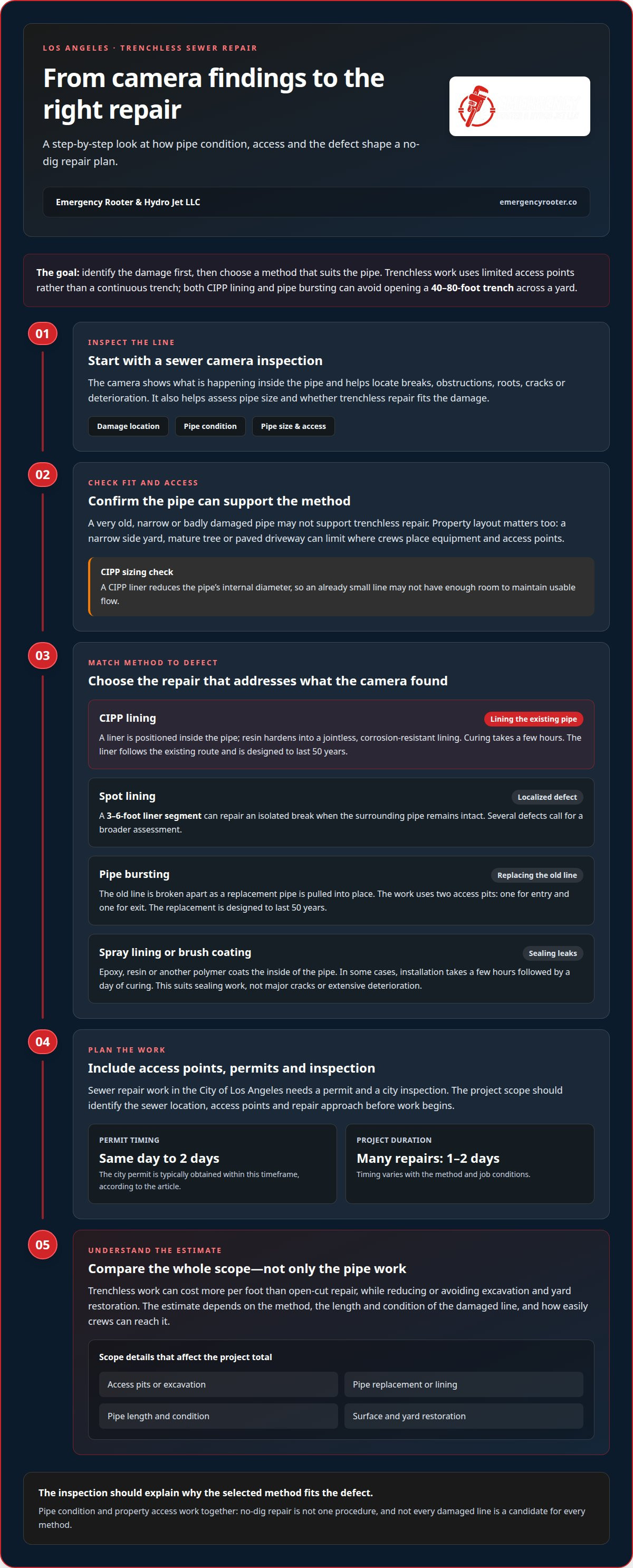
Two common approaches are CIPP lining and pipe bursting. CIPP forms a liner inside the existing sewer pipe; pipe bursting breaks apart the old line while pulling a replacement into place. Pipe bursting uses two access pits, one for entry and one for exit. Both methods can avoid opening a 40-80-foot trench across a yard.
Many trenchless repairs take 1-2 days. CIPP and newly installed burst-in pipes are designed to last 50 years. A homeowner should focus on what the camera inspection shows and whether the existing pipe can support the selected method. No-dig sewer repair in Los Angeles is not one procedure; the repair must match the damage.
Costs Compared With Open-Cut Repair
Trenchless work can cost more per foot than open-cut repair, while reducing or avoiding excavation and yard restoration. Open-cut work may disrupt more of the surface, especially when the sewer runs beneath landscaping, a driveway, or other hardscape. Compare the full scope, not just the pipe work: access pits, excavation, replacement, and surface restoration all affect the project total.
Durability also depends on the repair method and pipe condition. CIPP and pipe-bursting replacements are designed to last 50 years, while the available facts don’t give a like-for-like lifespan for traditional replacement. A camera-based diagnosis helps connect the proposed method to the actual defect.
When Trenchless Repairs Are Unsuitable
A very old, narrow, or badly damaged sewer pipe may not support trenchless repair. CIPP also reduces the pipe’s internal diameter, so it may not suit a line that is already small. Pipe bursting replaces the existing line but requires entry and exit access points. Consider these limits before choosing a method.
When comparing contractors, focus on documented inspection findings, the proposed repair method, and the work scope. For trenchless work in Los Angeles, confirm the contractor’s license status and compare the proposed approaches. The inspection findings should explain why the selected method suits the pipe, rather than treating every blockage or break alike.
Local Conditions Affecting No-Dig Repairs
Tree roots can enter cracks or joints and obstruct sewer flow. Root intrusion may be cleared, but a damaged pipe can still need repair. Aging lines also matter: many Los Angeles homes built before 1980 have clay sewer pipe. A camera inspection helps show whether roots, cracks, or pipe deterioration affect the line.
Soil and property access influence where crews can place equipment and access points. A narrow side yard, mature tree, or paved driveway can limit the available work area. These conditions don’t determine the repair method on their own: pipe condition and access together show whether trenchless work is practical.
Trenchless Repair Permits in Los Angeles
Sewer repair work in the City of Los Angeles needs a permit and a city inspection. Include these steps in the project plan, whether the work uses trenchless access points or an open trench. The city permit is typically obtained the same day to 2 days, according to the available market information.
Permit and inspection requirements are separate from the repair method. Before work begins, the scope should identify the sewer location, access points, and repair approach. This gives the homeowner a clear view of how the work will proceed and which surface areas may need attention afterward.
Cured-in-place pipe lining
CIPP is one method for lining a damaged sewer line. Its suitability depends on the pipe’s condition and the location of the defect.
Cured-in-Place Pipe (CIPP) Lining
CIPP creates a jointless, corrosion-resistant epoxy lining inside the existing pipe. The liner is positioned in the sewer line, then the resin hardens to form a pipe within the old one. Curing takes a few hours. Because the existing pipe must provide a suitable path for the liner, a camera inspection helps identify breaks, obstructions, and changes along the line.
The finished liner follows the existing route, which can help limit excavation near landscaping. CIPP doesn’t suit every pipe. Since the lining reduces the pipe’s internal diameter, an already small line may not have enough room. The inspection should show whether the pipe can accept a liner and maintain usable flow.
Spot Lining for Isolated Breaks
Spot lining targets a localized defect instead of lining the full sewer line. A 3-6-foot liner segment can repair an isolated break. The camera inspection needs to locate the damaged area and show whether the surrounding pipe remains intact. That distinction matters: a short patch addresses a specific section, while damage extending beyond it may call for a different repair scope.
For example, a single break between intact sections may suit a spot repair. Several separate defects call for a broader assessment.
Spray Lining and Brush Coating
Spray lining and brush coating apply epoxy, resin, or another polymer to seal leaks inside a pipe. In some cases, installation takes only a few hours, followed by a day of curing. This approach suits sealing work, not structural damage. Major cracks or extensive pipe deterioration make spray lining unsuitable because a coating cannot replace a severely damaged pipe.
The key is matching the coating to the defect. Camera findings should distinguish a leak from a major crack before this method is selected.
Slip Lining and Pipe Patching
Slip lining places a new liner inside the existing sewer pipe and requires two holes. It works best in larger pipes because the inserted liner reduces the open diameter and can restrict flow. Pipe patching, by contrast, describes a localized repair. The location and extent of the damage help determine whether a short repair or a longer lining approach makes sense.
Compare the inspection image with the proposed repair area. A patch aimed at one defect won’t address separate damage elsewhere in the line.
Before choosing a method, have the camera inspection identify the defect’s location, severity, and surrounding pipe condition. Those findings help distinguish isolated damage from a line that needs broader rehabilitation. For help understanding the next repair step, review these sewer repair options.
Evaluating pipe condition and property access
A camera inspection and a clear view of the property help determine whether trenchless repair is suitable. In Los Angeles, pipe material, diameter, damage, and access all shape that decision. A method that suits one section may not work for a collapsed or badly deteriorated line elsewhere.
Pipe material offers a useful starting point. Most Los Angeles residential sewer laterals that qualify for trenchless repair are 4-inch clay, cast iron, or ABS pipes. Many Los Angeles homes built before 1980 have clay sewer pipe. Age and material alone don’t establish eligibility; the inspection must show whether the pipe remains suitable for the chosen repair.
Camera findings help distinguish a local defect from widespread damage. A crack, root intrusion, offset joint, or collapsed section can change the repair plan. A liner needs a pipe route that can accept it, while pipe bursting needs a route for the replacement pipe and room for access pits. If the pipe has lost its shape or continuity, trenchless work may not be practical.
Access matters just as much as pipe condition. Crews consider where the sewer runs, where equipment can reach it, and whether a driveway, foundation, mature tree, or landscaping blocks a workable access point. Pipe bursting requires entry and exit pits. CIPP lining uses limited access, but the pipe still needs a suitable path for the liner. Tight side yards or hard surfaces can affect the setup and restoration scope.
Roots and soil conditions also affect planning. Tree roots can enter damaged joints or cracks, then obstruct flow or complicate access to the affected area. Soil around an access pit influences excavation and pit support. A site assessment connects these conditions with the pipe findings, rather than treating roots as proof that a full replacement is needed.
Before setting the work scope, the inspection should identify the damaged section, pipe material, diameter, and access locations. These details help distinguish a repairable line from a collapsed pipe that may require traditional replacement. They also clarify how pipe bursting or lining would reach the defect and where surface disruption could occur.
Permit planning in the City of Los Angeles follows the selected work scope. A clear assessment gives the homeowner an upfront explanation of the proposed method, access points, and affected surfaces. This makes it easier to understand why trenchless work suits the job, or why excavation may be necessary for that pipe and property.
Sewer camera inspections and repair workflow
A sewer camera traces the line and shows where damage, roots, or blockages interrupt the pipe. Its findings help map the repair before digging begins.
Camera Inspections and Damage Location
A camera inspection can confirm trenchless repair eligibility in 30 minutes. Camera inspection and sewer-line locating together take about 1 hour. The camera identifies visible defects, while locating equipment helps mark the pipe’s route above ground. This matters when a sewer line passes beneath a driveway, landscaping, or another hard surface.
The findings guide the work area. A localized break may need access near one point, while a longer damaged section can require a different plan. Marking the route before excavation helps crews target access points instead of opening an unnecessary stretch of property.
Before-and-After Camera Video
Camera footage before repair records the pipe’s visible condition and the defect’s location. A final camera check, which takes about 30 minutes, lets the repair team inspect the completed work from inside the line. Comparing the views can help show whether the repaired area appears clear and continuous.
Compare the same section in both views. For example, footage can focus on a crack, root intrusion, or joint identified during the first inspection. Video supports the repair record, while the camera view helps reveal visible changes.
The workflow follows the inspection findings. First, crews inspect and locate the sewer line. Next, they mark the route and identify where access is needed. A driveway crossing may require a different setup from an exposed yard section. The method and access plan should match the documented pipe condition.
After the repair, inspection and backfilling take about half a day. The final camera check examines the line from inside. If the work involved digging, crews backfill the access area. Location matters: a pit in a lawn affects a different surface than one near a driveway or street.
For homeowners, the useful sequence is straightforward: understand what the first camera view shows, how crews locate the line, and what the final inspection examines. These steps connect the diagnosed defect to the work performed. They also clarify why excavation is limited to marked access areas, or why the observed damage calls for a different approach.
Typical sewer repair costs in Los Angeles
Los Angeles sewer repair estimates depend on the repair scope, pipe condition, and property access. The price varies by job and is provided after a quote request.
A quote should connect the proposed work to the inspection findings. A short repair for one isolated crack differs from replacing a longer damaged section. A line beneath a driveway may also require different access and surface work than one beneath an open yard.
What Shapes the Estimate?
Review these details in the proposed scope. Each can change the labor, equipment, or restoration involved in a Los Angeles plumbing project:
- Repair length: The affected section’s length influences the amount of lining or replacement pipe required.
- Method: CIPP lining, pipe bursting, and open-cut excavation use different equipment and work steps.
- Pipe condition: A localized crack differs from a collapsed section or damage in several locations.
- Access: A sewer beneath a driveway or street can require more setup than an accessible yard route.
- Surface restoration: Excavation through landscaping or paving can add restoration work to the project scope.
Compare the Full Scope
Trenchless methods can reduce or avoid excavation, potentially limiting damage to landscaping. That doesn’t automatically make them the lower-cost option. Compare the repair method and the full work plan, including access pits, equipment setup, and any surface restoration.
Open-cut work exposes the pipe through a trench. It may suit a collapsed line that cannot support lining, but the estimate should account for digging and restoring affected surfaces. Pipe bursting replaces the damaged pipe through access pits, while CIPP forms a liner inside the existing pipe. Each method suits different pipe conditions.
For example, a home in the San Fernando Valley with one isolated crack may need a different scope from a property with widespread damage beneath paving. Pipe length, access, and inspection findings explain why the jobs differ. A quote should identify the affected section rather than treating every sewer problem alike.
What to Review Before Approving Work
Use the inspection findings to match the estimate to the repair. A clear proposal names the damaged area, method, access locations, and expected surface work. It should also separate the repair from related work, such as installing a cleanout when the project requires one.
- Match the proposed repair area to the camera inspection.
- Check that the listed method addresses the documented pipe damage.
- Review access and restoration work for a driveway, yard, or paved area.
Request a quote for the sewer line repair, then use its scope to understand the planned work.
Emergency Rooter & Hydro Jet: Sewer Line Repair
Emergency Rooter & Hydro Jet handles sewer line repair when pipe damage, recurring backups, or a confirmed break point beyond a routine clog. The right next step depends on the problem: Rooter Service can address blockages, while a damaged sewer line needs repair suited to its condition and access.
Pay attention to the pattern. A single slow drain may indicate a local obstruction, while backups affecting multiple fixtures can point to a shared drain or sewer issue. Repeated trouble after clearing also calls for closer attention to the line itself. Clear findings help distinguish a blockage from pipe damage and guide the repair decision.
If you’re dealing with a sewer backup or known line damage, contact Emergency Rooter & Hydro Jet to discuss the problem and next steps.
Choose the Next Step With Confidence
For no dig sewer repair in Los Angeles, move from symptoms to a clear repair decision. Describe what you've noticed, such as recurring backups, slow drains, or signs of a sewer-line problem. The pattern helps distinguish a drain blockage from damage that needs sewer line repair. A focused conversation can help you decide what information or service is relevant next.
Emergency Rooter & Hydro Jet LLC also offers Rooter Service, Hydro Jet Cleaning, and Drain Cleaning for drain and blockage concerns. The right service depends on what's happening in your plumbing, not simply on which repair method sounds least disruptive. If the issue points to a damaged sewer line, discuss the problem and repair options directly.
Contact Emergency Rooter & Hydro Jet LLC to talk through your sewer or drain concern. Take the next step with a clear account of the symptoms, and move toward a practical plan for your home.
Frequently Asked Questions
How long does it last?
Cured-in-place liners and newly installed burst-in pipes are designed to last 50 years. That figure describes the intended service life of those systems, not every pipe’s condition after repair. For example, a separate damaged section or recurring root intrusion can affect the sewer line later. Keep records of the repair location and method so future inspections can focus on the work area.
Can tree roots break a sewer line?
Yes. Roots can enter through cracks or pipe joints, then grow inside the line and worsen existing damage. They can also collect debris and restrict flow, causing recurring backups. A root blockage alone doesn’t show whether the pipe has cracked or separated. If roots return after clearing, a camera inspection can show whether they entered through a damaged section or joint.
How do I know if my sewer line is broken or just clogged?
Symptoms alone can’t reliably distinguish a clog from a broken sewer line. A blockage can cause slow drains or backups, while a damaged section can produce similar signs. Trouble in several fixtures, repeated backups, or symptoms that return after clearing warrant a closer look. A sewer camera inspection can reveal an obstruction, visible cracks, root intrusion, or another defect in the line.
How does the cost compare to traditional excavation?
Trenchless repair can cost more per foot, but reducing excavation can limit landscaping or paving restoration. Traditional excavation exposes the pipe directly and may involve more surface work. Compare the full project scope, not only the pipe repair: access pits, digging, equipment, and driveway restoration can change the overall comparison. A property with an open yard may have different restoration needs from one with paved surfaces.
How fast is it?
Many trenchless sewer repairs are completed in 1-2 days. That describes the repair work, not necessarily every step from diagnosis to final sign-off. Camera inspection, locating the line, arranging access, and any required permit or city inspection affect the project schedule. A clear line route and accessible work area can make setup more straightforward than a pipe beneath a driveway or other hard surface.
Is trenchless always possible?
No. Very old, narrow, or severely damaged pipes may not suit trenchless methods. CIPP lining reduces the pipe’s internal diameter, which can be a problem in an already small line. Pipe bursting requires access for its entry and exit pits. A camera inspection helps identify the pipe’s condition and the constraints that shape the repair choice.
What is trenchless or no-dig sewer repair, and how does it work?
Trenchless repair fixes or replaces a sewer line through limited access points instead of opening a continuous trench. With CIPP, a liner is placed inside the existing pipe and cured in place. With pipe bursting, equipment breaks apart the damaged pipe as it pulls in a replacement. A camera inspection helps locate the affected section and determine which approach fits.
What no-dig sewer repair methods are available in Los Angeles, such as pipe lining and pipe bursting?
Methods include CIPP lining, spot lining, spray lining or brush coating, slip lining, and pipe bursting. CIPP lines a section of existing pipe; spot lining targets an isolated break. Spray or brush coatings seal leaks, while slip lining inserts a new liner. Pipe bursting replaces the damaged pipe. In Los Angeles, inspection findings and access conditions help determine which method fits.


