

A sewer problem doesn’t always mean tearing up your yard. Sewer repair without digging up a yard in Beverly Hills may be possible with trenchless methods, which repair or replace underground pipe through small access points instead of a long trench. A camera inspection helps identify the damage before choosing a repair method.
It’s reasonable to want a clear cost before work begins. The price depends on the affected pipe, the extent of the damage, the repair length, access, and the method used. An estimate follows a quote request. This guide explains how inspection and estimates work, what can affect the scope, and what to expect from residential and commercial sewer service.
You’ll also learn when trenchless repair may suit the pipe and how it differs from excavation. The goal is to give you a clear next step, without guesswork about what’s happening below your property.
Key Takeaways
- Trenchless methods can repair or replace a sewer line through small access points, limiting excavation across a yard or driveway.
- A camera inspection can reveal roots, cracks, offsets, and other damage before a repair method is selected.
- Cured-in-place pipe lining forms a liner inside the existing pipe; the pipe’s condition helps determine whether lining is suitable.
- An estimate depends on factors such as damage, repair length, pipe access, and the method required.
- Multiple backed-up drains, sewage odors, soggy lawn patches, or gurgling toilets can point to a main sewer line problem.
What Are the Benefits of Trenchless Pipe Repair?
Trenchless methods repair or replace underground sewer lines through small access points rather than a continuous trench. Sewer repair without digging up a yard in Beverly Hills can limit surface disruption, but the right method depends on the line’s condition and route.
Cured-in-Place Pipe Lining
Cured-in-place pipe lining, or CIPP, installs a liner inside a damaged sewer pipe. The liner forms a new interior surface without removing the entire pipe. Before recommending this method, the existing pipe needs to be stable enough to support the liner. Pipe size and material also matter because the liner must fit the line being repaired.
A camera inspection helps locate cracks, offsets, roots, and other damage before lining. Scale or debris may also need attention so the pipe can be assessed and prepared. If the pipe has collapsed or cannot support installation, lining may not suit the condition. CIPP liners are designed to last 50 years.
Because lining works inside the existing pipe, it can reduce excavation and disruption to lawns, driveways, and landscaping. That can help when a sewer line passes beneath a paved area or established planting. For sewer repair without digging up a yard in Beverly Hills, camera findings and pipe condition help determine whether lining is practical.
Pipe Bursting Compared With Lining
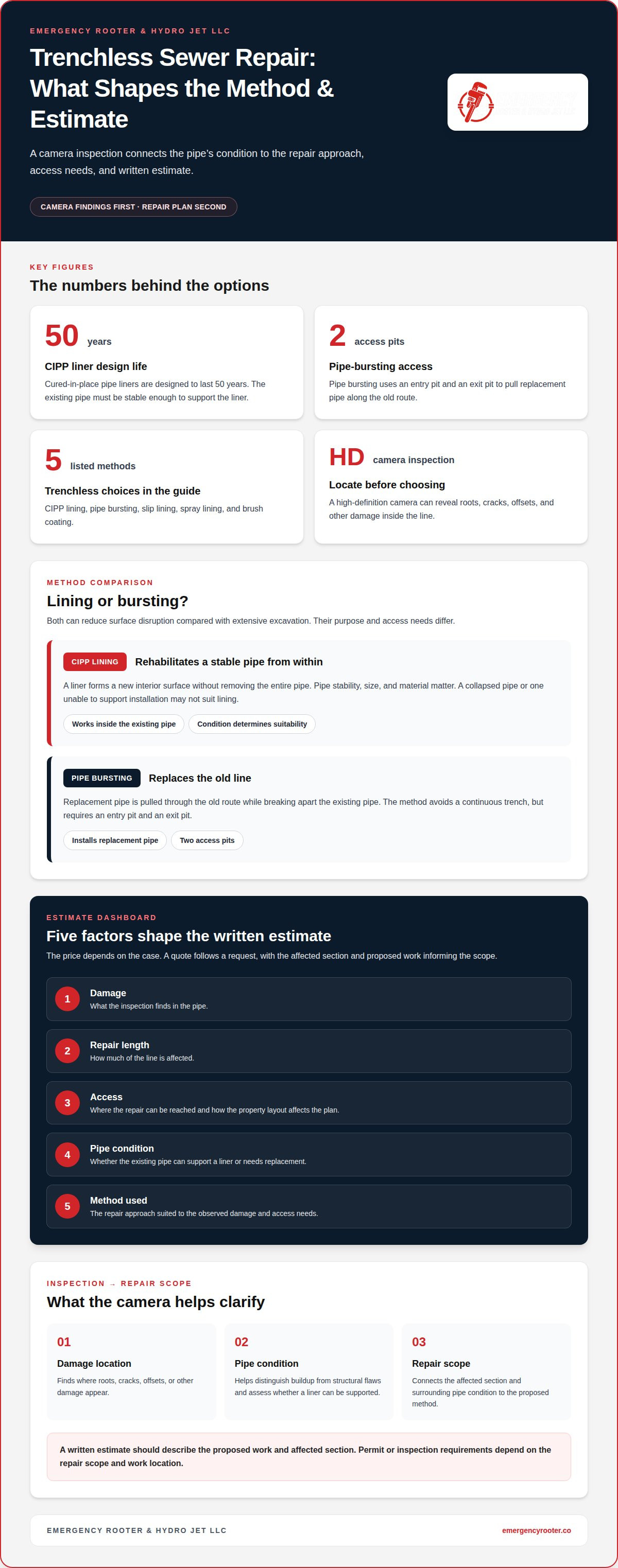
Pipe bursting replaces the old line rather than placing a liner inside it. The method pulls replacement pipe through the old route while breaking apart the existing pipe. It requires two access pits, an entry pit and an exit pit. This avoids a continuous trench but still requires excavation at both ends.
Lining rehabilitates a stable pipe from within; bursting installs a replacement. The existing pipe’s condition helps determine which method fits. A line that can support a liner may be a candidate for CIPP, while pipe bursting replaces the old pipe. Both methods can reduce surface disturbance compared with extensive excavation, but their access needs differ.
For example, if a sewer line runs beneath a driveway, the access locations matter to the repair plan. The damaged pipe’s length, route, and condition also shape the method. These findings help match the repair choice to the problem.
Camera-Based Damage Location
A high-definition sewer camera inspection shows the inside of the line before a repair is recommended. It can identify root intrusion, cracks, offsets, and other sewer damage. The camera helps locate the affected area instead of treating every slow drain as evidence of main-line failure.
Scale and debris can obstruct the camera’s view or restrict flow. Inspection findings help distinguish buildup from structural flaws and guide the next step. The assessment clarifies where damage appears and whether lining or replacement better suits the observed condition.
Use the findings to understand the repair scope: the damaged location, the surrounding pipe condition, and whether a liner can be supported. This information helps avoid unnecessary excavation and connects the method to the problem beneath your property.
How much does trenchless sewer repair cost in Beverly Hills?
Trenchless sewer repair costs depend on the damaged section, repair length, access, pipe condition, and method. The price depends on the case and is provided after a quote request, with these factors shaping the estimate.
In Beverly Hills and other Los Angeles-area cities, trenchless work starts by identifying the line’s condition and the repair needed. The city alone doesn’t determine whether a method suits the property.
Relining Sewer and Drain Pipes
Relining places a liner inside an existing sewer or drain pipe instead of replacing the full line through a long trench. Cured-in-place pipe lining is one option; slip lining, spray lining, and brush coating are other trenchless methods. Camera findings, pipe stability, material, size, and access help determine whether relining fits the job. A written estimate should connect the proposed work to the affected section and its condition.
Permits, Inspections, and Repair Responsibility
Do permits or inspections apply? Requirements depend on the repair scope and the work location in Beverly Hills. A repair estimate should describe the proposed work and identify any permit or inspection steps that apply to the project.
Who handles a private-property line? Responsibility depends on where the damaged section sits and the property’s service boundaries. A camera inspection can locate the affected section, and the repair scope should clarify which part of the line the work covers.
Financial Options, Risks, and Warranties
Are rebates or financing available? They depend on program eligibility and the project. Keep any financing terms, rebate conditions, and repair charges separate in the written paperwork.
What risks or limits apply? Trenchless repair doesn’t suit every pipe condition. A liner needs a stable pipe, and access needs vary by method. Ask for warranty terms in writing, including what work they cover and any stated limits.
Across Los Angeles-area cities, a sewer line may be considered for trenchless repair when inspection shows the method can address the damage. Camera findings help distinguish a line that can be relined from one needing replacement. Pipe bursting is another option; it replaces the pipe and requires two access pits. The property layout and pipe condition affect which method is practical.
Which methods are available? Trenchless choices include cured-in-place lining, pipe bursting, slip lining, spray lining, and brush coating. The right option depends on the pipe, damage, and access.
How can homeowners verify a contractor’s license and insurance? Review the contractor’s license and insurance documents, and make sure the written estimate identifies the business performing the repair. Match the proposed method and scope to the inspection findings before approving the work.
How Deep Are Sewer Lines Buried?
Sewer lines are typically buried 12 to 24 inches below the ground, but depth varies with local codes, soil conditions, and climate. In Beverly Hills, the actual line depth and route matter more than a typical measurement when locating damage or planning excavation.
Sewer trenches can range from a few feet to several feet deep, depending on soil, local building codes, and the existing sewer-line depth. That variation affects how crews reach a damaged section. Surface symptoms can’t show the pipe’s exact depth or condition; an inspection helps locate the problem before repair planning.
Watch for patterns that may point to a main sewer line problem. Multiple drains backing up, slow drains throughout the house, sewage odors, soggy lawn patches, and gurgling toilets are all warning signs. One slow sink may involve a local drain, but trouble across several fixtures can indicate a shared line problem. An inspection helps distinguish between these possibilities.
Notice where symptoms appear and whether they happen together. For example, a gurgling toilet alongside slow drains in several rooms is more concerning than one isolated fixture. Sewage odors or a persistently soggy lawn patch offer further clues. These signs don’t reveal the cause on their own, but they help describe the problem during an inspection appointment.
Common causes include cracks, collapse, corrosion, tree-root intrusion, ground movement, aging materials, and years of use. Roots can enter through a damaged joint, while ground movement can stress a buried section. Corrosion and aging materials can weaken the pipe over time. Each cause can create different problems, so the repair plan depends on the line’s observed condition and location.
Burial depth also affects access choices. A shallow line may still run beneath a driveway, patio, or established landscaping, while a deeper section may require different access planning. Traditional excavation exposes the pipe directly, but trench depth and route depend on the line’s position and surrounding conditions. Trenchless repair can reduce surface disruption, though inspection must first show whether the pipe suits that method.
For Beverly Hills properties, treat warning signs as a reason to arrange an inspection, not as a diagnosis. Describe which drains are affected, when backups occur, and whether odors or lawn changes are present. These details help narrow down the location and guide the next step. In the Los Angeles area, addressing suspected sewer line problems early can help prevent major backups and property damage.
Sewer camera inspections and written estimates
A sewer camera inspection connects visible symptoms to the condition of the existing line. Its findings guide the repair method and written estimate.
Camera Inspection and Diagnosis
A high-definition camera travels through the sewer line to show its interior. The inspection can identify root intrusion, cracks, offsets, and other damage before a repair is recommended. It also helps distinguish a damaged section from a problem limited to buildup or debris. That distinction matters: clearing a blockage and repairing a broken pipe address different problems.
Inspection findings help establish where damage appears and what the next step should address. For example, an offset or crack can indicate structural damage, while visible roots can show intrusion. The camera view supports a decision about lining, pipe bursting, or another repair approach. It doesn’t make every method suitable for every existing pipe.
For a Beverly Hills property, the sewer line’s route matters too. A line beneath a driveway or landscaping can make excavation more disruptive. Camera findings help focus the proposed work on the affected section instead of treating the whole property as the problem. During an emergency backup, inspection can help clarify whether damage or obstruction is involved.
Written Estimate Details
A useful written estimate connects inspection findings to the proposed work. It should identify the affected section, describe the repair method, and explain what the work includes. For example, an estimate for lining should distinguish pipe rehabilitation from replacement. A clear scope makes it easier to understand how the diagnosis leads to the proposed repair.
The estimate should also explain which factors shape the work, such as pipe condition, repair length, access, and the selected method. If a driveway or landscaped area affects access, the written scope should make that constraint clear. This gives homeowners a practical basis for understanding the likely disruption and planned work.
The price depends on the case and is provided after a quote request. The affected pipe’s condition, repair length, access, and required method shape the estimate. A camera inspection provides information for that decision; it does not, by itself, set the price. Read the proposed scope alongside the findings to ensure the repair addresses the observed damage.
Before approving work, compare the inspection explanation with the estimate’s stated scope. Confirm that the damaged location and proposed method match, and note any work listed separately. An unusual obstruction or a change in the pipe’s condition can affect the repair plan. A clear written estimate gives you a defined scope to discuss before work starts.
Residential and commercial sewer services
Trenchless sewer work can address both residential and commercial lines, but each project starts with the pipe’s condition and route. A Beverly Hills project replaced approximately 300 feet of damaged sewer line using pipe-bursting technology. It also rehabilitated an additional 76 feet with a cured-in-place pipe liner. Those figures show how replacement and lining can serve different sections within one project.
For a homeowner, the affected line may run beneath a yard, driveway, or landscaping. For a commercial property, a sewer line may serve spaces used by multiple occupants. In either case, the repair plan needs to identify the damaged section and method before work begins. Lining rehabilitates the existing pipe from inside; pipe bursting replaces it along its route. The observed pipe condition helps distinguish between them.
That Beverly Hills project was camera-inspected and flow-tested after installation. These checks assess the completed work and confirm that water moves through the repaired line. They also provide a clear closeout step for owners managing a residence or business property. Ask for the work scope to identify which sections were lined, which were replaced, and what post-installation checks were completed.
Schedule and access also matter. Trenchless sewer projects in Beverly Hills can often be completed within one or two days, depending on pipe condition, repair length, and method. A longer line or more complex damage can change the work involved. For a business, planning around the repair route and affected areas helps owners understand potential disruption. For a residence, access-point locations show where surface work may occur.
Restoration needs depend on how the repair reaches the line. Trenchless methods use small access points rather than a continuous trench, which can limit surface disturbance. Pipe bursting still requires an entry pit and an exit pit. For residential and commercial owners, the practical takeaway is to connect each proposed method to the pipe section, access needs, and final checks. This makes the repair scope easier to understand before work starts.
Emergency Rooter & Hydro Jet: Sewer Line Repair
Emergency Rooter & Hydro Jet LLC provides sewer line repair when a damaged line needs attention. If several drains back up or sewage odors appear, describe the affected fixtures and symptoms when you contact the team. Those details help direct the service to the problem.
Not every sewer issue calls for the same work. Rooter Service and Drain Cleaning address drain problems, while Hydro Jet Cleaning is another option. When inspection findings point to damage in the sewer line, sewer line repair is the relevant next step. The method depends on the pipe’s condition and repair scope.
For a recurring backup or suspected sewer line damage in Beverly Hills, contact Emergency Rooter & Hydro Jet LLC to discuss the problem and next steps.
Move Forward With a Clear Repair Plan
For sewer repair without digging up your yard in Beverly Hills, the next step is to connect the observed problem to a defined repair scope. A clear plan gives you a practical basis for deciding how to proceed and what work addresses the sewer line.
Emergency Rooter & Hydro Jet LLC provides Sewer Line Repair. For related drain problems, its services include Rooter Service, Hydro Jet Cleaning, and Drain Cleaning. The right service depends on the problem being addressed, whether it’s a damaged sewer line or a drain blockage.
If you’re ready to discuss the sewer problem and possible next steps, contact Emergency Rooter & Hydro Jet LLC. A focused conversation can help you move from uncertainty toward a workable plan for your property.
Take the next step with confidence, keeping your property’s needs at the center of the decision.
Frequently Asked Questions
Why choose trenchless sewer repair instead of traditional excavation?
Trenchless repair can address underground pipe damage without a continuous trench across the property. That can reduce disturbance to surfaces above the sewer line, including paved areas. The tradeoff is that the pipe must suit the selected method, and pipe bursting still needs entry and exit pits. A camera inspection helps match the repair approach to the damage instead of choosing based only on surface symptoms.
Can trenchless sewer repair protect my landscaping and driveway?
Trenchless repair can limit disturbance by using small access points rather than exposing the full sewer route. That can matter when a line passes beneath a driveway, lawn, or established landscaping. Pipe bursting still requires two access pits, so it isn’t excavation-free. The pipe and access-point locations determine where surface work occurs. Ask for those locations to be shown in the proposed work scope.
How do I know if I need a sewer camera inspection?
Arrange an inspection when backups affect several fixtures, drains stay slow throughout the house, or sewage odors appear. A camera is especially useful when the cause isn’t clear from one fixture. It shows the pipe interior and can help distinguish an obstruction from damage such as a crack or offset. Share which drains are affected and when symptoms occur to help focus the diagnosis.
How is sewer relining done?
Sewer relining places a liner inside an existing pipe to create a renewed inner surface. First, the pipe is inspected to locate damage and assess whether it can support the liner. The line is prepared for installation, and the liner is then inserted and cured in place. This method treats the pipe from within rather than replacing the entire line along its route.
How long do results from trenchless pipelining last?
Cured-in-place liners and burst-in replacement pipes are designed to last 50 years. That figure describes the intended service life of those materials, not a warranty term. The completed work should be assessed against the inspection findings and the repair scope. Keep the written work details and any warranty terms together, so you can refer to what was installed and what the paperwork covers.
What factors affect the cost of trenchless sewer repair in Beverly Hills?
The estimate reflects the damaged section, repair length, pipe condition, access, and method. For example, a longer affected stretch or difficult access can change the work required. The estimate should explain the proposed scope and distinguish lining from replacement. Review the included preparation and completion checks, too. These details help you understand what the quote covers without comparing unlike repair plans.
How long does trenchless sewer repair take, and what are the steps?
Many trenchless repairs take 1-2 days, while the specific project depends on pipe condition, repair length, and method. Work generally begins with a camera inspection to locate the damage. The selected method is then installed through its required access points. After installation, camera inspection and flow testing can assess the completed work. The written scope sets out the planned sequence for the property.
What signs indicate a sewer line needs trenchless repair?
Multiple drains backing up, slow drains throughout the home, sewage odors, soggy lawn patches, and gurgling toilets can signal a main sewer line problem. These symptoms call for diagnosis, not automatically trenchless work. A camera inspection identifies conditions such as cracks, root intrusion, or offsets. The pipe’s condition then determines whether lining, bursting, or another repair approach fits.


