
Pipe bursting sewer replacement in Santa Monica can replace some damaged lines without digging a continuous trench, but it isn’t right for every sewer. The method breaks apart the old pipe while pulling a replacement through its route. Access excavations are still required, and the pipe’s condition and surroundings help determine whether this approach fits.
A failing sewer doesn’t always mean a long trench across a yard, driveway, or paved area. But choosing a trenchless method takes more than spotting roots or an aging pipe. A camera inspection shows what’s happening inside the line, while route locating helps map what lies around it.
Learn how pipe bursting works, when it may address root intrusion and aging pipes, and what can rule it out. This guide also explains how inspections and route locating inform the decision, how pipe bursting compares with open-trench replacement, and what to do when a sewer line needs repair.
Key Takeaways
- Pipe bursting can replace a damaged sewer line without a continuous trench, but access excavations are still needed and site conditions matter.
- A camera inspection reveals the pipe’s condition; route locating helps identify nearby obstacles that can affect the replacement path.
- Root damage and aging pipes may make replacement worth considering, but the right method depends on what inspection reveals.
- Compare trenchless and open-trench replacement by looking at access needs, surface disruption, and the condition and route of the existing line.
- When a sewer line needs repair, learn how Emergency Rooter & Hydro Jet’s sewer line repair can address the problem and what information helps guide the next step.
Can every sewer line be repaired without digging?
No. Pipe bursting replaces a damaged sewer line along its existing route, but it still requires access excavations. The route, pipe condition, surrounding soil, and nearby construction all help determine whether trenchless work is suitable.
Trenchless Repair Services
Pipe bursting breaks apart the old pipe as equipment pulls a replacement through its path. It may suit a sewer lateral with a usable route and room for access pits at the necessary points. Other trenchless repairs work differently, so inspection findings must support the selected method. Consider the damaged section, access requirements, and surface areas the work may affect.
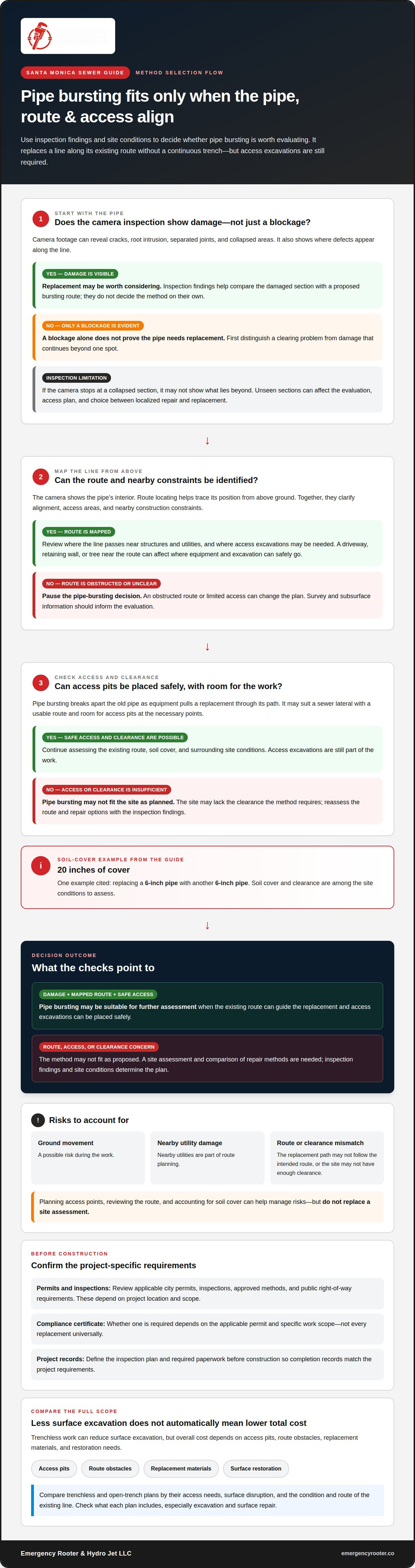
Before construction, review the Santa Monica project for applicable city permits, inspections, approved methods, and public right-of-way requirements. These depend on the project location and scope. The inspection plan should also clarify what needs review during construction and after the replacement is complete.
Inspection requirements are part of sewer-lateral planning. Whether a compliance certificate is required depends on the applicable permit and specific work scope, rather than being a universal step for every replacement. Define the required paperwork before construction so completion records match the project requirements.
Pipe bursting suits a line when the existing route can guide the replacement and access excavations can be placed safely. A camera inspection helps identify breaks, root intrusion, and sections that have collapsed. Route locating helps map nearby utilities and structures. Soil cover and clearance also matter; one example is 20 inches of cover when replacing a six-inch pipe with another six-inch pipe.
Risks include ground movement, damage to nearby utilities, and a replacement path that cannot follow the intended route. The site may also lack the clearance pipe bursting requires. Planning access points, reviewing the route, and accounting for soil cover help manage these risks, but don’t replace a site assessment.
Choose a sewer contractor by comparing the proposed method with inspection findings, the route, access points, and permit requirements. Review license details and confirm they cover sewer work. A clear scope should explain the replacement route, construction impacts, and inspection steps. Customer accounts are most useful when they describe comparable sewer-lateral work and its outcome.
Repair Savings and Lifespan Claims
Trenchless repair can reduce surface excavation, but that alone doesn’t show whether a project will cost less overall. Access pits, route obstacles, replacement materials, and restoration needs all affect the scope. Treat savings claims as project-specific, and compare what each plan includes, especially excavation and surface repair.
Lifespan claims need context, too. Replacement material, installation quality, ground conditions, and ongoing care influence how long a line performs. Don’t treat a general lifespan estimate as a promise for a specific property. For water line repair or replacement, the same practical questions apply: identify the damaged section, map the route, and match the work to the site.
Rebates and financial assistance aren’t automatic. Eligibility and covered work depend on each program’s rules, so don’t subtract possible assistance from a sewer-replacement budget before confirming the project qualifies. For a sewer lateral, gather the proposed scope and property details before applying.
Customer experiences can show whether construction access, communication, and cleanup matched expectations. Look for accounts that describe the actual repair method and comparable site conditions. A story about clearing a blockage, for example, doesn’t show how a full sewer-line replacement performed.
Camera inspection and route locating
A camera inspection shows the sewer line’s interior condition before a replacement method is selected. The camera moves through an accessible section and records changes along the pipe. Cracks, root intrusion, separated joints, and collapsed areas can point to different repair needs. A blockage alone doesn’t prove the pipe needs replacement. The footage helps distinguish a clearing problem from damage that continues beyond one spot.
The inspection also shows where the line changes direction and where defects appear. A contractor can use that information to compare the damaged section with the proposed bursting route. For example, if a camera stops at a collapsed section, it may not show what lies beyond. That limitation matters: unseen sections can affect the evaluation, access plan, and choice between localized repair and replacement.
Route locating adds information a camera cannot provide. The camera travels inside the sewer; locating equipment helps trace the pipe’s position from above ground. Together, these steps clarify the pipe’s alignment and nearby construction constraints. Survey and subsurface information should inform the pipe-bursting decision, since an obstructed route or limited access can change the plan.
For a Santa Monica property, a useful evaluation connects camera footage to a marked route and specific work areas. The contractor can identify where access excavations may be needed, where the line passes near structures, and whether there is room for the proposed replacement work. Nearby utilities and surface features matter, too. A driveway, retaining wall, or tree near the route can affect where equipment and excavation can safely go.
Camera footage and route marks answer different questions: footage shows the pipe’s condition, while locating shows where it runs. Neither replaces the other. Review the findings together, including any section the camera could not pass, and match the repair plan to the visible damage and mapped route. This helps distinguish a root blockage from a failed pipe and avoid overlooking structural damage behind an obstruction.
Before construction, the contractor should use the inspection and subsurface findings to define the work area, access points, and replacement path. If the evidence shows structural failure rather than a removable obstruction, sewer line repair is the relevant next step. A clear evaluation keeps the decision grounded in the condition of the line and the constraints along its route.
How pipe bursting replaces existing sewer and water lines
Pipe bursting replaces a damaged line by breaking apart the old pipe and pulling a new pipe through its route. It differs from lining, which works inside the existing pipe rather than pulling a replacement through the route. Bursting requires access excavations, so “trenchless” means less continuous trenching, not no digging.
The work follows a planned sequence. The contractor prepares access points, connects the replacement pipe to the bursting equipment, and pulls it through the existing line. As the bursting head moves, it fractures the old pipe and makes room for the replacement. Route conditions, clearance, and the selected pipe size shape the plan before construction begins.
A project example shows the basic relationship: a 500-foot existing utility pipe can be replaced with a 500-foot fused polyethylene pipe pulled into place. The route remains the guide, but the new pipe becomes the functioning line. The footage describes the example, not a promise that every site has the same length or layout.
Pipe bursting can allow a replacement to be one to two sizes larger than the original pipe, subject to local clearances and regulations. For example, a six-inch pipe may be upgraded to an eight-inch or 10-inch pipe when the site allows. The larger size must fit the route without creating conflicts with nearby utilities, structures, or ground conditions.
Soil cover matters during upsizing. Contractors should provide 10 inches of soil cover for every inch of pipe upsize to help avoid ground heave. That requirement affects the route evaluation and the choice of replacement size. A larger pipe is not automatically the better choice if available cover or clearance cannot support it.
Service continuity is another project consideration. If bursting would interrupt sewer or water service for residents or businesses, a temporary bypass line can carry service around the work area while the damaged pipe is replaced. This matters for both sewer and water projects, where construction could otherwise disrupt normal use.
Pipe bursting isn’t the same as clearing an obstruction. It replaces the existing line along a route, with the specific work guided by the pipe’s condition and the site evaluation. In Santa Monica, review the project for applicable city permits, inspections, approved methods, and public right-of-way requirements before construction. These checks help align the replacement method, access work, and route with site conditions.
Root intrusion and older pipe materials
Tree roots can enter a sewer line through an opening at a joint or damaged section. Once inside, they can catch waste and restrict flow. A camera inspection helps locate the entry point and show whether the surrounding pipe is cracked, displaced, or intact. The distinction matters: removing roots doesn’t repair a damaged pipe.
For example, a line that repeatedly blocks near the same joint needs more than another temporary clearing. An inspection can show whether roots entered through one opening or whether damage extends along the line. That evidence helps distinguish a blockage from a replacement need and identify which sections require attention before construction planning begins.
Evaluate older pipe materials based on their condition. Age alone doesn’t show whether a sewer line can remain in service. Camera footage can reveal visible corrosion, cracks, open joints, and deformation. The route and surrounding conditions then help determine whether pipe bursting fits. A sound section beside one damaged joint presents a different problem from a line damaged along its route.
Pipe bursting breaks apart the old line as it replaces it along the route. That differs from clearing roots, which removes the obstruction but leaves the pipe that allowed the roots to enter. If roots have exploited a failed joint, replacement can address the damaged section rather than leave that opening in service. The route and access plan still need to support the work.
After root removal, a follow-up camera pass can show whether the pipe wall and joints remain intact. For instance, a clear view may reveal a crack that roots previously obscured. Recording the defect’s location and condition gives the contractor a practical basis for choosing between continued maintenance and replacement, and helps define the work area.
In California, recurring backups need prompt attention when accompanied by visible sewage, persistent odors, or wastewater appearing where it shouldn’t. These signs point to an active plumbing problem, not simply a question about pipe age. Focus the inspection findings on the source, affected section, and route so the repair plan addresses the actual failure.
Root intrusion can return if the entry point remains open. A repair plan should match the observed defect, not just the symptoms of a blockage. If the camera shows one isolated damaged area, work can focus there; if it shows repeated failures along the line, evaluate broader replacement. Site access, nearby construction, and pipe condition all shape the decision.
How does pipe bursting compare with traditional open-trench sewer replacement?
Both methods replace a sewer line, but they reach it differently. Open-trench replacement exposes the pipe along the work area. Pipe bursting uses access excavations to replace the line along its existing route. This difference can affect how much of a yard, driveway, or paved area construction disturbs.
Open-cut installation typically uses 20-foot-long pipe segments joined with gasketed ends. The trench exposes the route so crews can remove the old pipe and place the new sections. This gives direct access to the line, including its bedding and connections. The tradeoff is excavation along the installation path, followed by work to restore surfaces affected by digging.
Pipe bursting breaks the old pipe while pulling a replacement along its route. It requires access excavations, but not a continuous trench along the full line. This can reduce the length of surface opened for construction. For a route beneath pavement, the difference between access pits and an exposed trench can shape the project’s surface impact.
Timeframes also differ. Projects using pipe bursting can be completed up to 4.5 times quicker than projects using methods such as open-cut installation. That is an upper comparison, not a set schedule for every sewer replacement. Access needs, route conditions, pipe damage, and construction requirements influence the work involved.
Neither method suits every site. Open trenching gives crews direct access where they need to expose or adjust the line. Pipe bursting needs a route that can accommodate the replacement pipe and equipment access points. Nearby utilities, structures, and available clearance all factor into the choice. A camera inspection and route evaluation connect the pipe’s condition with a practical construction plan.
Compare project scopes, not just method labels. One proposal may include surface restoration or access work that another lists separately. Ask how each plan addresses the existing line, replacement route, access points, and any interruption to sewer service. If pipe bursting interrupts service, a temporary bypass line should maintain service for residents or businesses affected by the work.
For a sewer line that needs replacement, the key decision is whether the route and site support trenchless work or require open excavation. A clear scope should explain why the selected method fits the line and property. Arrange sewer line repair when damage calls for a replacement plan, not another temporary clearing.
Emergency Rooter & Hydro Jet: Sewer Line Repair
Emergency Rooter & Hydro Jet provides sewer line repair when inspection findings show damage that clearing alone won’t address. Recurring backups, a visible pipe break, or a root-damaged section may call for a closer evaluation and a repair plan matched to the line’s condition.
Rooter Service, Hydro Jet Cleaning, and Drain Cleaning address blockages and buildup. When a camera inspection shows structural damage, sewer line repair is the relevant next step. The findings help distinguish a blockage, a damaged section, or a larger line problem, focusing the work on the cause instead of treating the same symptom again.
Share what you’ve noticed, such as repeated backups or where wastewater appears. Contact Emergency Rooter & Hydro Jet to discuss your sewer line repair needs.
Choose the next step for your sewer line
Make the inspection findings the starting point for your decision. Keep the camera record, marked route, and proposed scope together to clearly discuss what needs repair and what the work will involve. For pipe bursting sewer replacement in Santa Monica, match the method to the actual condition of your line rather than choosing by label alone.
If the evidence points to a blockage rather than structural failure, Rooter Service, Hydro Jet Cleaning, or Drain Cleaning may address the immediate problem. If the pipe itself is damaged, focus on sewer line repair and a plan that fits the property. The right approach depends on the line’s condition and the site. Emergency Rooter & Hydro Jet LLC can help you consider the next step. Contact Emergency Rooter & Hydro Jet LLC to discuss your sewer concern and move forward with a clearer plan.
Frequently Asked Questions
How long will I be unable to use water?
The work plan determines whether water use or sewer service needs to pause. A sewer-only replacement can affect wastewater flow without requiring a household water shutoff. If work interrupts sewer or water service, a temporary bypass line can maintain service around the construction area. Before work starts, clarify which connections are affected, how the bypass will work, and when normal use can resume.
Is hydro jetting an alternative to replacement?
Hydro jetting can clear buildup and obstructions, but it doesn’t replace a structurally damaged sewer pipe. For example, a grease blockage may respond to cleaning, while a cracked or collapsed section needs a repair plan. Camera findings help distinguish the two. Hydro Jet Cleaning suits removable material inside the line, not a failed pipe wall or joint.
What affects sewer line replacement cost?
Project scope depends on the line’s depth, pipe material, and extent of damage. Access pits, route conditions, and the amount of surface restoration can also affect the work. A short damaged section differs from a longer replacement with difficult access. Compare written scopes by checking what each includes, particularly excavation, replacement work, bypass arrangements, and restoration.
What is pipe bursting?
Pipe bursting fractures the existing line while drawing a new pipe through its route. It may suit a line with a usable path and room for the necessary access work. The key distinction for property owners is that this method replaces the pipe rather than simply clearing material from inside it. Route and site conditions guide whether it fits.
Will trenchless repair permanently stop tree roots?
Replacing a root-damaged section removes that pipe from service, but no method can promise roots will never enter elsewhere. Roots can exploit another opening or defect along the sewer route. A post-work camera inspection can document the repaired section and show visible problems in accessible portions. If roots return, identifying their entry point matters more than repeatedly clearing the same blockage.
What is pipe bursting sewer replacement and how does it work?
Pipe bursting sewer replacement in Santa Monica uses a bursting head to break the old sewer pipe as equipment pulls a replacement into place. The crew needs access points to connect and guide the equipment. The method follows the existing route, so clearance and nearby utilities matter. Camera footage and a mapped route help define where the work can proceed.
How much does pipe bursting sewer replacement cost in Santa Monica, CA?
There isn’t one fixed price for every Santa Monica property. The project cost depends on pipe depth and material, how much of the line is damaged, access requirements, and site conditions. The scope determines the quote. To discuss a project-specific estimate, call Emergency Rooter & Hydro Jet LLC at (310) 889-7979.
What factors affect the cost of sewer pipe bursting in Santa Monica?
For pipe bursting in Santa Monica, key project factors include route length, depth, pipe material, damage extent, and required construction access. Nearby utilities or limited clearance can change the work plan. Surface restoration and any temporary bypass work also affect scope. When requesting a quote, describe the symptoms and share inspection findings if available so the estimate reflects the actual project.


