

A full sewer-line excavation isn’t the only option. For homeowners considering alternatives to sewer line replacement in Santa Monica, pipe lining may repair a damaged line from the inside, while a targeted lateral repair can address a localized problem. The right choice depends on what an inspection reveals about the pipe and its layout.
It makes sense to seek a fix that resolves the sewer problem without disturbing more of your property than necessary. But lining isn’t suitable for every damaged pipe, and excavation may be more appropriate when deterioration is widespread or the line has severe offsets.
This guide explains how pipe lining works, when a focused lateral repair may fit, and how both compare with excavation. You’ll learn how a camera inspection can reveal cracks, blockages, and other trouble spots, and why access, pipe condition, and the surrounding site matter when choosing a repair approach.
Key Takeaways
- Pipe lining can repair a sewer line from the inside, while targeted lateral work may suit damage limited to one area.
- A camera inspection helps locate cracks, blockages, and other trouble spots before a repair method is chosen.
- Pipe condition, access, and site layout help determine whether a trenchless method or excavation is the better fit.
- Permits, utility easements, and the work area can affect how a sewer repair is planned in Santa Monica.
- Older clay or cast-iron pipes can face distinct problems, including root intrusion and corrosion, that shape the repair decision.
Lateral cleaning, repair, and replacement
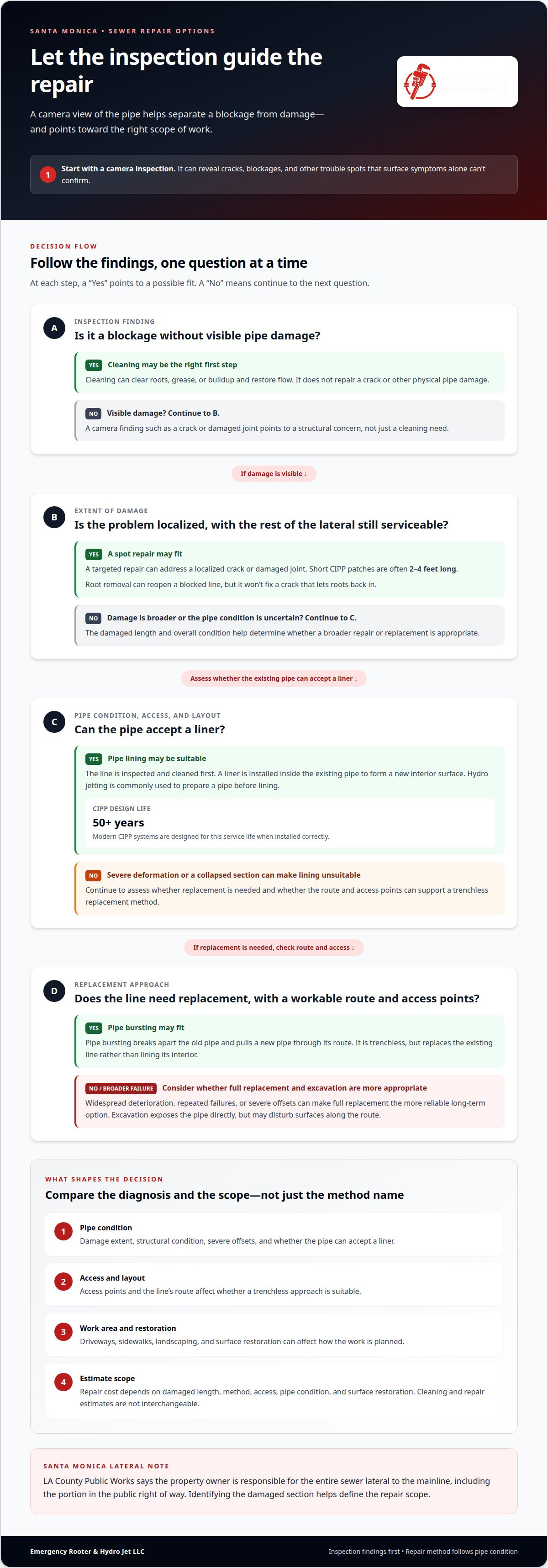
For a Santa Monica sewer lateral, cleaning can clear a blockage, while repair or replacement addresses physical pipe damage. Inspection findings, the location of the damage, and the pipe’s condition help determine the right scope of work.
Spot Repairs and Pipe Replacement
A spot repair can address a localized crack or damaged joint when the rest of the lateral remains serviceable. Short CIPP patches are often 2-4 feet long. Root removal can reopen a blocked line, but it doesn’t repair a crack that lets roots back in. Cleaning and repairs solve different problems.
Widespread deterioration, repeated failures, or severe offsets can make full replacement the more reliable long-term option. In Los Angeles County, LA County Public Works says the property owner is responsible for the entire sewer lateral to the mainline, including the portion in the public right of way. That responsibility makes it important to identify the damaged section.
Trenchless Repair and Pipe Lining
Trenchless sewer repair works underground without digging up the entire route. For lining, the line is inspected and cleaned first. Hydro jetting uses high-pressure water to clear roots, grease, and buildup, and is commonly used to prepare a pipe before lining. A liner is then installed inside the existing pipe to form a new interior surface.
Modern CIPP systems are designed for a service life of 50+ years when installed correctly. But lining depends on pipe condition, access points, and layout. Severe deformation or a collapsed section can make a liner unsuitable. The inspection must show whether the line can accept the lining installation.
Repair Costs and Contractor Estimates
There is no single cost for sewer repairs in Santa Monica. The total depends on the damaged length, repair method, access, pipe condition, and any surface restoration. A quote request is followed by a case-specific price. Don’t treat a cleaning estimate as a repair estimate: clearing roots won’t restore a cracked pipe.
To compare estimates, match the diagnosis and scope. Note the repair location, proposed method, access work, and restoration included. Estimates based on different damage findings or work scopes aren’t directly comparable. A camera inspection helps connect recommended repairs to visible trouble spots instead of leaving a replacement plan unexplained.
Pipe Bursting Compared With Sewer Lining
Pipe bursting replaces an existing line underground by breaking apart the old pipe and pulling a new pipe through its route. Sewer lining leaves the existing pipe in place and installs a new inner layer. Both are trenchless methods, but they address the pipe differently.
Pipe bursting may suit a line that needs replacement but has a workable route and access points. Lining may suit a pipe that can hold a liner and doesn’t have severe structural damage. In Santa Monica, the pipe’s condition and layout determine which approach fits. Widespread deterioration or severe offsets may call for full replacement instead.
Sewer line damage symptoms and camera inspection
Problems with several fixtures or recurring backups can point to a shared sewer-line issue. A camera inspection helps locate the trouble before repair work begins.
Recognizing Sewer Line Damage
Look for a cluster of symptoms, not just one slow drain. If a toilet backs up while a nearby shower or sink drains poorly, the shared sewer line may be involved. A problem with a single fixture can have a different cause, so the number of affected fixtures helps narrow the diagnosis.
Recurring backups deserve attention, especially when clearing a drain provides only temporary relief. Note which fixtures are affected and when the problem occurs. These details help technicians distinguish a line-wide issue from a blockage closer to one drain and direct the camera inspection along the relevant sewer-line route.
Changes in the ground above a buried line can add context, but surface conditions alone don’t identify a pipe defect. A camera can reveal a blockage, crack, or other problem area. That visual evidence helps distinguish a cleaning need from damage that calls for repair.
Video Camera Inspection and Diagnosis
During a video camera inspection, a camera is sent into the sewer line to view its interior. The live image can show cracks, blockages, and other problem areas that aren’t visible from the surface. This moves diagnosis beyond symptoms and toward the pipe’s actual condition.
Technicians use the footage to locate trouble and identify the type of obstruction or damage. A blockage may call for cleaning; a visible crack points to a structural concern. The distinction matters: clearing debris restores flow, but it doesn’t repair a damaged pipe.
When several fixtures are affected by a possible main sewer-line problem, a camera inspection can help trace the shared issue. The findings also help determine whether the line is suitable for trenchless sewer repair. Pipe condition, access points, and layout all influence that decision, so the camera view is one part of the assessment.
A useful inspection connects the visible defect to a practical next step. For example, footage showing roots at a joint gives technicians a specific location to assess, while a blockage without visible pipe damage may call for cleaning first. If a sewer-line problem is affecting your home, sewer line repair can address damage identified through inspection.
Choosing trenchless methods versus excavation
Trenchless methods can repair or replace sewer lines underground without digging up a driveway, sidewalk, or landscaped area. Excavation exposes the pipe directly but may disturb surfaces along the route. In Santa Monica, the deciding factors are the pipe’s condition, access points, and layout, not simply a preference for less digging.
Pipe lining suits a line that can hold a new interior layer. The existing pipe stays in place, and the liner is installed inside it. This approach can limit surface disruption, but depends on the line’s shape and condition. A collapsed section or severe offset can prevent a liner from forming a sound path through the damaged area.
Trenchless sewer replacement may use pipe bursting. This process breaks apart the old pipe while drawing a replacement through its route. It can replace a damaged line underground, but needs suitable access points and a workable path. A tight layout or significant obstruction can affect whether the method suits the property.
Excavation makes the pipe accessible for direct repairs or replacement. That access can matter when deterioration is widespread, failures keep recurring, or severe offsets disrupt the line. These conditions can make full replacement the more reliable long-term choice. The tradeoff is digging, which may affect paving, landscaping, and other surface features above the sewer route.
Time on site can also shape the decision. Many residential trenchless sewer projects are completed in 1-2 days, while full excavation can take a week or more. These timelines show why trenchless work may appeal to homeowners seeking less disruption, but they don’t decide suitability. Pipe length, access, and site conditions still affect the work.
Before selecting a method, connect the repair plan to the actual defect shown by the inspection. Localized damage may need focused work; deterioration along the line may call for replacement. Then consider where access points can be placed and what sits above the pipe. For example, a route beneath a driveway makes surface disturbance an important planning factor.
For homeowners considering alternatives to sewer line replacement in Santa Monica, the key comparison is what each method can address. Trenchless lining preserves the existing pipe; bursting installs a replacement underground; excavation opens the route for direct access. Blockages or buildup alone may call for cleaning rather than structural work. Matching the method to the cause helps protect the property and its infrastructure.
Permits, environmental considerations, and utility easements
Sewer work in Santa Monica involves more than choosing a repair method. Permits, construction access, environmental standards, and the sewer route can affect planning. A pipe beneath landscaping, a sidewalk, or an easement may require a different work plan from a pipe with clear access.
Santa Monica sewer repairs involve permits, regulations, and environmental standards. A permit granted under Section 7.04.670 becomes void 60 days after it is issued. The City may extend it for no more than 60 days per extension. These time limits make permit timing relevant to construction planning, especially when work schedules shift.
Permit planning should reflect the proposed work and actual repair scope. A trenchless method and excavation can affect the surface differently, though both involve work on sewer infrastructure. The repair plan should account for the route, access points, and affected surfaces. Cleaning or jetting may be part of sewer work, but neither is a structural repair.
Utility easements matter because sewer laterals connect buildings to a mainline typically located in the street or a nearby easement. The route can cross areas that limit equipment access or surface work. A camera inspection helps identify the line’s condition and the problem location; mapping the route against driveways, sidewalks, and landscaping shows where construction access may be needed.
Environmental considerations also shape site planning in Santa Monica. Work near landscaped areas may require attention to soil disturbance, runoff, and the handling of removed material. The chosen method affects how much ground is opened, but trenchless work still needs access points. Excavation exposes more of the route directly, so surface restoration and site conditions form part of the plan.
Permit requirements depend on the location and scope of the proposed work. A repair in Santa Monica should account for the City’s permit process and the property’s conditions. For example, a lateral beneath a paved driveway presents different access needs from one beneath open landscaping. Consider the property layout, easement location, and repair method together.
Before construction begins, align the inspection findings, repair scope, access plan, and permit timing. A documented crack may call for a different work area than a blockage cleared by cleaning. Connecting these details helps owners understand why a repair plan includes particular access points, surface work, and permit steps.
Aging clay and cast-iron sewer pipes
Older Santa Monica homes and commercial buildings may still have original clay or cast-iron sewer pipes. Age alone doesn’t show whether a line needs replacement. A camera inspection can reveal cracks, separated joints, corrosion, or blockages, helping distinguish structural problems from buildup that affects wastewater flow.
Clay pipe sections connect at joints, where roots can enter cracks or gaps. Once inside, roots can catch debris and contribute to blockages or backups. Cleaning may restore flow, but won’t close a damaged joint. If roots return after clearing, the pipe condition and entry point need attention.
Cast iron can corrode, and Santa Monica’s salty air and high moisture levels can accelerate corrosion in metal sewer pipes. Corrosion can roughen the pipe’s interior and contribute to buildup. Grease and other debris may collect along rough areas, slowing drains. Cleaning can remove obstructions, but it doesn’t reverse corrosion or restore weakened pipe walls.
Distinguish a flow problem from pipe failure. A single slow drain may point to a local blockage, while repeated backups or problems across several fixtures can indicate trouble farther along the sewer line. Inspection footage can show whether the concern is grease, roots, a crack, or deterioration. That distinction guides the next step: clear the blockage, repair a localized defect, or consider replacement for widespread damage.
For an aging line, follow a practical sequence: inspect the pipe, identify its material and defect, then match the work to the damage. A sound section with one damaged joint may allow focused repair. A line with widespread deterioration, repeated failures, or severe offsets may need full replacement for a more reliable long-term outcome. Pipe condition, access, and layout also affect whether trenchless work is suitable.
Don’t treat repeated drain cleaning as a permanent fix when the same backup returns. Cleaning addresses debris; sewer line repair addresses pipe damage. For example, clearing roots from a clay lateral without addressing the cracked joint leaves the entry point in place. Inspection findings help show whether cleaning is enough or structural repair is needed.
If recurring backups or visible damage point to a failing lateral, arrange sewer line repair based on the pipe’s condition and the location of the defect.
Emergency Rooter & Hydro Jet: Sewer Line Repair
Emergency Rooter & Hydro Jet provides sewer line repair when an inspection points to pipe damage rather than a simple blockage. The findings help distinguish a need for structural repair from buildup that may respond to cleaning.
For roots, grease, or debris restricting flow, Rooter Service, Hydro Jet Cleaning, or Drain Cleaning can address the blockage. These services clear obstructions; they don’t replace repairs for a cracked or deteriorated pipe. When the line itself is damaged, sewer line repair addresses the structural problem and helps determine the appropriate next step.
If recurring backups or inspection findings raise concerns about your sewer line, contact Emergency Rooter & Hydro Jet to discuss repair options.
Make the Next Sewer Repair Decision With Confidence
For homeowners considering alternatives to sewer line replacement in Santa Monica, the next step is turning inspection findings into a clear work plan. Focus on the defect’s location and extent, the surrounding pipe’s condition, and how the repair area can be accessed. These details connect the proposed work to the actual problem, rather than choosing a method based only on how much disruption it might cause.
Before moving ahead, keep the decision focused: what needs fixing, which repair method addresses it, and what work the property will require. If the pipe is damaged, delaying a clear plan can leave the underlying issue unresolved. Emergency Rooter & Hydro Jet LLC can help with sewer line concerns and related drain problems.
Contact Emergency Rooter & Hydro Jet LLC to discuss the next step for your sewer line. A clear diagnosis gives you a practical starting point and helps you move forward with less uncertainty.
Frequently Asked Questions
What is pipe lining and is it right for my Santa Monica home?
Pipe lining creates a new interior surface inside an existing sewer pipe without replacing the entire route. It may suit a Santa Monica home when inspection shows the pipe can hold a liner and the damaged area is accessible. A collapsed section, severe offset, or widespread deterioration can rule it out. The key is whether the existing pipe’s shape and condition support lining across the affected area.
What alternatives to full sewer line replacement are available in Santa Monica?
Options include cleaning, localized spot repair, pipe lining, and pipe bursting. For Santa Monica homeowners, the practical choice depends on whether the issue is a blockage or physical damage. Cleaning can clear grease or roots, but won’t fix a cracked pipe. A limited defect may call for focused repair; broader work may suit lining or bursting if the pipe’s condition and layout allow.
How does trenchless sewer pipe lining work, and when is it suitable?
Trenchless sewer pipe lining installs a liner inside the existing pipe after the line is inspected and cleaned. It suits a pipe that remains open enough for installation and is in suitable condition. For example, a damaged section in an otherwise usable line may be a candidate. The route, access points, and severity of the damage help determine whether lining is practical.
How much do sewer line lining and pipe bursting cost in Santa Monica?
Lining and pipe bursting don’t have one fixed project price. The price depends on the sewer line’s depth, pipe material, extent of damage, access, and work required. Because the methods differ, estimates should identify the proposed approach and scope. The project price is provided after a quote request. Compare estimates by matching the repair area and included work, not just the method name.
How can a sewer camera inspection identify the right repair option?
A camera inspection shows the inside of the sewer line, helping distinguish a blockage from a structural defect. Footage may reveal debris that calls for cleaning or a crack that needs repair. The location and extent of visible damage help define the work area. Findings can also show whether the pipe’s condition and route suit a trenchless method or call for another approach.
How long do trenchless sewer repairs last, and what warranties are common?
Modern CIPP lining systems are designed for a service life of 50+ years when installed correctly. That figure describes the system’s intended service life, not warranty coverage. Warranty terms are set by the written agreement for the specific project. Review what the coverage applies to, its duration, and any stated conditions before work begins. Keep the inspection findings and repair documents with your home records.
What risks or limitations can make trenchless sewer repair unsuitable?
Trenchless repair may not suit a line with a collapsed section, severe offsets, or widespread deterioration. Lining also depends on the pipe’s condition, usable access points, and route layout. A liner cannot provide the right solution if the existing pipe cannot support installation through the damaged area. When these limits apply, direct excavation and replacement may better address the underlying failure.


