

A sewer odor in one room, then gone by morning? Where and when it appears can help narrow the source. If you’re dealing with a sewer smell in house Los Angeles, the cause may be a dry drain trap, a toilet seal, a blocked vent, or a sewer-line problem. An odor outside your home may point to a wider public sewer issue instead.
The smell is unpleasant, and guessing can lead to the wrong fix. Note which room smells, when the odor gets stronger, and whether drains are slow or toilets gurgle. You can safely run water into an infrequently used drain and look around the toilet for visible leaks. Don’t open sewer cleanouts or use harsh drain chemicals.
This guide covers common household and sewer-related causes, safe first checks, and signs it’s time to call a plumber. Persistent odors, especially when paired with slow drains, gurgling, or sewage backing up, need professional attention. If the odor seems to come from the street or a public area, report it to the appropriate city service rather than investigating the sewer system yourself.
Key Takeaways
- A sewer smell in house Los Angeles can come from a fixture, the plumbing system, or a sewer line. Odor alone can’t confirm a pipe failure.
- Match the odor to its location and timing. A smell limited to one fixture may have a different source from an odor noticed outdoors or beyond your property.
- A rarely used drain can lose the water barrier in its P-trap. Running water into it may help if there’s no visible damage or backup.
- Track nearby fixture use and note drainage changes or visible signs to give a plumber useful clues.
- When an odor persists or comes with drainage symptoms, a plumber can inspect the system and determine whether drain cleaning or sewer-line work is appropriate.
Sewer Smell in a Los Angeles House: What the Odor Can, and Cannot, Tell You
A sewage-like or sulfur-like odor indoors is hard to ignore. But smell alone can’t tell you whether a pipe has failed, whether the sewer line is breached, or even whether sewer gas is the source. A sewer smell in house Los Angeles residents notice may come from a household fixture or plumbing issue, while an outdoor odor may need a different response.
Sewer gas is a mixture of gases that can form as waste breaks down and may enter a building through plumbing openings or faults. The odor is a clue, not a diagnosis. The overview of sewer gas explains possible sources and entry points, but identifying what’s happening in a particular home takes more than recognizing a smell.
For a simple household check related to bathroom sewage odors, watch this video:
How to describe a sewer odor without diagnosing it
Start with what you can observe. Does the smell seem sewage-like, sulfur-like, or different? Is it constant or intermittent, or strongest after a sink, shower, or toilet is used? Note the room and nearest fixture. A bathroom drain may be close to the odor, but proximity alone doesn’t prove it’s the source.
Record whether the smell changes after water use or after a fixture has been unused for a while. These details help a plumber narrow the possibilities. Avoid labeling the problem a broken pipe or sewer-line breach before it’s inspected.
Household plumbing or public sewer odor?
Look at the pattern, not just the intensity. An odor limited to one room or fixture may point to a household plumbing source. If you also notice it outside, near the street, or beyond your property, a wider sewer odor is possible. Reports from nearby residents can add context, but they don’t confirm where the smell originates.
- Indoors near one fixture: Note the location, timing, and any change after water use. Contact a plumber if it persists or comes with drainage problems.
- Outdoors or across nearby properties: Record where and when you notice it. Report a possible public-sewer odor through the relevant Los Angeles Sanitation and Environment reporting channel.
These situations call for different responses. A plumber can inspect private household plumbing and sewer-line concerns. Los Angeles sanitation authorities handle reports about possible public sewer odors. Don’t enter a sewer area or open a public access cover to investigate. Use the odor’s pattern to choose a next step, not to declare the cause.
Common Causes of Sewer Smell Inside Los Angeles Homes
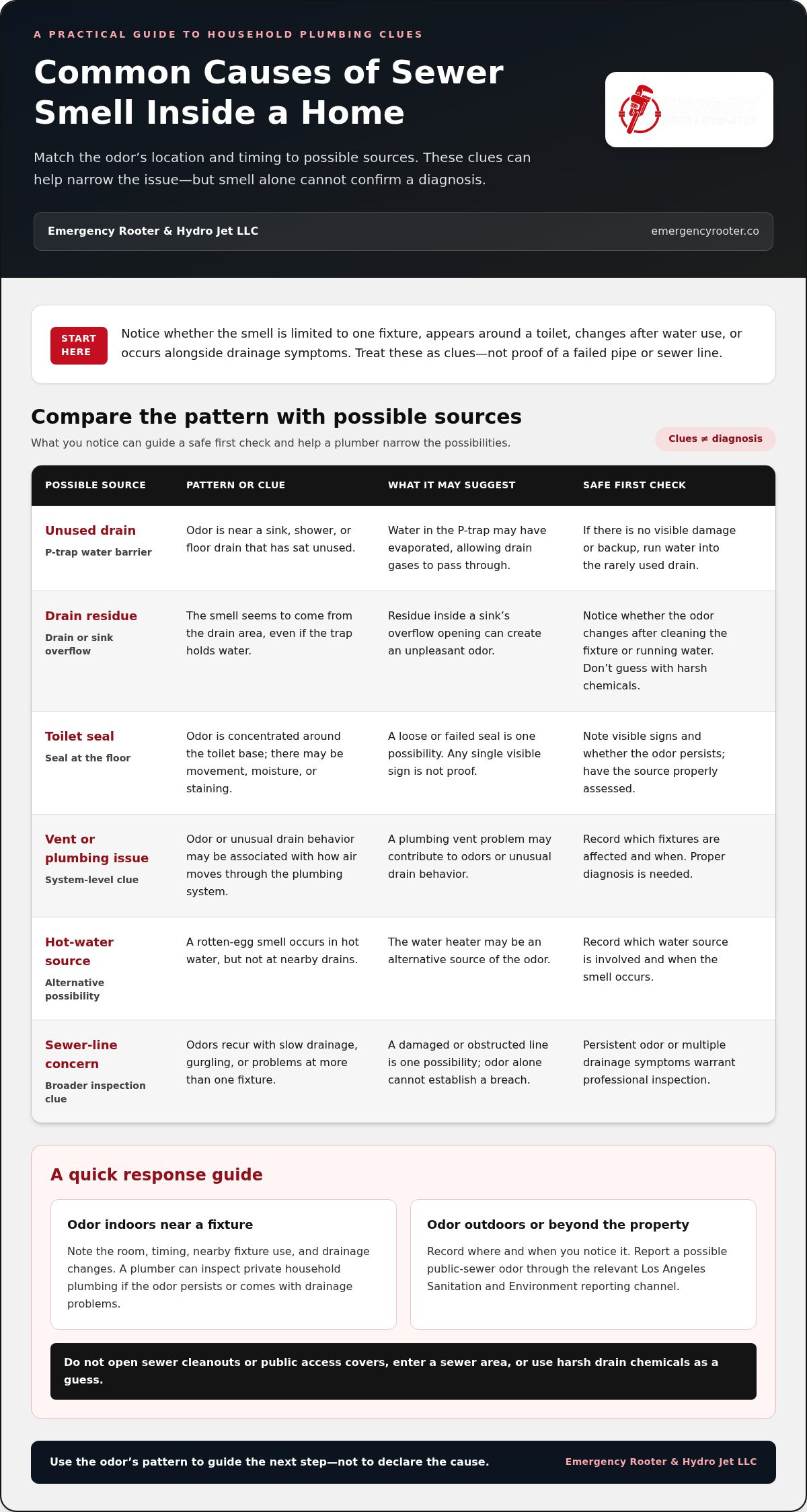
A sewer smell in house Los Angeles homeowners notice can come from a small fixture issue or a larger plumbing problem. Start with the pattern: is it one drain, one bathroom, water from a tap, or several fixtures acting up? These clues help narrow the possibilities, but none proves the cause without inspection.
Think in three groups: fixture-level sources, plumbing-system problems, and sewer-line concerns. A drain odor may come from a dry trap or residue. An odor near a toilet, or one paired with slow drainage at multiple fixtures, calls for a closer look. Don’t assume there’s a clog or pipe breach just because the smell seems strong.
Dry P-traps, drains, and rarely used fixtures
A P-trap is the curved section of pipe beneath many sinks and drains. It normally holds water that acts as a barrier between the room and drain gases. If a sink, shower, or floor drain sits unused, that water can evaporate. A sewer-like smell near the fixture may then come through the drain. If there’s no visible damage or backup, running water into a rarely used drain may restore the barrier.
Check the sink overflow opening too. Residue can collect inside it and create an unpleasant odor that seems to come from the drain area, even when the P-trap is holding water. Note whether the smell changes after cleaning the fixture or running water. Avoid pouring harsh chemicals into the drain as a guess. They may not address the source.
Toilet seals, vents, and water-related odors
A loose or failed seal where a toilet meets the floor is one possible cause of an odor concentrated around the toilet base. Look for movement, moisture, or staining, but don’t treat any one sign as proof. Plumbing vent problems can also affect how air moves through the system and may contribute to odors or unusual drain behavior. Both require proper diagnosis rather than a smell-based assumption.
Pay attention to whether the odor appears when using water. If a rotten-egg smell is noticeable in hot water but not at nearby drains, the water heater may be an alternative source. If the smell comes from a drain regardless of which tap runs, that’s a different clue, not a confirmed diagnosis. Record which water source is involved and when the odor occurs.
Sewer-line possibilities and recurring symptoms
A damaged or obstructed sewer line is one possibility, especially when odors recur alongside slow drainage, gurgling, or problems at more than one fixture. But a clog doesn’t always cause sewer gas, and a smell alone can’t establish a line breach. Inspection helps determine whether the issue is at a fixture, elsewhere in the plumbing system, or in the sewer line.
A fixture-specific odor may point toward a local drain or seal. Recurring smells with drainage symptoms may warrant a broader plumbing inspection, but neither pattern confirms the cause. If the odor persists or several fixtures show problems, professional drain and sewer-line diagnosis can guide the next step. Plumbing and sewer-line help can narrow down the source before any cleaning or repair is chosen.
Is the Sewer Smell Coming from Your House or a Los Angeles Sewer?
Where the odor appears matters. A smell confined to one bathroom or drain gives you a different starting point from an odor noticed outdoors or by people on nearby properties. Neither pattern proves the source. Use the clues to decide whether to arrange a private plumbing inspection or report a possible public-sewer odor.
For a sewer smell in house Los Angeles residents are trying to trace, record which fixtures are affected, whether the odor changes after water use, and whether drainage symptoms appear. Slow drains, gurgling, or several affected fixtures are reasons to investigate further, not proof of a sewer-line failure. If you’re also seeing backups or drainage trouble, consult a main sewer line clog guide for related warning signs.
Clues that point toward a fixture or private plumbing issue
Check whether the odor is strongest beside one sink, shower, toilet, or floor drain. Does it intensify after using that fixture, or appear after it has sat unused? A localized pattern can help a plumber focus the inspection, but the nearest fixture isn’t automatically the cause.
Repeated odor alongside slow drainage, gurgling, or more than one affected fixture deserves professional assessment. Note which drains are slow and whether the symptoms happen together. These details help distinguish a fixture-level concern from a wider issue within the home’s plumbing or sewer line.
Clues that may point to a wider Los Angeles sewer odor
Step outside only if it’s safe, and note whether the odor is also present near the property or street. Ask whether neighbors notice a similar smell at the same time. A shared outdoor pattern may suggest a broader odor, but a street-level smell or multiple reports don’t confirm a defect in the public sewer.
Private plumbing and public sewer concerns can require different responses. Which party is responsible depends on where the problem is found, so don’t assume the boundary based only on where you smell it. A plumber can assess private plumbing concerns. Report suspected public odors through the appropriate Los Angeles sanitation channel.
| Observed pattern | Possible source | Sensible next step |
|---|---|---|
| Odor strongest beside one sink, shower, toilet, or floor drain | Fixture or nearby private plumbing issue | Note the fixture and timing; arrange plumbing assessment if it persists. |
| Odor changes after water use, with slow drainage or gurgling | A plumbing or sewer-line issue to investigate | Record affected fixtures and symptoms; seek professional diagnosis. |
| Odor noticeable outdoors or reported by nearby residents | Possible wider odor, source not established | Report the suspected public odor through the relevant Los Angeles sanitation channel. |
| Odor both indoors and outdoors | Private or wider source, or more than one issue | Describe both locations when arranging assessment or making a report. |
Keep any report factual: note the location, time, whether the odor recurs, and whether nearby people notice it too. Don’t open sewer access covers or try to trace a public odor yourself. Clear observations help route the concern without turning a smell pattern into a diagnosis.
First Steps for Sewer Smells in Los Angeles Homes
A sewer smell in house Los Angeles residents notice can be unsettling, but you don’t need to dismantle anything to gather useful clues. Keep the checks simple. The goal is to describe the pattern and spot warning signs, not to repair a pipe or prove where the odor comes from.
Follow this sequence:
- Note the location and timing. Write down the room and nearest fixture. Record whether the odor is constant or intermittent, and whether it gets stronger after using a sink, shower, or toilet.
- Check nearby fixtures without taking them apart. Look around the sink, toilet base, and visible pipework for moisture, staining, or signs of a backup. Don’t remove drain covers or open cleanouts to investigate.
- Record other symptoms. Note slow drains, gurgling, several affected fixtures, visible leaks, or sewage backing up. Include which fixtures are involved and whether symptoms happen at the same time as the odor.
Safe checks you can make without opening pipes
For a rarely used sink, shower, or floor drain, run water briefly if there’s no visible damage or backup. Water can restore the barrier in a trap that may have dried out. Watch for any change in the odor, but don’t treat improvement as proof that the source is fixed. It’s an observation to share if the smell returns.
Check only what you can see from outside the fixture. Don’t dismantle plumbing, open sewer equipment, or remove water-heater covers. Never mix drain chemicals or pour one product on top of another. An unknown odor is not a reason to test several cleaners, and chemical products won’t identify the underlying cause.
When to stop troubleshooting and get help
Stop and arrange professional plumbing help if the odor persists after basic checks, you see a leak, or more than one fixture is affected. Sewage backing up, an active release, or a plumbing problem that is worsening quickly needs urgent attention. Don’t keep running fixtures to test the system if water is backing up or leaking.
Avoid flames while investigating an unknown odor. Don’t open plumbing or water-heater equipment, and don’t attempt a repair based only on where the smell is strongest. If the odor seems to be outdoors or beyond your property, report a suspected public sewer concern through the appropriate Los Angeles sanitation channel rather than trying to inspect public infrastructure.
Persistent odors or odors paired with drainage symptoms call for diagnosis, not guesswork. A plumber can inspect private plumbing and determine whether drain cleaning, rooter service, or sewer-line work fits the findings. Learn about plumbing help for persistent sewer odors.
How a Los Angeles Plumber Tracks Down a Persistent Sewer Smell
A lingering odor needs a diagnosis, not a guessed repair. For a sewer smell in house Los Angeles residents can’t trace, a plumber starts by building a picture of where and when it occurs. The pattern helps direct the inspection toward a fixture, drain, plumbing-system concern, or possible sewer-line issue.
Expect the plumber to ask which rooms smell, which fixtures are used before the odor changes, and whether drains run slowly or gurgle. Visible moisture, staining, or signs of a backup add useful context. Share your notes, including when the odor first appeared and whether more than one fixture is affected. These clues guide the assessment, but none alone confirms a failed pipe.
What a professional diagnosis can help distinguish
An odor limited to one fixture may call for a closer look at that drain or connection. Odor with symptoms at several fixtures may lead to a broader assessment of the private plumbing or sewer line. A plumber uses the observed conditions to narrow the source before recommending work. The right inspection and cleaning method depends on what the assessment finds.
That distinction matters. Drain cleaning may fit a localized drain problem, while a sewer-line concern may require a different inspection or repair plan. Rooter service or hydro jet cleaning may be appropriate in some cases, but an odor by itself doesn’t mean either is needed. Diagnosis comes first, then the service is selected to match the findings.
When to call Emergency Rooter & Hydro Jet in Los Angeles
Call for professional plumbing assessment if the odor persists or appears with slow drains, gurgling, visible leaks, or sewage backup. These symptoms don’t prove a sewer-line breach, but they make it important to find the source rather than keep testing fixtures. If sewage is actively backing up or a leak is worsening, treat the problem as urgent.
Emergency Rooter & Hydro Jet LLC provides plumbing service across Greater Los Angeles, including Beverly Hills, Los Angeles, and Santa Monica. Its services include drain and rooter cleaning, hydro jetting, and sewer-line repair when diagnosis supports that work. The company holds California contractor license number 574013 and provides 24/7 emergency plumbing service in Greater Los Angeles. A suspected odor from the public sewer should instead be reported through the relevant Los Angeles sanitation channel.
Have your notes ready: odor locations, fixture use, drainage symptoms, and any visible signs. That gives the plumber a practical starting point and helps keep the next step tied to the actual condition. Read about plumbing services in Los Angeles.
Take the Next Step Toward a Clear Diagnosis
A persistent odor doesn’t have to leave you guessing. Record when it appears, where it’s strongest, and whether any drains or fixtures behave differently. This gives a plumber a useful starting point and keeps the next step focused on the actual condition rather than an assumption about a sewer-line breach.
If the sewer smell in house Los Angeles residents are noticing continues, or comes with slow drains, gurgling, leaks, or sewage backup, arrange a professional assessment. Emergency Rooter & Hydro Jet LLC is licensed and insured, holds California contractor license number 574013, and has completed more than 10,000 jobs. For urgent plumbing problems, the company provides 24/7 emergency service across Greater Los Angeles.
Get help with a persistent sewer odor in Los Angeles. A clear diagnosis can turn an unpleasant, uncertain problem into a practical next step.
Frequently Asked Questions
Is sewer gas smell in a house dangerous?
It can be, so don’t ignore a strong or persistent sewer-gas odor. Smell alone can’t tell you what gases are present or how concentrated they are. Avoid flames and don’t enter enclosed plumbing spaces to investigate. If the odor is intense or you feel unwell, move away from the affected area and seek appropriate emergency assistance. For a recurring indoor odor, arrange a plumbing assessment rather than trying to identify the gas by smell.
Can a dry P-trap cause a sewer smell in my house?
Yes. A P-trap holds water that helps block drain gases, and the water can evaporate in a fixture that isn’t used often. If a guest-bathroom sink or laundry-room floor drain smells, run water briefly when there’s no backup or visible damage. If the odor returns quickly, or other fixtures develop symptoms, don’t keep pouring products into the drain. Have the plumbing checked to find out why the odor persists.
Why does my house smell like sewer only in one bathroom?
A smell limited to one bathroom can be associated with a local fixture or connection, but the room alone doesn’t identify the source. Check whether the odor is stronger at the sink, shower, toilet, or floor drain, and whether it changes after a specific fixture is used. For a sewer smell in house Los Angeles residents notice in just one room, record those details and seek an inspection if it keeps returning.
What should I do if my whole Los Angeles neighborhood smells like sewer?
If the smell is outdoors and people beyond your property notice it too, report a possible public sewer odor through the relevant Los Angeles sanitation reporting channel. Give the location, time, and whether the odor is ongoing or intermittent. Don’t open sewer covers or enter restricted areas to trace it. A neighborhood pattern can help the city assess a report, but it doesn’t confirm the odor’s source.
Can a sewer line problem cause a smell in the house?
Yes, a sewer-line problem can be one possible cause of an indoor odor, particularly if the smell occurs with recurring drainage trouble. For example, slow drains in several areas or repeated gurgling may warrant a broader plumbing inspection. Those signs don’t prove a damaged line, and an odor can have other causes. A plumber can assess the private system and determine whether line inspection or repair is appropriate.
Should I use drain cleaner to get rid of a sewer smell?
No, don’t use drain cleaner to diagnose an unknown odor. It may not address the source, and mixing products can create a hazardous reaction. Don’t add a second cleaner if one has already been used. Follow the product label for any cleaner already in the drain, keep people away from splashes, and tell the plumber what was used. Avoid opening or dismantling the drain while investigating.
When should I call a plumber for sewer smell in my house?
Call a plumber if the odor persists, returns after a simple water check, or comes with slow drains, gurgling, visible leakage, or backup. Sewage actively entering the home or a leak that is worsening needs urgent attention. In Beverly Hills, Los Angeles, or Santa Monica, share which fixtures are affected and when symptoms occur. That information helps focus the assessment on the household plumbing or sewer line.


